The impossible, but most often asked question – Which film camera should I buy?
Based on the hundreds of cameras I’ve owned, used and reviewed, these are my budget focussed recommendations. If you are fortunate enough to not need to worry about money or have saved a huge chunk to spend on your hobby then my advice is and always will be – buy the best. If you want the best film camera experience, all in one, buy a Leica M3 or M6. If you want the best film SLR ever, buy a Canon EOS 1V or a Nikon F6. It’s that simple. For everyone else, this guide is for you. As always, this is my opinion, and the beauty of being human is that everyone’s perspectives are different so there is no cast iron, factual, scientific method of recommending a camera as “the one and only.” Ultimately, whichever of these cameras you buy, forget about gear and you’ll enjoy yourself for years to come.
Remember, there are a lot of other costs involved in shooting film. You’ll need to budget for developing costs, scanning your images and digitising them using Photoshop or similar.
Film, though, is well and truly back. With companies like Harman investing millions in new emulsions, colour films and manufacturing equipment, this is a resurgence that isn’t going away.
I want a… compact camera
Honestly? Why?
The advantages of compact cameras are that they’re portable, always with you and ready for action. Having said that, film compacts are not exactly that small unless you start to make serious compromises or pay serious money for the absolute top of the line rarities that had size as their number one design goal.
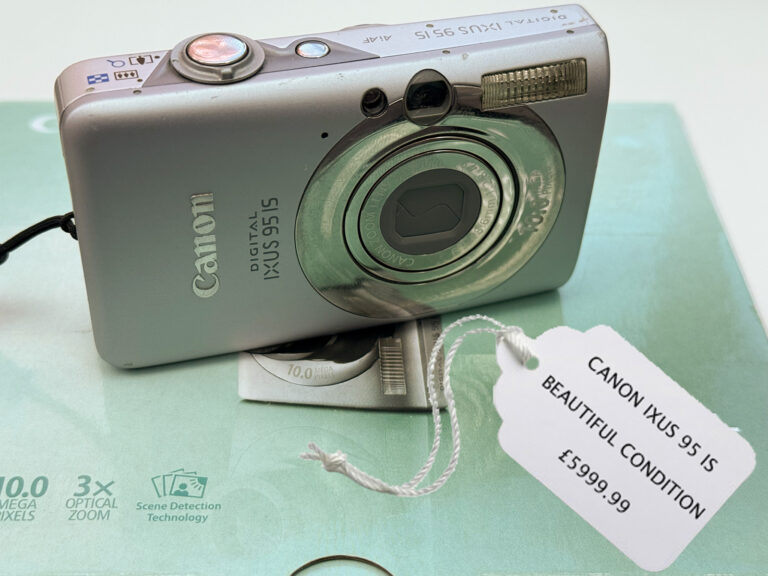
Sadly, due to the demise of APS film, the truly compact greats are no longer a viable option. Yes, you can still pick up the odd roll of colour film but it will be awful by now and you’ll pay plenty to have it developed whilst you’re at it. The Canon Ixus series would be absolutely incredible cameras to just have in a bag or pocket these days, but as yet no one has come up with a sensible, reliable way of respooling APS cassettes. I wish they would, though.
There have been a number of modern film compacts released in the last few years to jump on the analogue resurgence bandwagon and every single one, without question, is over priced, expensive junk. For £2-500 you get a plastic camera, perhaps with a posh display on top, that offers absolutely nothing that a £10 compact from the 1990’s sold on eBay wouldn’t give you.
Yes, you’ll see endless reviews saying how wonderful it is to have new cameras, how they’re “not bad!” and “great fun” but this is because people are largely being incentivised to positively review this nonsense. What the film world really wants is new SLR or TLR type cameras, no one was desperately seeking a brand new, expensive compact yet… here we are. Do not believe the hype, do not waste your money on a new Kodak, Lomo, Fuji…
Frankly, if you want to experience film photography, I do not see the point in starting out with a compact. There is no joy in the automated shooting process, a total lack of creative control and nowhere to go if you want to try out different types of environment for your photography. Honestly, there’s a reason phones took over for casual snapshots and I find it difficult to understand why anyone would want to just point and shoot but on film? There’s a lot of fun to be had with cheap digital point and shoots, but that is another topic for another day.
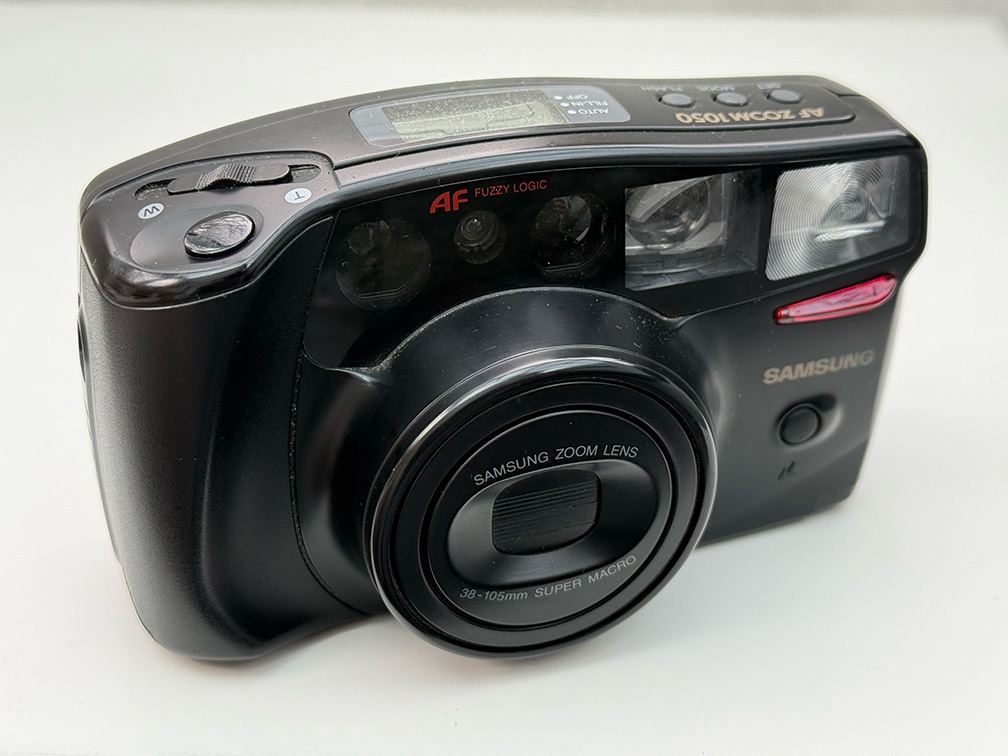
If you absolutely must have a compact – go for one of the later zoom models, or an Olympus Mju (expensive). Cheap and brilliant options include:
- Pentax Zoom 105r
- Samsung AF Zoom 1050
- Nikon TW Zoom
Around 1993 these were all considered to be pretty much flawless compacts that would’ve cost you somewhere in the region of £300 – not exactly pocket money. Most later 35mm compacts have a wealth of controls, a decent zoom range and are optically very good. These three are widely available for roughly £10-20 in todays market.
But wait… I want a manual compact camera
Now you’re talking. A manual compact is any non-SLR camera which has a fixed lens, mechanical shutter and no batteries except for perhaps a light meter. Manual compacts cover a broad range of cameras from the most basic, cheap, primitive efforts such as the Cosmic 35 or Cosmic Symbol to rangefinders that cost thousands of pounds. You do, of course, lose the ability to change lenses and frame your images through the lens itself but you gain light weight, portability and convenience.
There are quite literally thousands of cameras you could choose from in this category and models are available from the 1940’s all the way through to the 1980’s. You will need to be careful when buying super old cameras as over time the shutters become unreliable, timings are often out, shutter curtains degrade and if buying a bellows type camera you can often find pinholes in the leather which will cause light leaks. Furthermore, the older you go, the more likely a camera is to use roll film and many of the formats once used such as 620, 126 and others are either no longer available or extortionately expensive. The only roll film worth using today is 120 roll film which will give you between 8 and 12 shots depending on the film mask used in the camera.

My first recommendation for a manual compact is a camera which was always considered something of a toy, a throwaway camera that was bought by people as a cheap 35mm camera to practise the basics of exposure on before moving on to better models. The Cosmic/LOMO 35 or Cosmic Symbol is a metal bodied (or plastic in the case of the Symbol) camera that was renowned for being the cheapest 35mm camera available at the time, often selling for as little as £10 with offers in magazines. It is, however, a surprisingly well built camera that will provide you with a lot of fun for almost no money at all. It takes normal 35mm film, has a mechanical shutter with a range of speeds and, if you buy the Cosmic 35, a usable depth of field scale.
You might wonder why I recommend what many would consider a junk shop special, but the fact is the Cosmic cameras have all you need to learn the basics – judging distances, selecting appropriate apertures, using zone focussing and understanding depth of field. These are all essential skills that you can put to use with better cameras in the future should you decide you love this style of photography. You also get that true “vintage” look from the lens which is “sharp enough” but certainly has none of the corrections that modern lenses have to make images look crisp and perfect. you should pay no more than £10-15 at most for one of these.

Next, one of the most popular and successful ranges of cameras ever sold – the Kodak Retinette. These cameras have a cult following all of their own and collectors who try to buy every possible variant ever released. Whilst early models were folding/bellows type cameras, they quickly evolved to become extremely capable, easy to use, flexible compact cameras with decent lenses. They have weird film advance levers that are on the base of the body which are surprisingly intuitive in real world use. As a walk around, snapshot camera these are a great choice. Again, prices are low – in the £10-20 bracket and you’ve a lot of choice between cameras with subtly different lenses, selenium cell light meters and so forth. Look for a well looked after, working copy and you should be rewarded with many rolls of picture taking joy. Be careful of broken wind levers and other plastic components which have become brittle or knocked over time as these are common failure modes on the Retinette series.
There are some cameras in this segment of the market which have a reputation for being great or “classics” but in my opinion don’t quite cut it. Notable of those is the Olympus PEN and Olympus Trip 35 cameras. Effectively the same camera, one is a half frame and the other full frame but both share the same principle – selenium cell meter, two shutter speeds, metal construction and thats your lot. There is a certain charm to them and no doubt they are well made, but the complete lack of creative control leaves a lot to be desired. Expect to pay between £20-50 for one of these if you really must buy one, but better cameras are definitely available. If you really want to shoot half frame, then the Canon Demi series is far superior in almost every respect, but you will pay for the privilege with prices rising to £100 at least for more desirable models like the EE-17.
Talking of Canon, they made several good compacts in their “Canonet” series, with good lenses and plenty of shutter speed/aperture options. Lots of these are broken today so as usual, be careful to make sure you test or buy a well tested copy. Despite what some advertisements may say, they are not rangefinder cameras but look and feel almost like one. Expect to pay £20-40 for a working Canonet.
Of course, there are hundreds of other models that you can select from in this category and I’ve deliberately avoided recommending folding cameras as they add yet another layer to the many things that could go wrong. The general rule of thumb here is that you can’t go far wrong if you buy known working cameras, they have a range of shutter speeds (up to 1/500 ideally) a half decent 35, 40 or 50mm lens attached and are in generally good order.
I want a… manual focus SLR camera
Good choice. Manual focus SLR cameras probably give you the best of all worlds film experience. Manual focus, manual wind cameras are, in my opinion, the essence of photography. With an SLR you get the convenience of through the lens composing (what you see is what you get), an almost endless choice of high quality, well build lenses for almost any scenario you can imagine and you can select from a long, long list of absolute classic camera bodies.
You’ll face two main problems deciding which camera to buy – the sheer weight of choice and the cost. There’s no doubt that in recent times the cost of good or “classic” manual focus SLR’s have gone through the roof and there are very few choices now that come in under £100. On top of this, lots of cameras are now approaching 60-70 years old and will be in varying states of disrepair. It is no surprise that many SLR’s from the 1970’s and 80’s are in need of a service. Having said that, I’ve had more failures (especially of shutters) on far newer cameras than on anything manual from this time period.
Nearly all manual focus SLR’s are regarded in some way as “classics” by their various advocates and fans. Pretty much every Canon, Nikon and Olympus is now firmly in this territory and you’ll pay the price premium to match. What were once £20-30 cameras in the early 2000’s as no one wanted them, are now £1-200 easily in the “collectors” market. There’s good reason for this and that is because during the manual focus wars of 1970-80, basically no bad cameras were made by these manufacturers.
Advice here is really quite simple. If you’re not constrained by budget, you want the best you can get your hands on and to experience the pinnacle of the manual focus experience then you should just buy one of the following:
- Olympus OM4 Ti
- Canon F1 (any variant, although “new” F1 is preferred)
- Canon A1
- Nikon F2
- Nikon F3
- Nikon FE
- Nikon FA
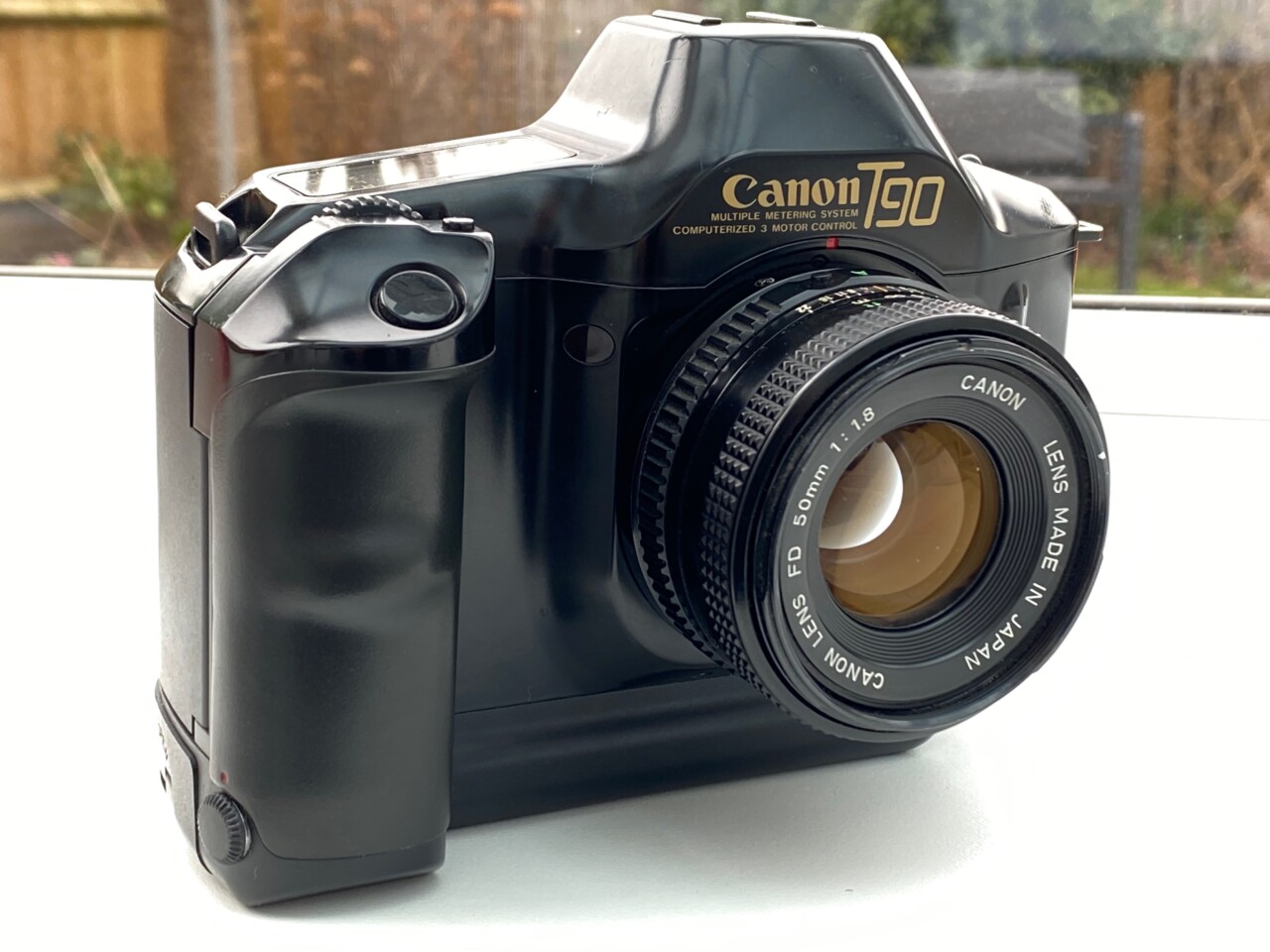
- Canon T90 (if you want manual focus but auto everything else in a “pro” body)

There doesn’t need to be a discussion or a list of pro’s and cons. If you can afford it, any of the cameras on that list are basically faultless in their own right, provide top drawer performance, handling, ergonomics, optics and lens choice. Yes, some are more electronic than others (T90, A1) and you might want to buy a camera which can never run out of batteries (early F1, Nikon F2 without certain finders) but which one of these cameras you buy would just come down to a personal preference. You’d be hard pushed to dislike any of them.
You will need to select a lens to go with your chosen camera and that is an entirely different kettle of fish. If you’re not sure, my advice would always be to get a 50mm F1.4 made by the matching manufacturer of your camera. You can add to your collection from there as your experience and desires change, but 50mm is by far the most versatile and widely available focal length for any SLR.
All of the cameras above start at a minimum of £100 for a working copy and will go up to £4-500 for a really good condition model in some cases such as the Nikon F2 with the best finder they made. The OM4 ti will cost you at least £400 – 500. Canon and Nikon are the “big” names today, but during this era they didn’t enjoy the same level of market domination. Great cameras were produced by Pentax, Olympus, Minolta, Yashica and others which shouldn’t be overlooked simply because they’re no longer the power houses they used to be.
If budget is an issue then you need to be more creative in your choices, but that is not to say that you’re buying an inferior camera. Most cameras manufactured in the 1960’s and 70’s were metal bodies. Only in the 1980’s did plastic start to become the new wonder material that every reviewer was deeply critical of.
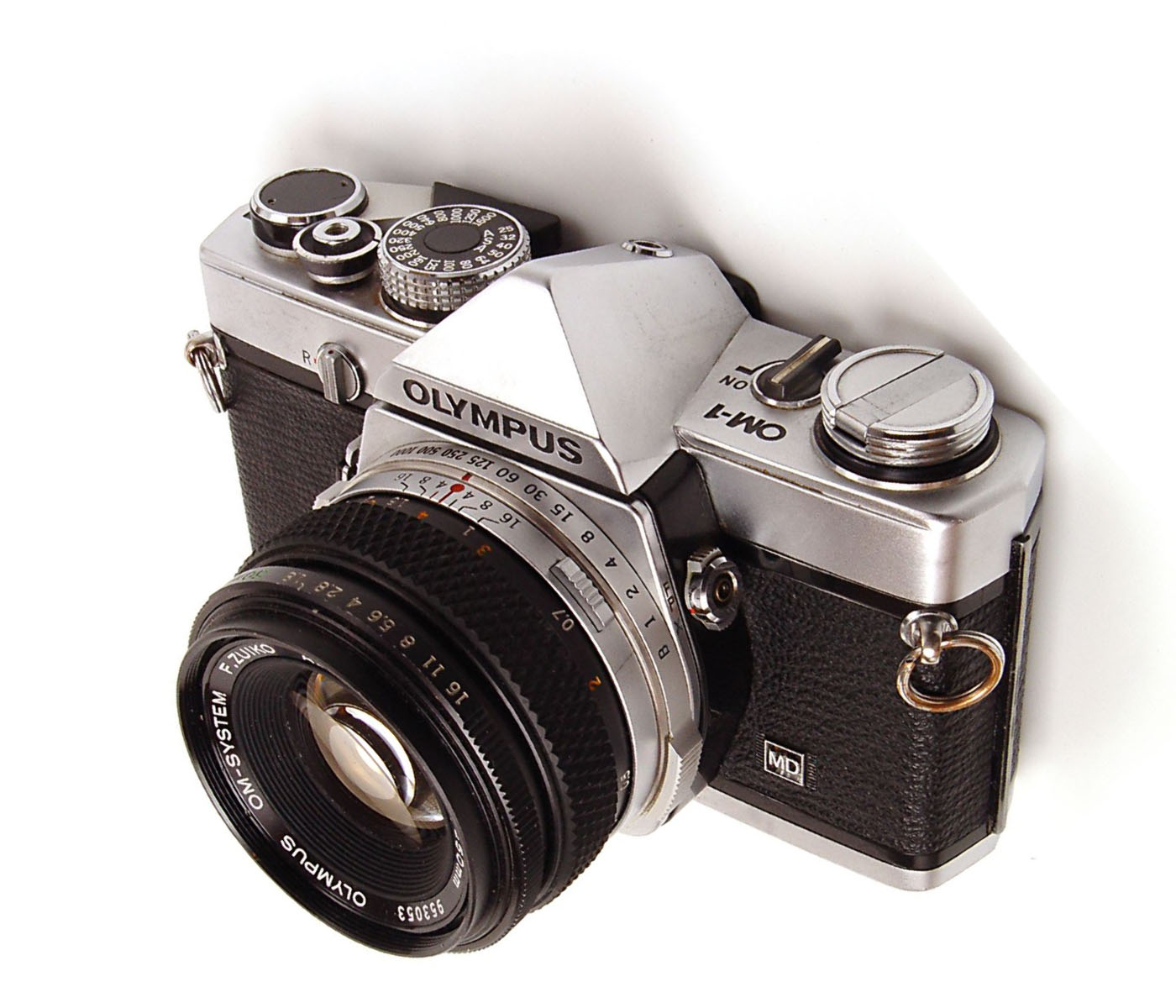
If I had to recommend just one camera in this category it would be the Canon AE1 Program. A very close second would be the Olympus OM 1 or OM 10. These cameras are more competitively priced whilst offering access to world class lenses, decent ergonomics and just enough creature comforts such as a program mode or decent metering to provide countless rolls of 35mm satisfaction. I would be more than happy to live out my days never having another film camera than the AE1 Program – its more than enough camera for most and provides all of the feeling, mindful experiences and whatever you’d desire from shooting film.
If you want to stay super cheap, you’d do worse than to look at the Praktica range. These were made in Germany and largely sold through high street electronics retailers like Dixons in the UK. They were budget cameras then and they’re budget cameras now, but their all metal construction mean many have survived pretty much unscathed. You should be able to pick up a Praktica LB2 or LB3 for around £20 on eBay and this gives you access to M42 screw mount lenses, of which the Carl Zeiss 50mm is an absolute beauty.
Finally, the early 1990’s saw a brief resurgence in the manual focus SLR market. At a time when auto focus bodies were beginning to dominate, many owners and customers pushed back against what they saw as too much automation, the job of the photographer being taken over by a computer was against everything they believed in. Furthermore, people were of the opinion that in order to get the most out of these new computerised models, you needed first to serve your apprenticeship with a manual camera to understand the basic mechanics of photography and creative control.
As such, there are a few much more modern manual focus, entry level SLR’s that are relatively cheap today. Be wary, though, these cameras were built to a budget and designed to be a very cheap entry into the SLR world, often retailing for less than £100 as a kit when brand new, they fetch roughly £25-30 today and honestly I think that is the limit of what anyone reasonable should pay for one of these. Consider looking for something like the Pentax P30T and don’t pay more than £30 all in.
I want an… auto focus SLR camera
Do you like choice? You’ve got choice. Do you want everything you could possibly ever need on a camera for 99p? It’s possible in this category.
I’ve tested, used, owned and still own countless 35mm auto focus SLR bodies from all of the main manufacturers. Whether you go for a Canon, Nikon or Minolta is simply going to come down to personal preference and your budget as this type of camera include everything from the cheapest, fully featured budget models all the way to the greatest, most technologically advanced film cameras ever made.
Minolta pretty much invented the auto focus SLR and for years made innovative, ergonomic and brilliant cameras. Today, I think they represent an excellent entry point into the world of automated film photography with one big caveat – can you find one that isn’t crumbling?
Minolta in the 1980’s and 1990’s used a rubber compound which has not stood up to the test of time and consequently the grips on all of their best cameras are a crumbly, cracking nightmare. There are some bodges you can apply, some people have created after market replacements and others mould their own out of Sugaru or similar. Either way, recognise before you buy that it is practically impossible to find one that hasn’t broken down. I have personally purchased several 7000i’s, for example, which have been in mint condition and then crumbled with their first use.

However, I would still recommend any of the following models:
Of those, the 7000i is definitely my favourite. It features a wonderfully ergonomic design, an almost perfect set of features built in and the auto focus performance is really good considering the age of the camera. Furthermore, Minolta created an excellent “honeycomb” metering system that gives impressive exposures in a range of conditions. Failure rates of these old cameras are beginning to increase but there are still plenty of great bargains to be had in the £30 ish price bracket and you should be getting a lens included for that money and they’re decent quality too, especially their prime 50mm offering.
Now, Canon. I’ve used pretty much every single Canon EOS SLR ever made and they nearly all have something in common – they’re all excellent. Current second hand prices for EOS film SLR’s is still very low but make no mistake, prices are starting to rise and stupidly so for some particular models. As always, price these days is dictated by reputation, rarity or desirability and certainly not in any way by objectivity. Consequently, some models are almost inexplicably more expensive than they really should be.
Instead of listing all the Canon SLR’s I’ve reviewed (you can if you like find those here), these would be my recommendations:
Wait… I don’t recommend the monumental, legendary EOS 1?! What’s wrong with you?
Well, it comes down to reliability. EOS 1n‘s are failing at an alarming rate with the dreaded “BC” error and is a similar problem which plagues the T90 due to shutter magnets no longer working as they should, leading to the camera thinking the shutter is broken. To be clear, yes, an EOS 1n or v is the best Canon SLR you can buy and an absolute dream to use, but they’re also expensive and when they fail you’re left with an expensive paperweight. Don’t even mention the EOS 3 – they’re even more expensive to the point of absurdity and you’ll be lucky to buy one for less than £400 anywhere these days.

The EOS 300 is by far and away the greatest photography bargain ever. You can regularly and easily find them for less than £5, I have bought more than one for 99p and these kinds of auctions keep popping up. It is a fully featured SLR with good auto focus, perfectly decent metering, all the modes you need and all in a tiny package. Yes, you can’t use it to knock a nail into a block of wood and it “only” does 1.5fps, but who in their right mind is rattling off animated GIF’s with a film camera in today’s world?
Next, the mostly unloved EOS 50 or 55. When released, this was Canon’s nod to classic cameras with control dials and switches for everything and the result is a camera that is fully featured, extremely nice to hold in the hand and capable as you’ll ever need. The only criticism that you can level at the EOS 50 is the AF can sometimes be ponderous, but only on occasion. Eye control versions are fun, but not essential and you can buy these for around £25. At that money you’re getting an incredibly capable, well built SLR that could easily be the only film SLR you ever need. I highly recommend them to this day and in terms of value I don’t believe they can be beaten.
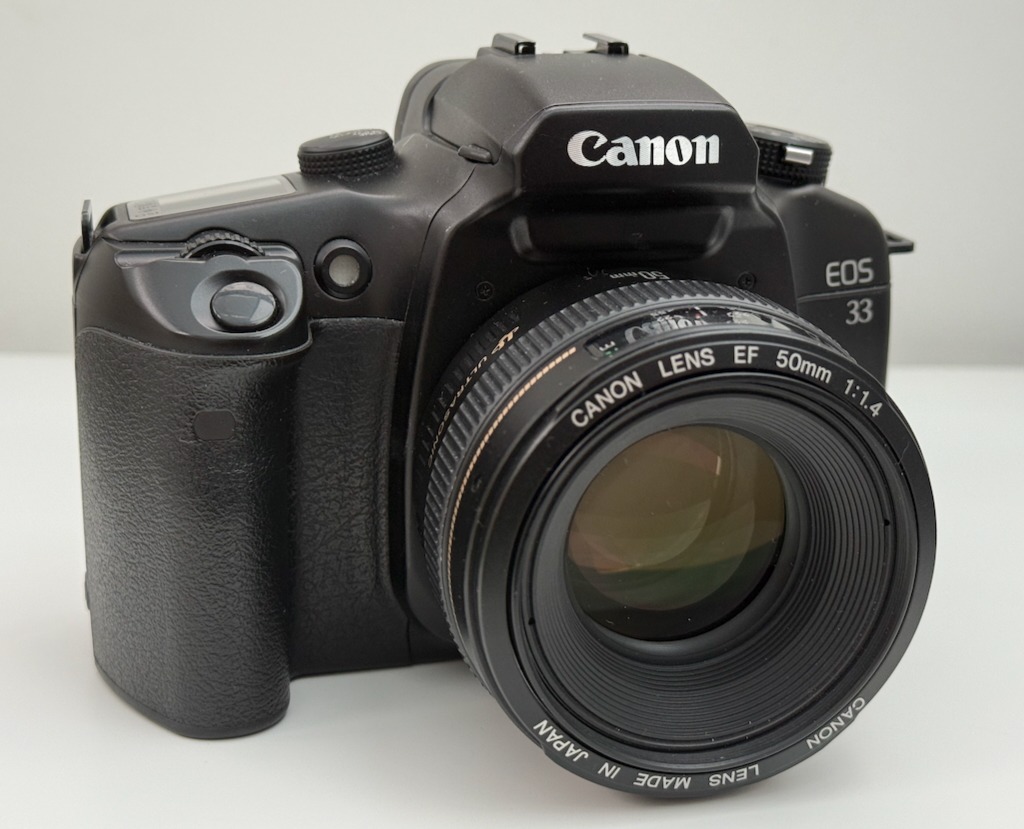
Finally, the EOS 33 or “Elan 7” if you’re in America is probably the best balance of price/performance and modern features. In Canon’s own words, it borrowed the AF tech from the EOS 3 (a beast of a camera) and improved on the EOS 50/55 in nearly every area. So closely matched are these two cameras that certain parts of the EOS 50 can be swapped in to the EOS 30/33. This camera is now my go to, day to day Canon EOS film camera (and I’ve had an EOS 1n). It provides brilliant auto focus performance, excellent metering and is as up to date as a relatively inexpensive film camera gets these days. Prices are high and rising, but for £40-50 you should be able to get one in good condition and they’re worth it if you don’t have the money for an EOS 1n or 3 which are the only cameras better than this in the Canon lineup.
Cameras to generally avoid are the EOS 10, EOS 5 (yes, many love it, I think it’s massively overrated in todays second hand market when there are so many better options available for the same cash) and EOS 700. You’d do fine with any of the original 600 series and a special mention must be given to the 300x which is a great camera if you want the smallest body you can lay your hands on and are prepared to pay a huge premium for what was an entry level body that now sells for anywhere between £50 and £80 which is outrageous when a few more pounds would buy you an EOS 1.
When it comes to Nikon, honestly, I don’t really click with them. Weirdly, for a company that used to pride itself on backwards compatibility of lenses, when they moved to AF lenses things went off the rails. Some lenses work with some cameras, some with others and good luck decoding the spaghetti of acronyms used to describe the various merits of each lens. There is nothing wrong with Nikon film SLR’s, but I have yet to find one which I truly loved and wanted to keep. I’ve owned various Nikon film cameras from the legendary F2 to more modern examples like the F80 and not one of them has floated my boat. For that reason, if you’re a Nikon fan it’s probably best to find an unbiased opinion elsewhere! For me, ergonomically, Canon and Minolta nailed it and Nikon… didn’t.
I want a… medium format camera
Decent medium format isn’t cheap. You’ll get between 9 and 12 exposures from a roll of film which costs the same as a 36 exposure roll of 35mm film. The benefit of this trade off is image quality and almost endless detail.
Having said that, you can buy a medium format camera for literally nothing and nearly every junk, reclamation or charity shop has a selection of box type cameras sat on their shelves looking sad and lonely. These generic, cheap cameras do have a certain charm and appeal to them. It’s almost a miracle when you pull the roll out of the developing tank to see that a box with a hole in it has made some quite acceptable images.
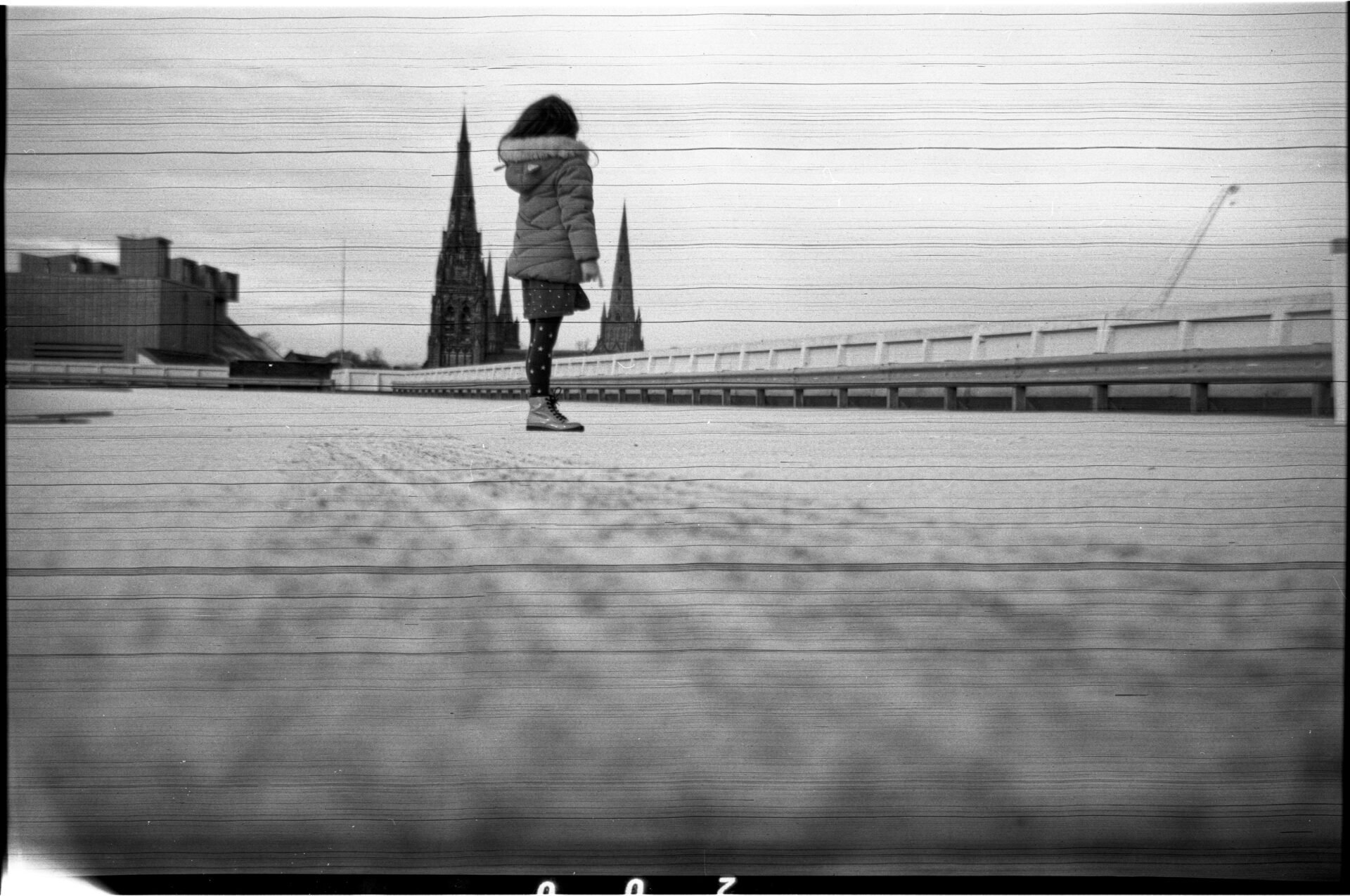
There are some downsides. Cheap roll film cameras have often been badly stored and severely neglected. Metal and cardboard (yes, cardboard) bodies either rust or turn to dust and you are more than likely to have issues with your films being scratched by minute pitting, scoring or imperfections on the rollers. Often, bakelite models are your best bet to avoid some of these problems (this won’t save you from rusty rollers) but you should be careful with them. Bakelite often contained asbestos and you should be wary of any bakelite which has cracked or obviously degraded – you can’t be too careful.
If you want to just have a dabble with medium format, you’ve a wealth of box and TLR-alike cameras to choose from. They’re almost all identical – one or two shutter speeds, single element lens, manual aperture (if any) and thats your lot. If you want the most basic, elementary photography experience, these cameras are for you.
For £5 or less you can get and Ensign Ful-Vue:
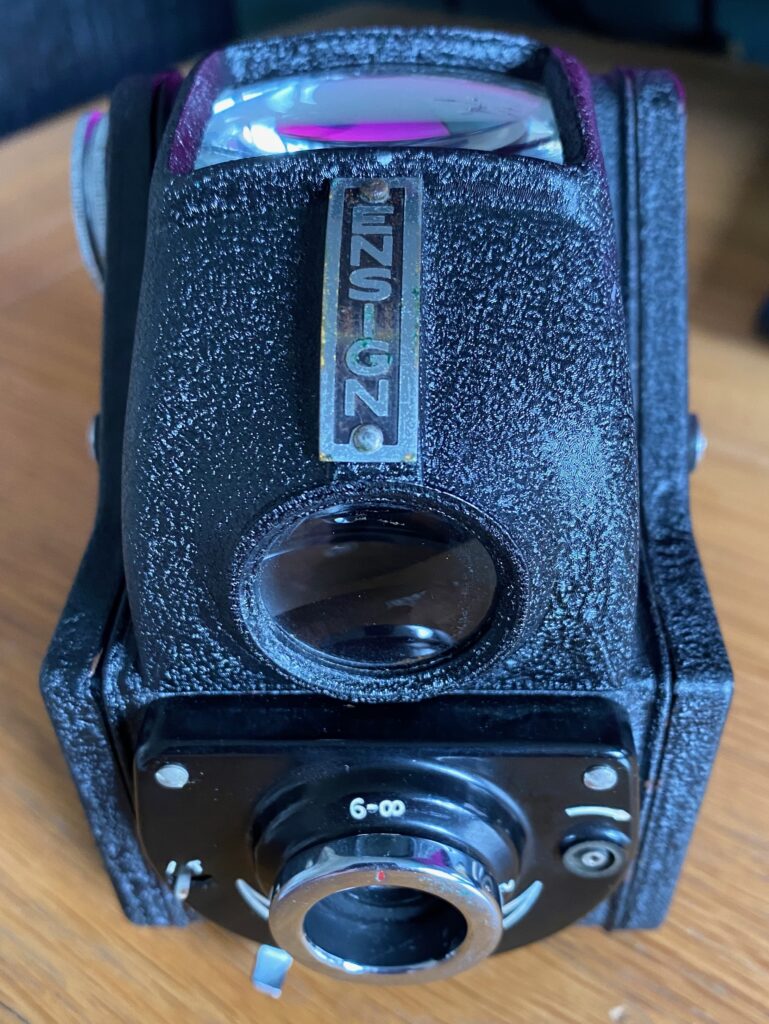
It’s a bog standard camera but comes in a rather nice metal case with a metal lens surround that doubles as a rudimentary focus ring. Composure is through a simple lens and mirror arrangement and there’s a single shutter speed. Many have survived in great condition due to the metal construction and they’re cheap as chips. Click here for the Ful Vue review.
If you like Bakelite, Ilford made endless cheap 120 cameras such as the Envoy. An alternative is one of the endless box type, Kodak Brownie-alike cameras such as the Coronet D20. These are ubiquitous and you should never pay more than £5 for one of these:
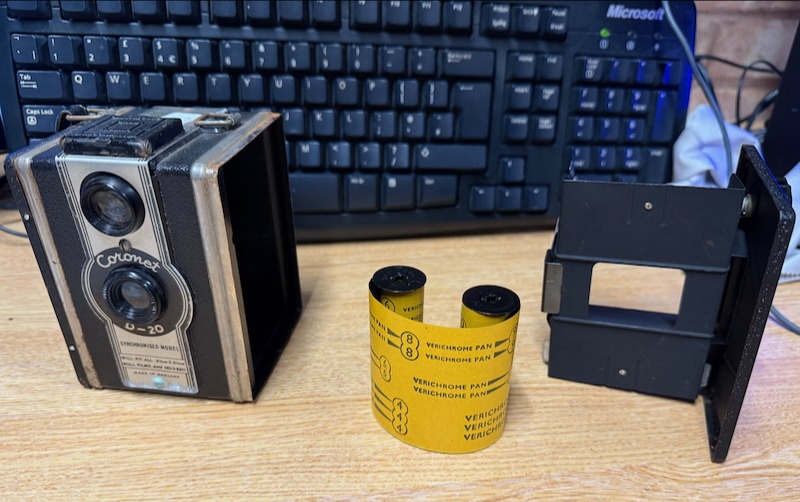
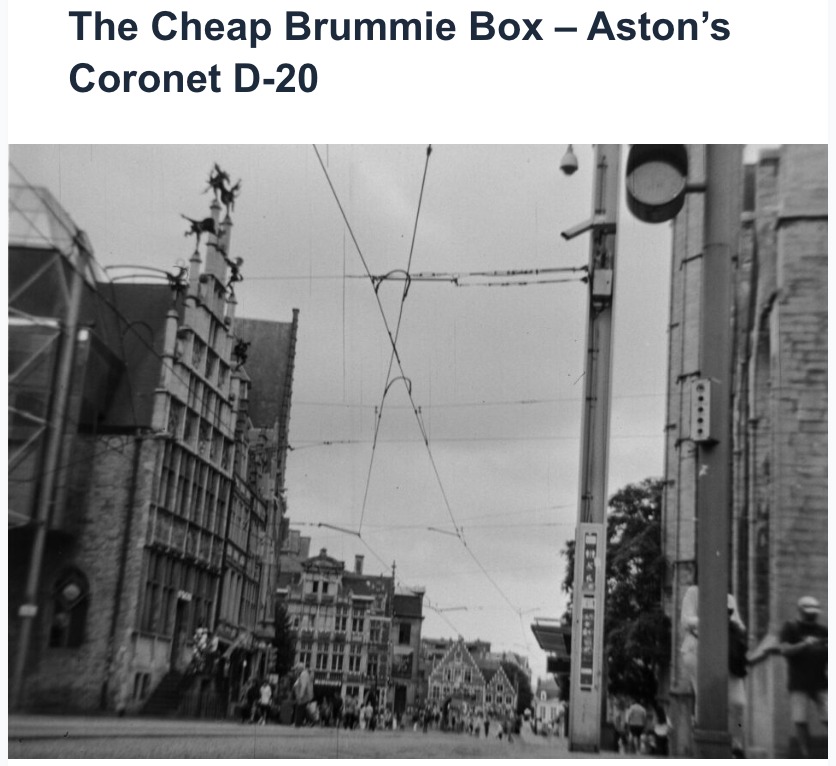
These have the absolute luxury of two apertures and two shutter speeds! Imagine… I picked this particular one up for the way over the top price of £10 from a junk shop simply because it contained an undeveloped film. As is often the case with these types of camera, the light seals were destroyed and had turned to fluff, the camera body was rusty but the lens cleaned up perfectly well. One thing that is definitely true about these cameras is how serviceable they are – anyone with a basic screwdriver set can take one apart and restore it to working order. My review of the D-20 can be found by clicking the image below:
The undisputed champion of cheap medium format is undoubtedly the Lubitel 166 series. Sold for over 50 years, well into the 1990’s, as the cheapest entry into the world of TLR medium format cameras, they have a cult following. If you’re lucky, images will be astoundingly sharp, but most of the time you’ll get a weird mix of all kinds of lens effects in your pictures. However, pick up one that has been looked after and it really is unbeatable value for a TLR and I’ve taken some of my favourite photographs with one. Expect to pay roughly £25 for a copy and they’re worth every penny, especially if the often lost 4×4 adapter is included so you can get more shots out of your roll of 120.
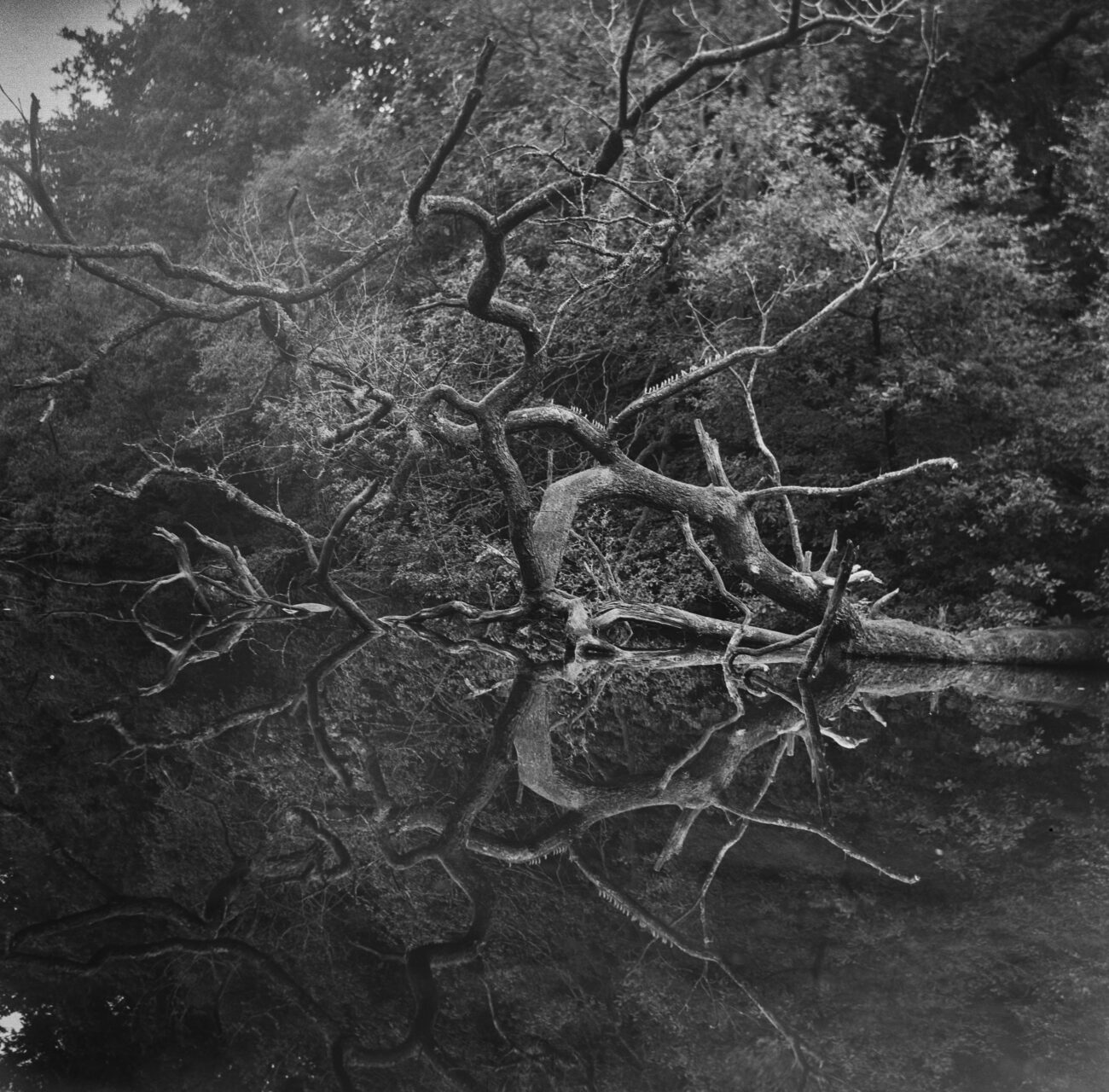
I really enjoyed using my Lubitel 166 and would wholeheartedly recommend it as a first medium format camera. If you want to experiment before committing large chunks of cash to a Rollei or similar, then you really can’t go wrong. There are a multitude of variations, but the actual differences between models are minimal at best. They have the luxury of a range of shutter speeds and apertures and even a self timer if you’re brave enough to engage it. This should lead to a far greater amount of keepers on your roll of 120. If you can find any of the 166 series, it’ll do – you don’t need a specific variant.
My review of the 166 Universal can be found here or by clicking the image below.

If you’ve money to spend then obviously you might want a Rolleicord TLR or as a cheaper but still decent alternative you might consider a Yashica TLR. Prices for well built, branded TLR cameras are steadily rising all the time and you’ll be lucky to get one for less than around £75. However, you do get what you pay for – better lenses, higher shutter speeds, better build quality and ultimately a nicer user experience. Don’t forget that regardless of which TLR you go for you will need to get your head round the completely reversed view finder which can be extremely jarring at first, and will definitely slow you down when you first start using one.
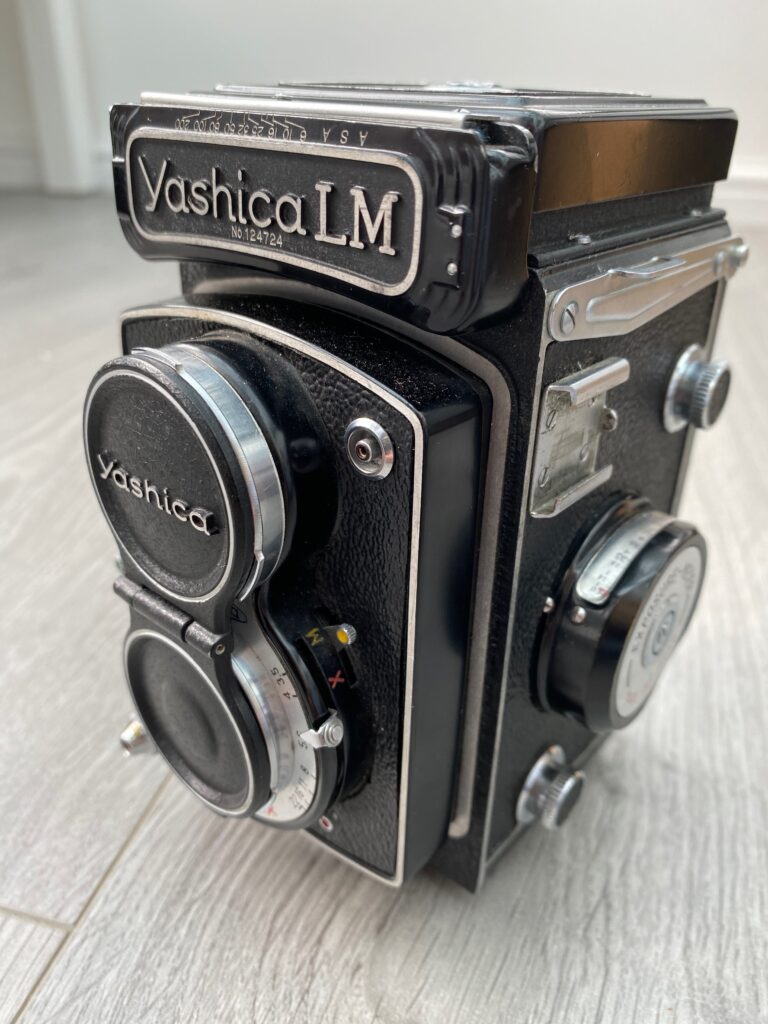
I’ve had the pleasure of owning a Yashica LM and enjoyed putting a few rolls of 120 film through it. The experience can be described as “refined” but ultimately I didn’t fully click with the user experience and sold it on, but this is a me problem and not an issue with the camera which I’d highly recommend to anyone looking for a quality medium format TLR.
I have… up to £20 to spend on any camera

In this price bracket, your options are unsurprisingly limited but you are not limited to cameras that are in any way rubbish. For £20 it is perfectly possible to buy a body and lens that will work perfectly for hundreds of rolls of film.
If I had to recommend just one single camera in this bracket it would absolutely have to be the Canon EOS 300 with the kit lens. Widely available, massively underrated and currently underpriced. I cannot see this staying this way forever but it is definitely the cheapest way into the world of film, all in, on a budget.
That was simple. Next!
I have… up to £50 to spend on any camera
At the £50 price point you’ve got choice coming out of your ears. Your biggest problem here will be choice.
I would urge anyone getting in to film photography for the first time to jump in head first and buy a manual focus SLR. It will be difficult to find a good one for £50, but not impossible. My recommendations are for all the “classics” here such as the Canon A1, AE-1 Program, Nikon FE, Olympus OM 10 or OM1. Any of these cameras are going to give you that all immersive, true manual photography experience that so many film photographers look for.
If you get lucky, I’d urge anyone who craves a little more automation, but still manual focus, to try and find a Canon T90.
However, this feels a little like cheating as you are not going to get any of the cameras mentioned so far for £50 with a lens included unless you are given one or find someone selling something they have no idea about.
When it comes to the crunch, the best camera with a lens (really important caveat because cameras sold complete with lenses often completely changes the pricing) I’ve ever used that can be bought for £50 or less is the Minolta Dynax 7000i with the 50mm F1.8. It is more than possible to find good working copies of this camera for much less than £50.
A great second choice is the Canon EOS 50 with a “kit” lens, usually the 28-80, but optically this is not going to be as good as any decent prime lens.
I have… more money than sense
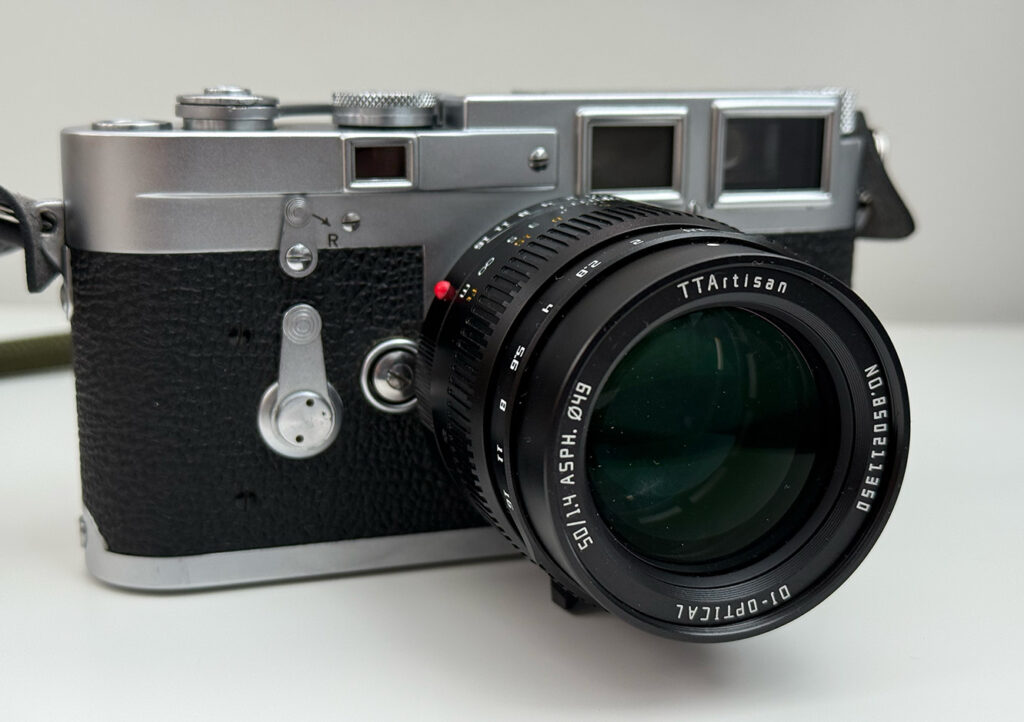
This is really straight forward. Do you want an SLR? Buy a Canon EOS 1V.
Don’t want an SLR? it has to be a Leica M3 or M6.
Now… buy a camera, any camera, and just go out and shoot some film. Enjoy the experience and do not covet thy neighbours camera.