Last time, we discovered that compact digital cameras have had an exponential explosion in popularity and price. We learned that many “old” digital cameras can give the very best smartphones a real run for their money even today and that perhaps this yearning for times gone by and the aesthetic of “old imperfect” images was part nostalgia, part decent optics and part nonsense.
What if we go back even further, to the birth of digital compacts? Do they tick the boxes? Are they the cameras of an influencers dreams? Well, the Ixus was arguably the line of cameras that started it all, so we should probably look there.
Certain camera designs are undeniably iconic, they define a type of camera or reflect the design trends of a particular decade. Think of the silhouette of a rangefinder and it’s a Leica, an SLR and it’s likely the angular, metallic pentaprism types from the 1970’s. Think of a rectangular cuboid and… it’s an Ixus.
The original Ixus was unequivocally the most bold and successful APS camera released during the lifetime of the short lived film format. A no compromise masterclass in miniaturisation, they were sturdy and well built with surprisingly good optics and image quality. The ixus became a fashion icon akin to the white headphones of the original iPod and anyone who was anyone turned up to parties and social events wearing one on a colourful string around their neck.
With the Ixus, Canon had created a new design language for luxury, high quality metallic miniature cameras and although there were some features best forgotten such as buttons you could only press with a supplied plastic tool, by the end of the line with the Ixus II, Canon had pretty much nailed the do it all, take anywhere, ultimate travel companion camera. When the rise of digital photography came along, Canon knew they already had a winning formula and with some minor alterations they could swap out the film for a sensor and be on their way.
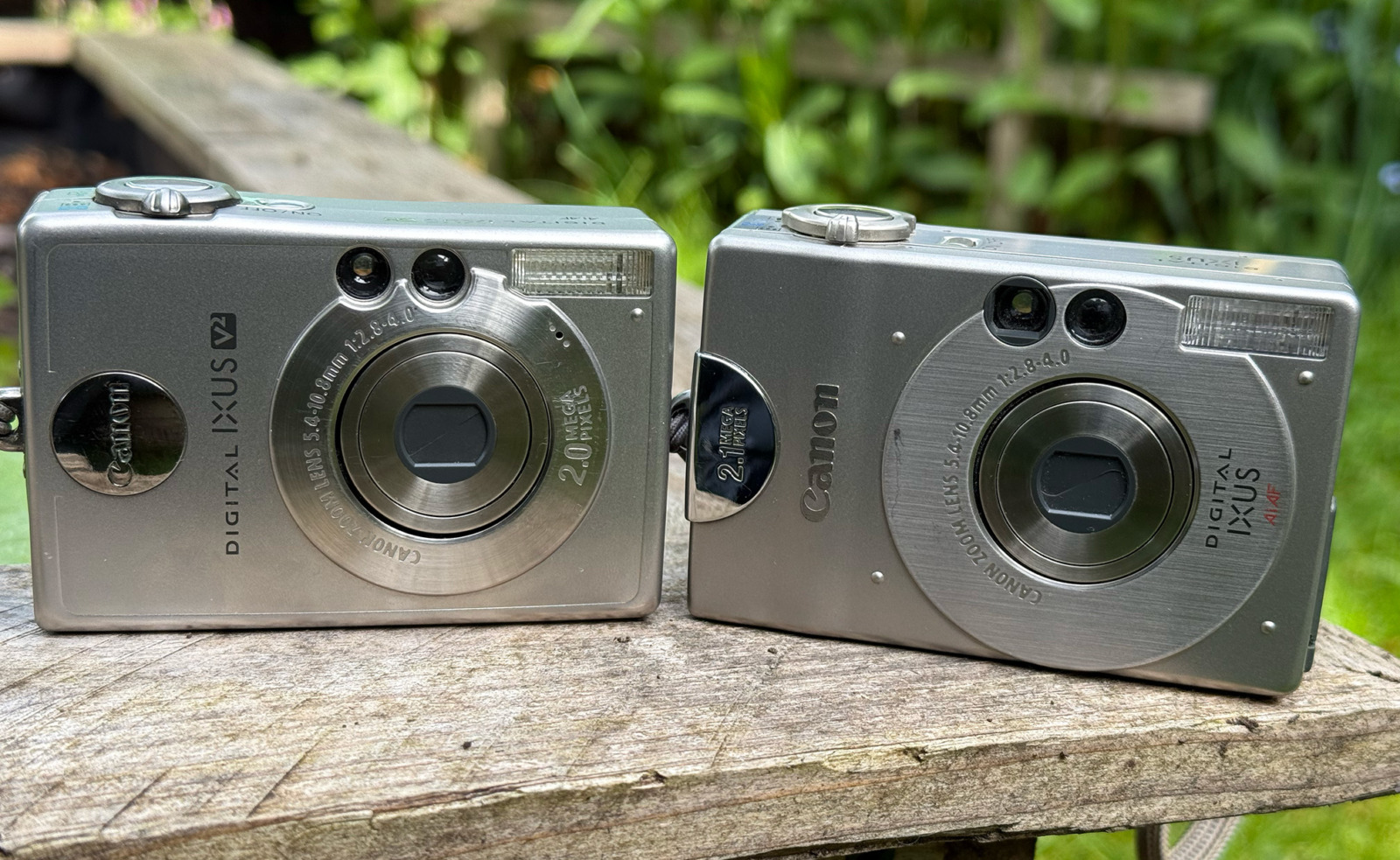
I bought a mint example of the first ever Digital Ixus and then a charity shop Ixus V2 to find out what the transition to this exciting new world of compact digital photography was like and to experience how quickly Canon iterated and evolved their beautiful, boxy dual megapixel marvel.
In this post:
Buying ain’t easy any more…
This whole thing started last time round when I discovered that digital compact cameras of almost any age, lurking in drawers around the country are suddenly worth frankly stupid amounts of money. I spent a while (two weeks) looking at which cameras were selling, what prices they were going for and whether there were any bargains to be had any more and the answer is depressing.
Other than the real rubbish, the mass produced no name or rebranded cameras, everything else is selling for over inflated, high prices. We’re talking everything from roughly 4mp or over and made by a recognisable camera manufacturer is now desirable and of value. If it’s digital, compact and still working, you’ll require a minimum of £50 in your pocket and that’s often for cameras that don’t even come with a battery or charger. This surge in popularity and perceived value is another level of utter insanity when you consider that these were cameras you couldn’t give away in a charity shop five years ago.
The only way to get remotely lucky now is to search for items that have been poorly listed, are listed as broken but probably aren’t or perhaps there’s a model that’s too old or too niche for the social media hype train to have picked up on. I did a generic search for “Canon” and found this for £21 with zero bids. I actually missed it first time round and bought the re-listed item that also attracted no bids. In the current market for compacts, I cannot think of a single reason why this one slipped through the net or isn’t desirable. I don’t think it’s a one off either as apart from the usual chancers who think they’re running a boutique camera emporium of digital tat, the prices for these are consistently low at the moment.
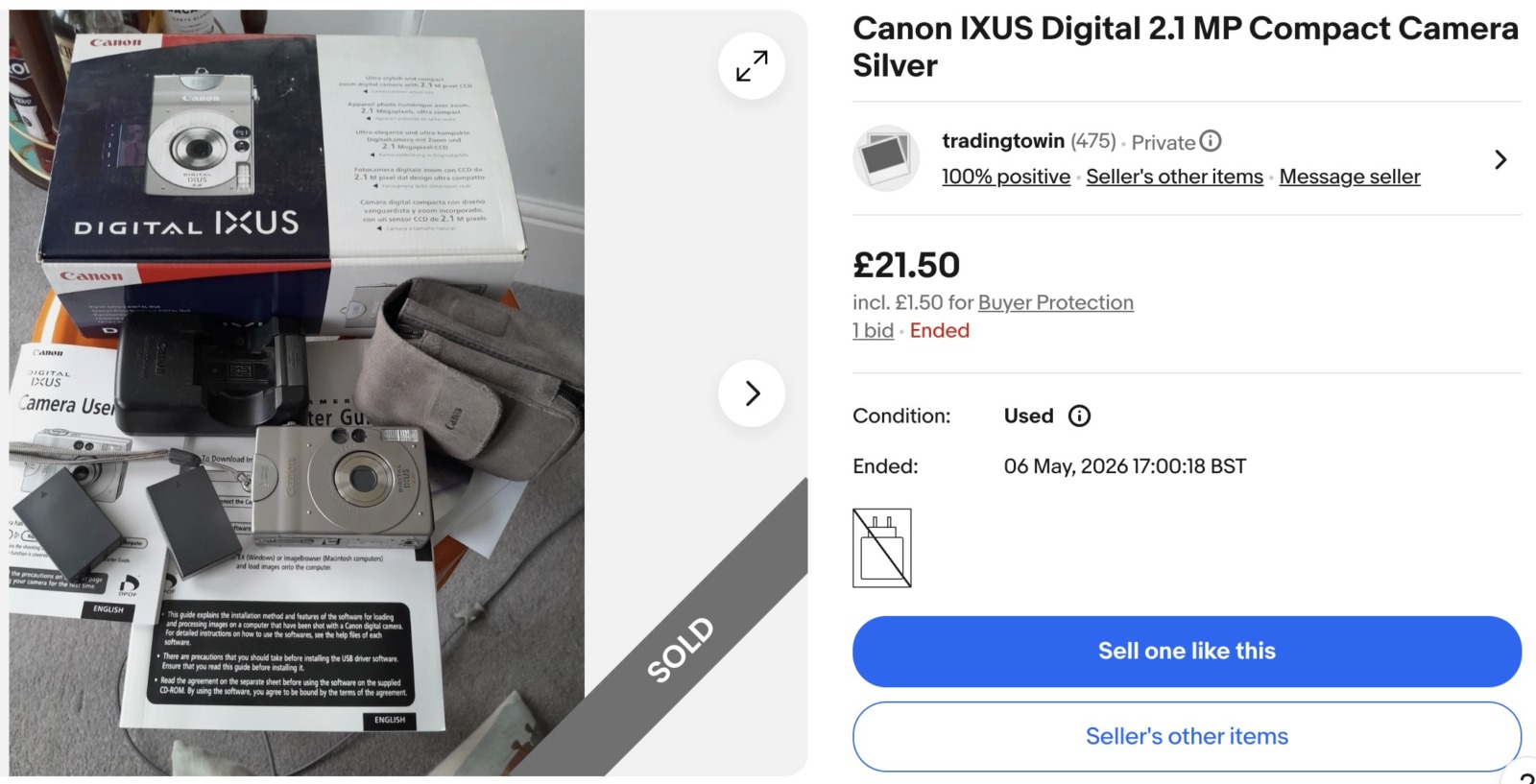
As always, the batteries are dead and suitable only for the recycle bin, but the rest of this was in as close to mint condition as you could realistically expect for a camera that was launched in 1999 and potentially anywhere up to 27 years old depending on when it was originally purchased.
Just stop and think about that for a minute. Compact digital photography is nearly 30 years old. It’s so easy to forget sometimes that a huge proportion of the adult population have never, ever known anything other than digital photography. Crazy.
Anyway, having had a few Ixus’s? Ixi? Ixusies? What is the plural of Ixus? No wonder they called it the Elph in America. Regardless, having had a few in my watch list, I also ended up buying the identical (photographically) but heavily revised Ixus V2 from a charity shop for £10. Why have one two megapixel Ixus when you can have two?
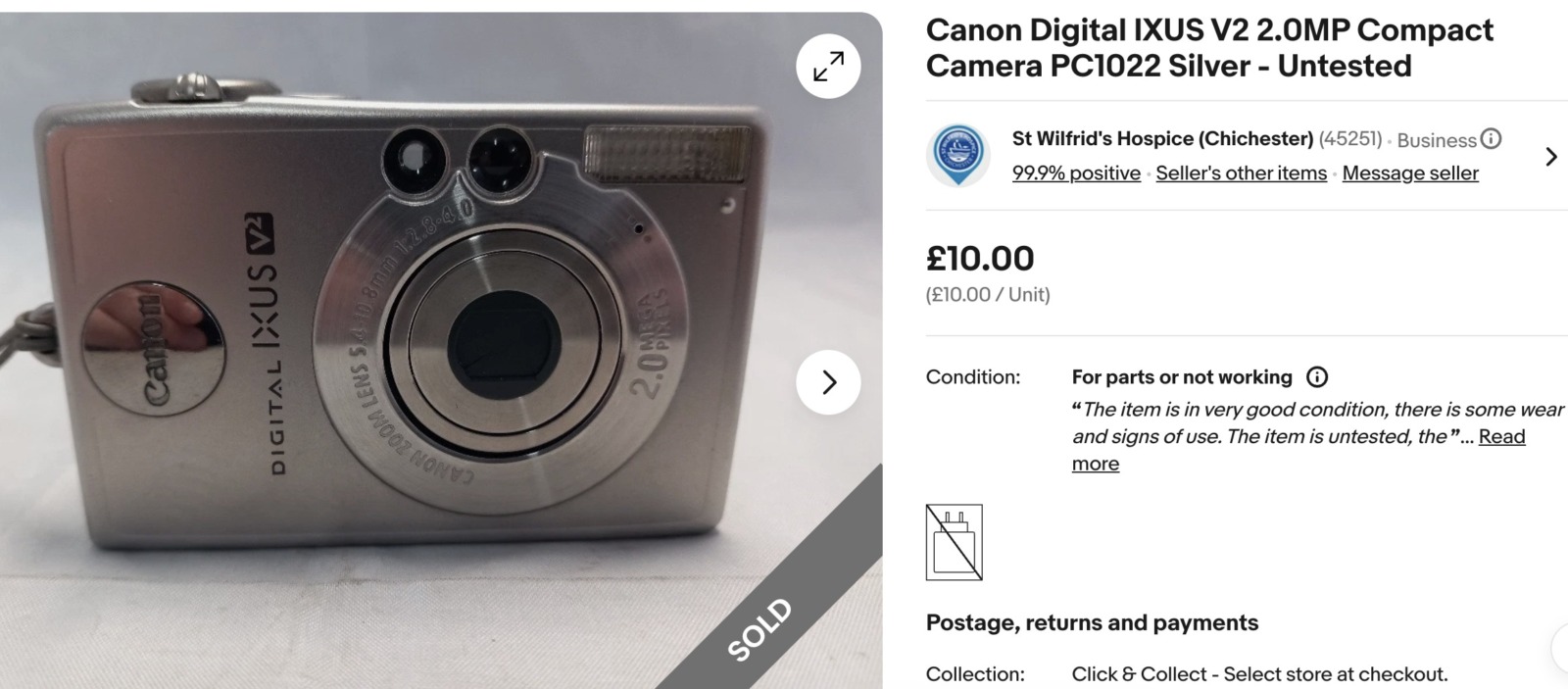
This one came with a 64mb memory card and more on that later. Suffice to say, memory cards are a huge privacy risk if you sell them online, even if you format them it is trivially easy to recover long since deleted images and videos. This particular Ixus and its memory card has been on some really rather impressive holidays.
Designing a legend
The first IXUS APS compact camera came to market in 1996 and totally redefined what a compact should be. There had been extremely small cameras before and there had been luxury metallic designs as well but absolutely nothing had ever combined such well thought out ergonomics with genuinely decent optics in such a tiny case which took full advantage of all that APS had to offer and knocked it out for a very affordable price. There had been attempts at “credit card” sized cameras before, but this was the real deal, at least in two dimensions. If you’d wanted something equally good looking and well built, your alternatives were to spend over £1000 for a titanium Nikon 35Ti or similar. The Ixus launched for just a shade over £200.

Was it perfect? No. The viewfinder was microscopically small and the zoom range limited, but after many incremental iterations and the eventual launch of the Ixus 2 in 1999 the design was refined, intuitive and as you can see from the image above, laid out the design language of the Ixus range for years to come with features such as the integrated zoom rocker / shutter button and large circular lens surround on the front of the body.
A perfected film camera design, however, does not necessarily transfer well to the digital world. There is more to it than just whacking a screen on the back and calling it done. A great deal of attention has to be given to user interface design and is something I feel Nikon always got wrong with their “physical buttons for everything” philosophy which worked well with film SLR’s but not so much their digital equivalents.
With digital, there are suddenly lots of options and settings which need to be thoughtfully integrated and if you’re not starting from scratch it would surely have been tempting to just smash a screen and a load of buttons on and be done with it, but there’s a subtle balancing act to be played here between physical hardware and software based menus. These were pioneering times and you can’t expect design teams to hit perfection first try and the Digital Ixus certainly is a case of “nice try, but room for improvement.”
Some things were spot on first time – although still small, the viewfinder compared to the film Ixus could now be considered large and was very usable. It had to be, because these cameras were battery eating machines best operated with the screen off as much as you could put up with. Yes, it negates the point of digital in some respects, but processor technology in 1999 was never designed with power saving in mind. If you had a laptop in 1999 you’d remember it was like lugging a paving slab around and had a battery the size of a loaf of bread which gave you roughly 30 minutes before needing to find a power outlet.
Spare batteries in the early 2000’s were a must and I vividly remember always turning the display off and reverting to the viewfinder when using my own Ixus 500 way back in 2004 to avoid the dreaded battery dead symbol appearing when I least wanted it to, but these compromises were the accepted norm back then.
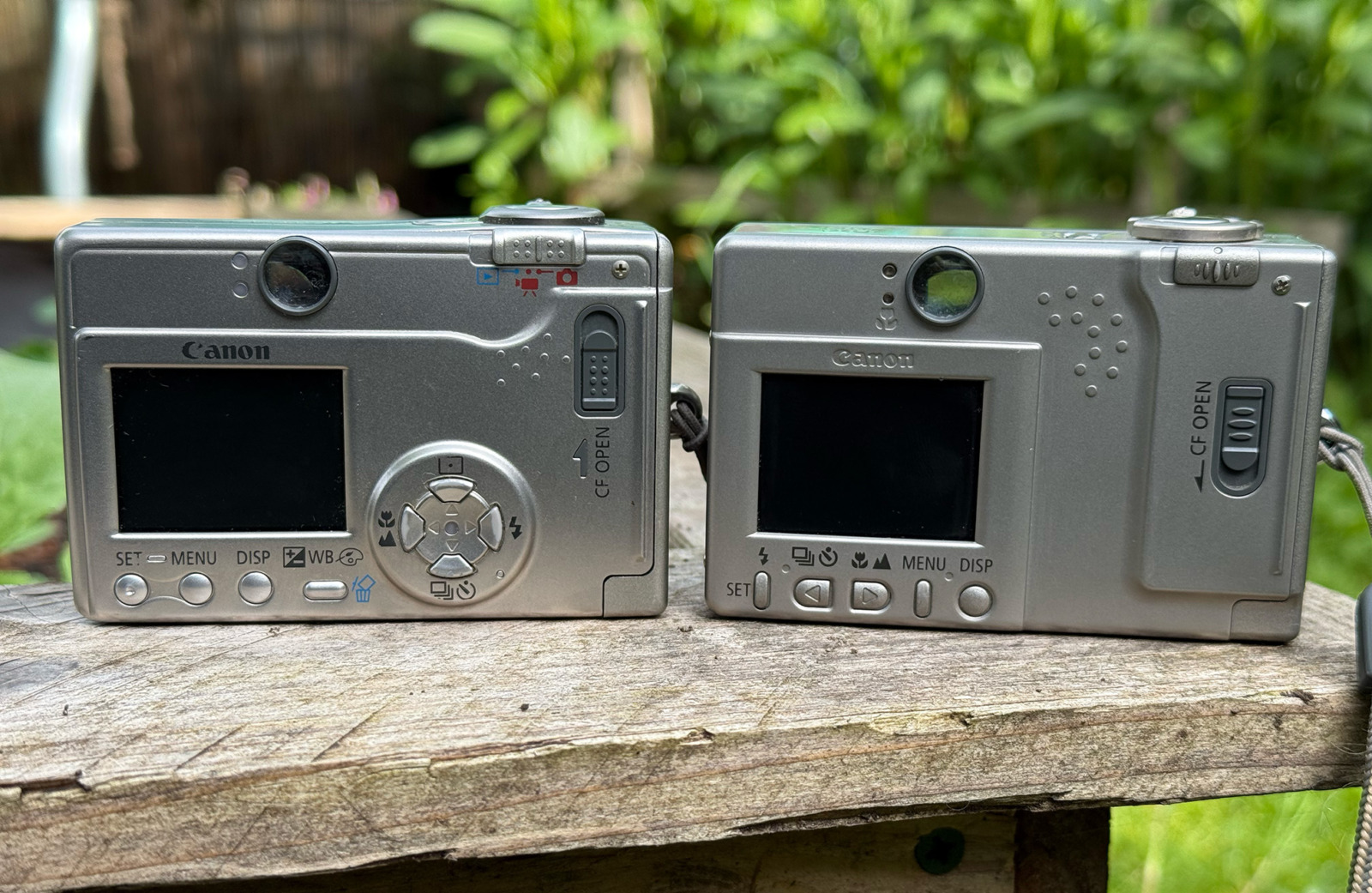
The first two megapixel Digital Ixus launched in May 2000 at a time of, as DPReview put it “three megapixel monsters.” Keeping the size physically small can be one of the only reasons Canon chose to limit the resolution of their new camera. We all know that packing in more pixels doesn’t automatically equal better image quality. They must’ve been happy with the sensor because they carried on using the exact same one over four more models and two years until finally releasing a three megapixel version at the end of 2002. As far as I’m aware, these early cameras all used sensors supplied by Sony (the Ixus 400 and 500 certainly did) and perhaps this had some influence on the lack of higher megapixel offerings.
Canon’s own Camera Museum is quite unreliable for information on these early models and the specifications are incorrect for several cameras. The first four to be released have the most confusing naming scheme ever. In chronological order they are S100, S300, S110, S330 and S200 or V2. There are extremely minor differences between these cameras – the 3xx series have a 3x optical zoom, the S1xx and 2xx have 2x optical zoom. Other than that, the biggest difference was the introduction of an automatic orientation sensor and movie mode.
According to the Canon Camera Museum, there have been a total of 73 models of the Ixus/Elph/Ixy since the year 2000 and they enjoyed a 17 year production run of this product line. That’s pretty much a new camera every 3 months for 17 years.
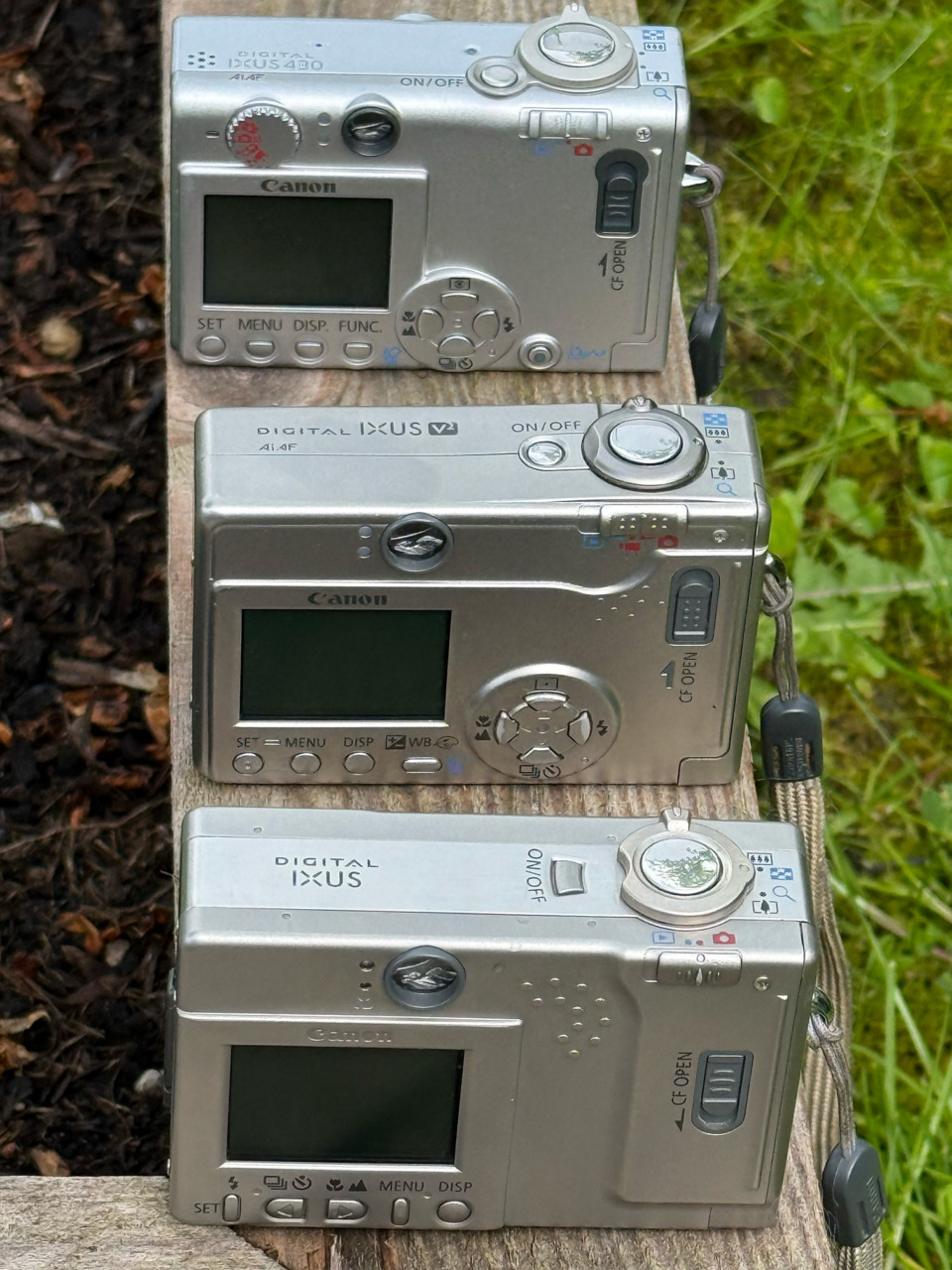
In my opinion, the design was complete by 2003 and the introduction of the four megapixel Ixus 400. The first ixus lacked the useful four way control buttons, the second lacked the all important shooting mode wheel, combined together in the 400 and with some small user interface tweaks, Canon had made a powerful but trivially easy to use camera with just about all the features you’d want in a carry everywhere, do it all compact.
After the Ixus 500, Canon concentrated on the inevitable arms race of higher megapixels and larger screens and honestly, I think they ruined it. Useful features like stitch assist were dropped for no obvious reason and when you think one of the primary uses of this camera would’ve been holiday shots and landscapes, the stitch assist feature really was essential. Furthermore, the larger screens whilst nice to have meant that certain controls either had to go or be moved. Smaller isn’t always better and the chunky, reassuringly weighty and solid Ixus body started to give way to ever smaller and lighter designs. Technically – amazing. Practically…? I’m not so sure. The Ixus 95 I used in the last post on these cameras is nowhere near as nice to hold as any of the early models here.
What’s it like today, then?
The original Ixus has all the quirks you’d expect of a first release and it is easy to pick up on negatives when you’re used to newer models and later improvements. It is noticeably slow to start up, the screen refresh rate is so low it looks like a slide show and the menu interface definitely needed work. In common with the Powershot S10, Canon overlaid their menus on the live preview. This is an odd choice considering the obvious implication for battery consumption and the fact it is harder to see than the alternative of having a plain background. They quickly changed this in later models.
The V2 is an improvement in nearly every area with the exception of how easy it is to switch between shooting modes. The lack of that little mode dial wheel introduced in later models is so telling, as is the lack of the “func” button which allowed access to the settings relevant to a mode such as being able to set ISO in manual mode.
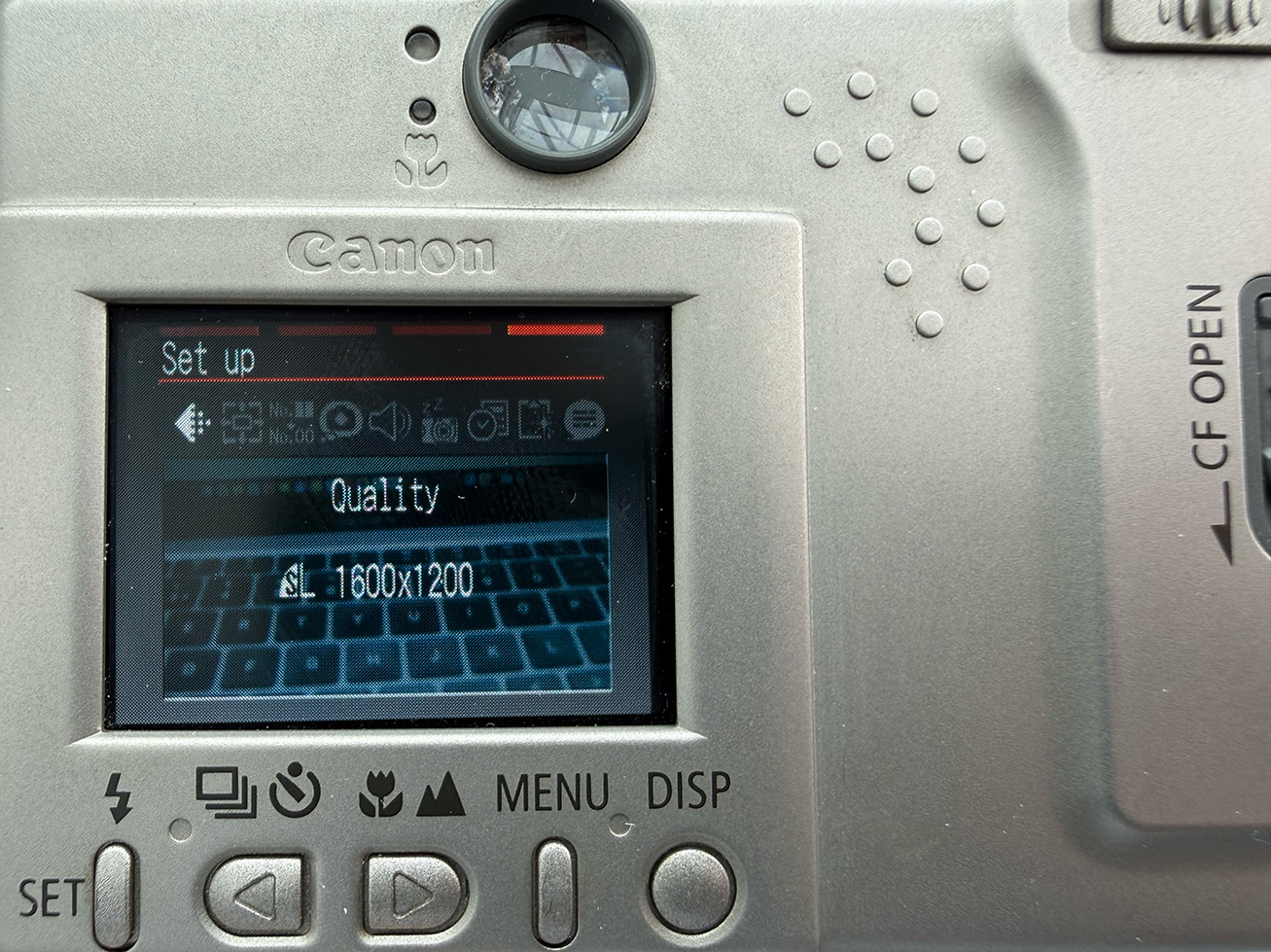
None of these things are show stoppers, though and thankfully once you’ve set the options to your own preferences the camera remembers them and puts you back exactly where you were after each power cycle…. or at least it does on the first Ixus, but by the V2 this only works in manual mode which is deeply frustrating. If you’re using auto mode, which is the default, after each power off you’ll be turning the ever so trigger happy flash off every time. Well, you will when you fire a shot and unexpectedly blind someone before turning it off and trying again.
You may think I’m mad for mentioning such an obvious thing, but this was not the default for digital cameras in the early 2000’s and many models would frustratingly return to a default state every single time you turned them off and turn them off you would unless you had shares in battery companies. Canon had this so right with the first one, why they changed it is anyone’s guess.
Talking of remembering settings, the super capacitor has almost certainly died in my V2 and as such it’ll repeatedly ask me to enter the date each time it is turned on. For those of you who like a date stamp on their photos, you’ve got four years before your Ixus refuses to recognise the future any more – 2030 is the highest you’re allowed to set before it cycles back round to 2002 again. From a computing point of view, it’ll be because they set the date to be a certain number of ticks/seconds since a starting point and that number will overflow in 2030.

I think one of the biggest compliments you can pay to any device is when you don’t really have a lot to say about it, anything which just gets out of your way and lets you get on has got to be a good thing. Learning the menus takes a small amount of time, but after that using either of these two cameras is as pleasant as any other with the usual caveats that hindsight and 24 more years of development have certainly made their impact.
Compared to a modern camera, the V2 especially doesn’t feel particularly slow. Focus takes a moment but is perfectly acceptable and the screen is appalling if we’re being brutally honest. These early TFT screens suffered badly from fall off at any angle other than dead straight on and these particular screens just cannot handle dynamic range in an image. Anything bright is just pure white and anything shadowy is mud or pure black. It’s really hard to tell if something needs any exposure compensation because the screen doesn’t help.
The image below is a perfect example and was taken in a dark and dingy pub in Birmingham, lighting was poor but even. The Marlboro sign completely confused the screen and showed as a huge white blob like a star shining over the rest of the image.

The final image came out just fine, if not a little over exposed where the sign is but it’s had a reasonable go at balancing what dynamic range it has with trying to get reasonable exposure in the shadows. Because I couldn’t see anything on the screen and didn’t want to hold the camera up to my face in an empty pub with a barman watching me whilst I waited for someone, the composition is totally whack, but there you go.
Looking at the EXIF information for the last image was quite interesting. It tells us that in Auto mode the Ixus is programmed to do what the hell it likes in terms of ISO and can set itself to almost any arbitrary value it feels like to achieve the exposure it is aiming for. The algorithm is heavily biased towards low ISO and noise reduction though, because to choose 1/8th of a second as a shutter speed whilst only raising the ISO to 111 (of all numbers) rather than, I don’t know, 200 or even 400 to reduce camera shake seems crazy.
In fact, the Ixus is so reticent to even raise the ISO that it steadfastly just displays a camera shake warning and opts for lower shutter speeds in every situation where the light doesn’t satisfy shooting at ISO 100 or thereabouts.
Security, privacy and your old tech – a public safety announcement.
More importantly is that this image reveals the original owner of the camera was called Mike (his full name is in there). Whilst not the end of the world that your name is left in a camera, combined with the images on the memory card you can start to build a pretty interesting picture (no pun intended) of the previous owner that I’m sure they’d rather remained private.
The memory card in this camera had some images left on it – a random picture of the inside of someones wardrobe and some holiday snaps from a Christmas trip abroad. I really wouldn’t feel comfortable selling a camera with a memory card that still had images on it, it doesn’t seem a sensible thing to do at all. However, unlike a found roll of film which contains only the images recorded on it, memory cards are far worse as they are a potential mine of information due to the fact that delete does not mean delete on a computer…
I ran the Linux command line tool “Photorec” on the memory card and, bear in mind this is a 64mb card, it pulled back over 800 deleted images and some videos which were completely intact. Consequently, I know this camera went to Greece, Japan and other destinations. Fortunately there’s nothing here that would cause me to wish my eyes could un-see things, but the potential problems are obvious.

Ethically, should you be running data recovery tools on memory cards that people are innocently selling or have been passed to charity shops? No, not really, but people are not ethical and the argument of right over wrong has never stopped anyone determined to pry into your life, so the onus is on you as the seller to make sure your data is secure. My advice to you and anyone else selling anything electronic which contains a memory card, hard drive or solid state drive is either remove it or run a proper, multi pass, secure erase on that drive before you sell it.
Where does the Ixus fit in today?

Getting back to photography, we find ourselves asking the obvious question.
What’s the point in a camera like this today?
The answer, as ever, is nuanced.
From a purely technical point of view, these cameras are not great just from a battery life perspective. That little flashing red battery icon is a real joy sponge and it pops up more often than we would believe in this modern time of all day battery life for laptops, phones and yes, cameras.
Then there’s the whole “look and feel” argument. A camera this early in the digital timeline definitely has characteristics that influence the look and feel of the images. Low resolution is one thing, but even at two megapixels, I’ve still had to downsize the images to make them comfortably fit on this page – even on desktop computers, so resolution isn’t the be all and end all.
Early digital sensors suffered from far more noise and a total lack of dynamic range compared to modern cameras or their film counterparts that they replaced. Most people like noise and definitely those who graduated from APS point and shoots to a digital such as the Ixus wouldn’t have been overly put out by some “digital grain” in their images. At ISO 100, it’s not an issue.
Having said that, I argued last time that many digital point and shoots are arguably the same if not better than your average camera phone these days. In other words, the aesthetic that many people from the social media trend brigade are looking for technically don’t exist or the effect, despite some saying they’re looking for imperfections, is actually the result of higher quality optics.

In the case of such early digital cameras as the first Ixus, you do indeed get the imperfect looks, the lack of resolution, purple fringing, chromatic aberrations and softness at the edges. The Ixus V1 and V2 definitely display all of these characteristics and yet these are not the cameras that are selling for insane amounts of money. I’m more confused now than I was a few weeks back because it would seem that these are the cameras that tick the trendy boxes yet are not the ones people want.
That leaves us with a perfectly functional yet apparently unloved camera, with questionable battery life and the convenience of mass storage of images on a memory card as the main headlines. When the Ixus came out, that last one was the deal maker for many. No more trips to the local lab to have your prints developed, no waiting and practically no limit on the amount of pictures you could take. That was pure magic and you took the hit to the image quality as an acceptable tradeoff. Does the same apply today?
Not really. There are many reasons people will give for preferring old cameras over new and not all apply to everyone. Most commonly, we go backwards to:
- Slow down or be more present in the image making process – a focus on the method rather than final image.
- To engage in a process which gives less than the perfect images produced by modern digital cameras
- To use film and all the reasons people enjoy the format
- To use cameras that used to cost a fortune and were once unobtainable
- To simply try new things or satisfy an urge to collect gear
- To achieve more atmospheric images through noise, quirky optics or lower specifications

I have argued for a long time that the joy in old digital cameras is the ability to take incredible pictures for next to nothing as old tech doesn’t mean useless tech. This is true of every DSLR I have ever used from the very first D30 and D60 or the 10D upwards. These are all cameras that cost £30 or less and produce absolutely beautiful digital files and not only that they are all RAW and so can be edited to your hearts content.
If these DSLR’s produced terrible pictures, I’d be hard pushed to argue that anyone should bother with them, but considering they do, it’s a real bonus that they make SLR photography accessible to everyone regardless of their budget and that is exactly how photography should be – open and accessible. You do not need anywhere near the latest equipment unless you are a full time paid professional and even then, I know professionals who do not go out and buy the latest kit despite their jobs depending on it.
However, digital compact cameras don’t offer this benefit. They do not create incredible images, they give you adequate to good JPG files that cannot be edited in the same way as a RAW from an SLR. You are stuck with the same lens, the battery life is poor, the viewfinders microscopic and they don’t fill the niche they once did – this has been filled by your phone. Consequently you must weigh up whether the downsides are outweighed by the perceived benefit of using an old digital compact and unless you are doing a specific project or you have abandoned smartphones entirely (if so I admire you) then I can’t think of a compelling case.
As a novelty, using the early Ixus models is fun. They’re nippy snapshot cameras and it’s nice to relive the way we used to do things before phones took over. It’s equally nice to be using a well made, dedicated device that was made for the job rather than a shiny glass slab that is awkward to hold. Beyond that, though, I run out of reasons to keep coming back to it.
Conclusions and learning

So is the early Ixus pointless?
No. Of course not. The Ixus almost single handedly showed what a compact digital camera could and should be. Canon embarked on a relentless 17 year long campaign of iterative design changes and regular releases to flood the market with miniature, well specified point and shoot cameras that were the stuff of holiday makers dreams. They didn’t try to fill it with pointless features and stuck to a mainly winning formula of a decent zoom lens, plenty of megapixels and a video mode. If you wanted more, you bought a Powershot G or S series.
It is some kind of testament to this product range that it lasted so long. Camera phones had been around at least ten years by the time Canon gave up and stopped making new models. There is now a growing trend of rejecting the “smartphone for everything” philosophy and I for one am here for it. Smartphones are a compromise for nearly everything – reading, writing or any form of content creation doesn’t work better on a phone than it does on a dedicated laptop or desktop. The same is true for photography. From the perspective of convenience and acceptable quality, the phone wins every time, but for actual photography, it’s awful.
What do I mean by “actual photography?” I find that these days I never purposefully take a picture with my phone. It’s nearly always a record of something, steps for how something was disassembled for example, or a list of things I need to remember. The irony is, then, that by carrying around a convenient picture taking tool in my pocket, I actually engage in purposeful, thoughtful photography far less than if I were to carry a dedicated camera around all the time.

So the conclusion is simple – I should carry a camera around with me and… that’s exactly what I’ve started doing. I’ve got some form of compact in the car, in coat pockets, you name it. I can select focus points, play with exposure compensation which an iPhone simply doesn’t seem to grasp the concept of and fiddle with settings to my hearts content.
But none of these cameras will be an Ixus V1 or V2 long term and that’s because of the obvious. They are absolute buggers for draining the battery when not in use. I don’t like being rushed when I take a picture (unless its a snapshot) and the fact I live in constant battery drain fear mode when the screen is on just takes the joy away and then there’s the image quality. It’s fine. It’s ok. But what is the point in that when you don’t have to compromise any more?
And I think this is the real conclusion of this whole “what’s going on with digital compacts” debate at the moment. You used to be able to get incredible point and shoot digital cameras for £10-20 easily. Carrying one of these round makes sense, it fits the narrative of rejecting your phone and engaging in your photography more. Quality is amazing, battery life perfectly acceptable, they have big clear screens and yes, crap viewfinders if there is one at all.
Now those sweet spot old cameras are stupid money. They aren’t viable nor sensible and that leaves you with the cameras that no one wants or are so old as to be awkward in some way or another. I’m not about to start carrying a Casio QV10 around with me because I’ll have to build an old PC every time I want to get the images off it. So, for so many, the idea of dropping the attachment to your phone and carrying around a nice, slim digital camera has just become unobtainable, it’s a movement that has thoroughly shot itself in the foot because of market dynamics. Or greed. It’s definitely greed.

What’s the answer? Honestly? I think buy a film compact is probably one solution or, perhaps, we should just accept that in the digital world the argument for these old cameras is purely one of nostalgia and rose tinted glasses. We loved them because they were incredible innovations, they changed our lives… but today? Today they don’t work in the same way, they don’t solve the same problems that existed 25 years ago.
A film camera still does, it still has those all important draws – presence, lack of instant gratification and a complete lack of reliance on technology. Many film compacts, SLR’s and rangefinders do not need a battery to function and that is true freedom right there.
I love the Ixus range and I admire the impact it had on both photography and design. For a quick blast of nostalgia, it’s worth £10 to have a play, but beyond that it will become an ornament with expensive replacement batteries. Unless you’re a total moron “influencer” then these are not the cameras for you. If you are, then there’s content aplenty for not much money – fill your boots.
And your pockets.
With batteries.