


When 35mm film ruled the world the average photographer shot negative film, dropped their film off at the local lab and picked up a nice pack of prints the next day, probably with a free film in their hands too. Negative film was convenient, cheap and forgiving of mistakes, especially accidental over exposure.
However, the process of printing negatives comes with the downside of tiny, cumulative losses as prints are literally second hand images, made from exposing a negative through a lens and effectively making another photograph appear in positive form on paper. Whilst a trivialisation of the whole darkroom process, it illustrates just one of the many reasons why slide or transparency film was seen as the gold standard.
Slide films were usually low ISO – 25, 50 or 100 at most, with almost imperceptible grain. When viewed through a projector, they gave beautiful, rich colours and who didn’t enjoy seeing their images blown up to absurd sizes that could never be achieved on paper? Furthermore, if you wanted your work printing in a magazine or book then for many years you had absolutely no choice but to shoot slide film and submit your transparencies for publication – nothing less was acceptable.
What slide film gave with its inimitable look, it took away with a brutal lack of forgiveness if you so much as hinted at an incorrect exposure. Being anything like a stop out in a scene would result in colourless skies or crushed shadows, but get it right and you were handsomely rewarded. Due to this, reviewers often based their judgements about new cameras and their metering systems on how well they performed using slide film.
Given all this and the ever strong resurgence of analogue photography, you’d think slide film would be enjoying a second dawn but… apparently not. Why is that? Let’s see if a rank amateur like me can find out…
In the beginning, there was Kodachrome
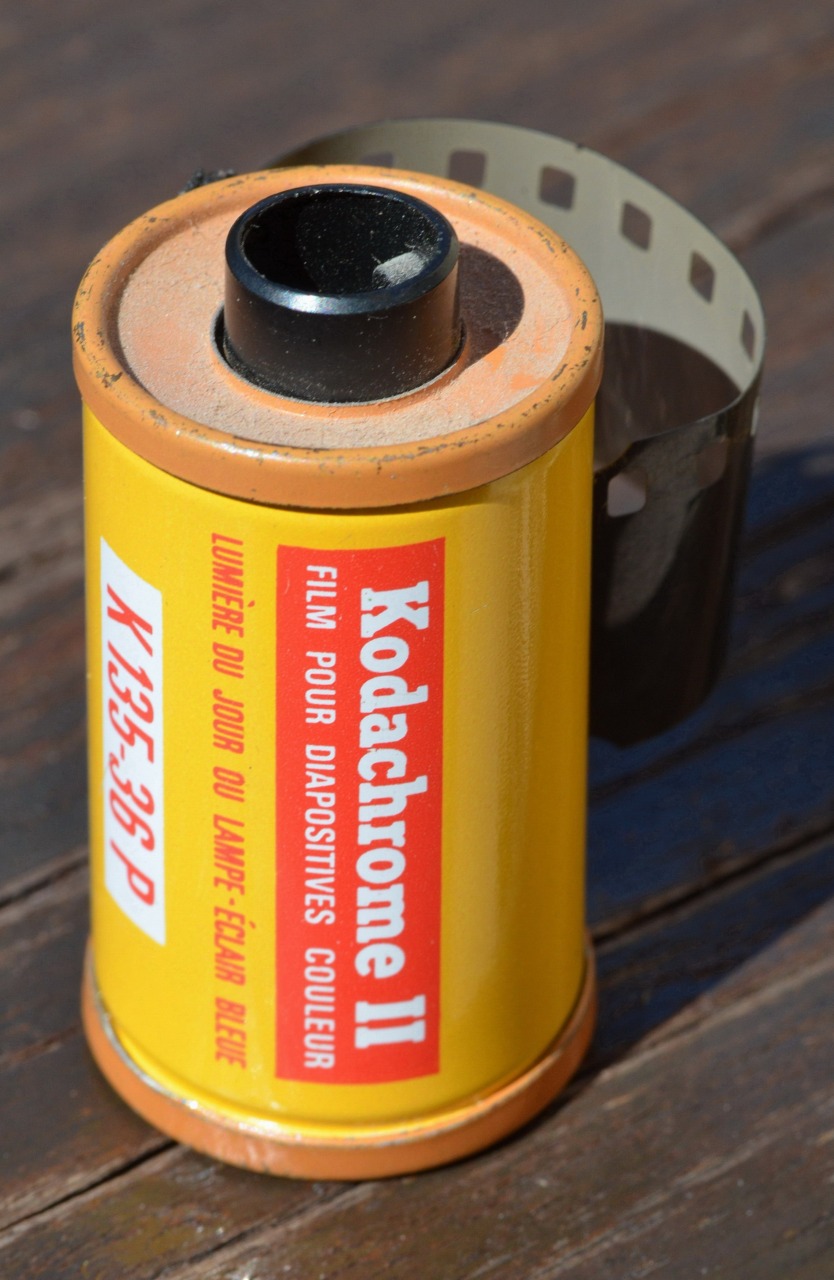
Transparency or “reversal” film is, to put it mildly, complex. The undisputed God of slides was Kodak Kodachrome which started life as a film for shooting movies and was later released for stills. Before Kodachrome, transparencies were known as Autochrome images, made using an additive colour process. If I’ve understood things correctly, this meant that light shone through three separate colour layers (effectively the same image but in different colours) and this “adds up” to the final image you see on a projector screen. These additive layers were made from potato starch and are extremely susceptible to degradation over time and it is recommended that any surviving slides are never projected as the light itself will damage the image.
Autochromes had a disadvantage in that they tended to require high powered projectors to clearly view images, which consequently produced a lot of heat. The colour layers effectively filtered out all but the wavelengths of light for the colour they represented – basically blocking lots of light from getting through. Kodak solved this problem by using a subtractive approach where the colour dyes absorb certain wavelengths of light but allowing the remaining to travel through.
This doesn’t mean that Kodachrome was any simpler to use or manufacture. The process to develop Kodachrome was so complex that Kodak used to insist that only they could carry it out and refused to license the process to independent labs. This later fell foul of antitrust laws and Kodak were forced to open up their process to independent laboratories but the initial restrictions didn’t stop the film being one of the most successful ever, selling for nearly 75 years and garnering a reputation for being the slide film.
Kodachrome was arguably one of the most important films ever invented and so embedded in popular culture that Paul Simon even wrote a song about it. Kodachrome was used by film makers and photographers to record some of the most famous events and images ever captured. Perhaps none more striking than “Afghan Girl” (Sharbat Gula) taken by Steve McCurry, a portrait so perfect I’m not sure it will ever be bettered. You could go further and suggest that one of the reasons this image is so good is because of the beautiful colour rendition of Kodachrome and the sheer detail it allowed McCurry to capture, especially in the eyes.
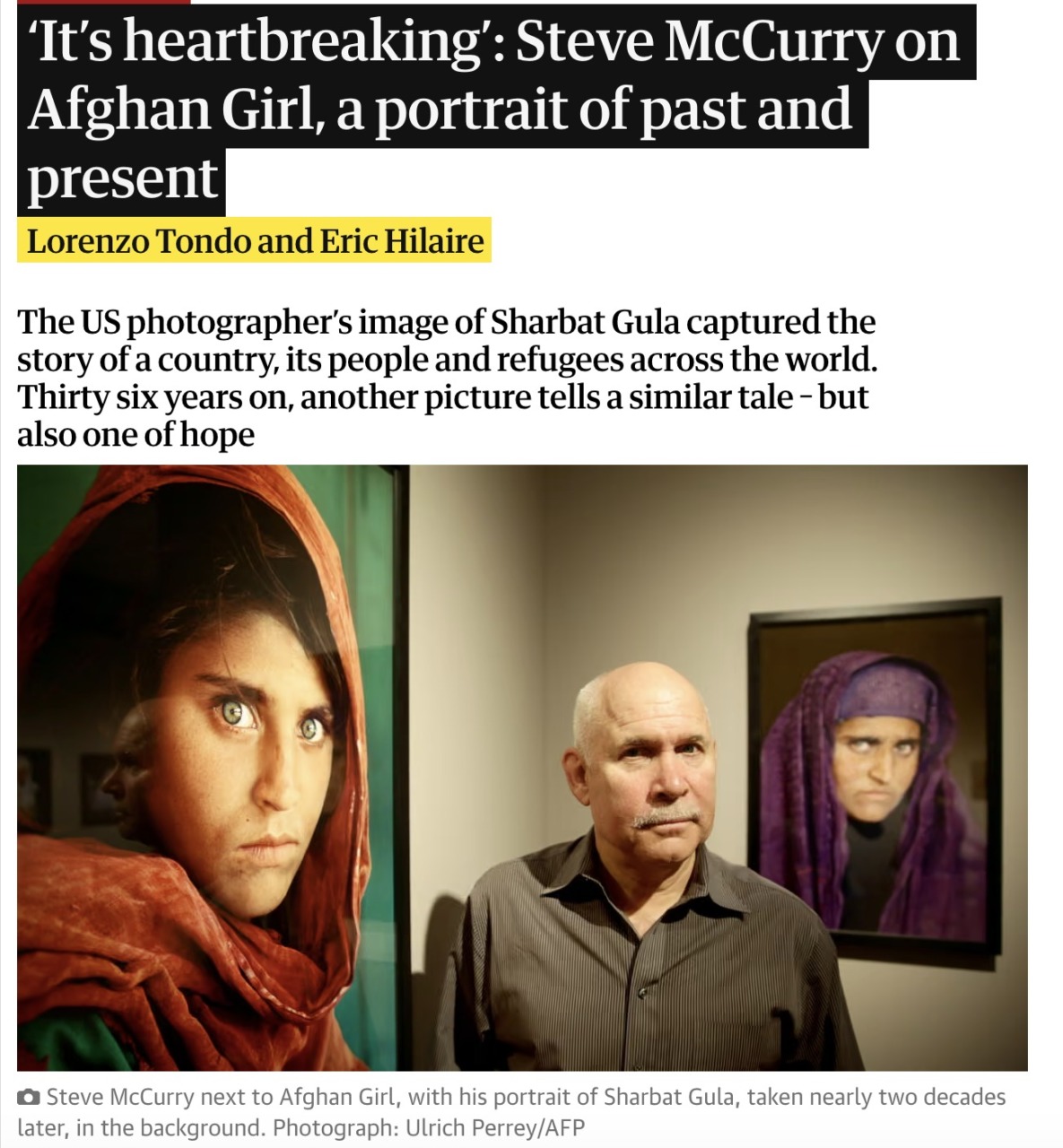
The image, taken for National Geographic, rapidly became a worldwide symbol of the troubles in Afghanistan. Whilst you and I might look at it and think it tells a story and does some positive work, I’m not sure that’s how Sharbat herself sees it. There are conflicting accounts from interviews with her, as in 2017 she is quoted by the BBC as saying:
“I became very surprised [because] I didn’t like media and taking photos from childhood. At first, I was concerned about the publicity of my photo but when I found out that I have been the cause of support/help for many people/refugees, then I became happy.”
Which sounds positive enough, but then later in 2022 after she moved to Italy to escape the Taliban she says:
“That photo created a lot of problems for me,” she says, “I would have preferred it had never been taken. I remember that day well, that photographer who arrived at the Nasir Bagh camp school. I was a child. I didn’t like photos. In Afghan culture women do not appear in photos. But there wasn’t much choice”.
Which apparently explains the look in her eyes, the famous piercing stare. Gula goes on to explain that she freezes when she sees a camera. Behind every iconic image, there truly is a story.
The rise of E6
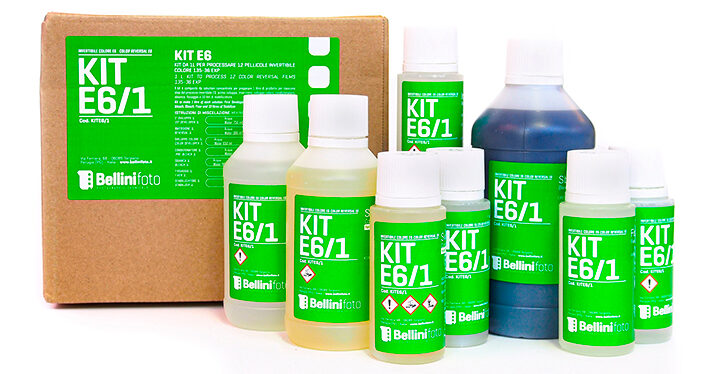
No one doubts the importance of Kodachrome in the world of slides, however the development process was insanely complex. To explain why, I’ll attempt to simplify something I don’t truly understand myself.
Normal colour films contain three dyes in the layers of emulsion that, when developed, effectively stain the silver halides to create the colour negatives. In Kodachrome, there were no colour dyes and these were added in during development. The film was developed as black and white in the first stage, but then required up to 8 different developing tanks, all containing various different types of chemistry to add the colour in. This process was not only convoluted, but apparently used some pretty vicious and nasty chemicals requiring expert knowledge to ensure the film came out as it should.
The de facto colour standard is C-41, which describes the methods, chemicals and temperatures for developing colour negative film. Other than requiring a stable temperature environment, C-41 development is relatively straight forward, requires roughly 4-5 different stages and can be completed by machine in about 20 minutes or so. A similar process would obviously have been hugely beneficial for slide films and so along came E-6.
Popular E-6 Slide films were made by Kodak, Fuji and Agfa. These are similar in concept to negative film in that they contain three layers which are sensitive to blue, green and red with another layer which filters out yellow. This, in turn, means that the film can be developed in a similar way to C-41 film and avoids the need for an outrageously complex development process and so became the default recipe for all slide films until digital photography took over.
I’d love to say that the E-6 process is so named because it uses 6 baths for developing, which it does, but I don’t think this is true… Whilst you can develop C-41 at home, E-6 is also possible but even more sensitive to fluctuations in timing and developer temperature. If I were shooting slide film today, at the prices you pay for a single film, I wouldn’t even entertain the idea of developing without a machine.
Once upon a time, E-6 development was almost as ubiquitous as C-41 but more expensive for two reasons – the slightly more involved process and, of course, the cost of mounts. It used to be popular to sell film at a higher price which included the cost of development and processing so at least you knew at the point of purchase what your total outlay would be. As of today, there are no longer any companies which manufacture slide mounts, but I see no reason why it wouldn’t be possible to mass produce cardboard slide mounts especially – they are literally two pieces of card glued together, but this does mean that if you develop E-6 film today, you’re not getting a nice box of mounted transparencies back from the lab.
Problems lurking in cupboards
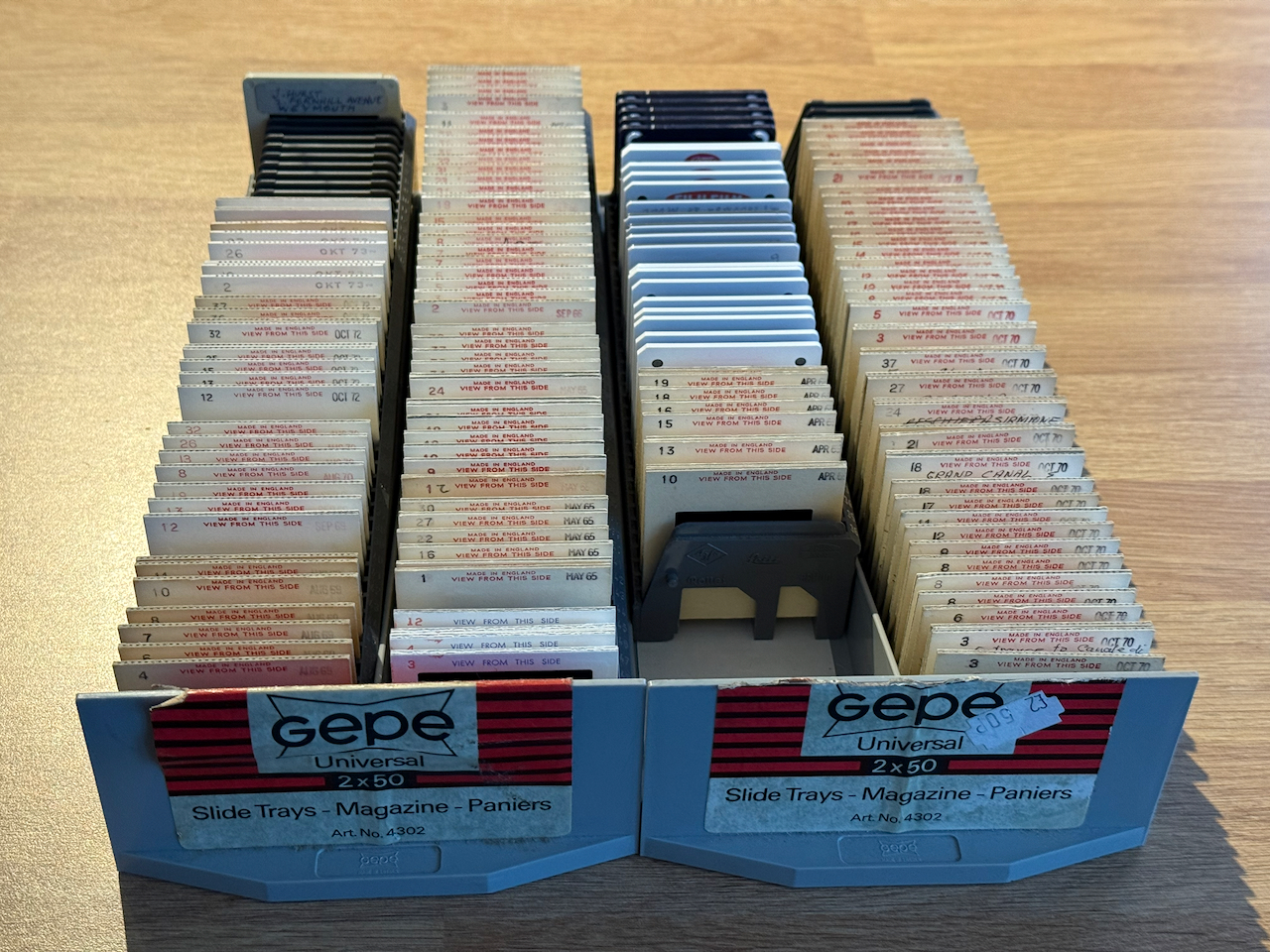
One thing that I think many of us would understandably overlook is the effect that time has on our images. It is normal to presume that photographs whether digitally produced or film based are in some way permanent but this isn’t true for either format.
Digitally, we are one drive failure away from losing our images. In the film world we have multiple enemies at the door such as environmental factors, storage conditions and light. If you’ve got a photo on your wall which has been there for some time, you’ve probably noticed that the colours have faded – especially if that picture lives near a window or, worst case scenario, in a sunny conservatory.
Most of us accept the fact that the sun is bad for most things – even furniture will change colour over time if exposed to the sun for long enough. I’m sure many of us have seen the classic plastic garden chair which over time has turned into a faded, brittle accident waiting to happen. But what if you found out that keeping your images in the dark wasn’t even enough to protect them from the march of time?
The fact is, film negatives degrade over time almost regardless of the storage conditions and this is especially true for colour negatives. It’s classic stuff for those of us who’ve tried to archive the family photo albums and discovered that the 1960’s and 70’s seemed to have been a time when the world was a very sunny shade of orange. Black and white fares far better over time, but even they are not immune.
Slide film is no better. Back in 1990, Popular Photography along with Henry Wilhelm (who literally wrote the book on this topic) did some fairly extensive and interesting tests into how various film stocks degrade in light and dark conditions. The results were fascinating.
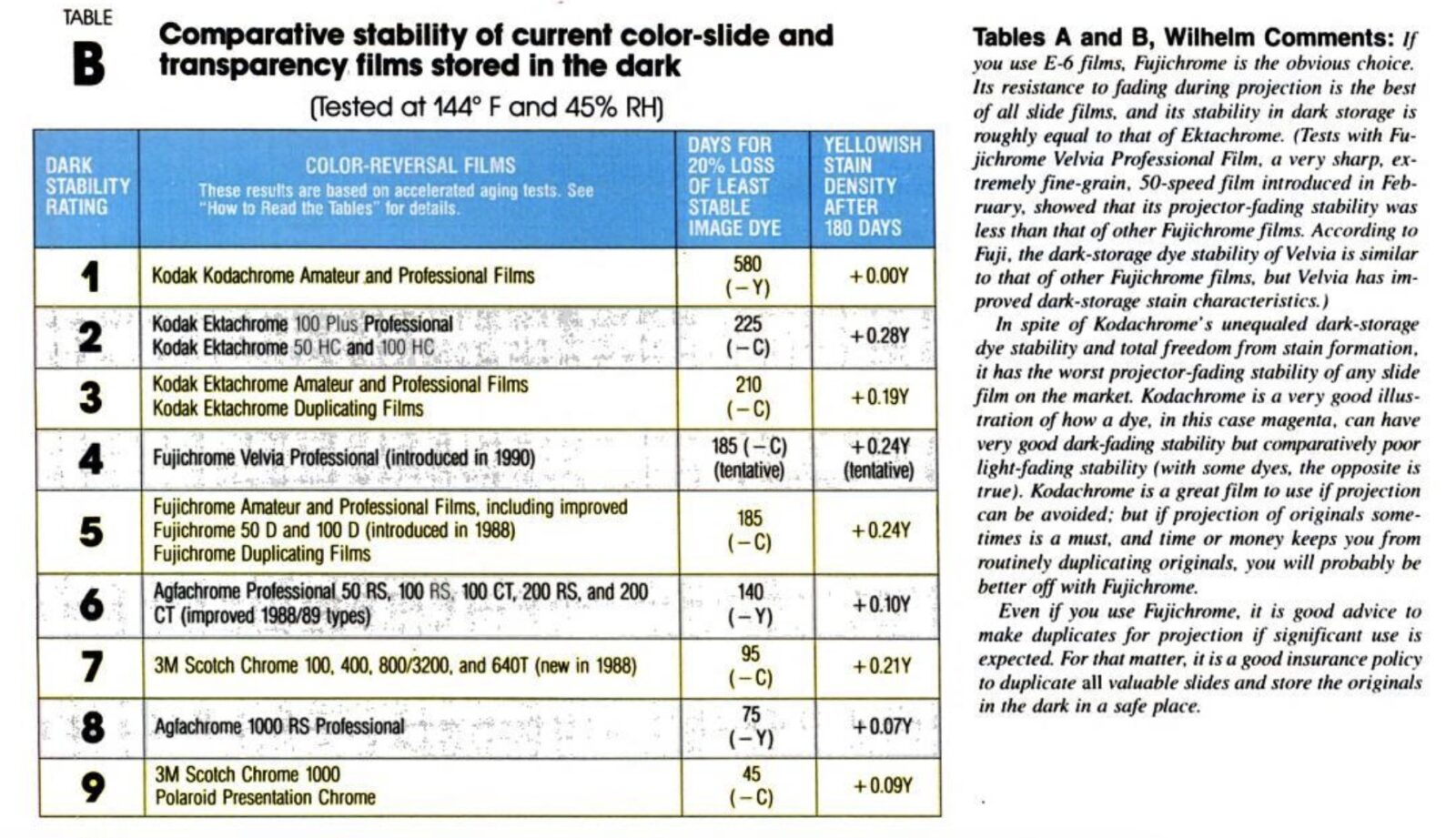
The conclusion here is that slide film is damaged by…. projection. Who would even consider the idea that using a film for its intended purpose would actually be the most damaging thing you could possibly do with it?
It gets worse too, as according to the testing and research carried out by Wilhelm, slides don’t even do well when stored in the dark. This probably explains the huge colour shifts I had to deal with when I recently went through a stack of slides from the mid 1960’s to early 1970’s. However, it has to be said, those slides were still in remarkably good condition, could definitely be rescued (with one notable exception) and the detail remained incredible even at over 50 years of age and probably questionable storage conditions.
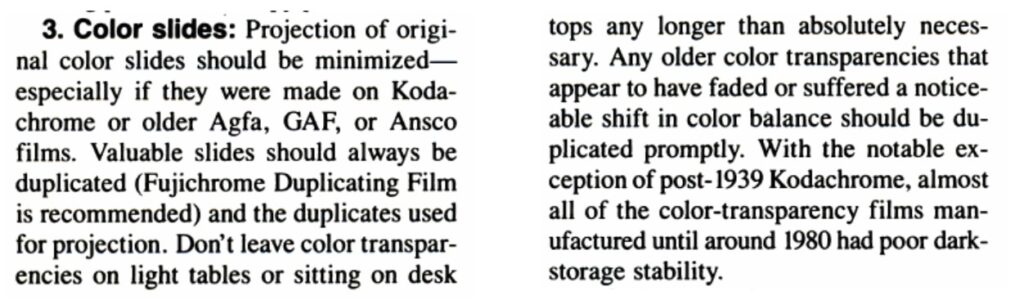
Some slides are more affected than others by ageing and, from the relatively small sample I’ve seen, even images on the same roll of film can degrade in different ways. Usually there has just been a small shift in colours which can be corrected by adjusting the white balance. Sometimes there are quite wild shifts, usually into the oranges and reds which will cause you more problems. Even so, it is usually possible to at least rescue the picture somewhat.


Don’t get me wrong, the edit above is by no means perfect, but it does illustrate just how much can be rescued from a badly degraded transparency with just a quick slide of the white balance and tint sliders. You would get far better and more natural results by using the colour mixer to target the specific colour casts individually – but this proves the point nonetheless.
If you want to know how best to preserve any type of photography material you should refer to this excellent guide from the University of Illinois.
Shooting slide film today
Slide film is effectively holding on by a thread these days. Back in 1990, you were spoiled for choice and could buy films all the way from ISO 25 up to even 400 – extremely high for slide film. A roll of Ektachrome was roughly £4.99 which adjusted for inflation is nearly £12 in 2026.
Today, Foma and Adox make one black and white reversal film each and these require their own special developers. As for colour your choice is Kodak Ektachrome or Fuji Velvia/Provia. Stock levels tend to be hit and miss, whilst prices are reassuringly insane. As of May 2026, a roll of Ektachrome is £30 or Velvia will set you back £25 a roll. You can also buy something called Flic Film Chrome which is Ektachrome which has been re-spooled and rebranded but at a mere £18 a roll. How can they do something like that? Don’t ask, it involves the complexities of how the Kodak brand and company were sold off and licensing deals. Don’t forget to also add postage and development costs into the equation and you’re looking at a second mortgage to be a dedicated slide shooter in 2026.
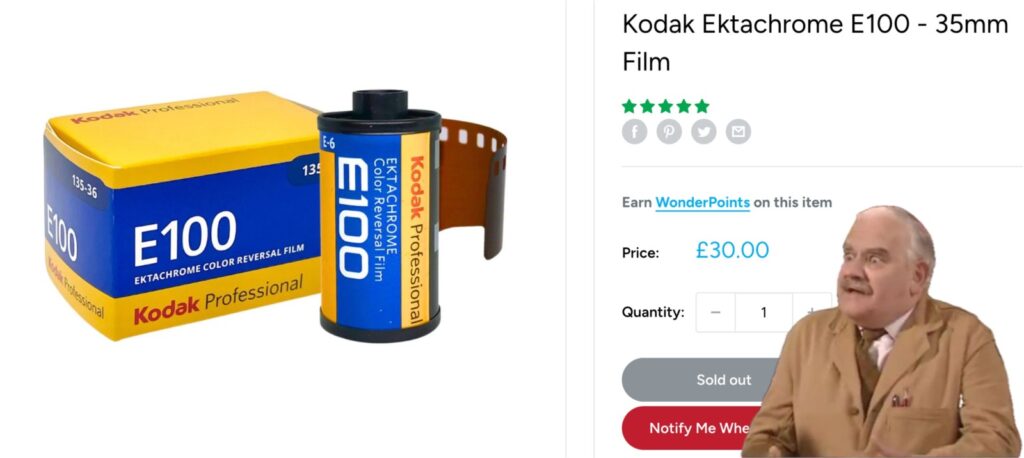
Development, mercifully, is quite reasonable at most places that offer an E-6 service online, however my local lab wanted £25 to develop the roll so sadly I declined to give a local business my money on this occasion and instead went to Analogue Wonderland who will develop your E-6 roll for £13. This isn’t bad at all in the scale of things when you consider they’re offering a specialist service and covering the cost of postage to (but not from, that’s an extra £3 back to you) their shop as well. I did find some places offering development in the £8-10 range but decided against these either because of reputation or postage charges being high.
The elephant in the room, though, is that at roughly £30-40 per roll there needs to be a compelling, sane and sensible justification for shooting slide film today. Is there a tangible difference or need for the modern film photographer to shoot slide film? This is extremely debatable and subjective.
In the 80’s and early 90’s, publications would demand transparencies as they were easier to reproduce and gave higher quality prints. However, by the mid to late 1990’s magazines were accepting negatives as well. Without any facts to go on, I would assume that this shift in attitudes was because the quality of film scanners had dramatically improved to the point where it was possible to scan and print extremely high quality images from normal 35mm negatives.
Today we are blessed with not just high resolution film scanners (if you can find and afford them) but also DSLR scanning options which can produce files so detailed you can clearly see the grain of the film. Therefore it is difficult to make the argument that shooting slide film today would be necessary purely on the basis of image quality.
So what are we left with? There are two factors I can think of and those are grain and “the look.”
Whenever I scan black and white film I can always make out the grain of the film. However, when going through a stack of slides recently, it was almost impossible to see. Furthermore, and this is not based on any kind of quantifiable facts or measurements, the resolution and detail captured in those slides seemed to far outweigh any negative I’d ever scanned with the same set up.
I’m willing to accept that these judgements have no basis in any kind of scientific analysis of images, but there is definitely a perception that slide film gives you a higher quality image than negatives. However, finding the science behind this is easier said than done. The usual outlets like Wikipedia simply make blanket statements – “it gives higher resolution” but then link the source of that statement to a site that gives no technical data nor evidence to back that claim up. If you dig deeper you’ll find people who insist that the data sheets of these films show they don’t actually have higher resolution and that it is simply because you are directly viewing the transparency rather than a second hand print which makes it look better.
Either way, judging the resolution (which is a digital idea applied to an analogue world) of film has always been an argument in itself and you’ll get different answers even today depending on where you look.
This leaves us with “the look” and is the most subjective thing on earth. Some people will swear by a certain film or even sensor type on a digital camera, declaring that it gives them an inimitable look, colour rendition or feel that they are particularly enamoured with. There is no doubt that every film stock has different characteristics that define how it reproduces colours, whether it is nice on skin tones like Portra or contrasty as all hell like Lucky 400 black and white film and the appearance of a film photograph is indeed never quite matched by any digital filter.
The “look” of slide film should be rich, vibrant, saturated colours out of the box. Perhaps also a smattering of vintage creeps in when people are looking at old slides which have colour shifted and faded over time.
Is it worth near enough £50 a roll all in with development for saturated colours, then…?
Hmm.
The results are in

The only way to test this was to buy a roll and not think about the cost. I picked up a roll of Flic Film Chrome 100 and waited for it to finally stop raining. When you’ve blown the budget on a single roll of film, and that film is all about colours, it probably isn’t wise to shoot it in the winter when the entire world is a miserable shade of grey or dark green. After one of the wettest winters on record, the wait to use it seemed endless.
Heeding the advice of old photography magazines and the need for the best light metering you can get your hands on, I decided to use the most modern and reliable SLR I own – the Canon EOS 33. This enabled me to use the very best quality optics in the form of Canon L series lenses to reduce any variables that could affect image quality. By combining the best equipment I have access to with what should be the best film, I hoped to produce the most accurately metered and detailed shots I could create on film.
Normally, with black and white film, I’d just walk around taking pictures of pretty much anything that takes my fancy as you don’t tend to worry too much at £5 a roll with cheap home development. At roughly £1 a shot, I did try to be a little more selective but this also fell by the wayside after it took over a month to finish a roll of 36 shots – such is one of the downsides of shooting film.
After posting the film off to Analogue Wonderland and asking them not to cut the negatives up for easier scanning, I sat back and waited for the results to arrive. Roughly two weeks passed and then…
There are no words
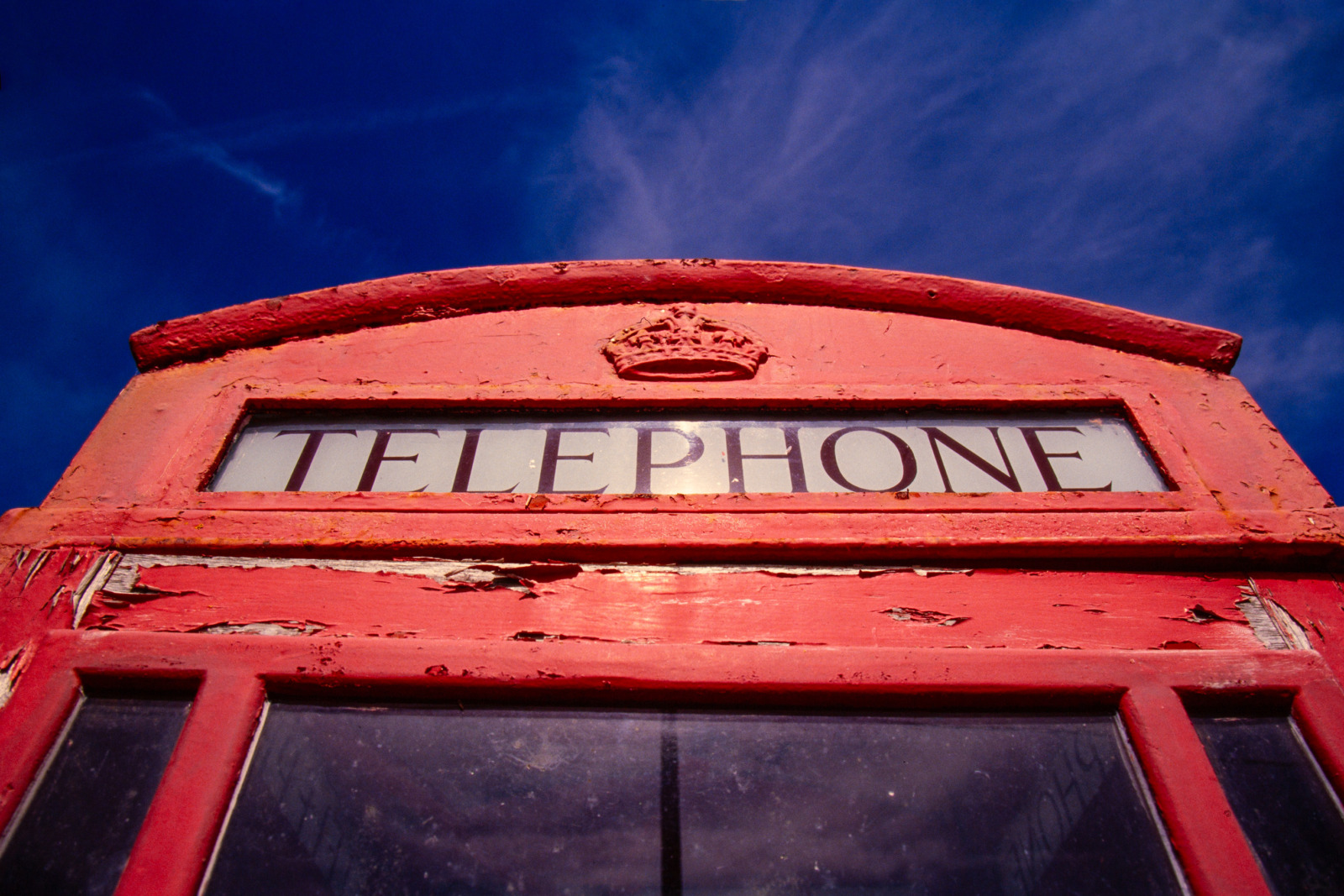
Allow me a short detour for some context. I have obviously seen slides before, but I am not old enough to have been shooting film when slides were the de-facto standard. I clearly know what old slides look like (and they’re pretty impressive) but I’ve never seen freshly developed E6 film before now.
So, back to the present. Is slide film really that much better than negative?
Yes.
Oh. My. God. Yes.
Slide film, quite frankly, is the most incredible experience I have ever had shooting film. Initially, held up to the light for a quick inspection things look ok and it’s nice to be able to see your images immediately. Then you place it on the light box and the whole world changes.
The colours, tone, richness are beyond words. If you’ve only ever shot 35mm colour film you will not believe your eyes. If you’re coming from digital, you will not believe your eyes. I’ve never taken an image on a digital camera which has the beautiful, warm look and feel of a single decent shot from this roll of film.
Normally, it grinds my gears when people talk about the “film look” or similar. Film does indeed have a certain “feel” to it that is difficult to put into words. It’s less clinical than digital, it feels more “authentic” or warmer than the perfect, calculated shots you get straight out of a digital file. But this? This is something else. I am honestly unable to describe quite what it is, but there is something about slide film that cannot and has not been replicated digitally and I don’t think ever will.
At risk of sounding like a wooly hat wearing, beard stroking hipster, all I can conclude is that when you’re looking at those images over a light box, that is photography in its purest form.
Then there’s the detail.

I get it now, I understand why so many photographers with years of experience didn’t want a DSLR in those early years. They complained about noise – they were right. They complained about lack of dynamic range compared to film – they were right and they complained about resolution – my god were they right. To be clear, all of the images shown here have absolutely zero sharpening whatsoever. The only editing to any image is a reduction in contrast and control of highlights and shadows. That’s it. If the colours look rich, that’s because they are rich in the real slide.
Under Goldilocks conditions, I’ve been impressed by the cleanliness and detail of lower ISO negative films in the past, but slide film is on another planet. Using a 1:1 macro lens and a 200% zoom I can just start to make out grain in the images, but only just. The level of detail captured on slide film is nothing short of insane.
It is not all gravy
You might be thinking “yeah that’s nice, but these pictures don’t give me the same impression on screen.”
You’d be right.
I noticed very quickly that using my normal DSLR scanning set up was giving very odd results. What comes out of the camera is nowhere near what you see on the light box in real life. It’s almost depressing.
For multiple reasons, the RAW files have way, way too much contrast to the point of being absurd and the dynamic range of the camera cannot match the dynamic range of the slide. An image like the one below with areas of highlight in the sky and deep shadow under the bushes and trees look perfect in real life on the slide itself and there’s detail in all areas. Scanned, it looks bloody awful – the shadows are crushed to black everywhere and the colours are saturated to all hell.
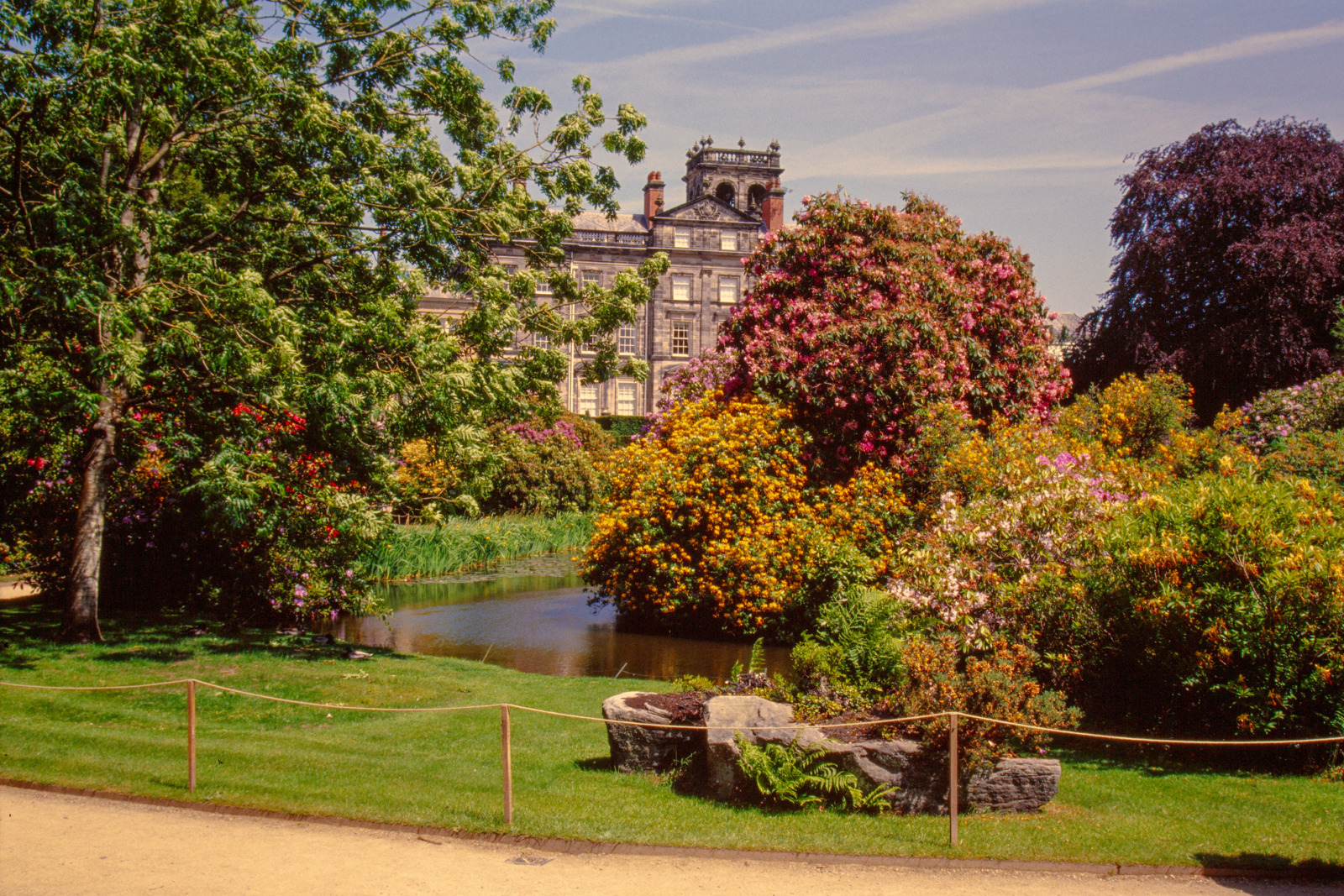
I’ve been working on this article for weeks now and in a rush to get it out and published with work and other commitments, I’ve not had time to go back to the drawing board and fiddle with the settings in camera. I did try some basic exposure compensations but honestly, my DSLR cannot handle slide film right now and from the brief research I did, this is not uncommon. The most common solution is to take three or more bracketed exposures of each frame and HDR merge them in post processing.
The weirdest thing about this experience is that I had no such troubles when scanning boxes of old slides from the 1970’s and I cannot for the life of me work out why there would be such a vast difference other than the ageing process we discussed earlier which must surely go some way to killing the dynamic range and saturation of some colours. Having said that, the incredible thing is that these old slides still look great 50 years later.
Conclusions and learning
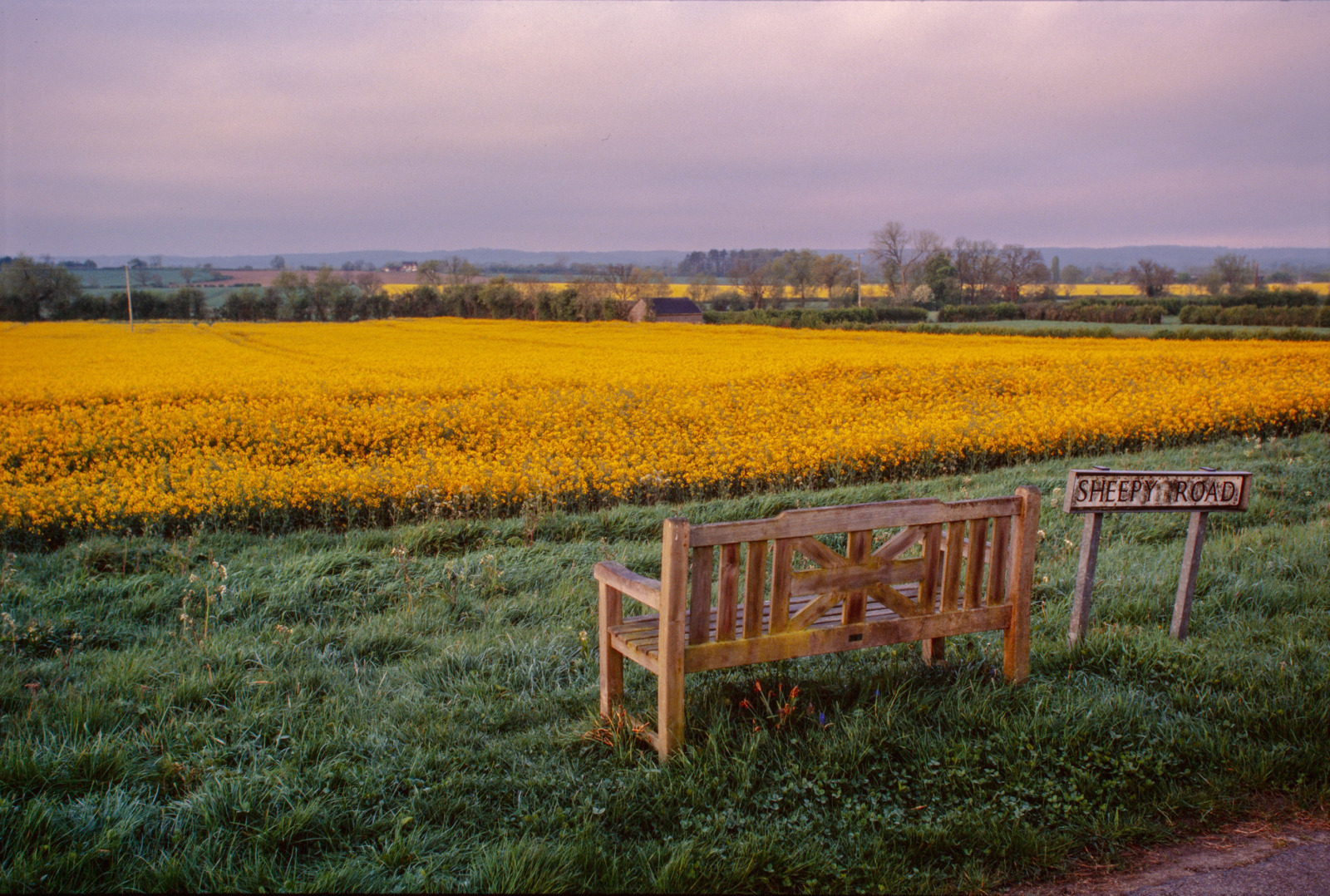
I paid £18 for a roll of film, £16 all in for development and if I’d not bought £50 worth of film in one go, I’d have had to pay £4 postage on the film when ordering it. That leaves us a total of £38 all in if you wanted to buy just one roll, shoot it and get your images back – that’s £1.05 per image. For context, Instax film is currently working out at between 85p and £1 per shot and Polaroid is £1.75 per shot.
Therefore, despite the initial shock at how expensive a roll of film can be, it’s not the most expensive analogue format and is significantly better than Polaroid and Instax put together. However, since writing this Flic Film has become unobtainable almost everywhere I look and that means the cheapest roll of slide film available right now is FujiFilm Velvia or Provia at £26 a roll. With the £16 development on top, that’s £42 or £1.17 per shot – still cheaper than shooting polaroid! Although, in fairness, the story behind the resurrection of Polaroid film is quite incredible and it is no wonder that stuff is so astronomically expensive.
At the risk of just doing maths all day the first obvious conclusion to be drawn is that whilst slide film is expensive, it isn’t any more expensive than other popular methods of analogue photography and provides significantly higher quality results. At £40 a go, I’m not going to advocate that people should change their habits and shoot solely slide film. However, for all of its obvious benefits, I do think that for the odd occasion, that special trip, a portrait session or maybe you just bought yourself a new Leica, then yes I think shooting slide film is absolutely justifiable.
The cost implication does have one positive side effect though. Unlike firing off a £5 roll of black and white, you will definitely think twice before pressing the shutter when you’ve loaded up a roll of £30 slide film. This should, in theory, lead to better results… right?
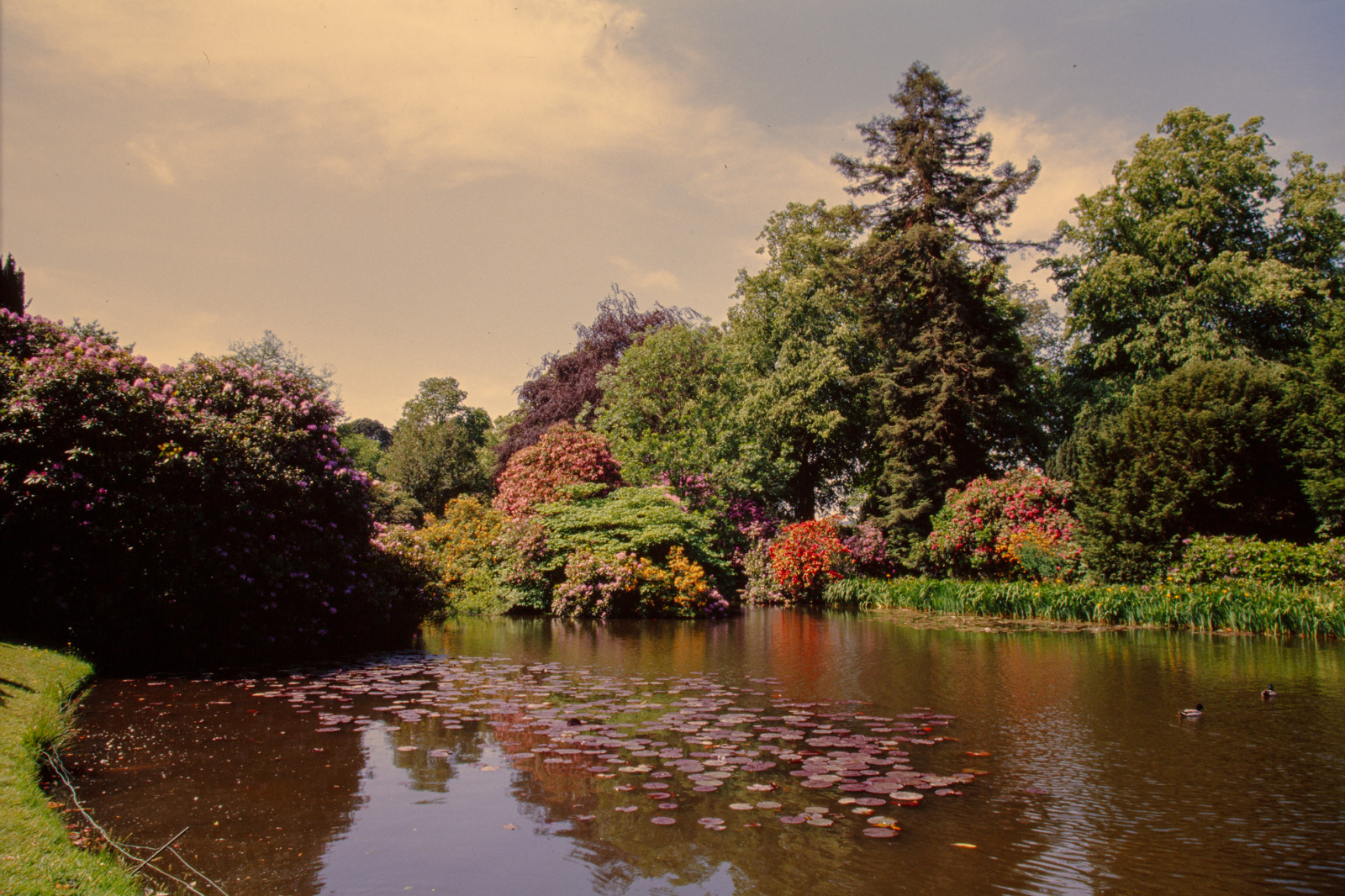
Cost aside, the truth is that slide film is undoubtedly the finest form of film photography. I do not know of any other method of shooting film that will provide you with such beautiful images other than going all out and shooting medium or large format. For 35mm, this is it, it is as good as it gets.
The elephant in the room is actually viewing those images. Scanning negative film is easy and even for colour there are well sorted processes that most people can quickly apply using their home scanning set up. Slide film, though, is just another story entirely and the most disappointing part of the whole process is seeing images appear on screen that look nothing like the film sat on your light box. I know I’ve done a really poor job with the scans shown here – I realised too that my laptop applied TrueTone adjustments because I was sat in bright light and consequently my images all have the white balance totally out, but you can still get the general idea.
However, these films were designed to be projected and that is undoubtedly where these images will look their absolute best. How many people have a slide projector and screen these days? Not many, I’d wager, and furthermore you can’t actually get your slides mounted any more unless you have some cardboard and patience or a 3d printer.

If your goal is to scan images and display them digitally or put them on social media platforms, I really think you’d be wasting your time by shooting slide film. If you want to just enjoy beautiful film images by yourself or you have the ability to create proper darkroom prints then without doubt, slide film is still the standard by which all other formats should be compared.
Slide film still has all the disadvantages it ever did – it was always expensive and it has only ever been relatively slow film. You are not going to be shooting a high tempo football game or your kids running around like loonatics on slide film and your metering definitely does need to be spot on. I’m fairly sure the EOS 33 did a great job of balancing most of the exposures I made but my relative inexperience with judging film exposures by eye showed up in a few images. However, the ability to pull some detail out of poorly exposed slides is surprisingly still there and there’s a small amount of latitude for mistakes.
All in all, I cannot think of any reason why a film enthusiast wouldn’t want to experience the joy of positive film photography. Put the cost to one side, go out and enjoy the process and then really take the time to slowly, mindfully enjoy what appears when your film returns from the developers. One of the main joys of getting into film photography, especially black and white, is when you first pull that roll out of the developing tank and see images appearing like pure magic. Shooting slide film for me has been like that all over again, with an extra wow factor of a look and feel that you cannot and will not get from any other type of film.

Do it. It’s worth it.


Thank you, I thoroughly enjoyed this article. Luci
Wow, what a interesting post, and was good to read about the history and uses of slide film. I remember my father back in the 90s projecting slides, but for some reason always just assumed that slides were just some kind of copies of regular negatives.
Thank you for taking the time to read 🙂