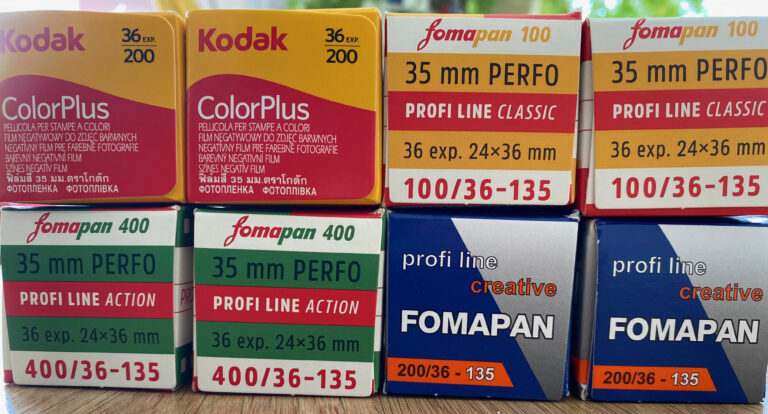
Fundamentally, film developing is really quite straight forward. Wind the exposed film onto a reel, sit it in some developer for a few minutes, rinse, sit in fixer for a few minutes and rinse again. That’s it. Considering this apparent simplicity, there have been an astounding number of inventions designed to make this process more straight forward or foolproof. So… Why are these necessary?
The thing is, there are two problems that make things difficult and both of them are based around the developing reels themselves. The first issue is that spooling a reel must be done in complete darkness. This is normally fine and you can do this with nothing more complex than a dark or changing bag. When things go well, you’re done in seconds, but inevitably you get that one film which winds 90% fine and the last 10% causes it to jam so you have to start again. Repeatedly.
This can be caused by many things – moisture, reels that need cleaning or have residue on them or simply that the film itself is so curved it keeps catching. If you could see the film in daylight, it might not be so difficult to correct these issues, but when you’ve gone past the point of no return, chopping the end of the film off and you’re 15 attempts in, things can feel a little desperate.
The Agfa Rondinax is a bakelite masterpiece that is apparently the answer to all these problems and more.
In this post:
Reel solutions
To solve the reel loading blues, “daylight development” tanks were invented. There are numerous tank designs which load the spool for you so you don’t need a dark room or changing bag as part of your kit. When I first started out in film photography I picked up a Jobo 2400 which is a really clever system that’s painfully easy to use.
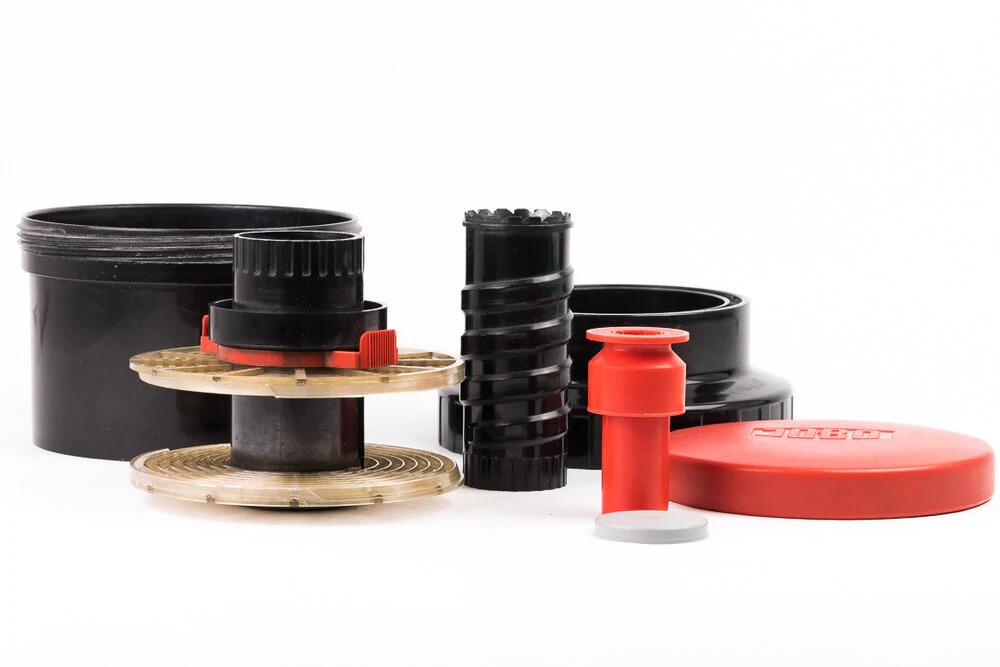
My Jobo didn’t come with the red bung which stops light getting down the central tube when loading the film onto the spool. I bodged together a replacement from a huge rubber bung used in home brewing kits which did the same job and used it for many years without issue. Eventually, plastic rot set in and the thinner elements of the tank started to become brittle and snap. Specifically, the lower reel has a weakness where the top reel clicks in (see the red squeeze tabs on the upper reel in the picture above). This area has a really thin piece of plastic that snaps at one or both ends and once both go you can no longer clip the reel together. Whilst my tank still works, it isn’t in the best of condition and no amount of glue seems to have held up to further use.
Examples of this tank now fetch absurd amounts of money second hand and the cheapest I could find online in January 2026 came in at £67, which is a lot for the convenience of not having to wind your own reels. There are some cheaper available for parts but you can guess the problem – they all come without the lower reel half which is the piece you really need.
For sheer ease of use and convenience the Jobo is almost unbeatable. It behaves exactly like a normal developing tank which is something other designs don’t do. If, for example, you like stand development then you’ll need to steer clear of things like the lab box, rondix/rondinax and other constant agitation type tanks.
The original
As far as I’m aware, the Rondinax is the first daylight development tank ever released. It certainly was patented to the hilt but that didn’t stop it being completely cloned by the Russians and rebadged as the “Sputnik.” Other competing designs came out from Kodak with their “Daylight Load 35mm” and the “automat” from a company called Optochrom. Even Leitz chose to license the Rondinax and release their own branded version – probably because Agfa had already catered for the non standard Leica 35mm film cartridges. Other than that, there seems to be the usual array of clones and one offs that never really caught on.
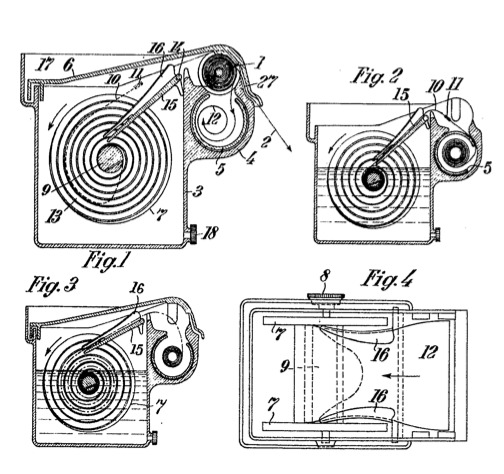
The Agfa range of 120 and 35mm daylight tanks were reasonably successful, although I can’t find sales numbers anywhere, going on the “how many can you find today” metric they’re certainly more widely available than any of the other models mentioned previously. The usual problems apply in that these are Bakelite products and Bakelite has a habit of cracking which is bad because it very often was mixed with asbestos. If that wasn’t bad enough, that damage usually then makes the tanks either no longer light tight or they leak more than they tend to leak as standard…
I’ve been looking for one of these since roughly 2008 and had given up the search many years ago due to them regularly selling for roughly £50-100 for fully working and complete copies and I couldn’t justify that kind of outlay on a developing tank when I already had equipment that did the same job.
That “fully working and complete” aspect is key. Not only are they prone to damage, these tanks were completely modular and so can be taken apart into many pieces very easily for cleaning and misplacing vital components. If you are searching for one of these tanks then set your expectations low and check for the following things:
- Broken thermometer (not a deal breaker)
- Cracked or broken lids
- Missing or broken film cutter
- Missing or broken leather film clip (this sits in the centre of the reel and pulls the film in)
- Broken reel
- Missing winder parts and seals
I saw mine in the “you might also be interested in” recommendations of an entirely different eBay search and, on a whim, clicked on it because the price was too low to be true.
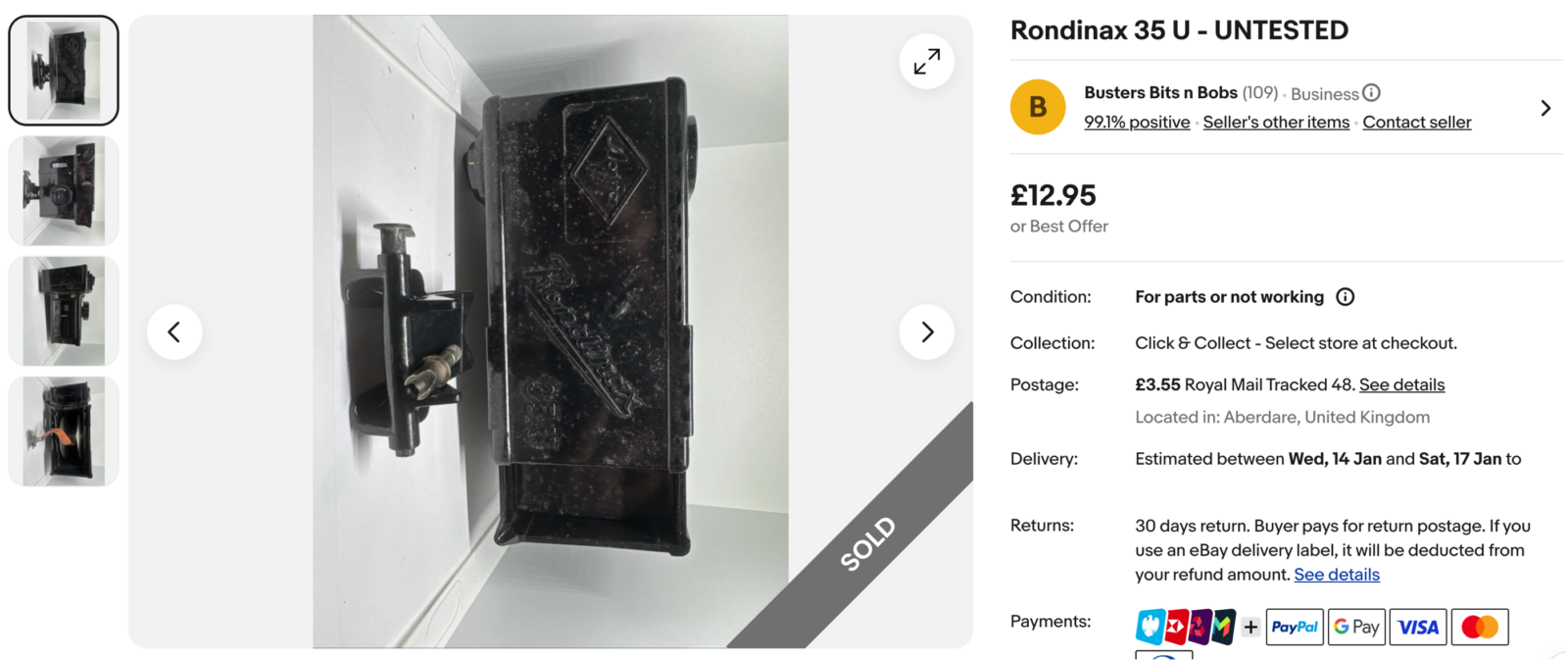
I took a few seconds to look over the pictures and check what might be missing and then decided it was too good to miss regardless of condition. If it came with a serious issue it didn’t matter because for £13 I had some very valuable spares that might help out with a future purchase. I did the usual checks to see that this wasn’t someone who sold photographic equipment all the time and therefore knew exactly what they had or were doing, then bought it.
From the pictures, it looked a bit knackered. What turned up was dirty but in a real stroke of good fortune everything seemed to be there except the instructions. It even came in the original box.
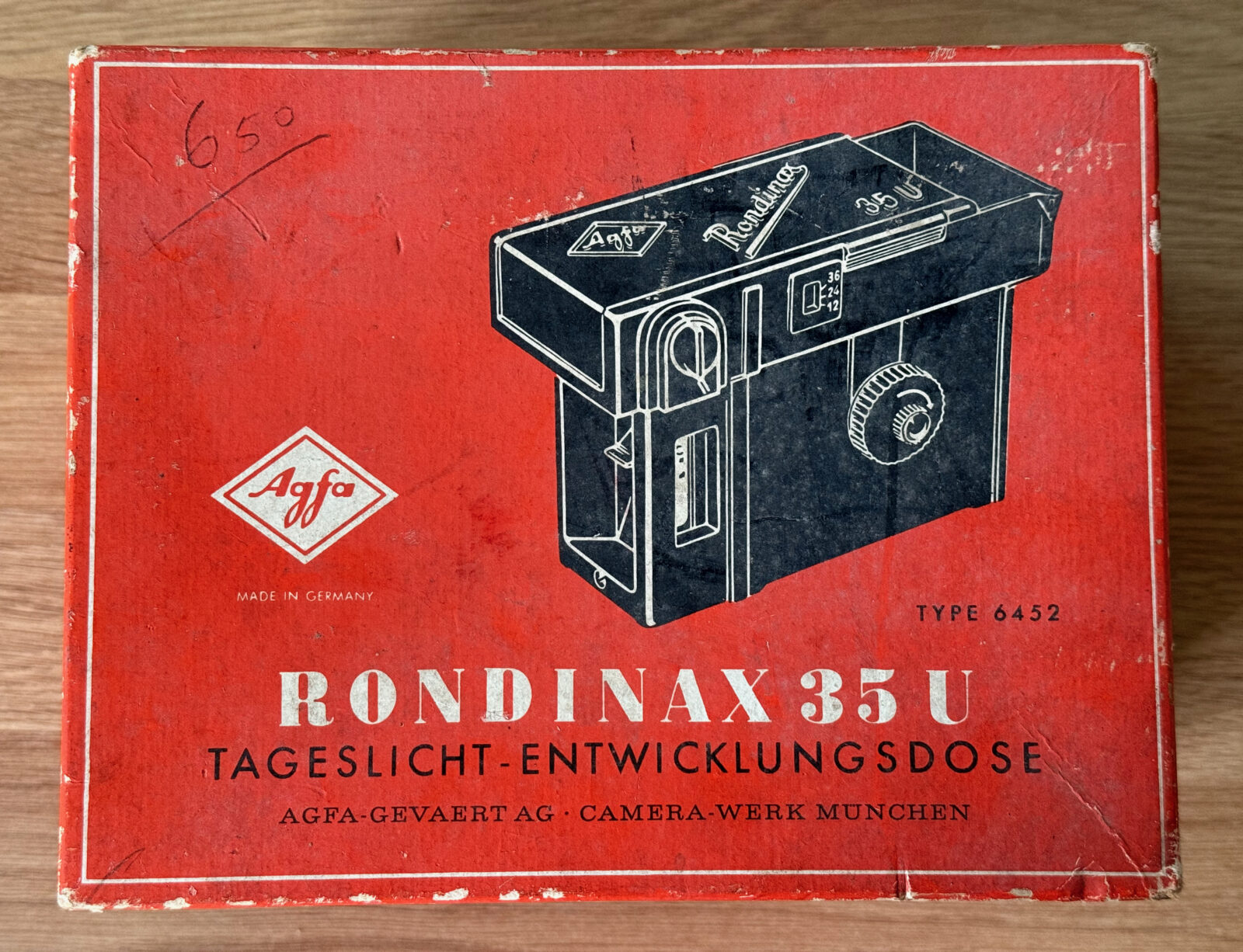
The only damage that I can see is a small part of the lid has snapped off at some point. I did worry about whether this would affect the light tightness of the tank but after testing the damage appears to have no detrimental effect at all. It must’ve been my lucky day when I bought this because even the thermometer is still working perfectly and from what I’ve read these are always failing.
A closer look
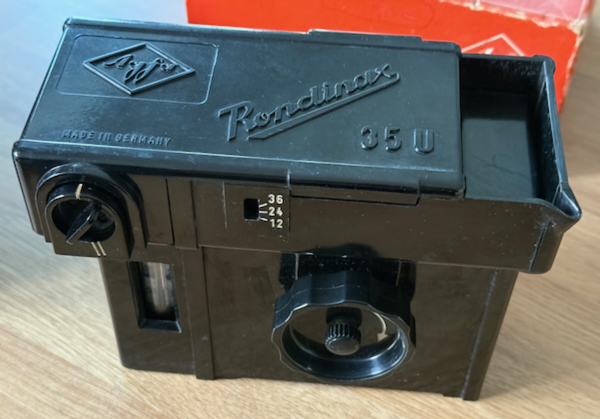
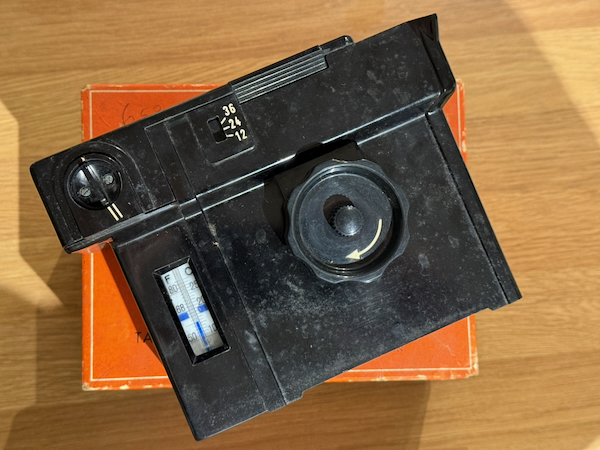
As is so often the case with things you buy online, in real life objects look completely different in terms of scale. The Rondinax is quite a chunky bit of kit and feels rather sturdy although I’d cry if I dropped it because that Bakelite is definitely going to crack and break. Going by the design of the winding knob which changed subtly over various iterations of the tank and the manuals I’ve found for this, I’d guess that my copy is probably a 1960’s version which would make it 65 years old at a minimum.
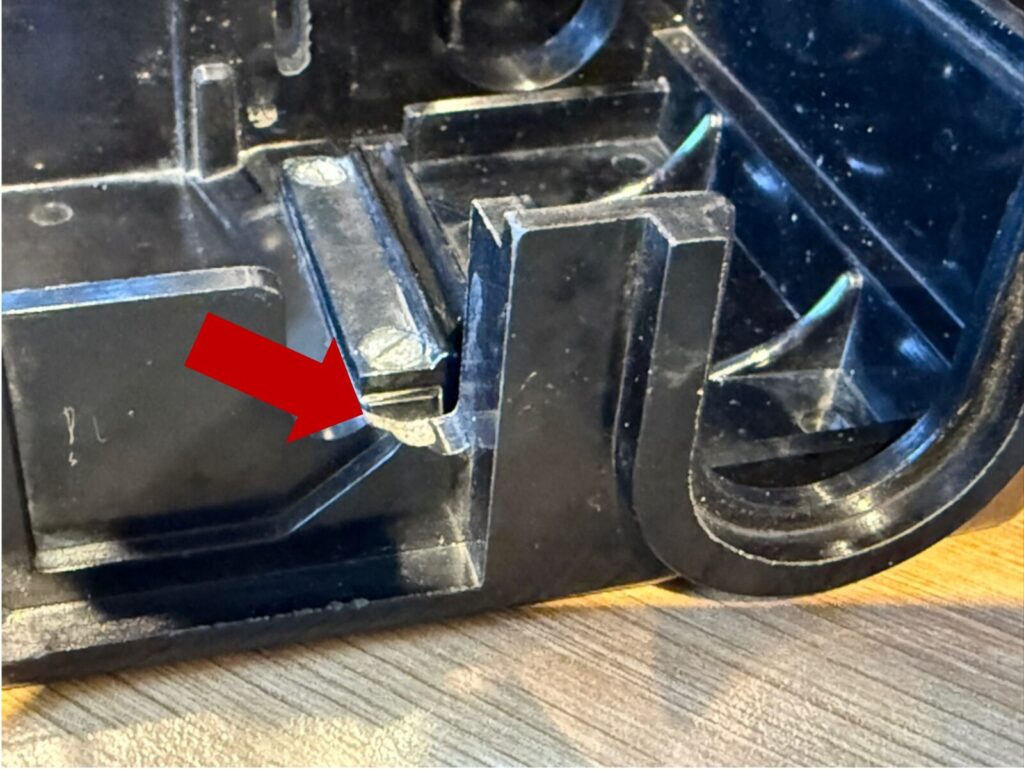
The Rondinax tanks have two killer features – daylight loading and economy. Besides the obvious benefits of automatic film spooling, this tank only requires 200ml of developer and fixer to develop an entire 36 exposure roll of film. Of course, with all benefits there must be some kind of trade off.
The reason the tank only uses 200ml of solution at any one time is to stop it leaking everywhere or, worse, overflowing into the film can. If this does happen, you have to take the three screws out of the thermometer end of the tank to clean and dry it. The 200ml of liquid comes up just about to the centre of the developing spool and the only weak part of the whole design.
The centre of the spool is connected by a rod to the rotation knob on the outside of the tank. There is a woefully inadequate rubber seal which is supposed to stop developer leaking all over your hands when you turn the knob but these have all long since failed or fallen out of these tanks. Mine is surprisingly leak proof still, but some fluid does come out meaning you do need to wear gloves throughout unless you like chemical hands.
The other downside of this film economy is the need for constant, and I do mean constant, turning of the film spool throughout. If you don’t turn the spool, only half of your frames will be developed. If you don’t turn constantly enough, then you’ll get uneven development. So, constant, slow, methodical turning is the name of the game here.
Developing a roll
Part of the Rondinax genius is that it is extremely helpful if you want to only partially use and develop a section of film. As you wind the film into the tank it raises what I can only think to call the “film slide” and attached to this is a little metal pointer. The more you wind onto the spool, the higher this gets and it points to the number of exposures you’ve wound on – 12, 24 or 36. If you’ve only used 20 or so shots, just roll until it points to 24 and then cut the film off and you can use the rest another time.
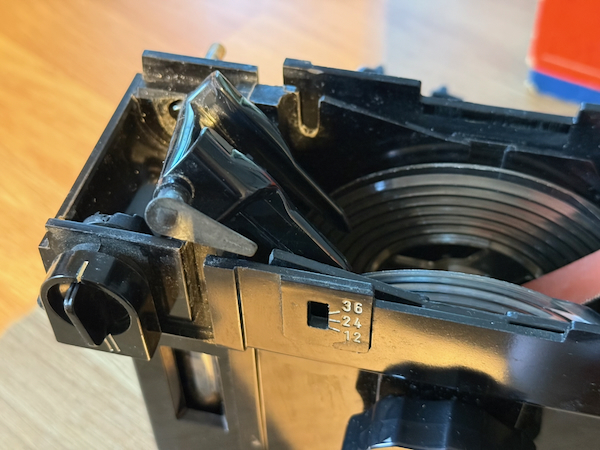
Using the Ronidnax is as simple as it gets. Trim off the leader as normal, then clip the end of the film on to the leather strap and clip. Wind a tiny amount of film down the film slide and then close the lid.
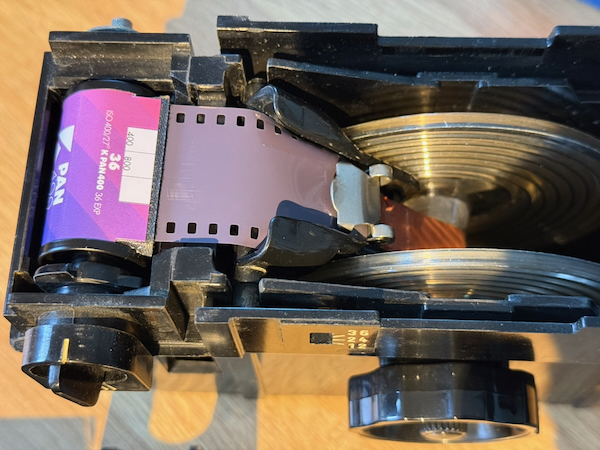
Next it is just a case of winding the film on until either it stops or you’ve reached the required number of frames. The built in film cutter is then pushed up with a hefty clang and that separates the film can from the reel. A few more winds and the film is spooled ready for chemicals. I can honestly say that I have never known such an easy and smooth mechanism in my life. The Jobo tank by comparison often feels a bit clunky, like it has the potential to get stuck or caught up but somehow never does. This just glides along, the film seemingly loading in a completely frictionless manner. It really is superb and very, very easy.
I’d dug this roll out of the fridge as it had been in there for a few years with “20 shots” written on the container. I duly rolled out 24 shots worth of film using the built in indicator and cut the film off…
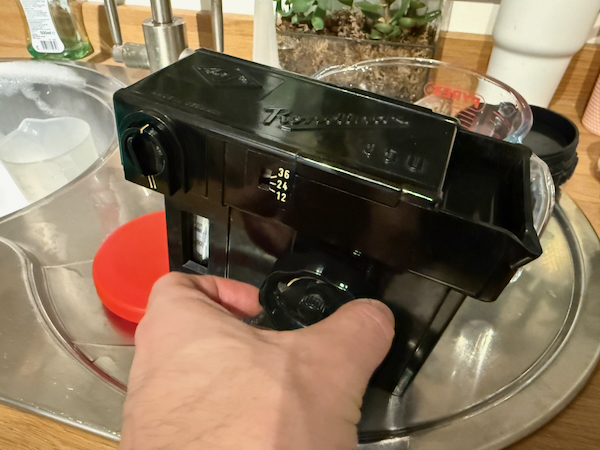
Once the chemicals are poured in it’s time to commence winding. I deliberately chose the strongest dilution of Rodinal and developed this roll at 1:25, even so this roll of Kentmere required 7.5 minutes of constant agitation. There is debate amongst Rondinax users as to how this agitation should take place. Some suggest that it should be carried out in a jerky manner, swishing the reel about the place each time, others go for the smooth and gentle approach. I went for “as constant as my wrists can put up with” for seven minutes and tried to be relatively smooth.
Why it took Agfa until the final iteration of this tank to introduce a crank handle is beyond me, it is the single thing that is so obviously missing from the tank. The constant turning of a dial like knob really does hurt after a few minutes, whereas winding a crank might not be ideal but it would certainly be a lot nicer. As a side note, if you want to truly have the piss taken out of you, you could buy yourself a “lab box” which is the modern day rip off of the Rondinax. They’re well and truly on the modern corporate bandwagon as they deliberately designed their tank with a dial but will gladly sell you a crank handle for an extra £25! That’ll bring your total outlay to near enough £200. How generous!!
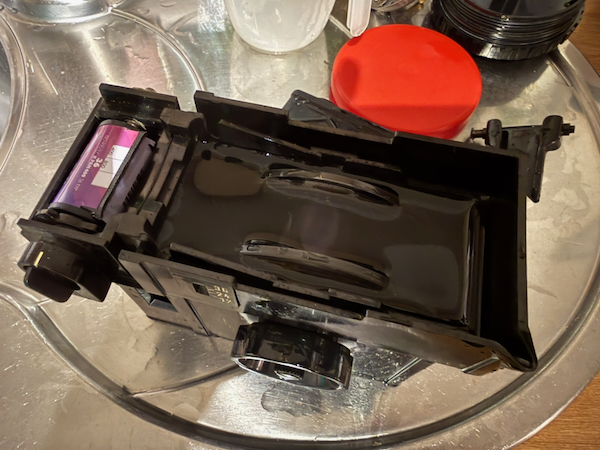
The image above shows the tank after development has finished. There is just enough room inside to completely cover the reel for one final rinse if you’re careful not to slosh it about the place. You can see the film can stays in the tank the whole time and leaves just enough film sticking out that you can retrieve it to cut a new leader in for future use. You’re now ready to unscrew the centre shaft and take the reel out to dry the film.
Did it work?
Conclusions and learning
Yes. Yes it did.
Did I make a monumental mistake?
Yes. Yes I did.
You see, this roll of film had indeed got 20 shots on it, but had been used in a Canon EOS 300v. That’s a camera that firstly winds all of the film out of the can, then winds it back in as you take each frame as a method of protection against accidental film door opening. I forgot this completely and it meant that the film I wound out of the can wasn’t exposed except for three frames right at the very end and one more which I had chopped in half.
Bugger.
Those few frames that were on the roll were perfectly developed, however!
What can we conclude from this experience, then?
Nothing in analogue photography is perfect. If I’m being honest, the most sensible way of developing film is to just spool it on to reels in a changing bag and stick it in a normal tank. If you do this you’ve got every developing option under the sun available to you, plus you can buy larger tanks and develop 2, 3, or even 5 reels at once. However, there is absolutely no doubt that those reels can be a right sod at times and for no obvious reason can continually jam with certain film or in very specific conditions. One thing I have learned is to keep your reels spotlessly clean and bone dry, but even then you’re not guaranteed a trouble free experience.
The Rondinax, then, offers to take this trouble away from you although I have read that people do have problems even with these. In my experience, limited though it is to this point, it was faultless and worked as well as you could reasonably expect. The only downside is that need for constant winding. I wouldn’t mind so much with a crank or slightly shorter development times but anything over five minutes or so starts to get a little tedious.
Does this mean you shouldn’t bother? No. They really are useful little tanks and I do love the convenience of being able to partially shoot a roll and then develop either 12 or 24 shots. Today this is a real bonus because rolls of 24 frame film are only a few pence cheaper than equivalent rolls of 36 so economically they don’t make much sense, but you don’t always want or need to shoot all 36 frames. This tank at least gives you the option, with some wastage, of using a film twice or in two different cameras which might be useful for side by side comparisons.
Agfa certainly created a very well thought out design and it is credit to them that 90 years later other brands are still copying their basic concept and selling it to hipsters for hundreds of pounds.
If you can get lucky on eBay, I’d say they’re worth a buy but just be super careful that it comes with all the bits and pieces. Don’t worry about broken thermometers, you don’t need it if you check the temperature of your chemicals beforehand. If you can find the Rondinax 60 then you’re on to a real winner because I genuinely think the strength of these tanks would be emphasised with medium format – good luck though because these are even more expensive!
Now, I just need to develop a roll of film that actually has some pictures on it….