

Slides.
Once upon a time, if you wanted top quality, sharp, clear images, and beautiful, rich colours you used slide film. Then, you’d gather the family and neighbours round and subject them to an evening in front of the projector whilst you gave an enthusiastic lecture about your travels and did your best Chris Whitty impression with a “next slide, please!”
It’s hard to over state how important slide photography was. Everywhere in the country are drawers and cupboards still stuffed with boxes of the things, probably unseen for years on end due to projector equipment being dead or simply too cumbersome to get out. Sadly, however, there are thousands upon thousands of slides that have simply been cast aside, cleared from houses, thrown out when people no longer see the value in them.
Now, companies that perform house clearances and the like simply pour them all into large containers and hope people will bulk buy them on eBay or at auction for some reason or another. Once bundled together like this, many slides are just endless mixed travel snaps or landscapes which, whilst beautiful in their own right, don’t really tell a story any more.
I’ve long avoided these “lucky dip” type auctions for this very reason, but I do keep my eye out for sets that might’ve been kept together and recently I picked up roughly 150 slides in a collection for all of £1.50. Their contents is as interesting as it is poignant. I’ve spent many, many hours piecing together the brief window into these peoples lives and the locations they visited, for what is genuinely a fascinating insight into life of a successful family in the mid 1960’s.
Don’t be surprised if this page takes a while to load, there are a lot of images and some of them are massive – this is deliberate to keep the quality of some of the images. I’ve not edited these pictures other than to correct white balance, restore a small amount of contrast and a very light sharpening. Other than that they are, I hope, as close to as they would’ve been the day they were developed.
In this post:
Bantry, Ireland, 1965
In amongst the slides which were part of an obvious set or the same film were four, square format images that were taken on roll film – probably 127. They seemed rather out of place but definitely belonged to the same person due to the handwriting matching notes on later images, they’re the earliest of the pictures and were taken in 1965.
What’s going on in them is another matter and why anyone was out walking their cow is beyond me but the image below is an absolutely fascinating street scene.
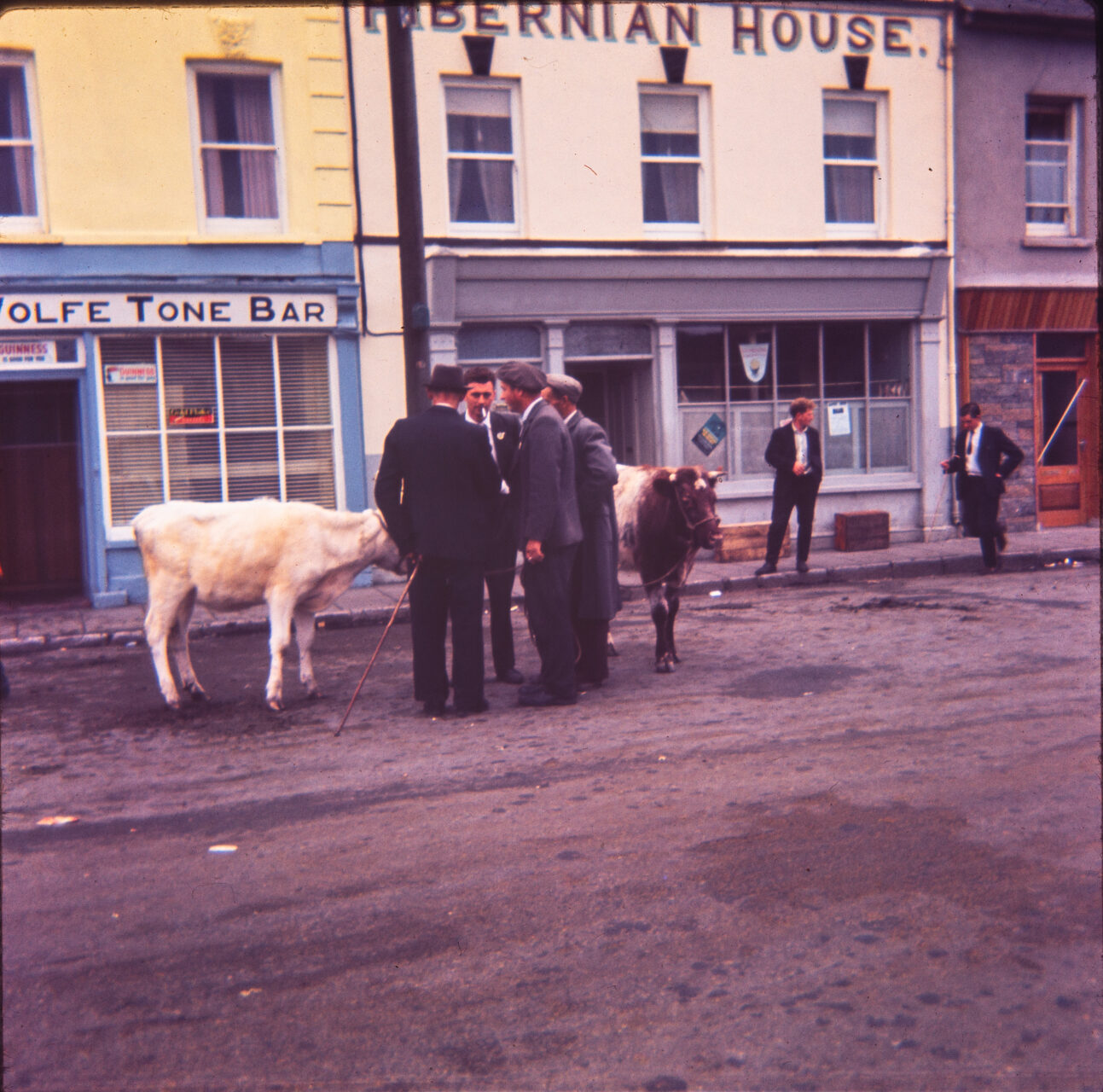
There’s so much going on here. Take the time to look at the activity in the background, the different styles of dress, and the man in the centre looking straight down the camera lens, cigarette balanced on his lips. What a scene.
Tracking this down took a while due to the fact that if you Google Wolfe Tone you get about a million results all relating to Irish history and there’s definitely more than one bar with the same name. After a little work, I managed to find the building in a small town called Bantry in County Cork, Ireland.
The image was taken on New Street, opposite to Wolfe Tone Square. The Wolfe Tone Bar as it was then is now the “The Quays” bar and restaurant and what was Hibernian House is now “The Snug”. The grey building on the right has had another storey added on top of it, but this is undoubtedly the correct place going on the details around the windows and doors.
Today, you’ll be surprised to hear, there’s no cows in the street:
The residents of Bantry don’t seem to have had the greatest of luck. According to their official website, the town served as a port during WW2 for various allied forces and then suffered from mass emigration leaving the town on its last legs. The 1960’s were kind to the town and saw something of a boom when an oil terminal was built nearby, bringing in countless jobs and money to the local economy. Incredibly, roughly ten years after this photograph was taken there was a tragic tanker explosion (the Whiddy Island Disaster) in the port.
The oil tanker Betelgeuse was docked in the town and, as far as I can understand, quite literally broke in half causing a huge explosion which physically blew men into the air and sea alike. Over 50 deaths (a miracle considering the size of the explosion) were caused by the explosion, fortunately many of the crew were apparently ashore when the vessel was being unloaded. The wreckage burned for almost a day before eventually sinking and extinguishing itself. The disaster signalled the end of the oil industry in the area.
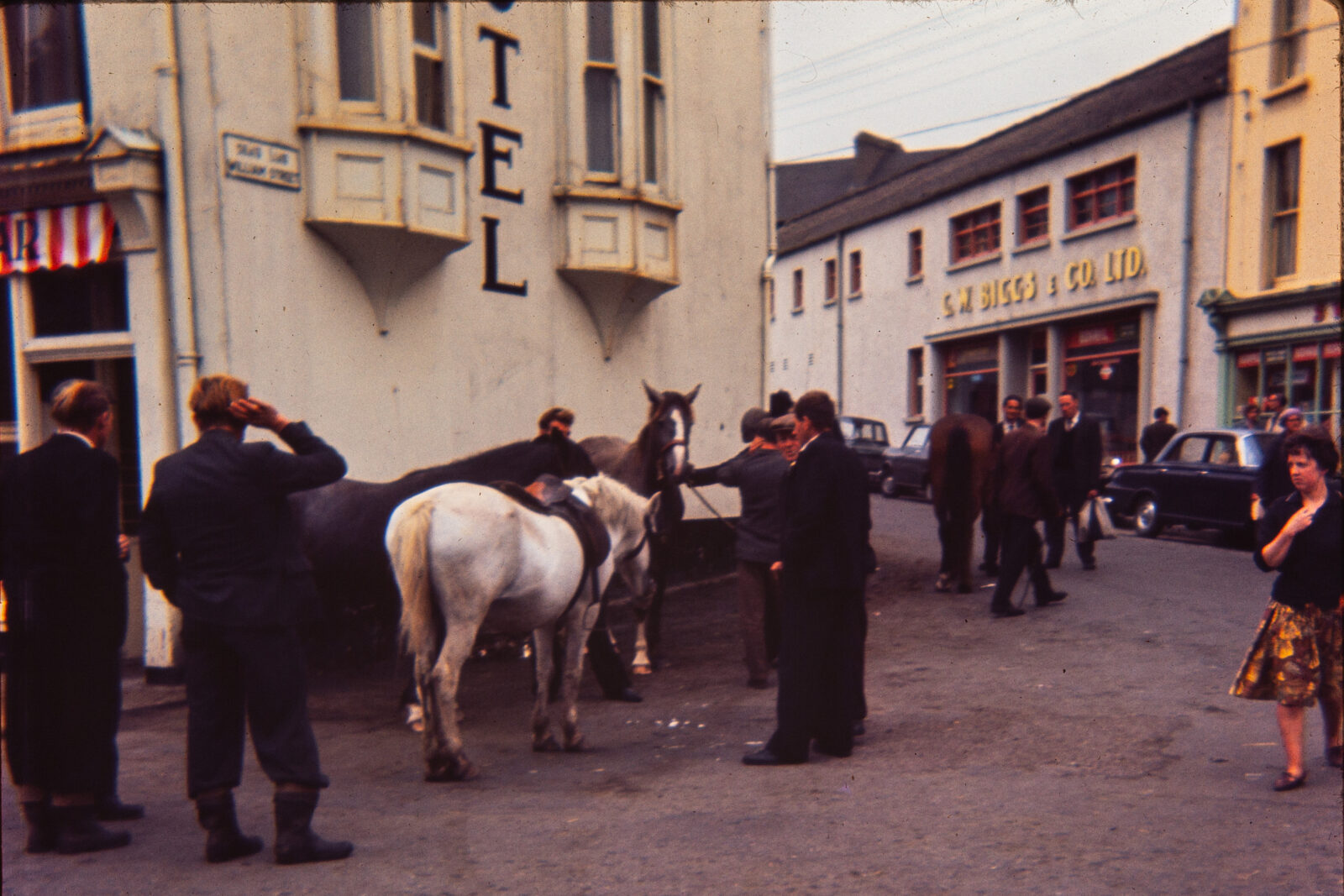
Down the road we find further animals in the street, this time it is the turn of the horses to be shown off.
This is the corner of New Street and William Street, just down the road from the previous photograph. As you’d expect, none of the businesses in the picture still exist.
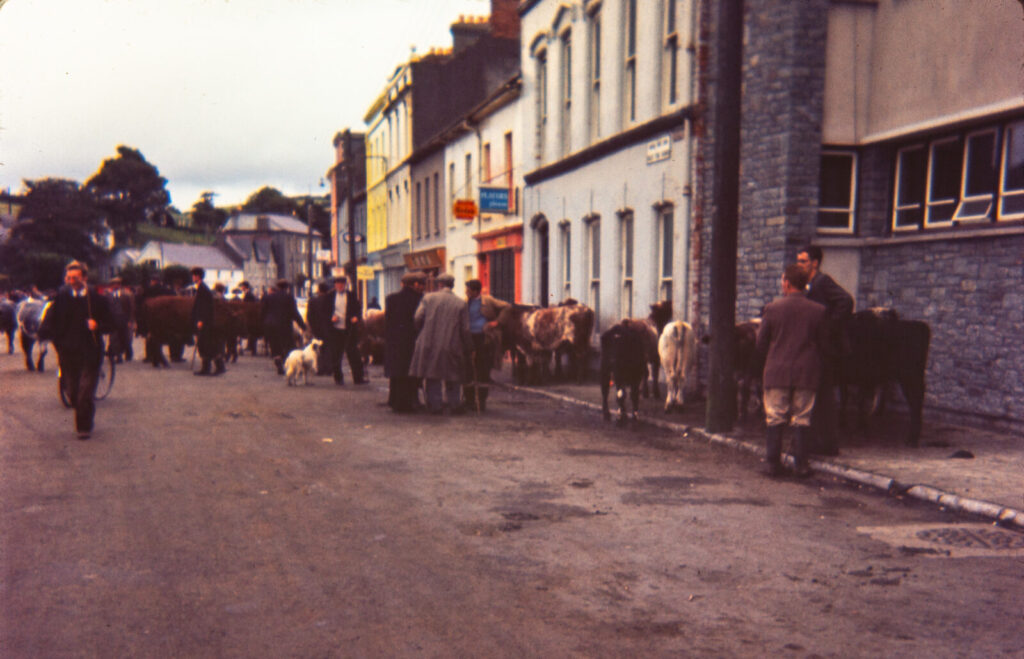
There were originally 12 images on the roll of film these belong to, I only possess four (one of which is out of focus and included below for the sake of the record) and must presume the others didn’t come out or have simply been lost or discarded. Slide film is notoriously unforgiving and unless your exposure is pretty much spot on, you don’t end up with much of an image at all. Considering the state of camera and metering technology in the 1960’s it would be no surprise that many shots were lost.
Weymouth, 1965
The family that these slides belonged to almost certainly lived in Weymouth. I cannot work out with absolute certainty who owned what as there are two houses that feature in various photographs and you’ll understand my confusion as we go through them.
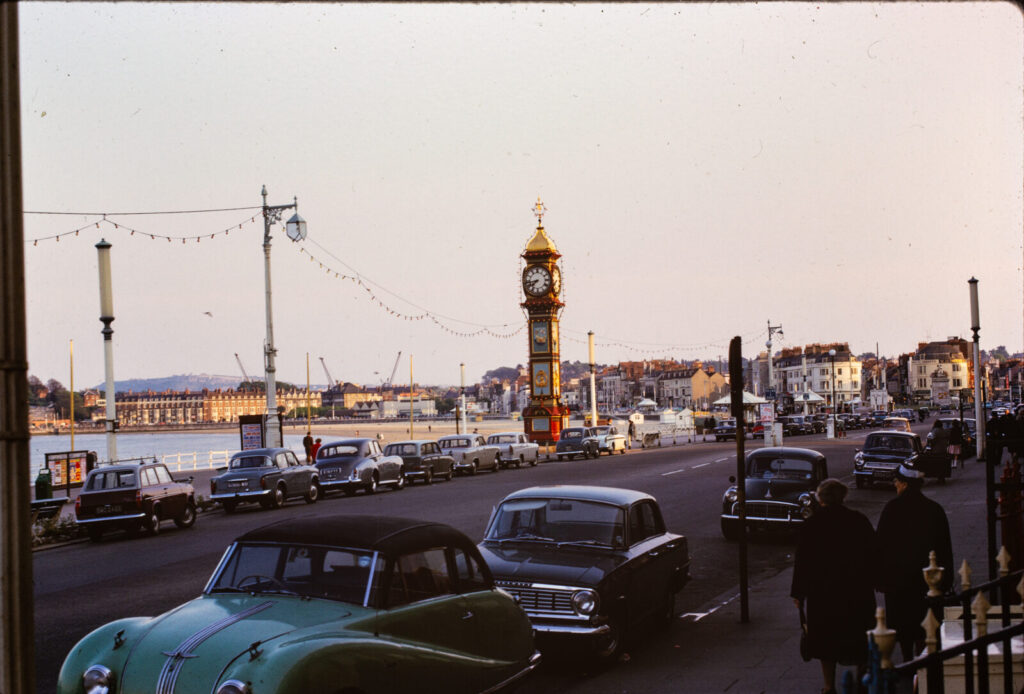
The action begins in 1965 where we’re treated to a classic “proud car owner” portrait. The setting is the Weymouth Clock Tower which is down on the sea front and the local council must win an award for the most monumentally stupid placement of a lamppost ever.
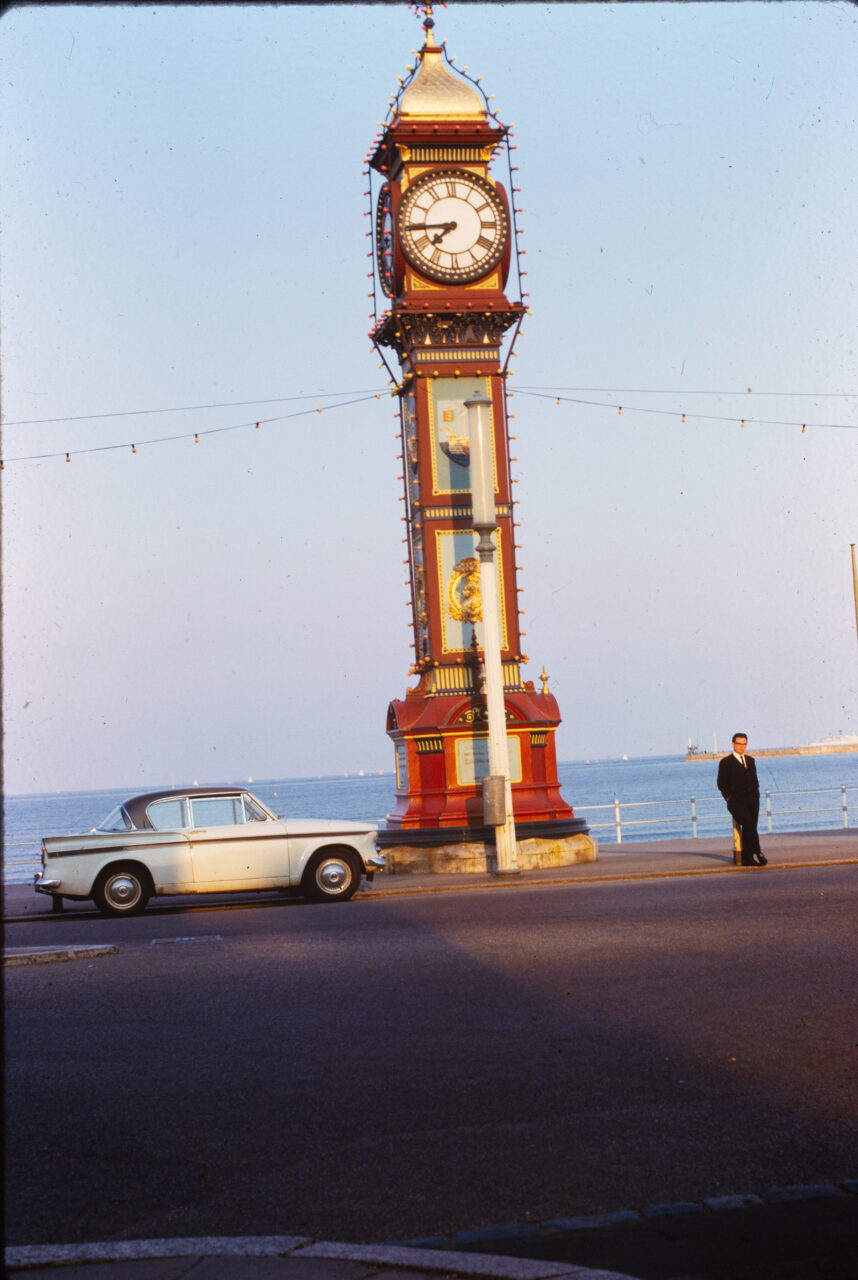
I have a feeling that this extremely dapper gentleman is usually the person behind the cameras. It is the only time he appears in any image and he certainly looks like the kind of person who would have a nice Sunbeam Rapier as his car.
The Jubilee Clock Tower celebrates 50 years of Queen Victoria and was erected in 1888. It had been paid for from public donations that didn’t quite cover the costs and one Sir Henry Edwards eventually donated the clock to the town. It is not a structure to be messed with either, made entirely out of cast iron on a huge stone base. I’d wager it will still be there another 100 years from now.
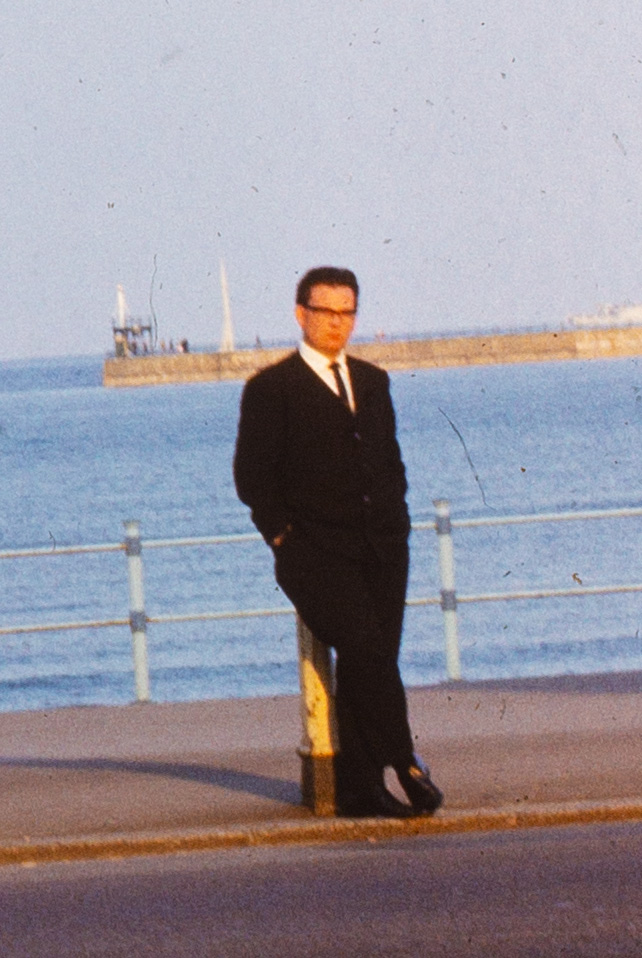
I’m presuming that the car belongs to him, there was later an obsession with including another car in nearly every picture so I don’t see why it would’ve been any different here. Car ownership was definitely something to be proud of in the 1960’s – a time when car ownership and the freedoms it provided had just started to become much more commonplace and affordable for more than just those who had deep pockets.
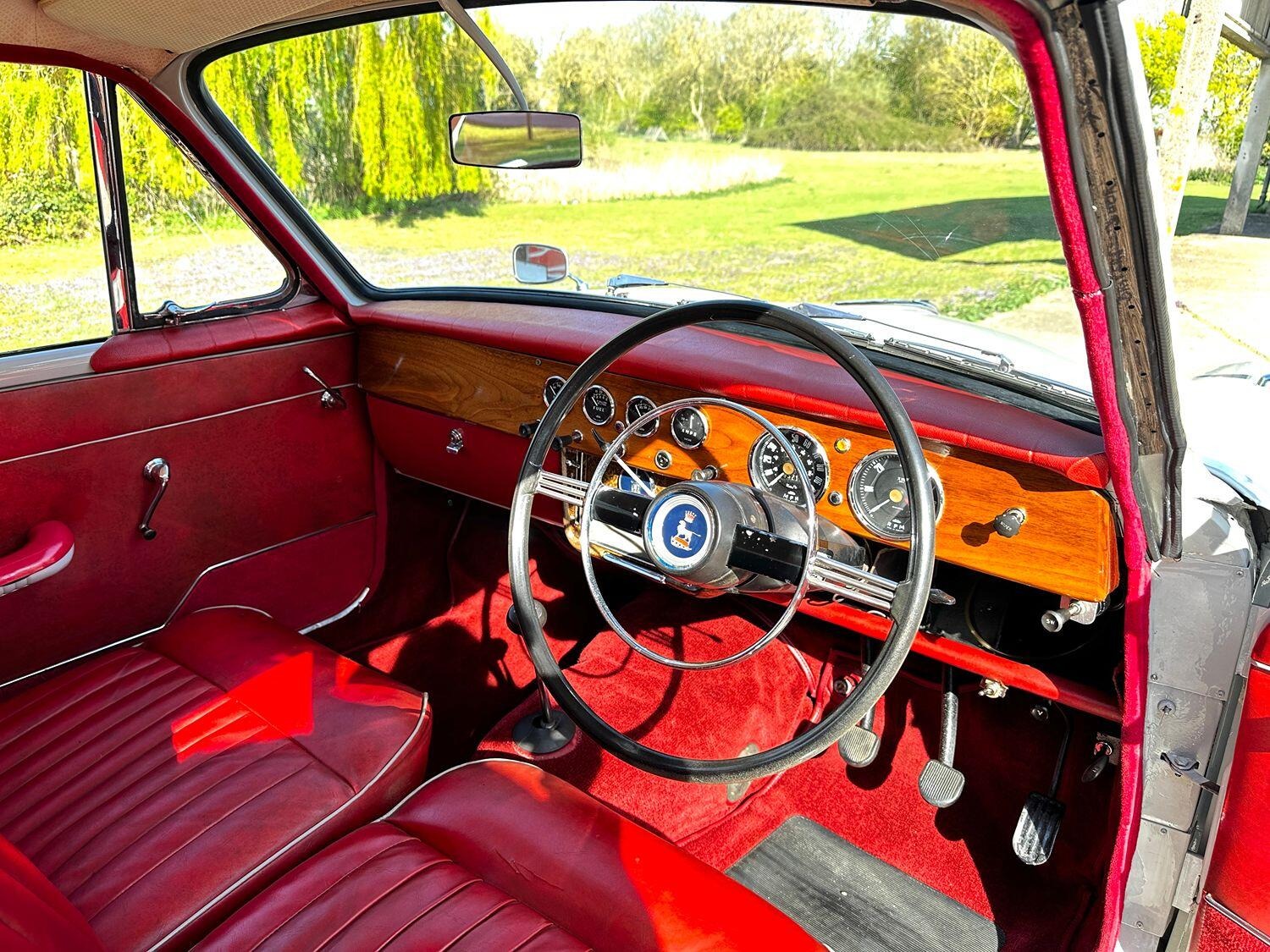
I’ve no idea about classic cars, but the Sunbeam Rapier was, according to a classic car site I read, a reliable and stylish car. I mean, reliable back then could mean a lot of things but most likely meant you could drive about 4000 miles before it needed a service and a lie down. Still, the interior of this modern restoration is quite something.
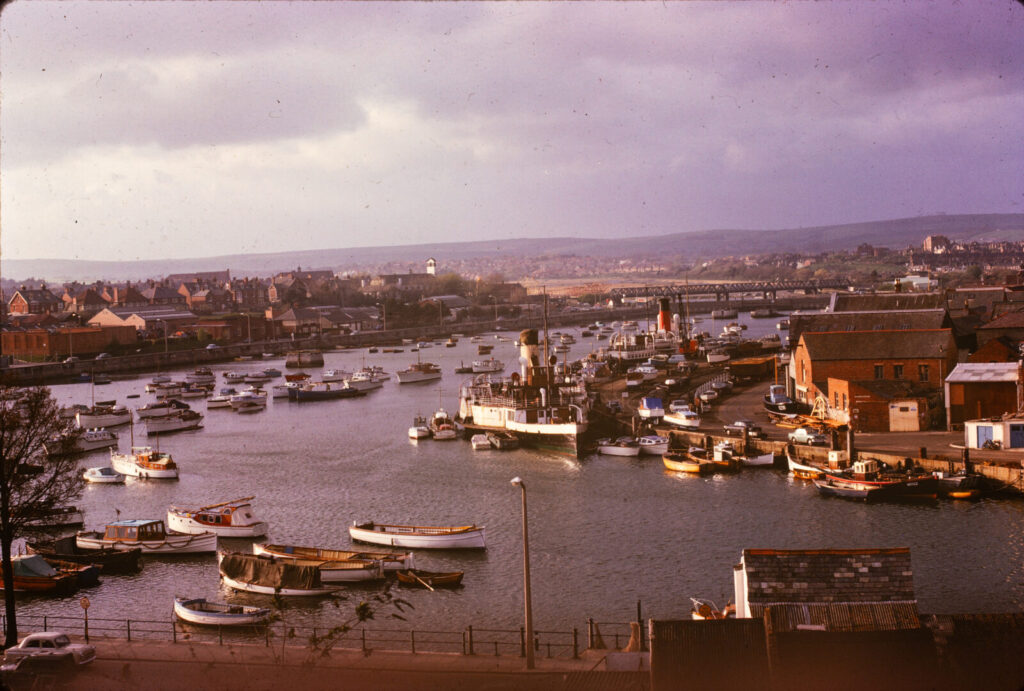
Weymouth apparently has an inner dock and this is where our next slide is taken. There is a trend amongst these images for marine life and boating in general – some taken in Ireland, others in Scotland and one or two in Weymouth itself. Did anyone in this family work on the water? Who knows…
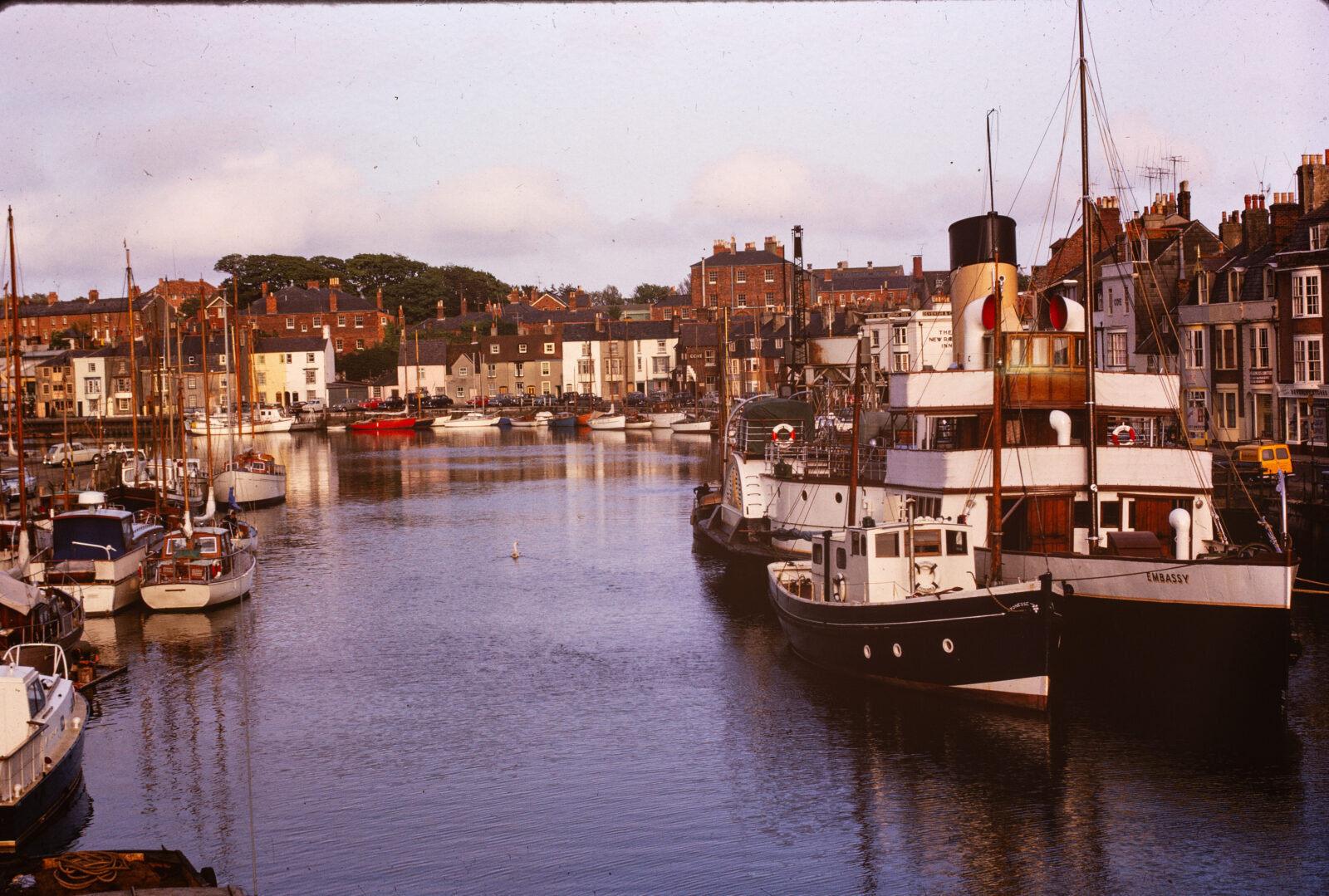
This is the paddle steamer Embassy which, by the time this photo was taken, was very nearly at the end of its life. Less than a year later it had been towed to Belgium to be scrapped. It was an “excursion steamer” commissioned in 1911 and launched from D&W Henderson of Glasgow as the Duchess of Norfolk. Designed for the Portsmouth to Ryde ferry service, it enjoyed five years of domestic use before being converted to military operation as a mine sweeping vessel between 1960 and 1920.
Fortunately, considering the dangerous work it undertook, the steamer returned unscathed and once again resumed passenger service between 1921 and the outbreak of the second world war, during which it served once again as a mine sweeper and training vessel with its name changed to Embassy. Remarkably, it returned once again and was refitted on return to Weymouth. It spent the rest of its life sailing around the Isle of Wight and Bournemouth, undergoing a conversion from coal to oil which apparently worked rather badly and made it plume black smoke from the funnels.
There are a few more images of Weymouth, the harbour and seafront that are worth viewing, although I have no further insight into them!
There is one final image from this 1965 set and I think it may well be my favourite simply because there is so much going on and so many questions I’d like to ask about it.
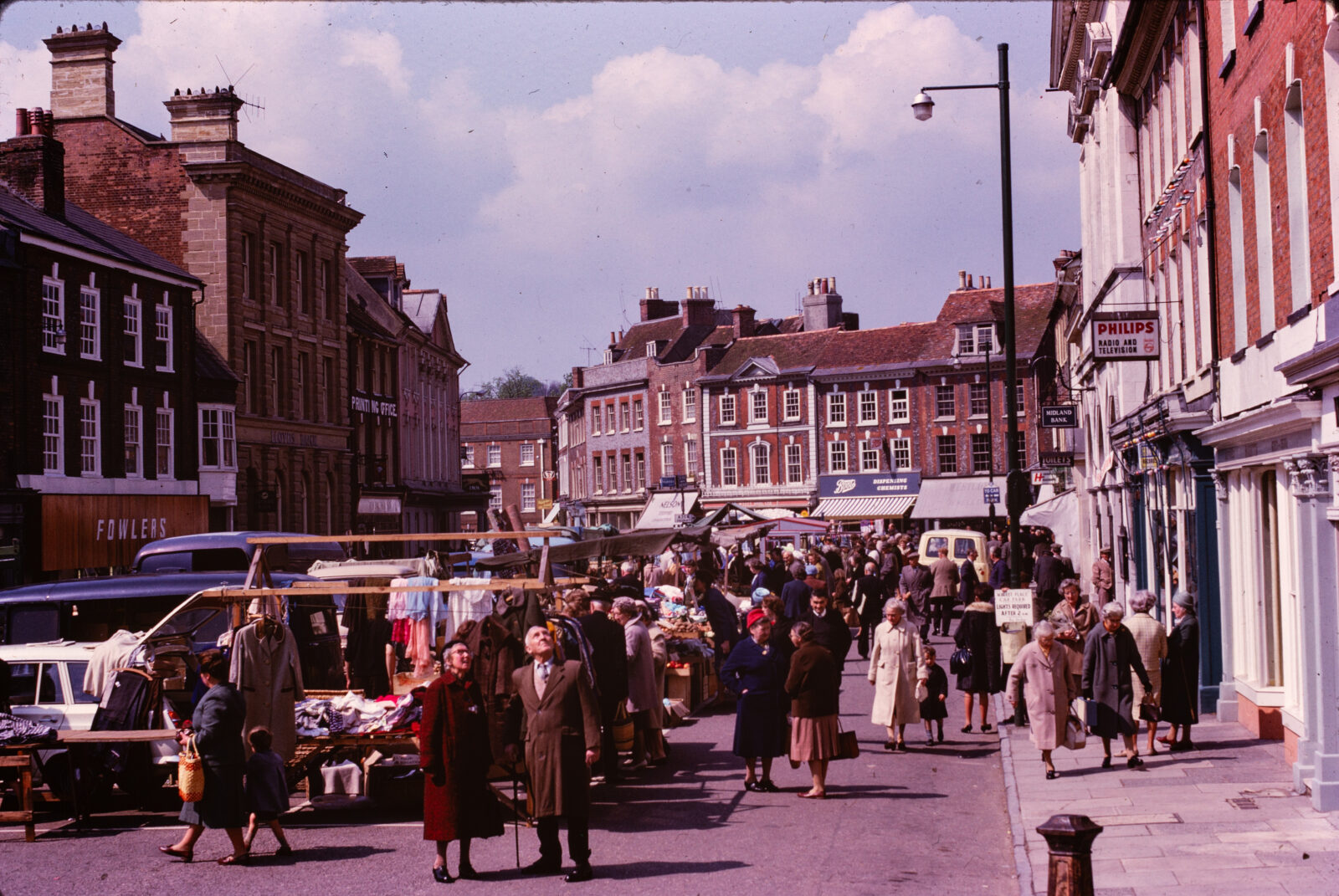
Firstly, the detail in this slide is nothing short of breathtaking. Whichever lens and camera combination created this image was an absolute diamond and the exposure is completely spot on. Zoom in and you can just see nothing but crisp, clear details.
At first glance it doesn’t appear to be anything special as you can just see a market and shoppers going about their daily business. If you look just a little longer you’re then drawn to the couple just left of centre at the front in the red and brown jackets. What have they noticed that no one else had…? I love pictures like this.
1966 – Meet the family
Another year passes by and we’re into 1966 and it is now that we’re introduced to two sisters who, it has to be said, are absolute masters of looking annoyed that their parents want to take another picture of them.
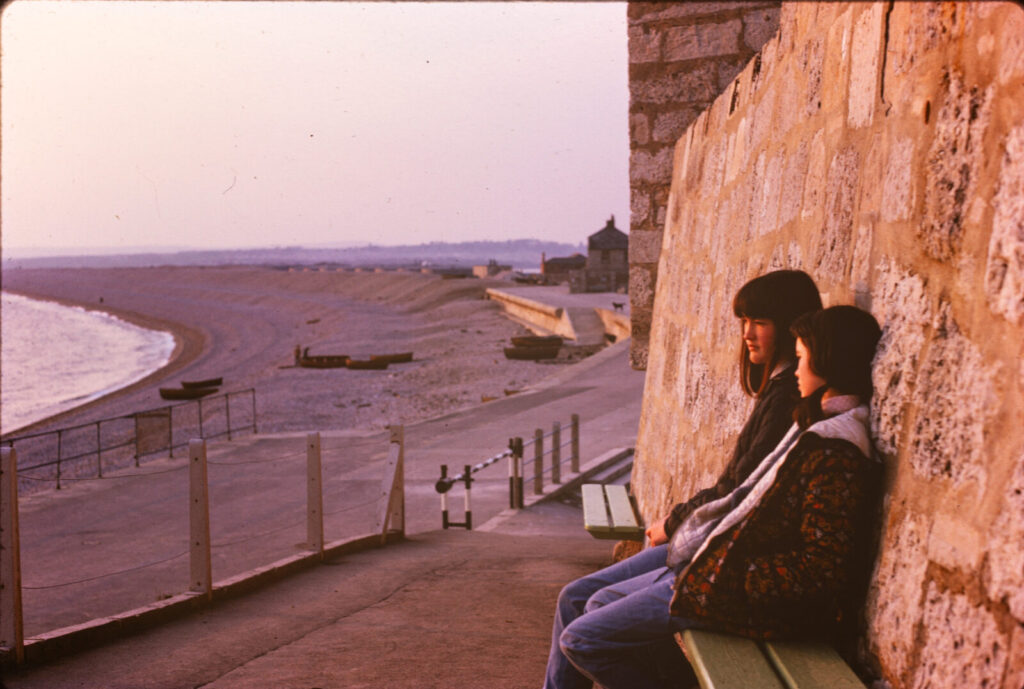
I have to admit that I’ve completely failed to locate this beach and it could be in any of four possible places that were visited in other slides – Aberystwyth, Weymouth, Ullapool and “somewhere up Yorkshire way.” I’m terrible at ageing people in photographs, but if I had to guess (and I do) I’d estimate the older one is roughly 13-14 and the younger perhaps 10-12.
Piecing together this family is difficult as we never see them all together as a group. I’m making the massive assumption that the father is the bloke we met but a few paragraphs ago. Oddly, the mother is completely absent from everything I have – there are slides missing from each series so add in your own conspiracy theory here. Unless, of course, she herself was the photographer, I can’t quite understand why though as you’d think a family photograph would appear at some point with all the holidays they went on.
A year later, in 1966, I think they moved in to a new build property:
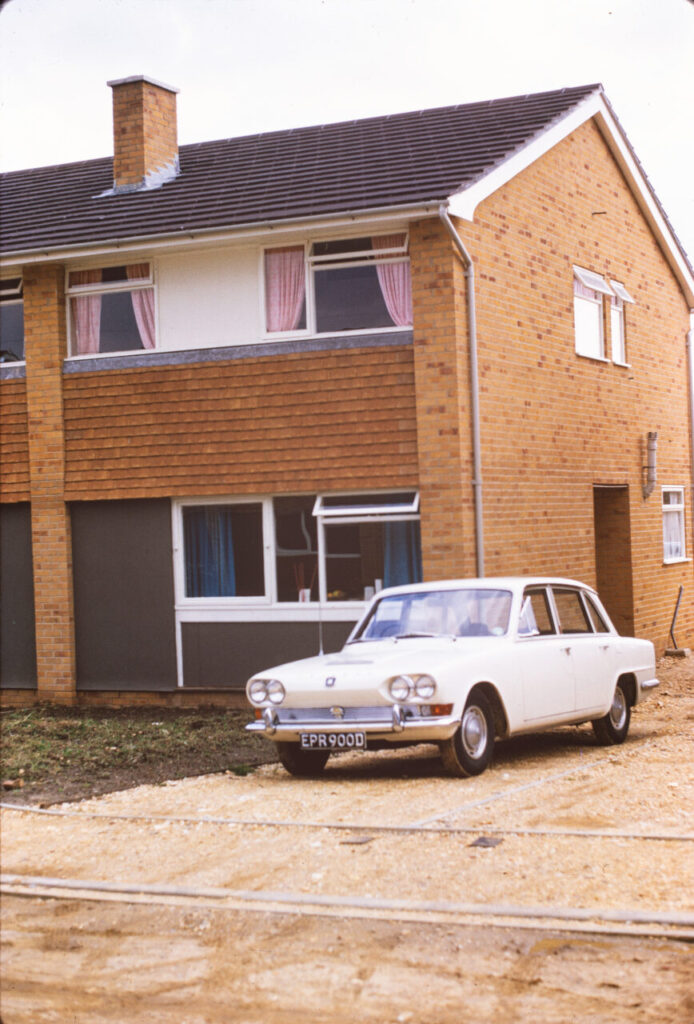
If you weren’t confused before, you’re about to be. EPR 900D is not a Sunbeam Rapier, it’s a brand new 1966 Triumph 2000 MK 1. So, who does it belong to? Well, I’m fairly convinced it is still the man we’ve already met if he is indeed the father of the two girls.
We are now taken on a fairly extensive drive in the country and this car and the sisters are in every. single. shot. They were very proud of this car and the girls probably quite bored of constantly having to pose in front of it.
I’m making a massive generalisation here but I’d presume that two bedrooms with bright pink curtains would almost certainly belong to two girls. The house they live in is so fresh that the builders haven’t even finished surfacing the drive, road or pavement.
These particular houses were the epitome of 1960’s affordable living and an answer to a shortage of housing. They’re called “cross wall” houses and they are cheap as chips and fast as hell to knock together. The two brick walls on the sides basically hold the whole house up and the front and back walls are nothing more than wooden frames with tiles hanging off them. If you’ve ever lived in one of these, and I have, you’ll know they’re bloody awful in the winter when the wind literally blows through your house and it has the heat retention of a colander. Worse, the party wall is about as sound proof as a piece of paper.
Anyway, off we go into what I think is the Yorkshire country side.
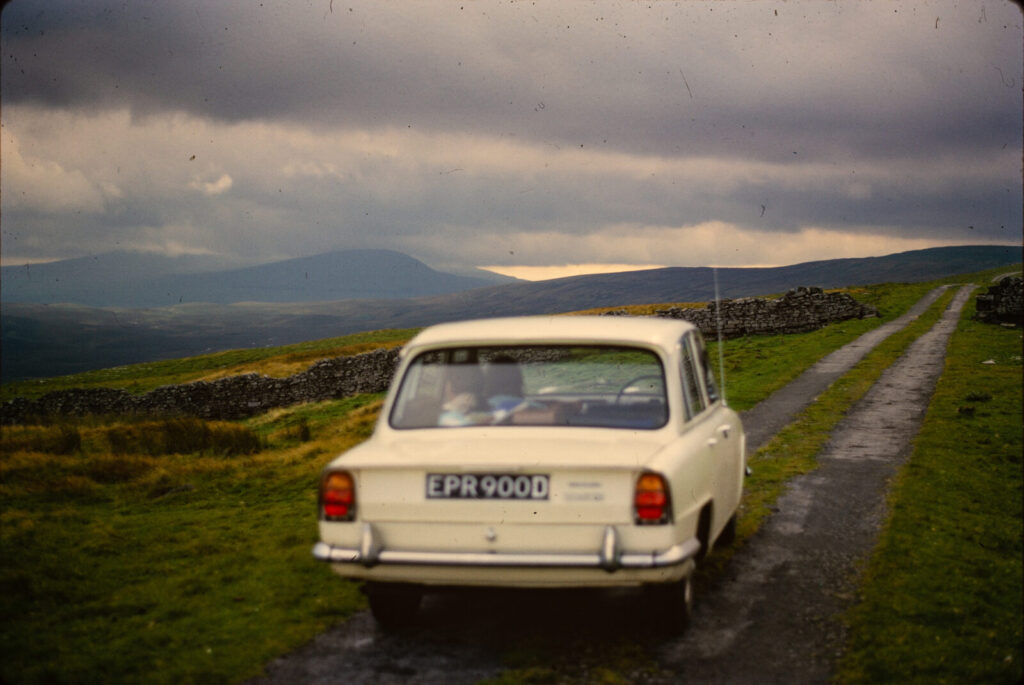
That’s quite the storm brewing in the background there. Notice that the girls are sat in the passenger and back seats – no mother.
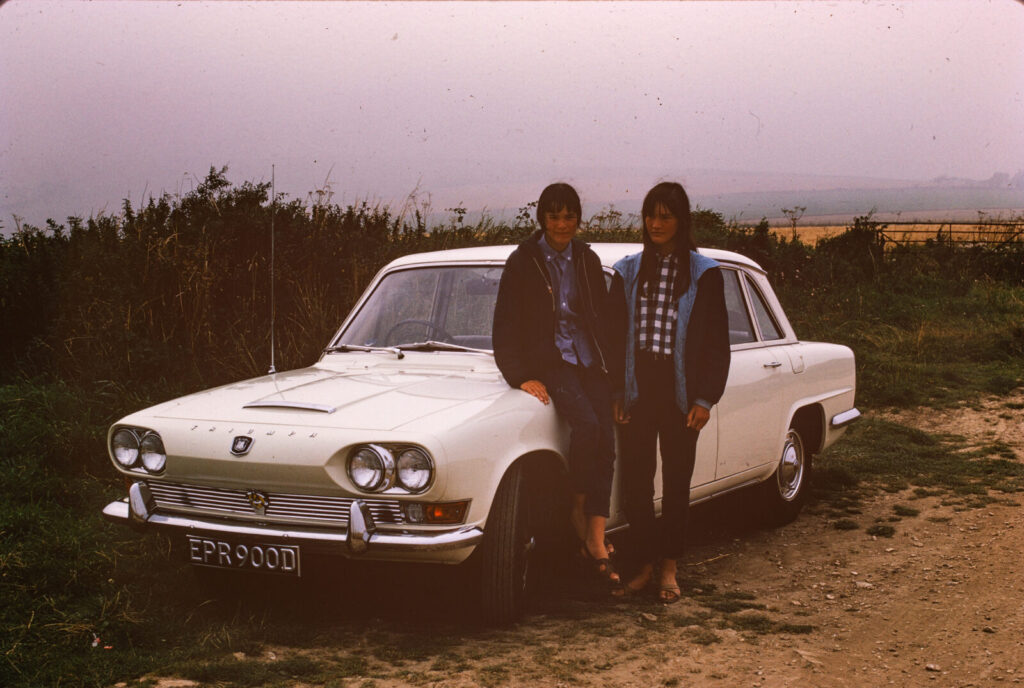
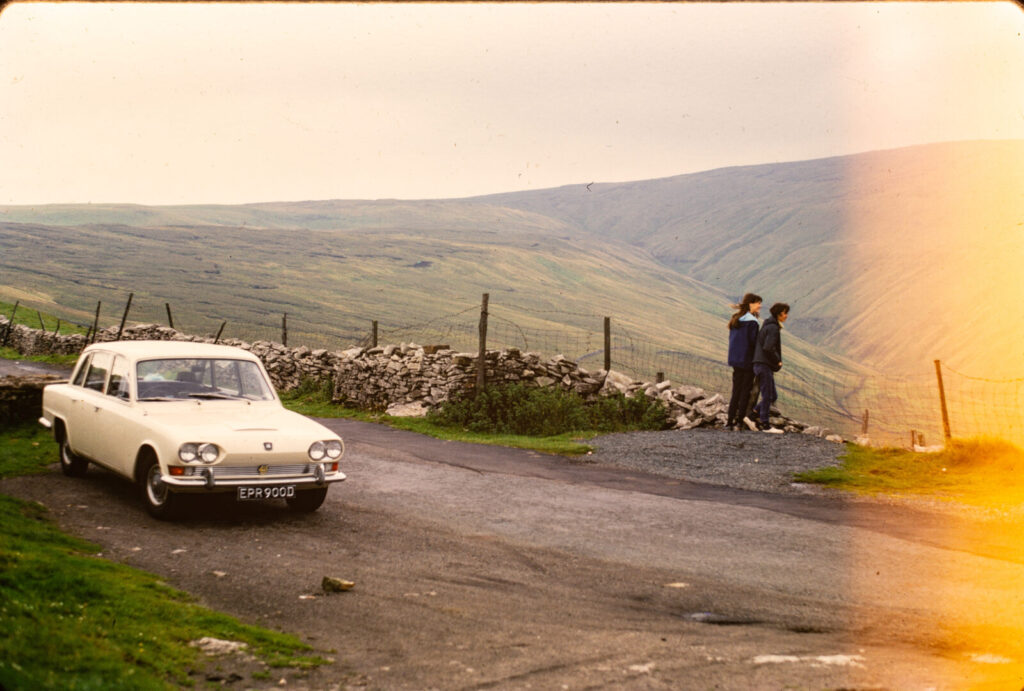
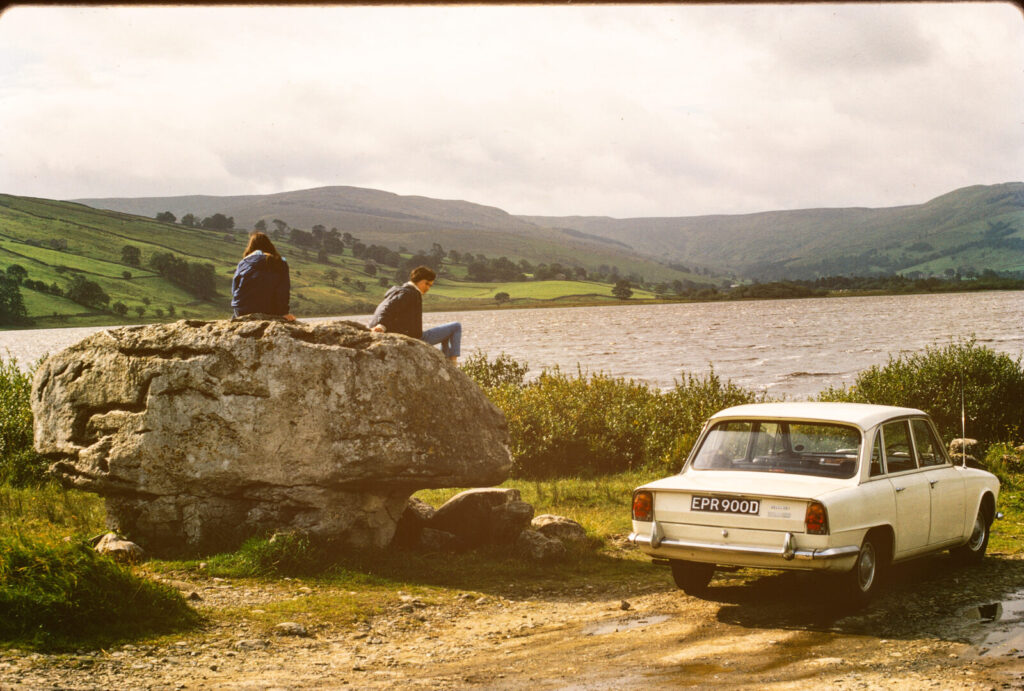
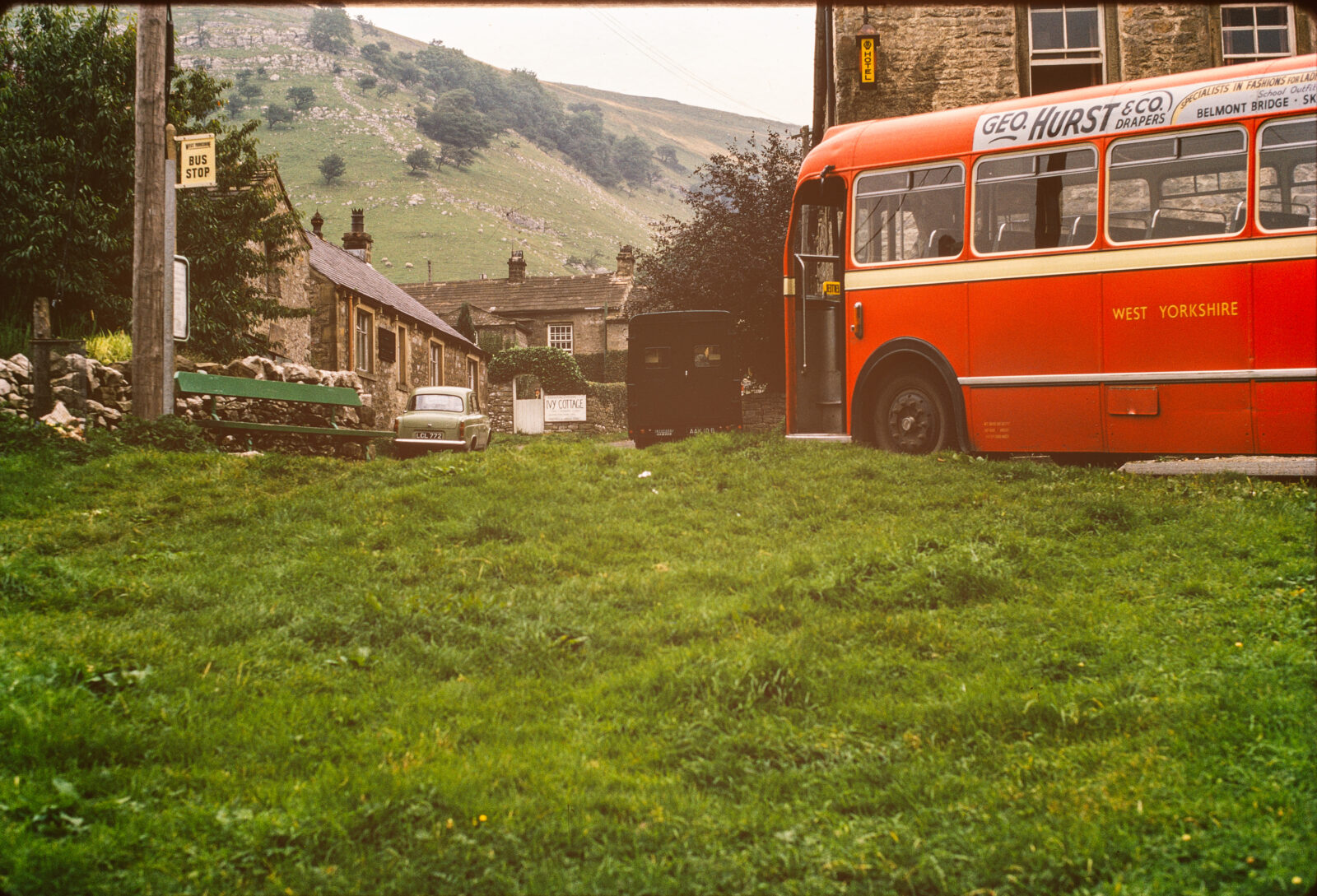
In fairness, this really was a beautiful tour of the countryside, especially the last photo, I wouldn’t mind knowing where it is. Wherever it was, they were definitely on a tour of Yorkshire and the next image is taken in a tiny village called Buckden which is in Wharfedale. Again, the detail in this image is nothing short of amazing. If you view it full size and zoom in, you’ll notice an old lady waiting for the bus to turn up.
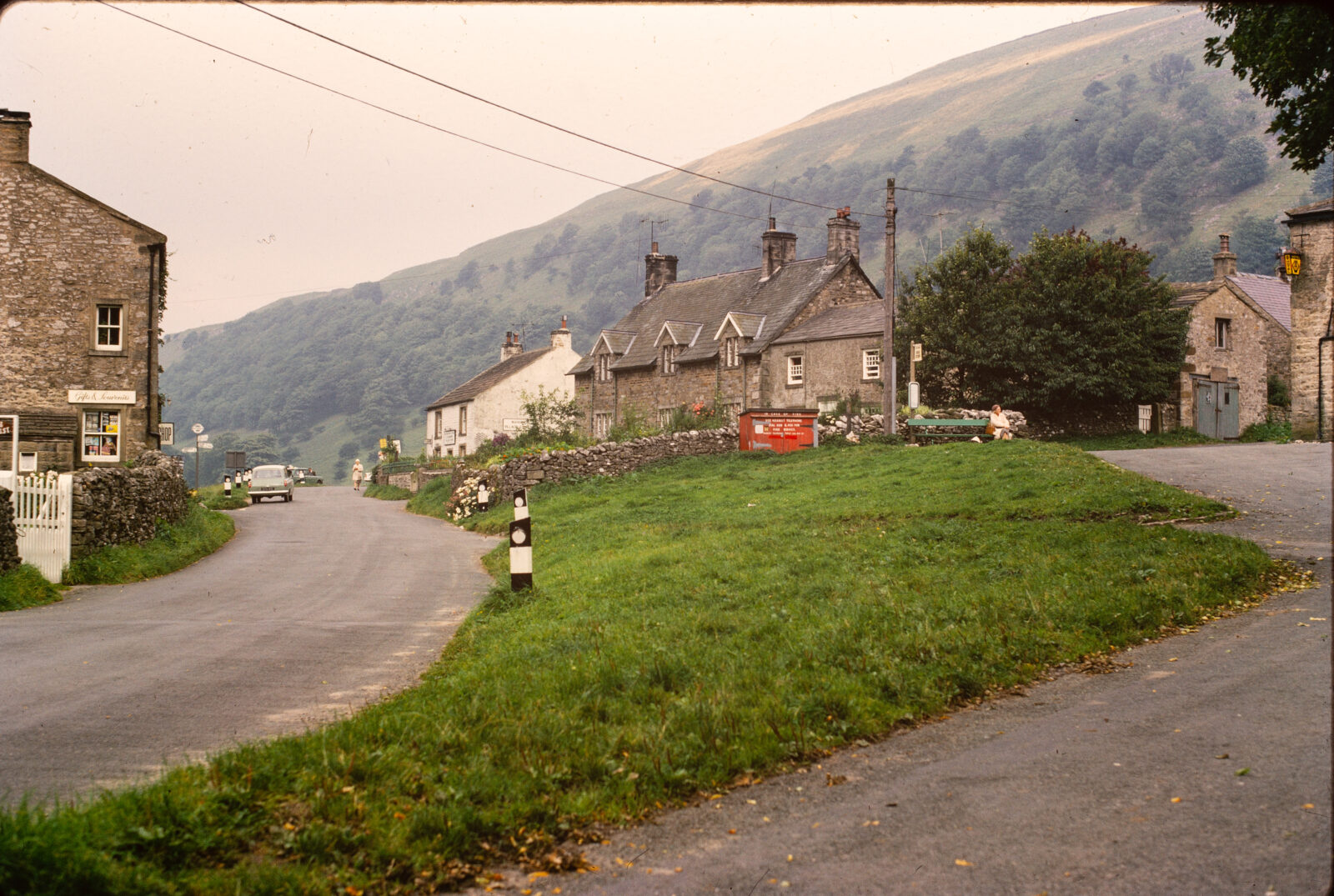
The same location on Google Streetview as it appears today – the gift and souvenirs shop is long gone, looking like it has turned into a set of holiday flats or a small B&B.
Buckden has its roots in the 12th century and is located on an old Roman road. It was originally a settlement for local forestry workers, but later evolved into a centre for gravel and lead mining with the gravel mine operating for 200 years from 1697 – 1897. As all places steeped in history should, Buckden has its very own unsolved mystery:
The mine is at the centre of a mystery that is yet to be resolved. In 1964 a skeleton was found at the site. It is believed that the man had entered the mine in 1890, but he has never been identified. Locals have dubbed him “Buckden Bill”. Strangely, his corpse was just 400 yards from the mine’s exit.
Quote from https://www.yorkshiredales.co.uk/villages/buckden/
So don’t go lurking around mines in the dark.
Oh, and the bus turned up…
The final stop on our tour of Yorkshire is the town of Grassington, Wharfedale. What’s Grassington famous for, I hear you ask. The answer is it played the role of Thirsk in the 2020 adaptation of “All Creatures Great and Small” which is basically a fictional series about a vet who spends far too much time having to shove his entire arm up a cows arse. Grassington is a beautiful, traditional Yorkshire market town, though.
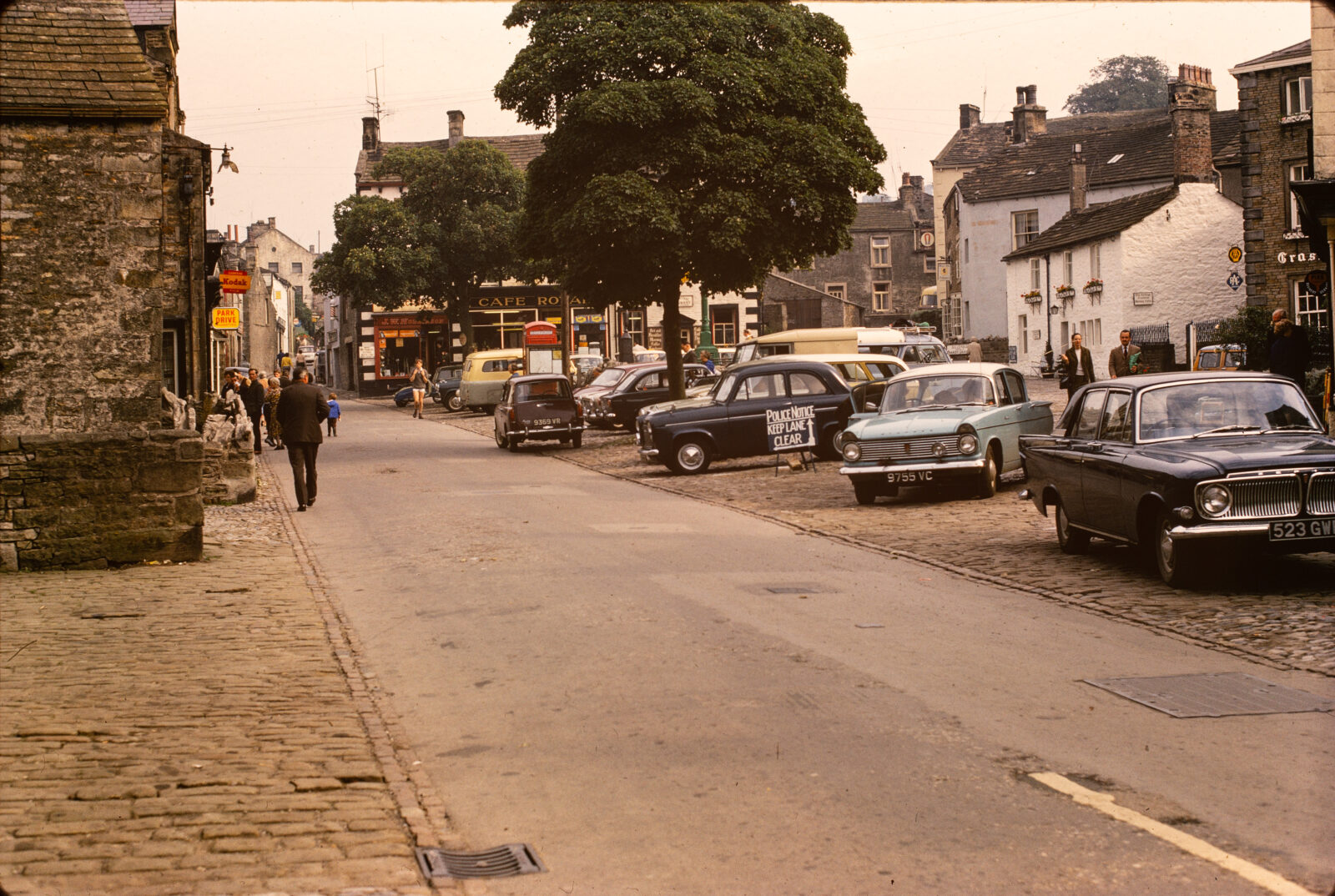
Grassington in September 1966 above and as it stands today, below.
1967 – Melrose, Scotland
In 1967 our family visited the Scottish border town of Melrose, famous for its ruined Cistercian monastery. The Cistercians didn’t like any of this relaxed, Benedictine style of worship. They wanted to return to proper good old manual labor, poverty, solitude and silence so went off to form their own Monastic order and this monastery was one of the results. Buried there is the heart of Robert the Bruce. Where the rest of him is, God knows, but for some reason they saw fit to distribute bits of him around the place.
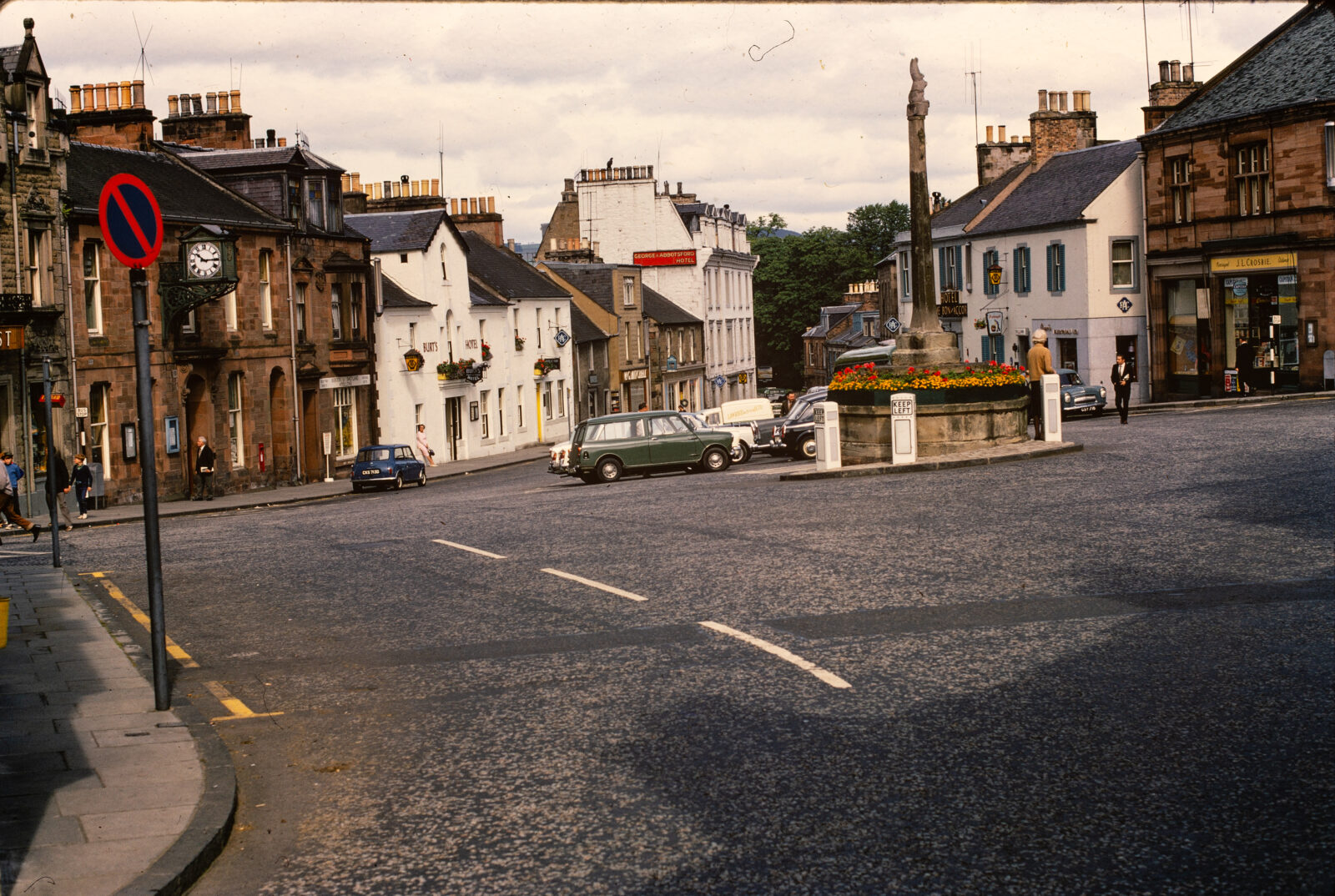
Once more the sheer quality of slide film came to my rescue when locating these images as all I had to do was zoom in, read the name of the hotels and give them a quick Google. One thing I’ve discovered doing this is that hotels are really reliable methods of locating places as they seem to stay open forever whereas shops and pubs even are much more transient in nature.
The image above, like so many of these, deserves closer inspection.
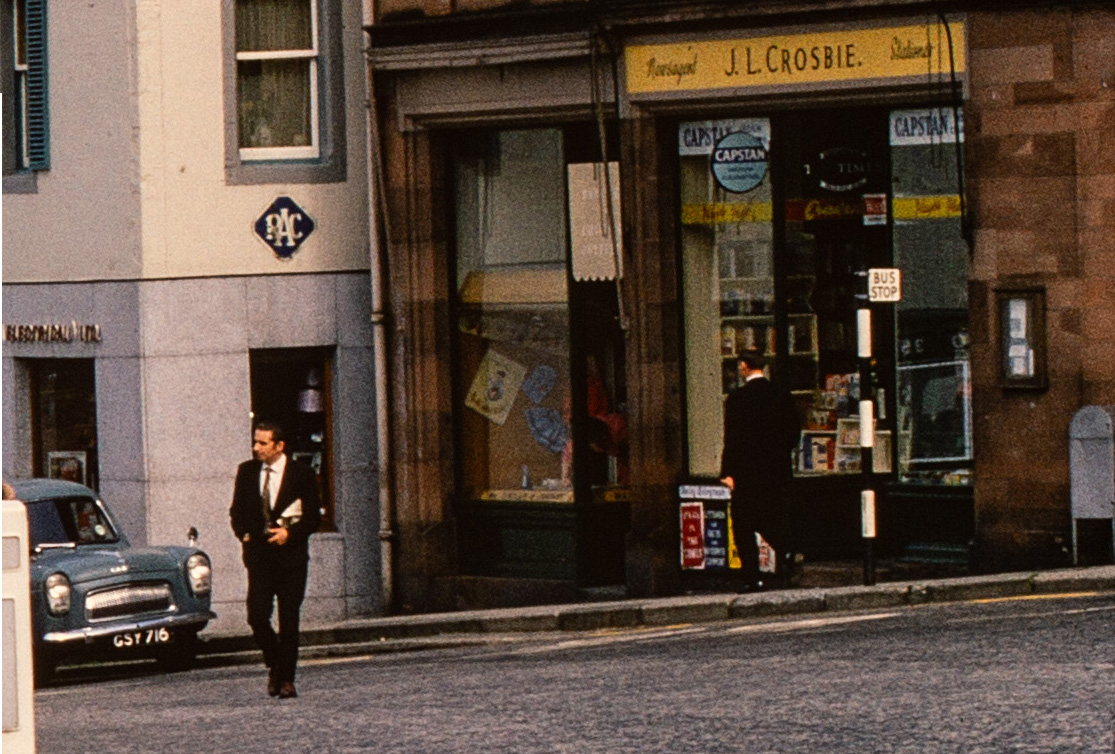
Just take a moment to look at how absurdly well dressed this man is. He’s just out to get his morning paper and yet he looks like a film star. This isn’t unusual for 1967, so many people in these photographs are absolutely flawlessly dressed in their finest suit and tie. Although personally I find suits hideously uncomfortable and impractical, there’s no denying these people look the part. If I looked like that on any day of the week I’d be happy, let alone if that was just my get up for fetching a paper. Madness.
Look left and we see this lady just casually taking a break:
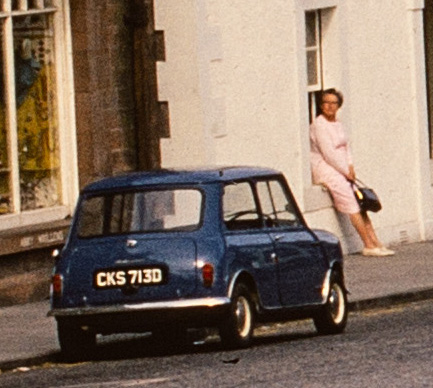
And why not. Just on the edge of the image, where you’d never think to even remotely pay attention is this kid who’s clocked the photographer and has a great expression on his face.
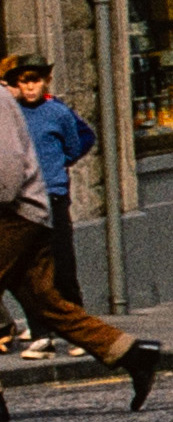
Decent hat too. Finally, notice the column in on the traffic island? What looks like a rabbit having a hard time is actually a “Mercat Cross”
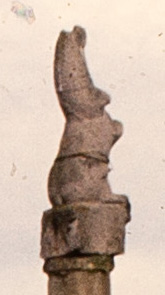
A Mercat Cross is a unicorn holding a shield which has the Royal Arms of Scotland on it and signifies a place where market trade takes place as far back as the 1200’s. But it looks like a rabbit in this picture…
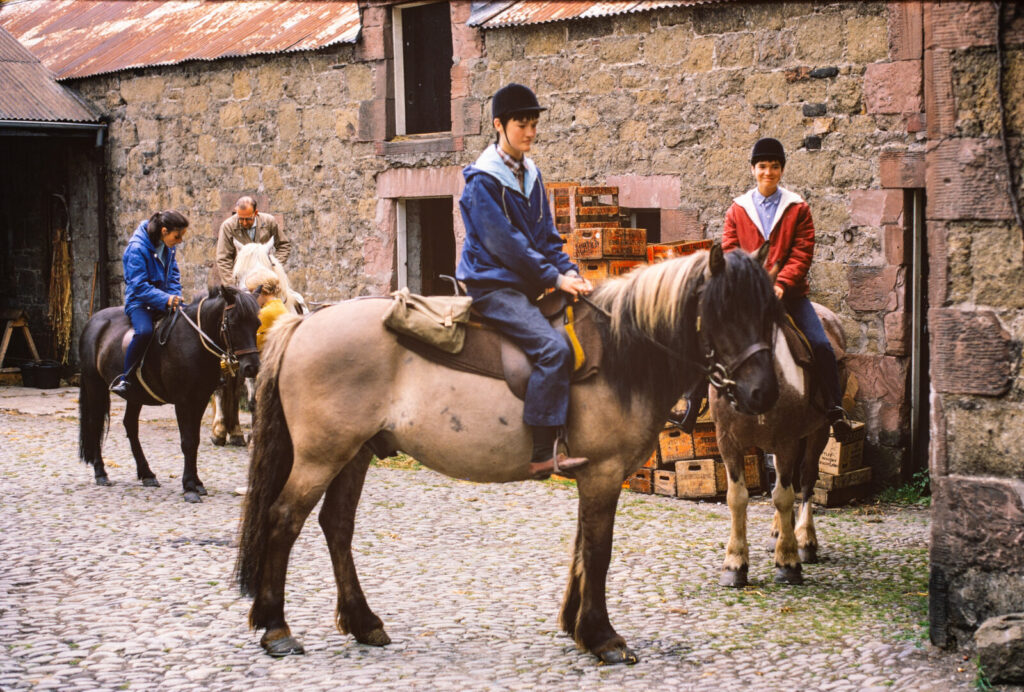
Anyway, back to our family, the sisters have come to Melrose to do some horse riding and have picked up their trusty steeds out the back of a pub that is just a hundred metres or so down the road from the first image of Melrose above. They look quite happy with themselves but I’m not so sure about the shoes on the girl closest to us, I always thought people riding horses wore boots but that shows how much I know about horses and riding (which is nothing at all).
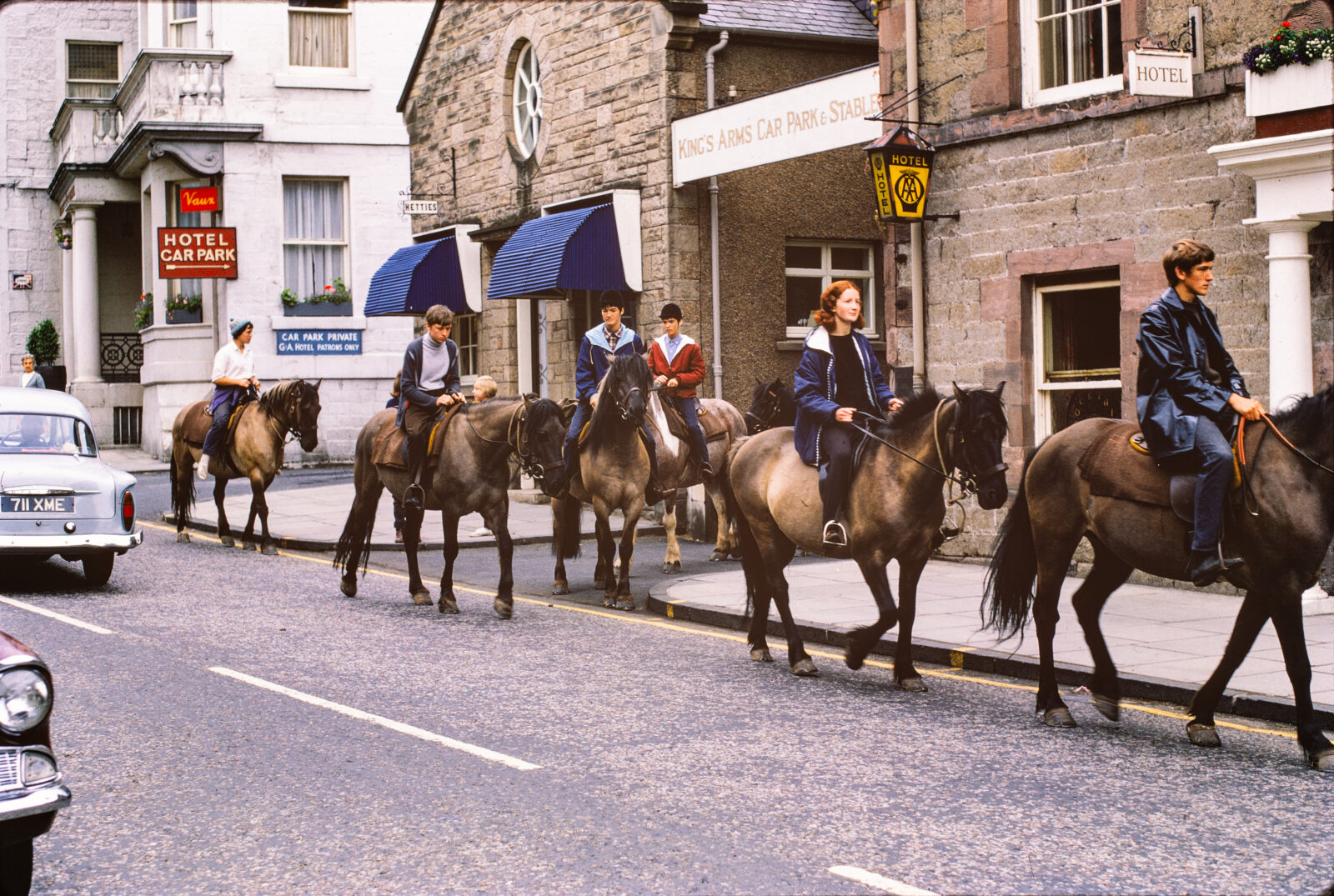
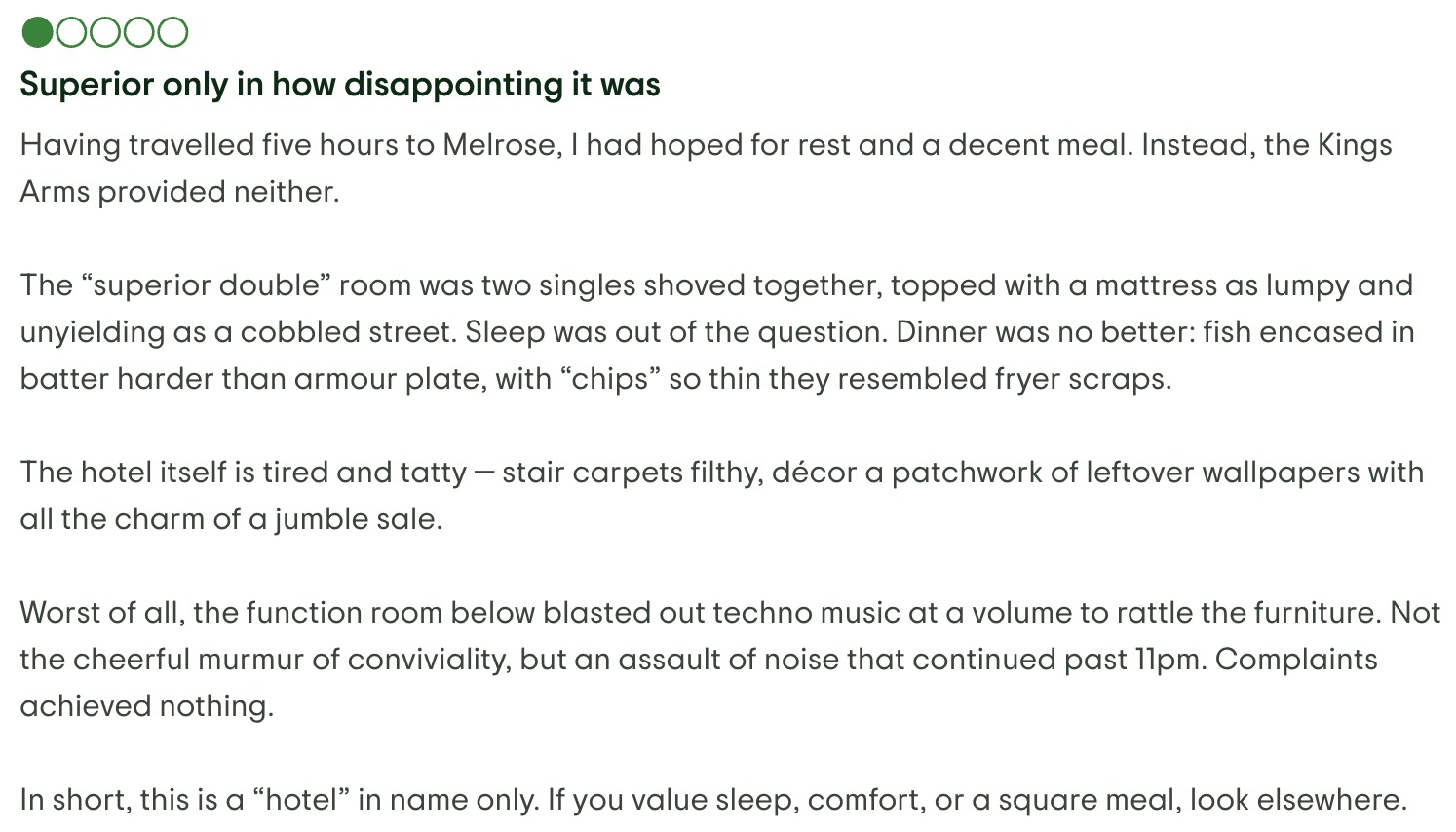
And they’re off! Where to? No one knows, because this is the last photograph in this particular series. As you might expect, the Kings Arms is still there today but the stables are now a beer garden. You can, however, stop the night if you like the idea of “armour plated” fish and a “jumble sale” aesthetic as this one satisfied customer describes it:
Melrose as it is today on Street View. Turn left and go up the hill to visit the location shown in the first image.
1970 – Some serious holidaying
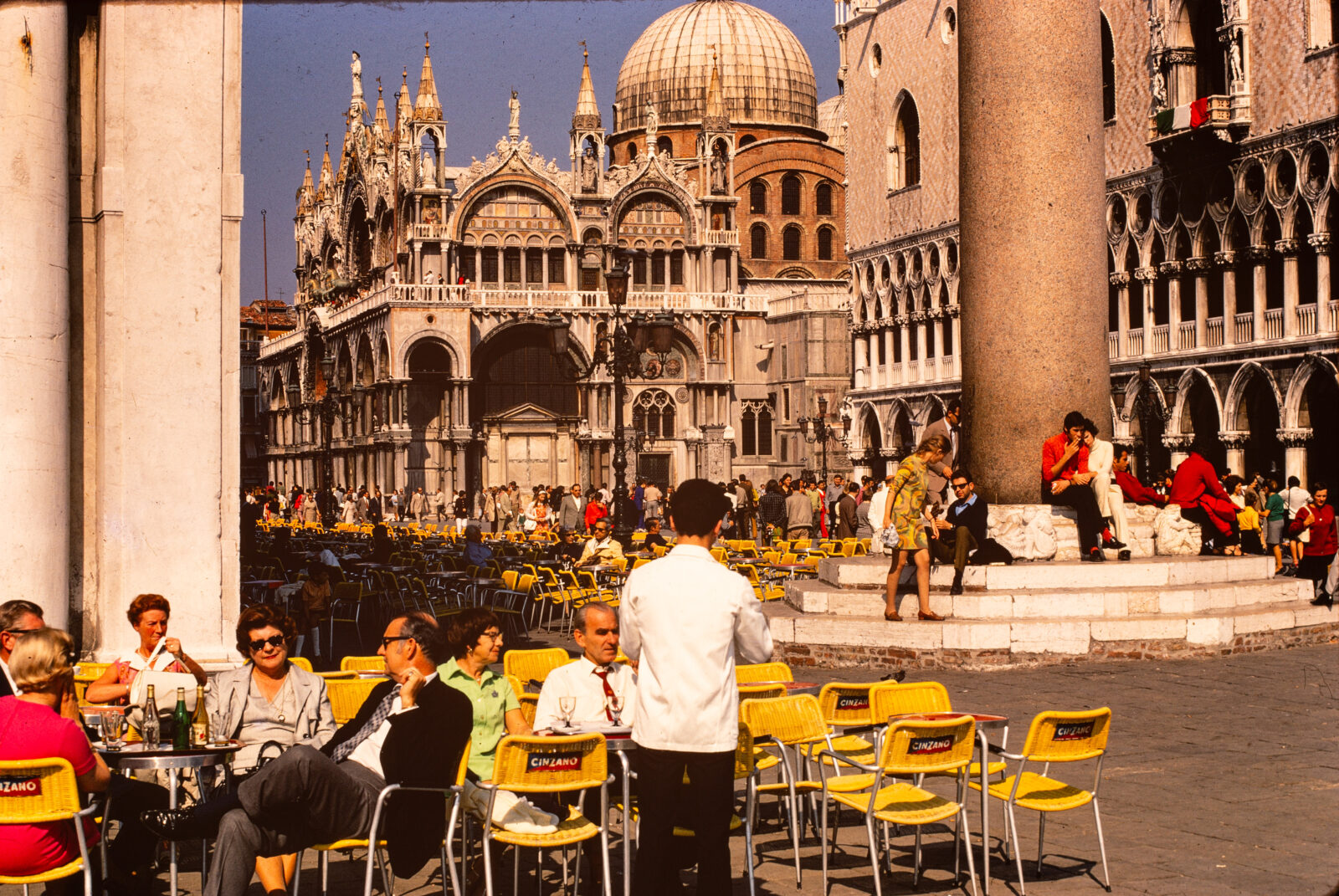
In 1970, they went on the holiday of a lifetime. From the same year there are photographs from Paris, the Italian Alps and Venice, including various stops in between these locations. The scenery is beautiful, the weather perfect and the dress on the continent even sharper than our dapper Scot that we met earlier.
I’ll let you into a secret, I didn’t have to work very hard to locate these as they all had the details written on them…
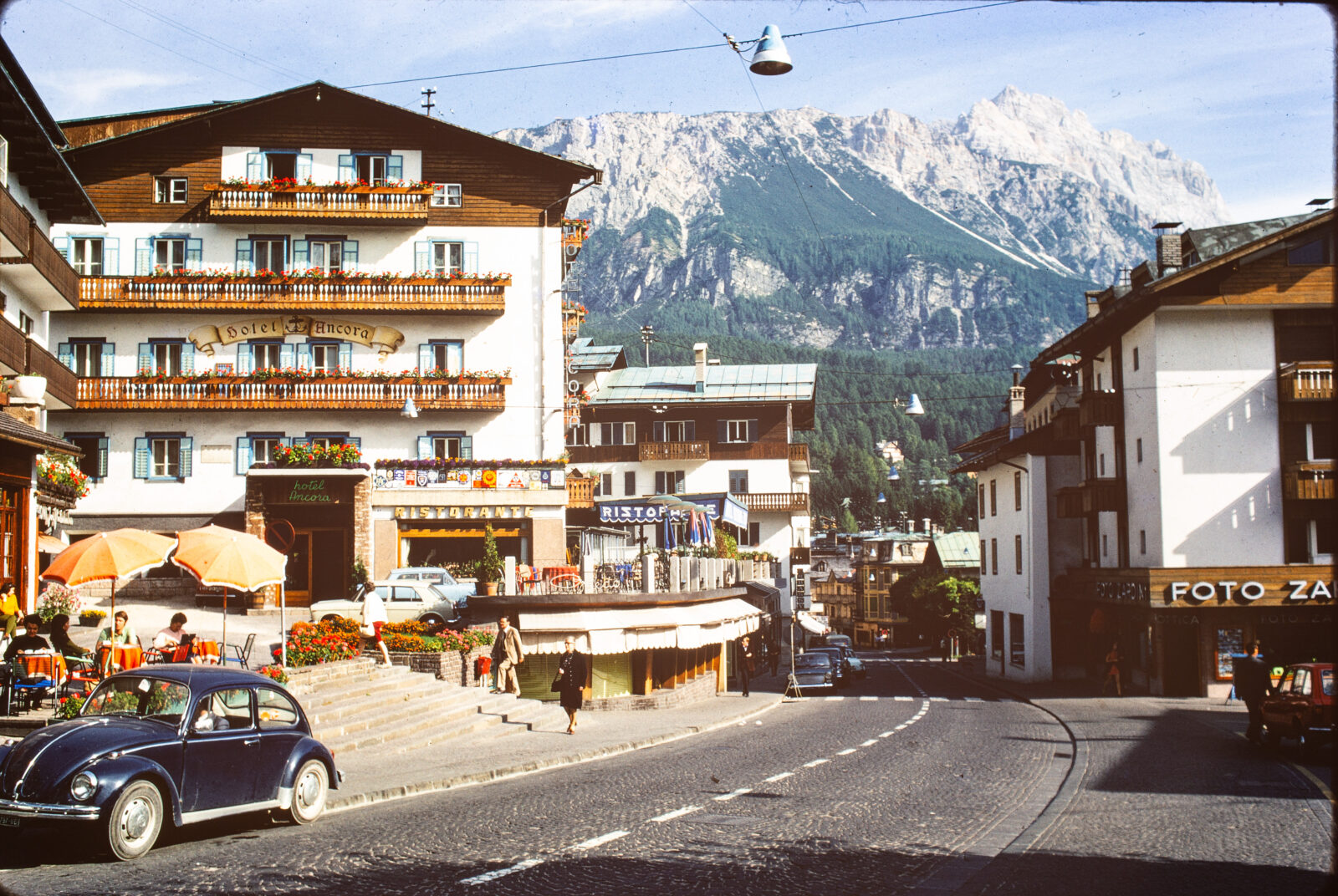
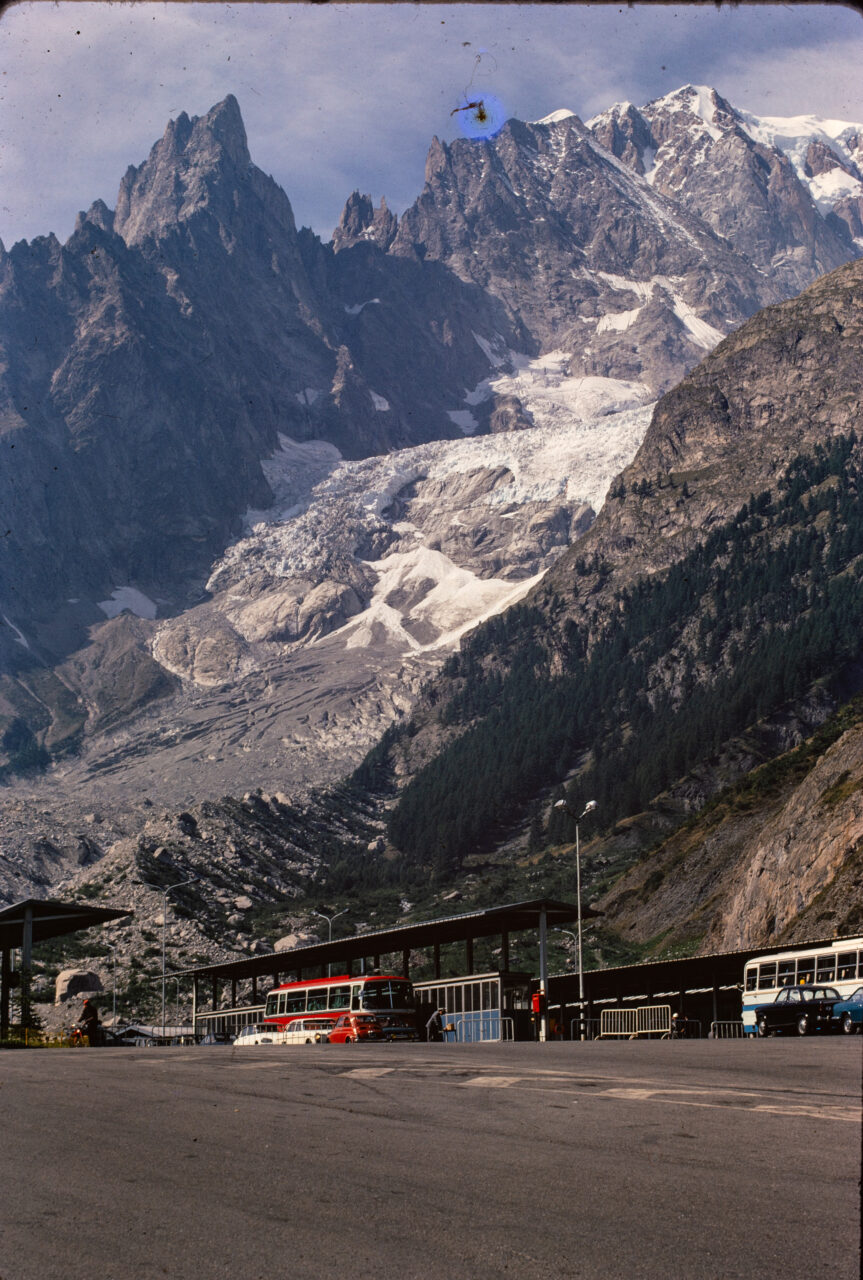
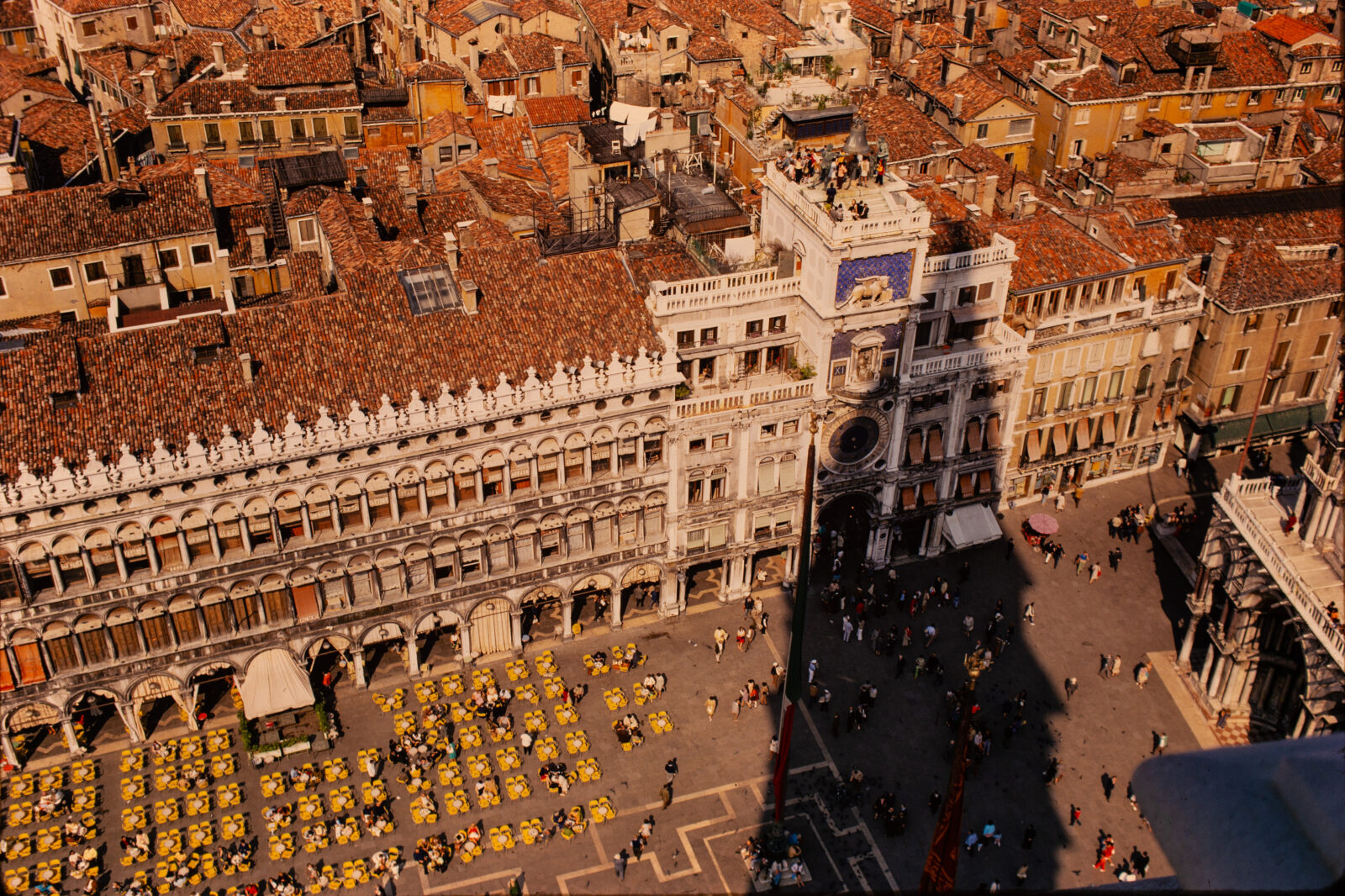
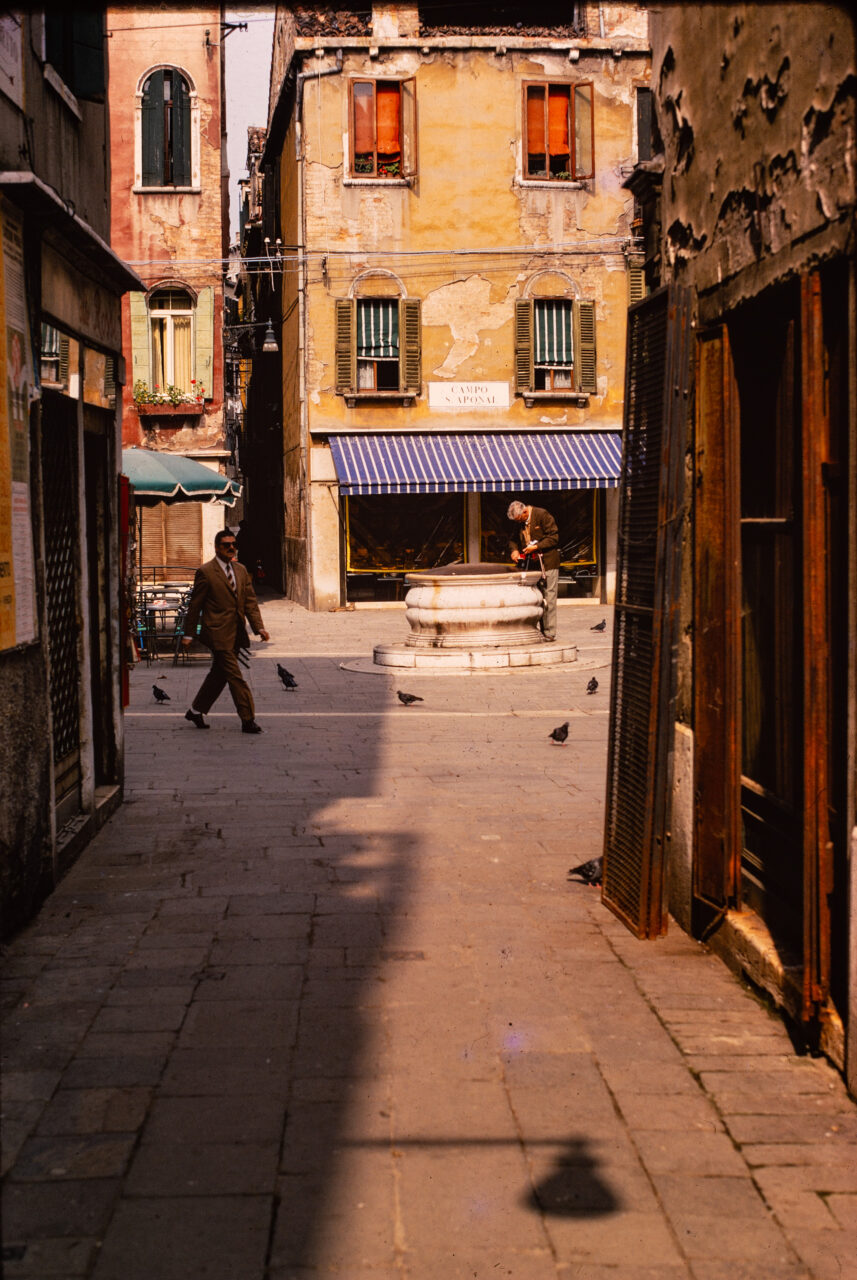
There are roughly 40 images from this series and I’ve chosen those that seem the most interesting to avoid this just becoming holiday spam from the past. I’m sure you get the idea by now that the weather was fine, the locations spectacular and… not once was a family member photographed. How odd?
1972 – Married
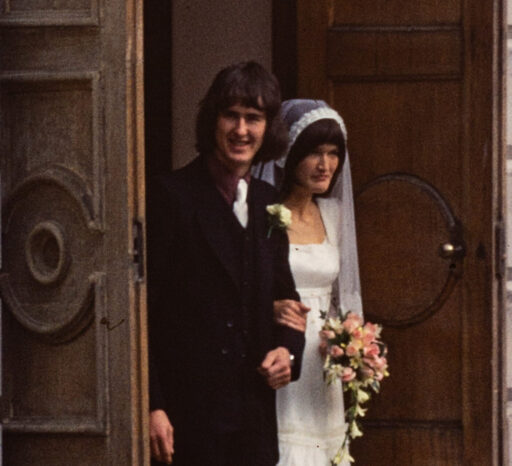
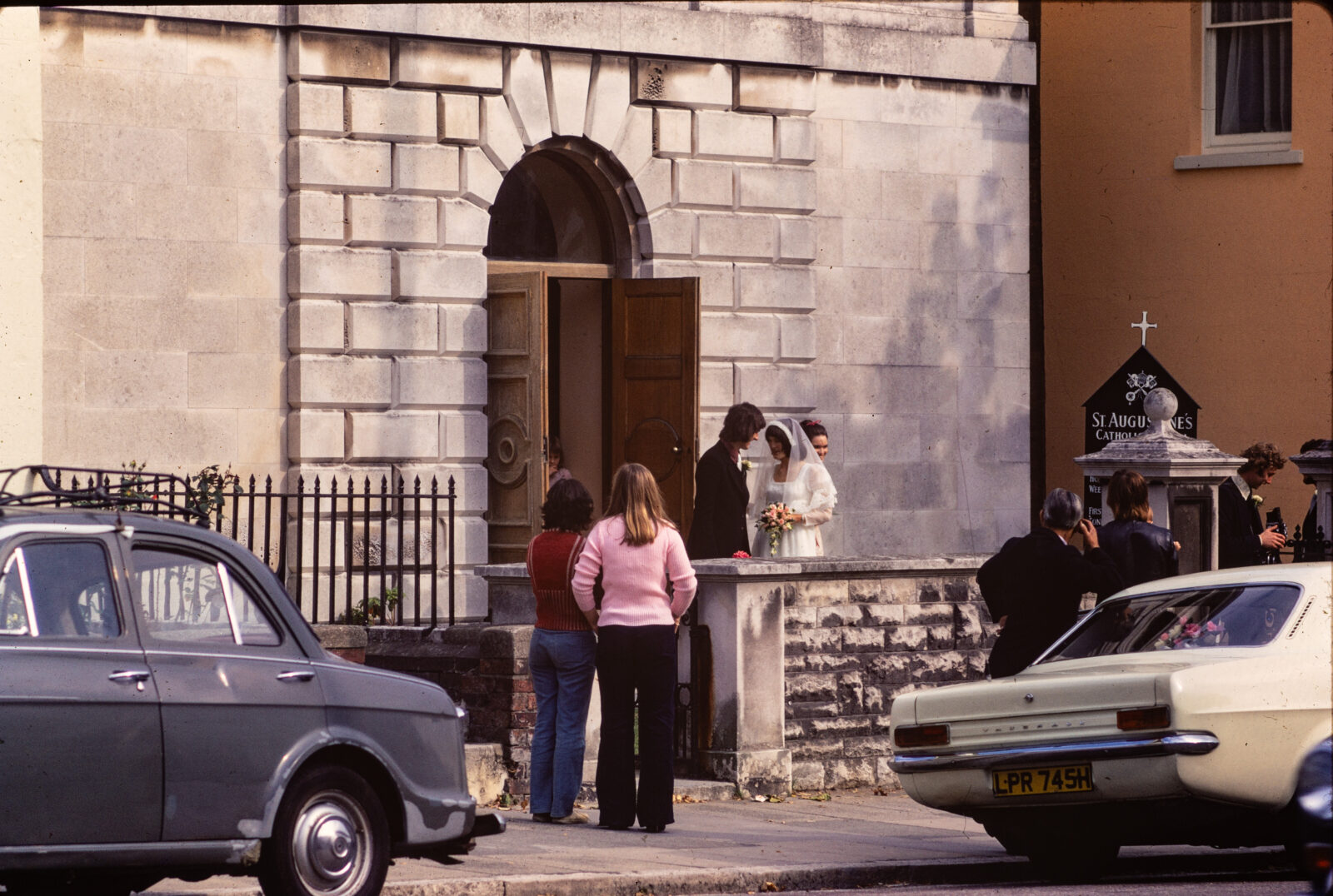
Seven years after we first meet her, the older of the two sisters is married in St. Augustine’s Catholic Church. I have looked at so many St Augustine’s on Google maps but I cannot for the life of me find this particular church so I can’t tell you where they got married. What I can tell you is that this is where the memories end – there are no more dated slides after this point, which seems poignant in a way.
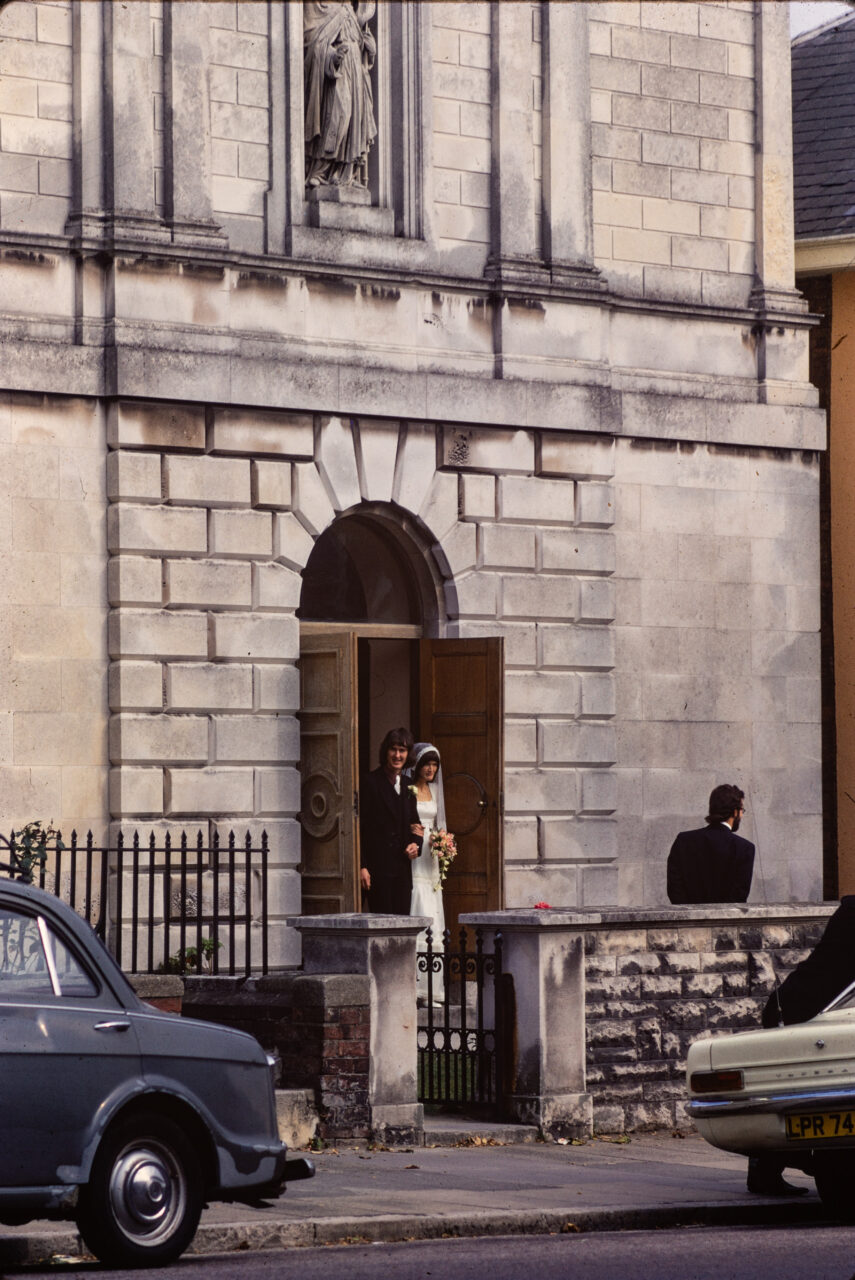
The image above isn’t particularly easy to see their faces clearly, but if you zoom right in you can see it is without doubt the older of the two sisters.
What I don’t understand is why this picture was taken from so far away. There’s a guy on the right who has a TLR, he’s obviously been in the church, another man with a camera to his face next to them, but our photographer seems to be over the other side of the road. I can’t really think why you’d do that if you were a close relative or father of the bride. Come to think of it, if you were father of the bride, you’d certainly be over with the other guests, wouldn’t you?
Lots of loose ends and unsolved puzzles
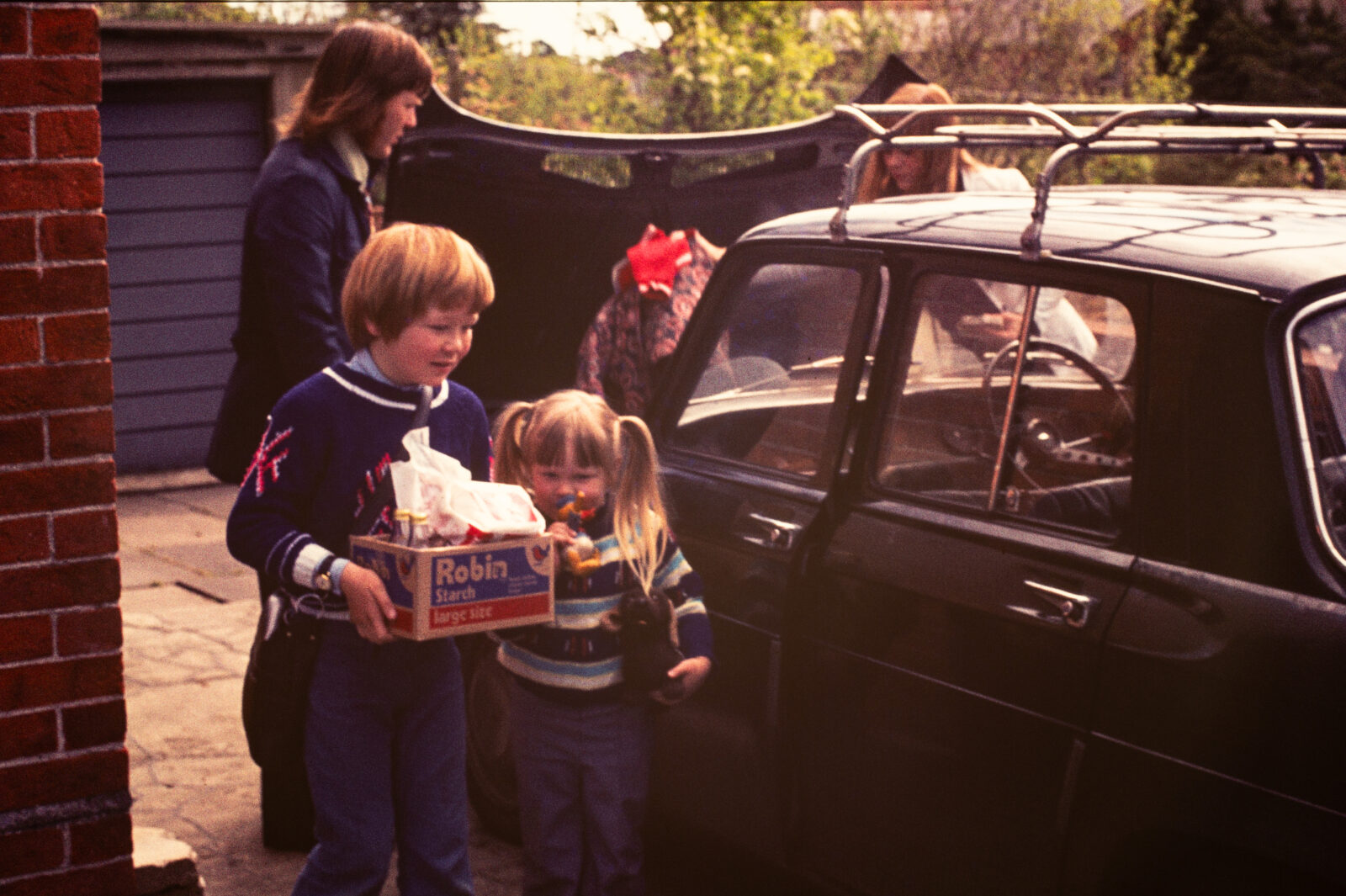
The picture below was taken in what I presume is the late 1960’s or early 1970’s – perhaps no later than 1975. These were from two different films which I only have approximately 8 slides from in total. There are no dates on them and the images depict a family we’ve not seen before visiting a house with their children – I don’t think it is their house simply because you wouldn’t really ask someone to take a picture of you unpacking the car on the drive.
The car is never seen again in any other photo and nor are any of the adults or children seen here. I’d go so far as to say they’re something of an anomaly in the series, but they do belong here as I located the house to Weymouth and I even know that either the woman in this image is called Jane, or the owner of the house is.
This is the house they’re visiting:
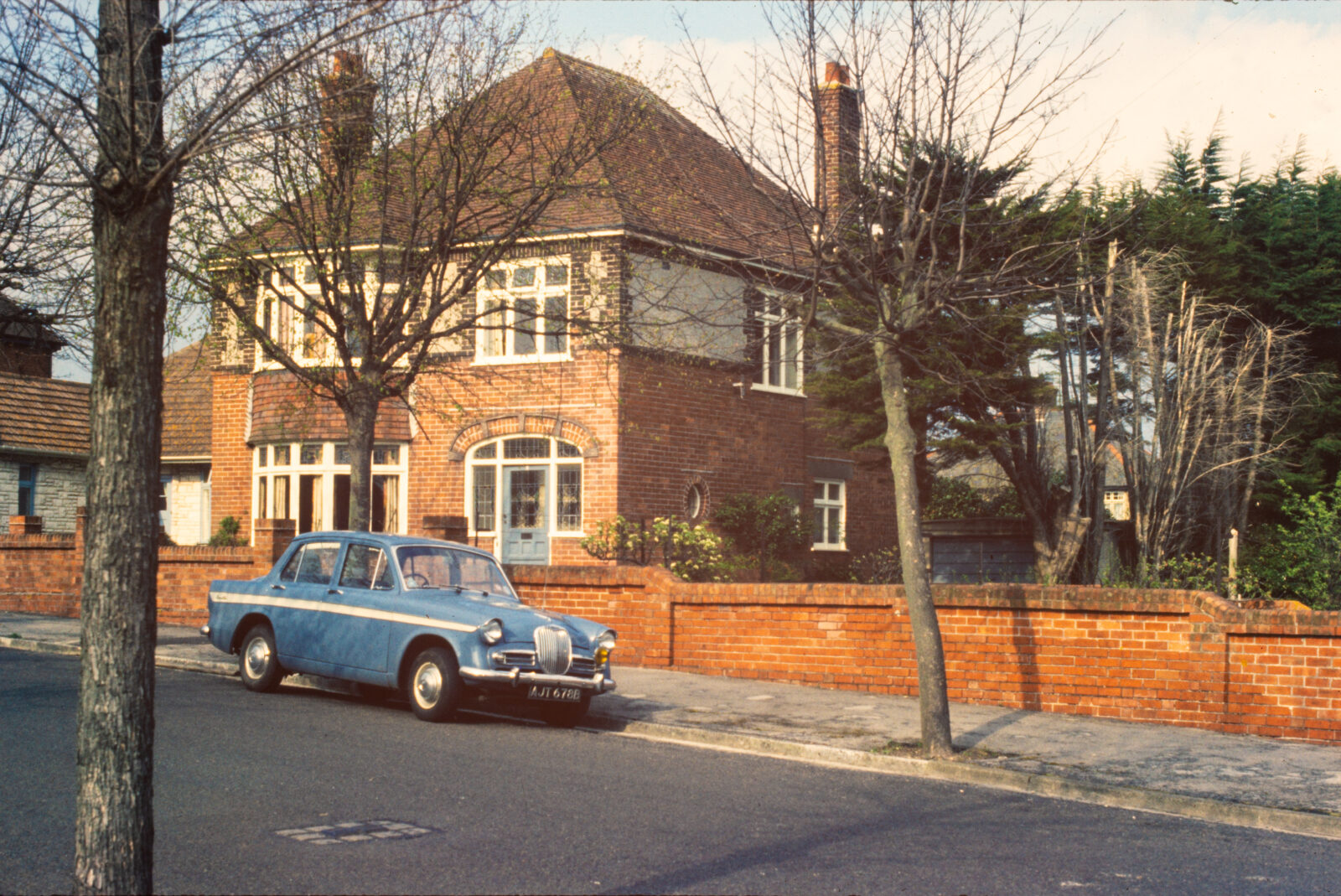
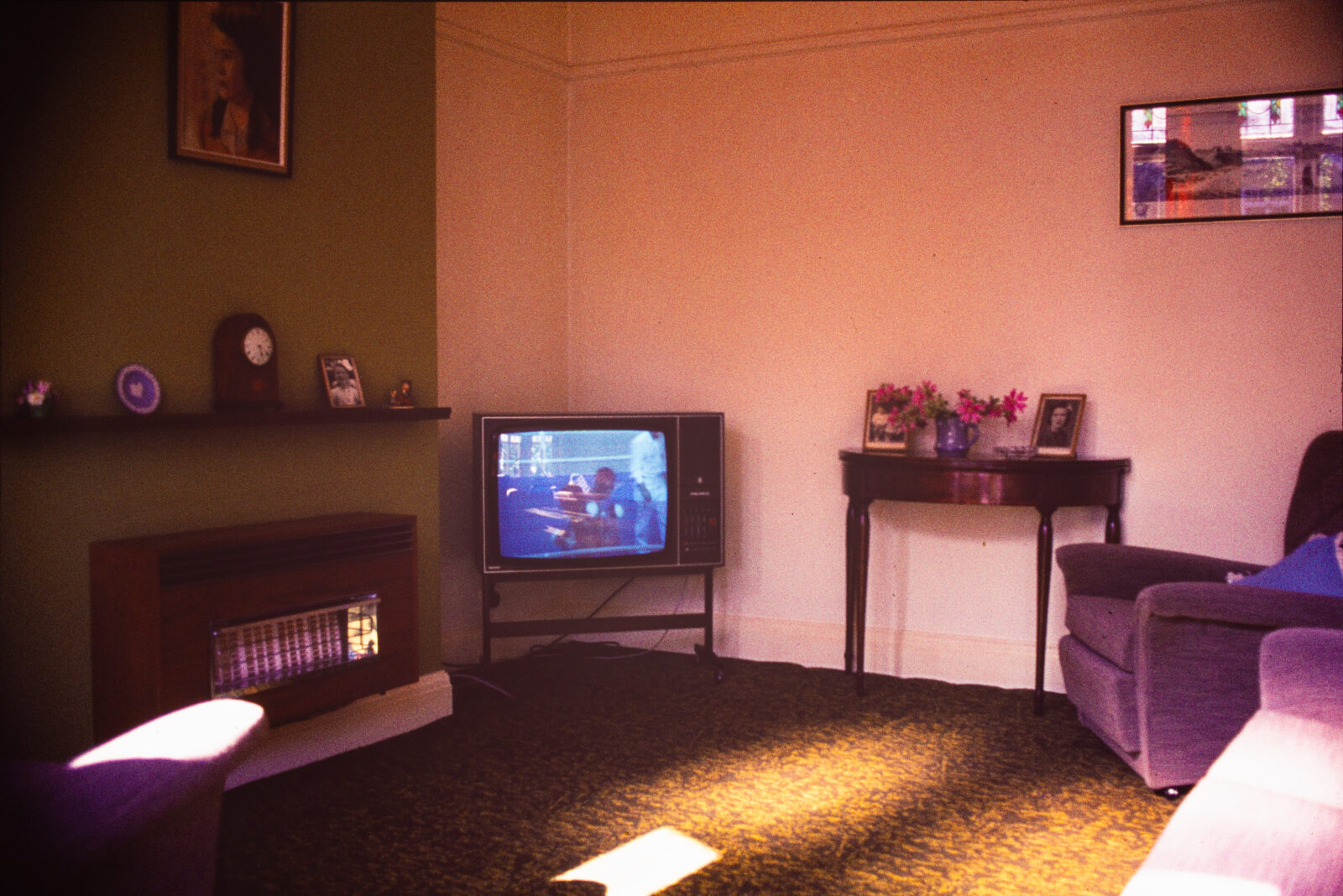
The car is a 1964 registration – so obviously cannot be any earlier than that. This is a substantial house and regardless of the fact houses were cheaper in the 60’s and 70’s, I’ll wager this was not a cheap house by any means. Was this a move for our family from earlier to a new house? Is it a relative – grandparent perhaps? My favourite image is of what must be the living room, it is just one of those pictures that you can not only look at for a long time but also gives you such an insight into the way things were. Just look how “minimalist” it is:
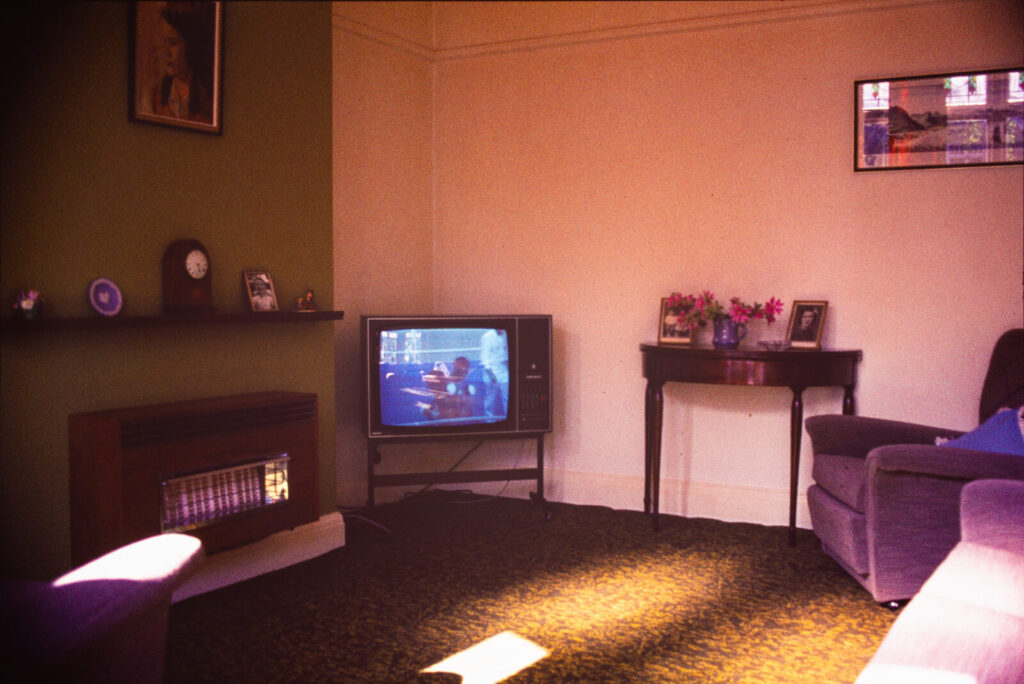
I’ve tried to “zoom and enhance” the picture above the fire and on the table but the detail simply isn’t there. The picture above the fire looks like a painted photograph – an art style that was prevalent in the 70’s. Is it the older sister? It’s so hard to say, there are some similarities but it isn’t screaming at me that it’s a match. The TV is colour and must’ve cost a fortune as this was at the very dawn of colour TV in the UK and that TV is not small by any means.
I think it would be highly unlikely that we have a mix up of slides here that don’t belong to this family in some way, especially as the house here is in Weymouth (I’ve located it on Google streetview but won’t link it here) where all the other images are taken and yet the man we saw on the sea front is definitely not the guy getting his family out of the car. Does the man in the suit own this house?
Is this family we’ve met the brother or sister in law side of the family we’re about to meet, perhaps?
I’ve got to admit that other than putting a coherent timeline together, I’ve failed to understand the family dynamic and story here. Too many uncertainties remain – who were the people visiting the beautiful house in Weymouth? Why don’t we ever see them again? Who is the father of the two sisters and why do we never, ever see them together as a group? Cameras back then definitely had self timers and with all the holidays and trips they did, you’d think you’d take at least one photo?
All we know is that the person who owned this camera was doing well for themselves. They always seemed to have a new car, they went to some of the most beautiful places in Europe and either they or a member of their family managed to buy a newbuild house whilst someone else in their family owned a really nice house down in Weymouth.
If things weren’t already vague enough, I wonder who Jane is. Jane either is the woman in this photograph or she is the person who took it – but what I can say with absolute certainty is she lived in the house we saw earlier in Weymouth. How do I know? She wrote her name and address on the slide…
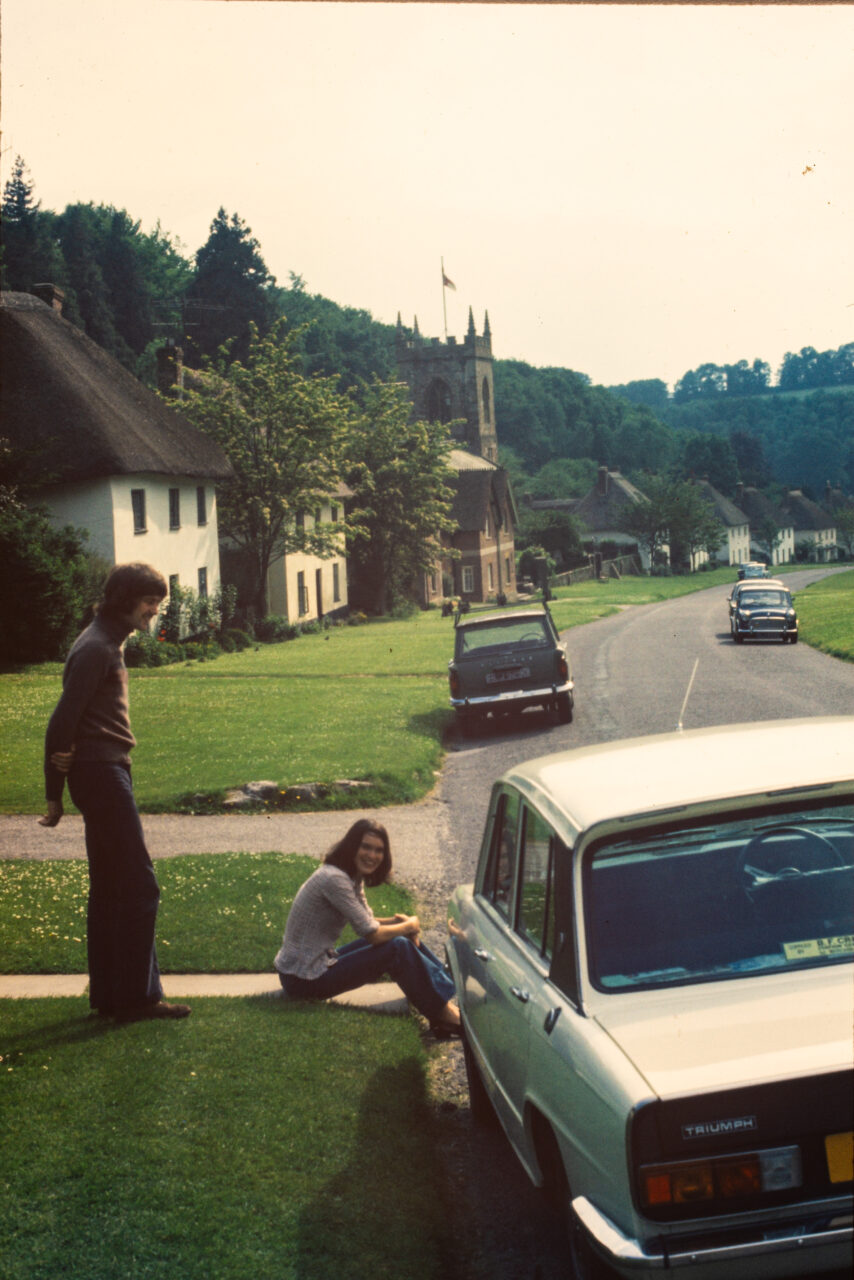
There is no date on the slide nor any other information. If this is the married couple from above I can’t be sure – it doesn’t seem to my eyes to be the same people.
And that, my friends, really is a bloody mystery!
I’m going to leave you with a gallery of other images. If you think you can do a better job of piecing together the events pictured here or the family connections or just want to have your say, please do take the time to leave a comment below.
As always, thanks for reading.
More slides…
These are the images that either didn’t belong anywhere else or I couldn’t quite shoehorn into the story. Enjoy!
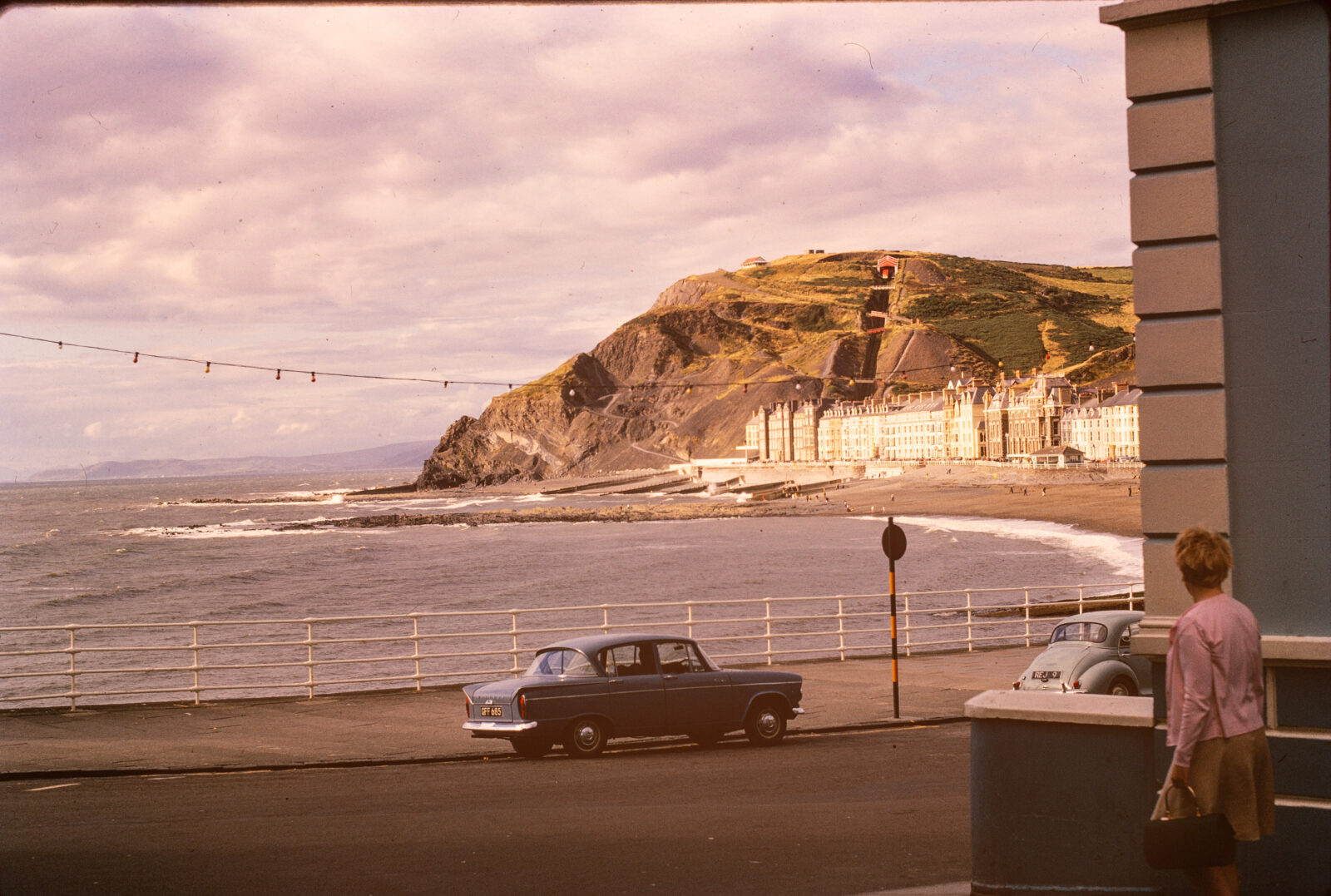
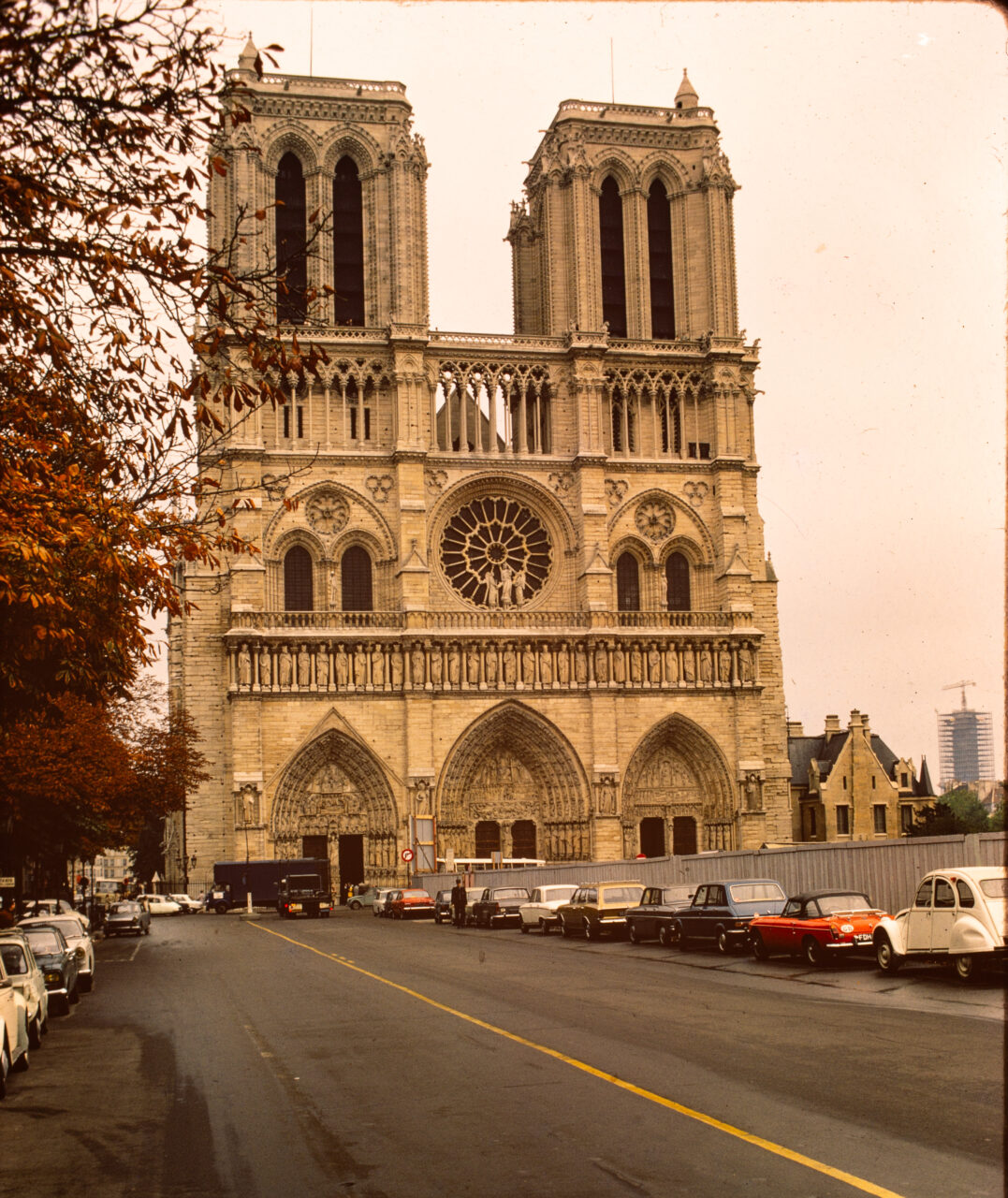
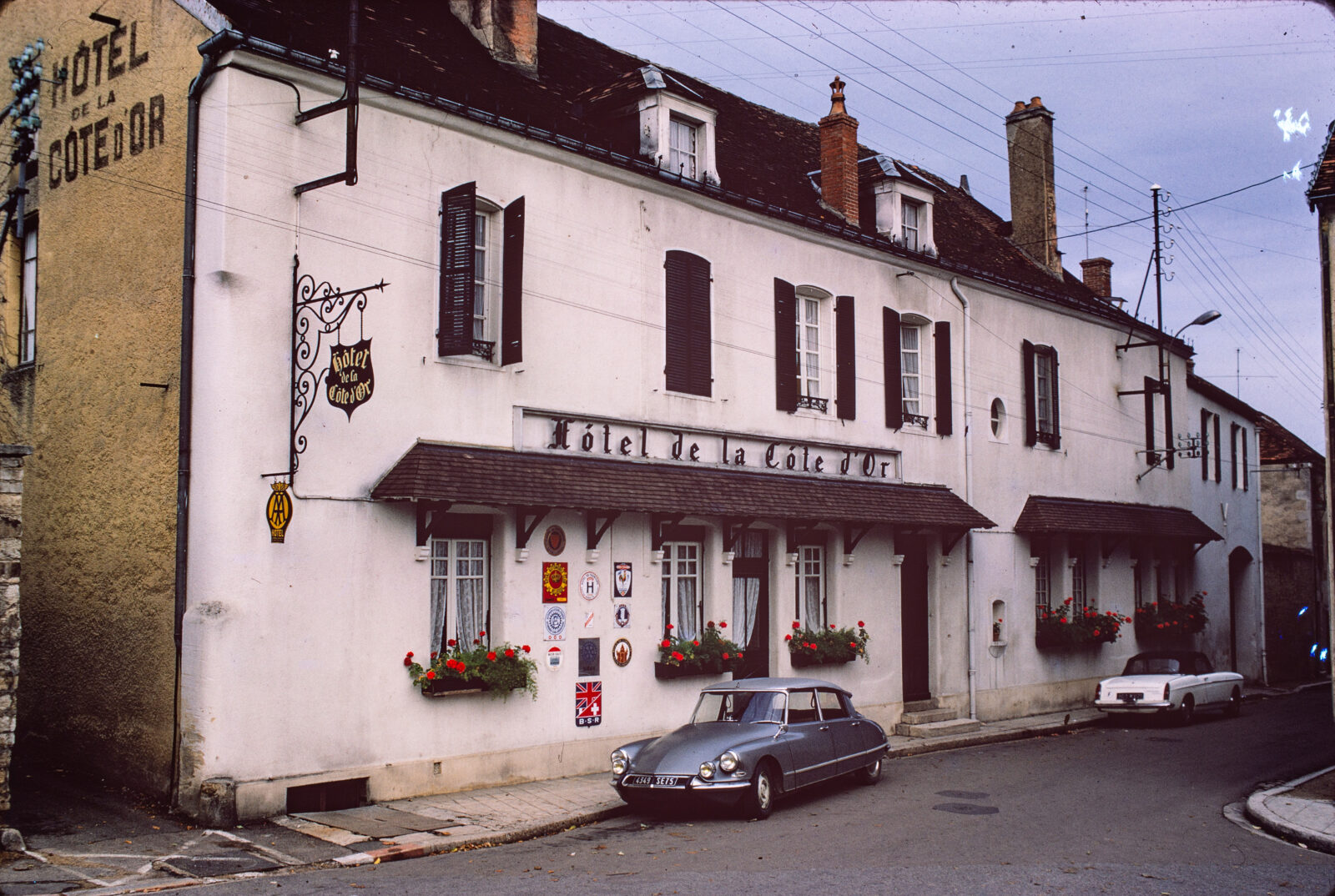
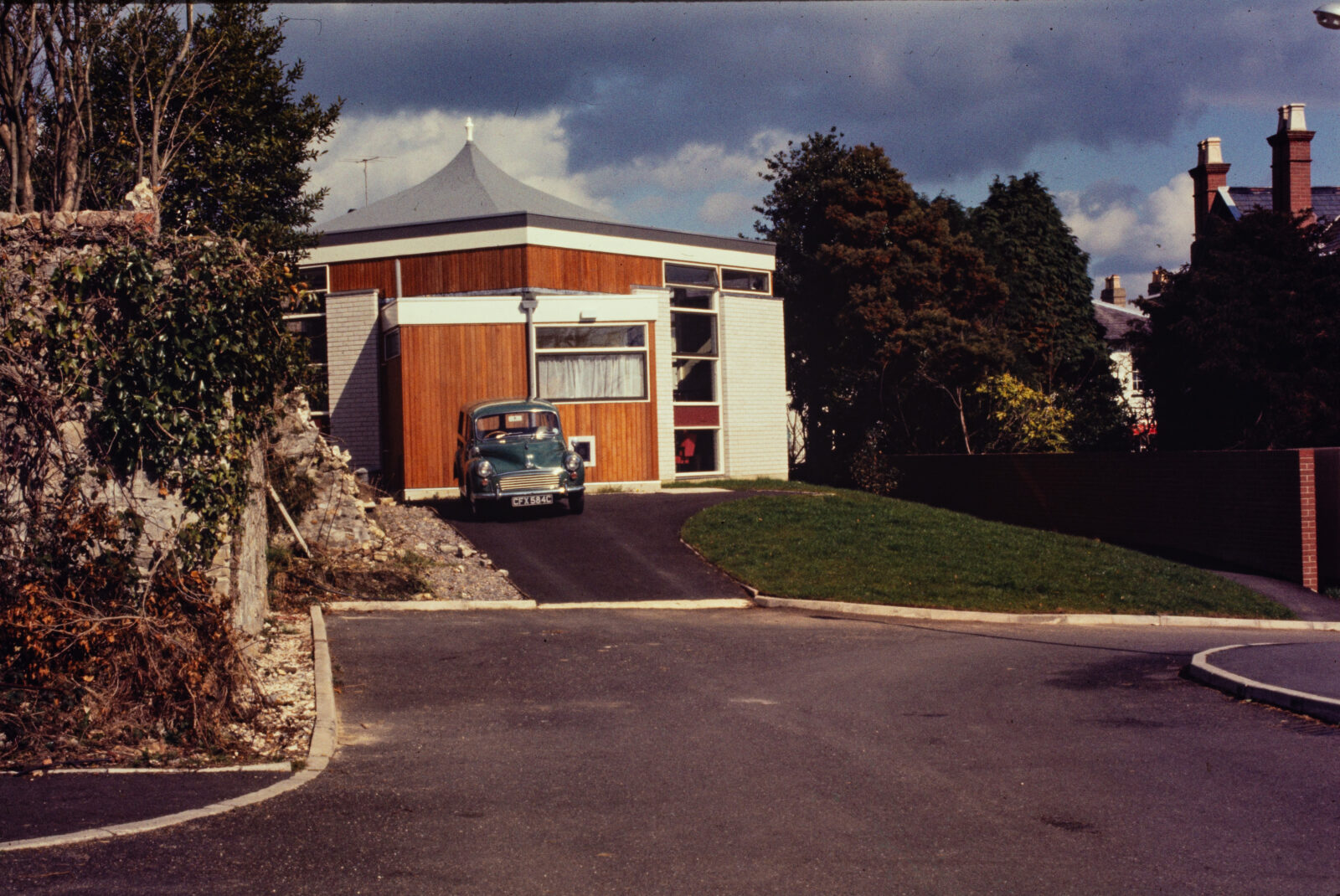
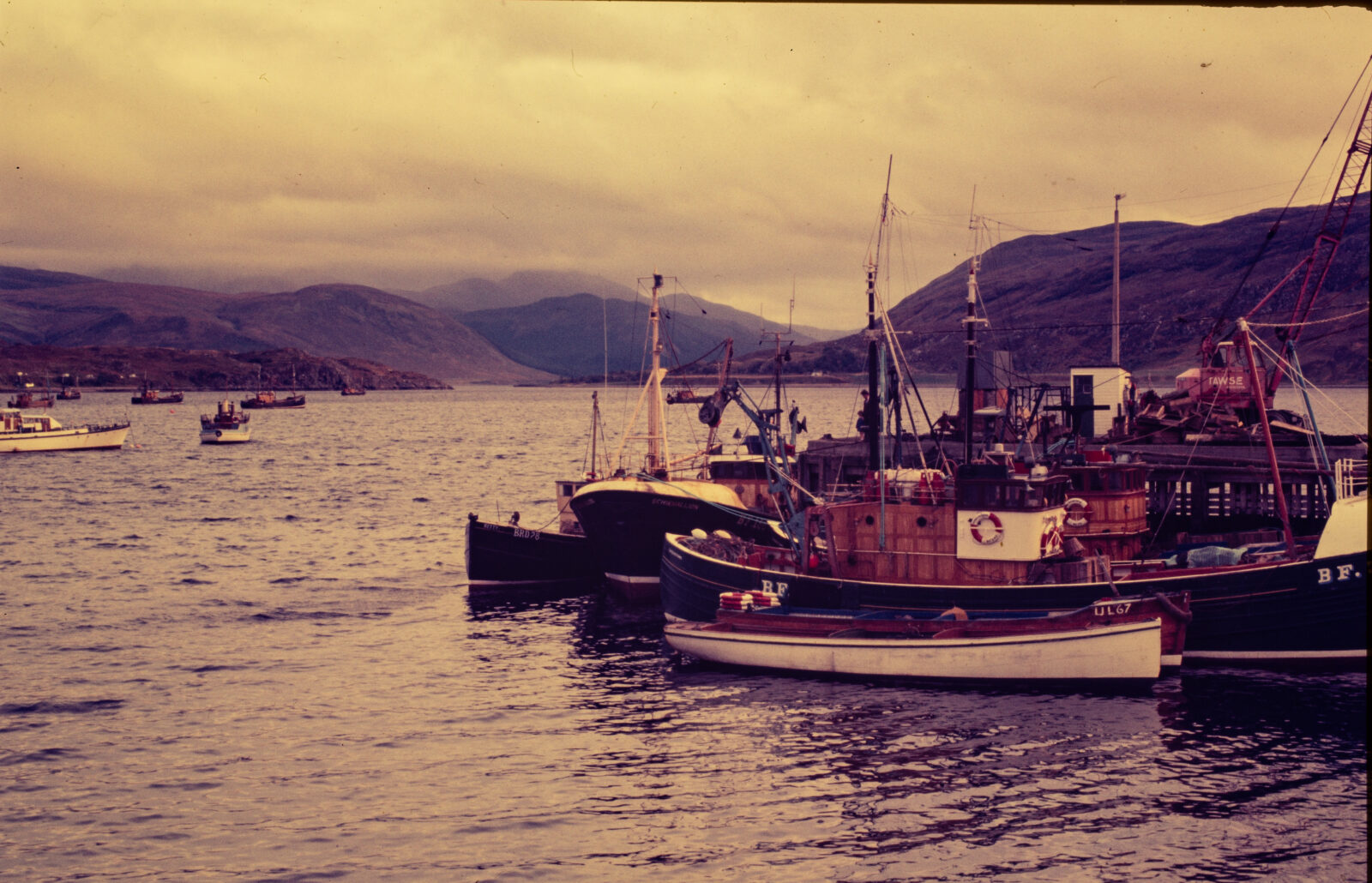
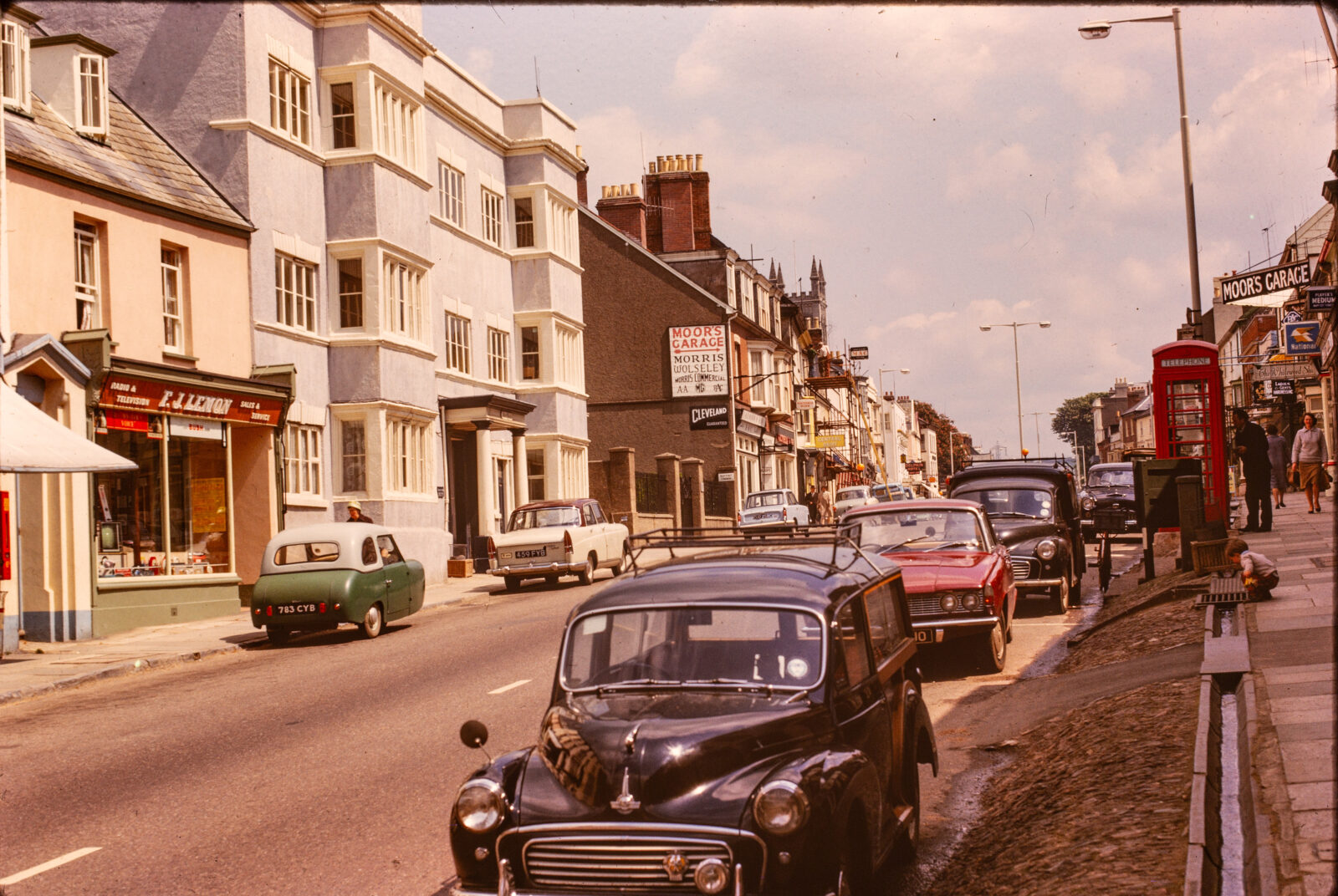
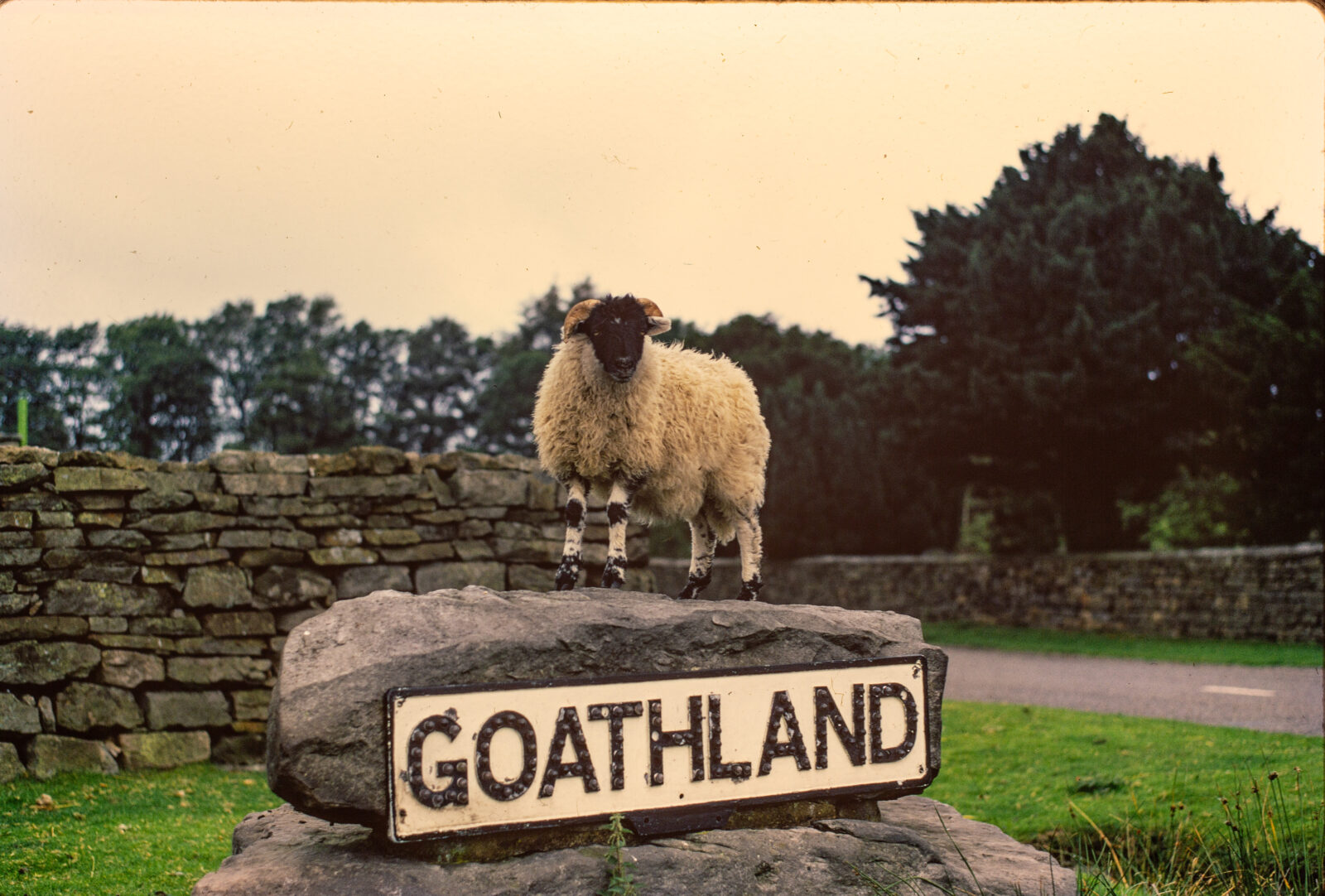
There were many others… but that’s enough for one day!


The first image of the two girls looks like a view looking along Chesil Beach from Fortuneswell (Portland, near Weymouth).
The living room scene strikes me as early-mid 1970s, particularly as colour TVs were far less common in the 60s.
Fascinating as always, thank you.
you’re totally right, looking again, the two slides of the house were taken at different times on different films. I can only presume it is some time before 1973.
The second to last picture is Honiton high street.