I have a search saved on eBay for cameras that are £2 or less and every now and again I’ll have a scroll through to see whether there’s anything interesting, unusual or might tell a story – usually a camera that has an undeveloped film left inside. In the last few months I’ve bought three cameras solely because they had a film in them, hoping that the images inside were suitably preserved.
You certainly have to temper your expectations when doing this as all sorts could’ve happened to a camera in the twenty to seventy ish years before it came up for sale. Recently my luck has certainly not been spectacular and I’ve been sorely disappointed as everything I’ve picked up has contained nothing but black. I did get a single frame from a Coronet D-20 which was hiding a creepy image of a greenhouse. This kind of thing can happen for all kinds of reasons such as cameras being poorly stored, often in lofts or garages where the fluctuations in temperature and humidity ruin not only the film but the camera too. You’ve got to just say “pyt” as the Danish would and move on, but every now and again you will get lucky and discover a genuine relic which one day the owner put away and for whatever reason never touched again until it came up for sale.
If you’re new to this series, you might want to have a browse through our previous glances into the forgotten lives of others:
Otherwise, let’s have a look what a generic box camera had in store for us.
In this post:
Cameras for a quid
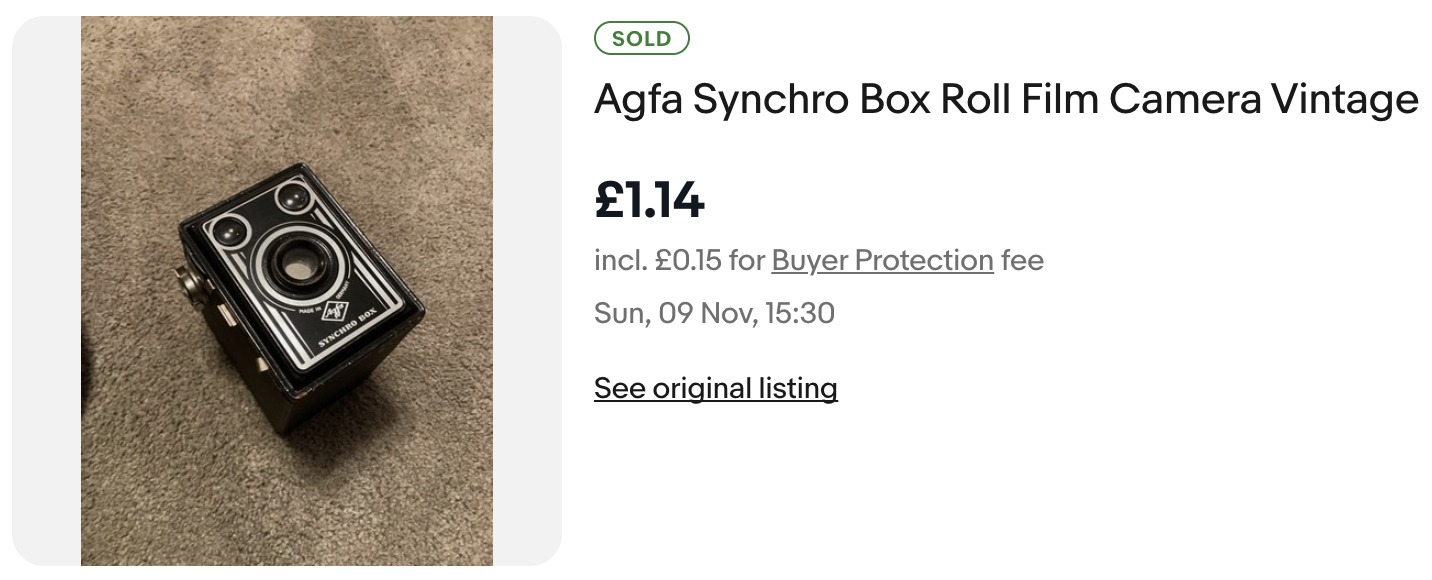
Initially this didn’t look like a great idea. The seller of this camera had about 8-10 other cameras for sale and all of them had been opened, one 35mm had sadly got a roll of Ilford HP5 in it which had been ruined. When people do this you can be fairly certain they’re not a camera expert by any means and therefore what you see is probably exactly what you’ll get.
The thing that made me give this one a go was the rather obvious end of the roll film sticking out with “exposed” on it which meant the roll had either been finished by the original owner or at least wound on enough to protect it by someone else. Furthermore, the seller didn’t seem to know how to take the film holder out of the camera or I’m sure they would’ve done going on their other items. This was enough to convince me that whilst a frame might be lost, there should be a decent chance that something is protected and preserved on the rest of the roll.
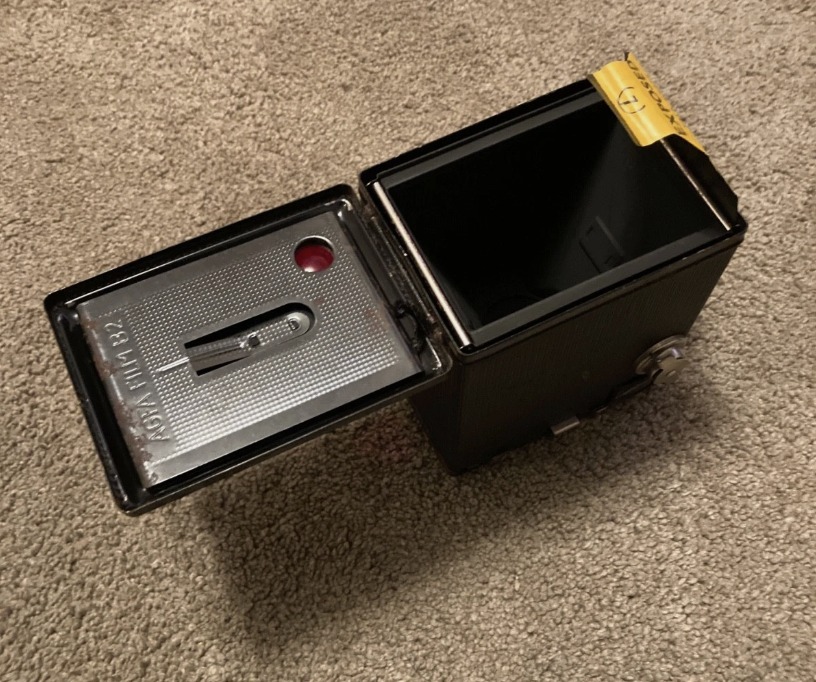
The camera itself is an Agfa Synchro Box, a third generation basic box camera with its original roots and design going back to 1938. Agfa are a company with a rather shady past and many of their executives were arrested and some later indicted in the IG Farben War Crimes Trial in America 1948. The accusation was that AGFA made extensive use of forced and slave labour during the war.
The original Agfa Box 45 from 1938 was a sheet steel box camera that featured a fairly poor lens, a couple of apertures which could be swapped by pulling a lever, a built in yellow filter and a shutter speed of approximately 1/50th of a second. Post war, the Box 50 took its place and the only difference was a subtle change to the design of the shutter mechanism. In 1951, the Synchro Box took this design and merely added flash shoes. All of these cameras had one thing in common – they were cheap. When other manufacturers had long since abandoned the box design, Agfa continued to fill the low end gap in the market with these cameras and apparently sold thousands of them.
Agfa had seen great success with their box cameras and had become an integral part of the German education system in the inter-war years. As part of what we might term our “National Curriculum” today, it had been “decreed” that students should be undertaking photography as part of their education. During this period, AGFA had been giving away cameras to everyone deemed to be “top of their class” in a couple of age brackets.
Finding exact information on these cameras is extremely difficult. As usual, the internet seems happy to quote each other in a circle of reference free copy and paste. I’ve looked at manuals, websites, collectors information and dates seem to contradict each other. Some will tell you it was introduced in 1949, others 1951. Whatever the truth of the matter, it would be reasonable to assume that 1950 is close enough as a starting point and they were made no later than 1957. I’ve found no method of accurately dating an individual camera.
Kodak Kodacolor-x
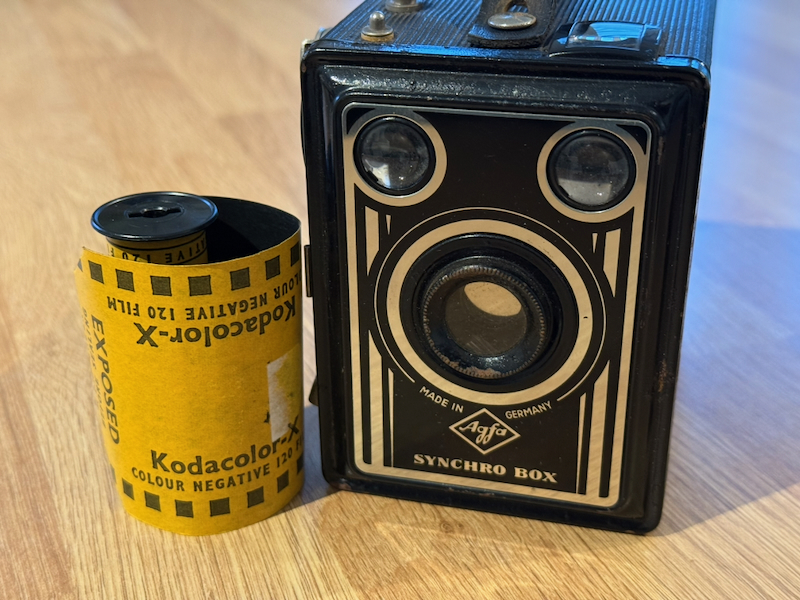
The film inside was Kodacolor-X, a C22 process colour film produced between 1963 and 1974, rated at ISO 80. This tells us a few things – the Agfa Synchro Box was at least 10 years old when it’s final roll of film was loaded and this roll of film is likely to have been inside the camera for a minimum of 50 years – I seriously doubt anyone kept this in their fridge for a decade before cracking out their old box camera and giving it one last go. Due to the discontinued C22 process, users would’ve purchased, shot and developed this film whilst still relevant.
Being an outdated process and an ancient roll of film, the hive mind of the internet has long since concluded that the only way to go is stand development in black and white chemicals. I whipped out the dark bag and was rather stunned to find the film easily wind onto a reel first time without any resistance. Normally films this old are so curly they’re an absolute nightmare to spool up on a developing reel.
One hour and twenty minutes later of sitting in Rodinal at 1:100, it was moment of truth time…
We have images!
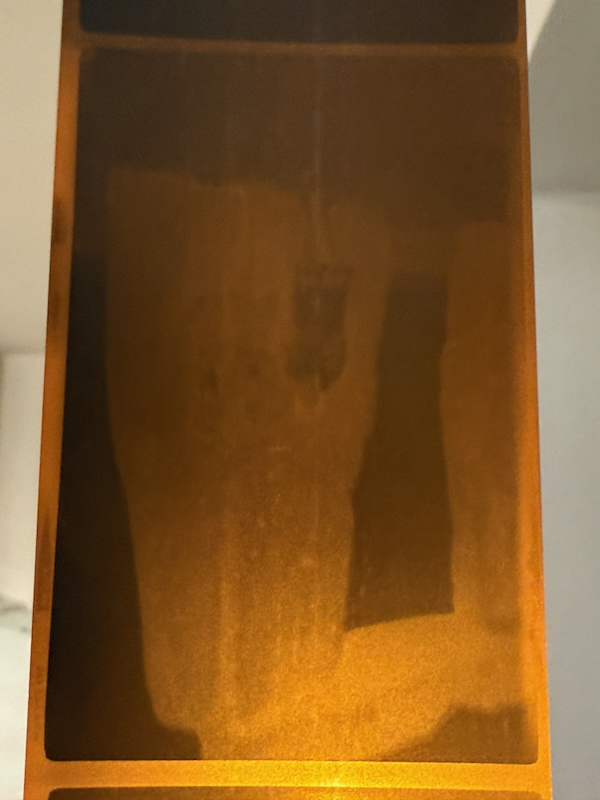
If you’ve never cross developed colour film in black and white chemistry, you might not know that it isn’t exactly obvious there are images on the negatives at first glance. Colour film is so dark when developed like this that you need to shine a relatively strong light through it to reveal any hidden images. Fortunately, with quite a lot of trepidation, I hung the negatives up and shone a torch through to see the unmistakeable image of Stonehenge looking back at me. Result!
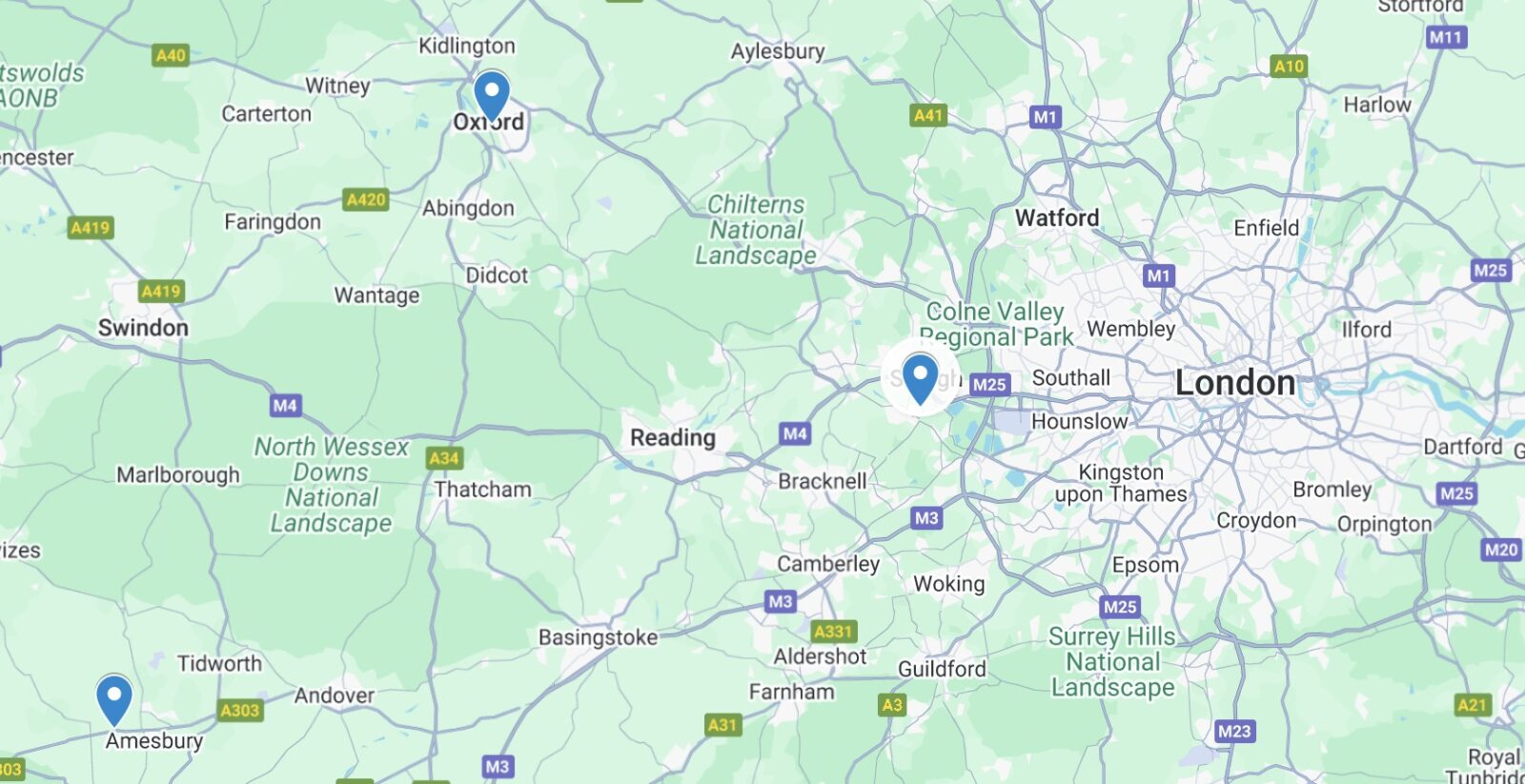
The negatives took an extraordinary amount of time to dry, to be safe I left them overnight before scanning them in with my Heath Robinson 120 DSLR scanning set up. The images on this roll take us on a journey around tourist sites of the south of England, namely Amesbury, Oxford and Windsor.
We’ll go through the roll in the order they were taken, starting with this:
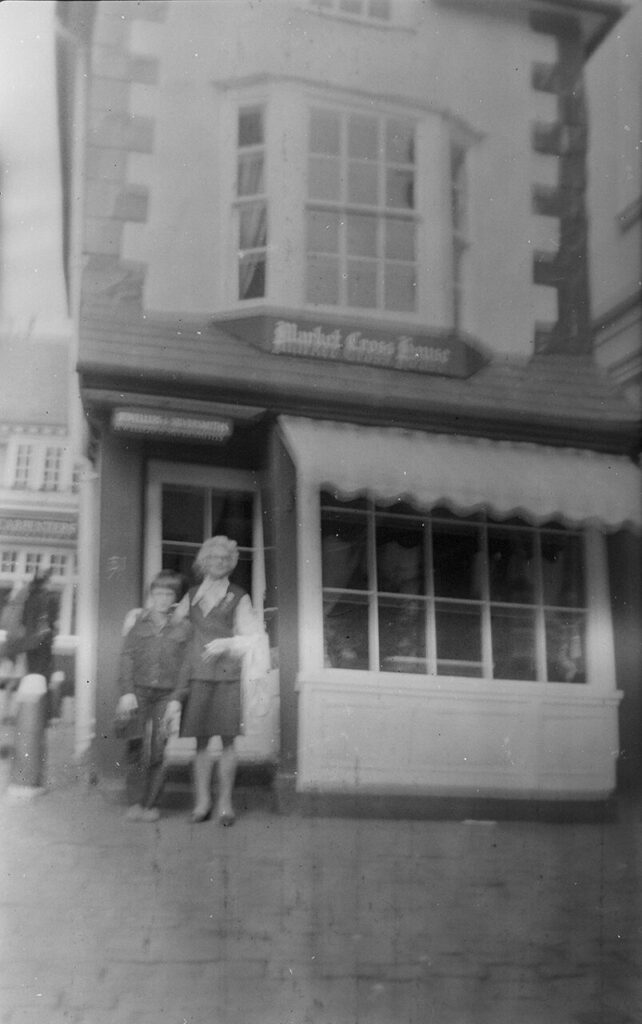
The picture shows a boy and what I presume is his gran outside “Market Cross House” – a grade II listed building in Windsor also known as The Crooked House of Windsor. It’s a properly ancient timber framed building constructed some time around 1687 and modified to its current state in the 1800’s according to Historic England. Wikipedia says it is the “oldest tea house in England” which is typical Wikipedia nonsense that’s disproved on the “Welcome to Windsor” tourist information site. I presume they perhaps meant the building it is housed in is the oldest to be used as a tea shop, rather than the fact that’s what it always was. In the image above it is a Jewellers – although extremely blurred, the sign above the door reads “Jewellers and Silversmiths”
The house itself has a fascinating history. Originally a butchers shop built in 1592 on the corner of the market square it was demolished to make way for the building of a Guildhall. Protesters immediately demanded it was reinstated (and we thought protesting building works was a modern past time) and they got their wish, however its construction was a rushed job to say the least and they used green (not dried) oak to make the timber frame. As the wood dried out, the building physically shifted into the shape it holds today – although lots of people like to argue about whether that’s actually the case…

Today it is a miniature bar, coffee and wine shop and the image above gives a little more context of the surroundings the building sits in. There’s no doubt it is the same building as in our photograph and must have been taken whilst standing up against the water fountain – perhaps even leaning the camera on it, although if they did it didn’t stop the camera shake but honestly, with a shutter speed of 1/40th, what chance did anyone stand of taking a sharp photograph with one of these?
The fact it is a Jewellers gives us the best chance of dating this roll of film. After some extensive digging, the best I can find is that Market Cross House was an antiques shop until 1973 and then changed hands to become a Jewellers in 1974. This lines up perfectly with our roll of film which incidentally also went out of production in 1974. Considering these facts and that film usually has a shelf life of about a year, it seems reasonable to assume that these photographs were taken no later than 1975 and that the boy in the picture will today be in his late 60’s.
Why the camera was put into a cupboard in 1975 and never taken out again is quite literally a mystery. I contacted the eBay seller and all they had to say was “that’s interesting” and offered no further information. I don’t think they are related to the original owners in any way or they’d surely have had more to say on the matter.
Still in Windsor
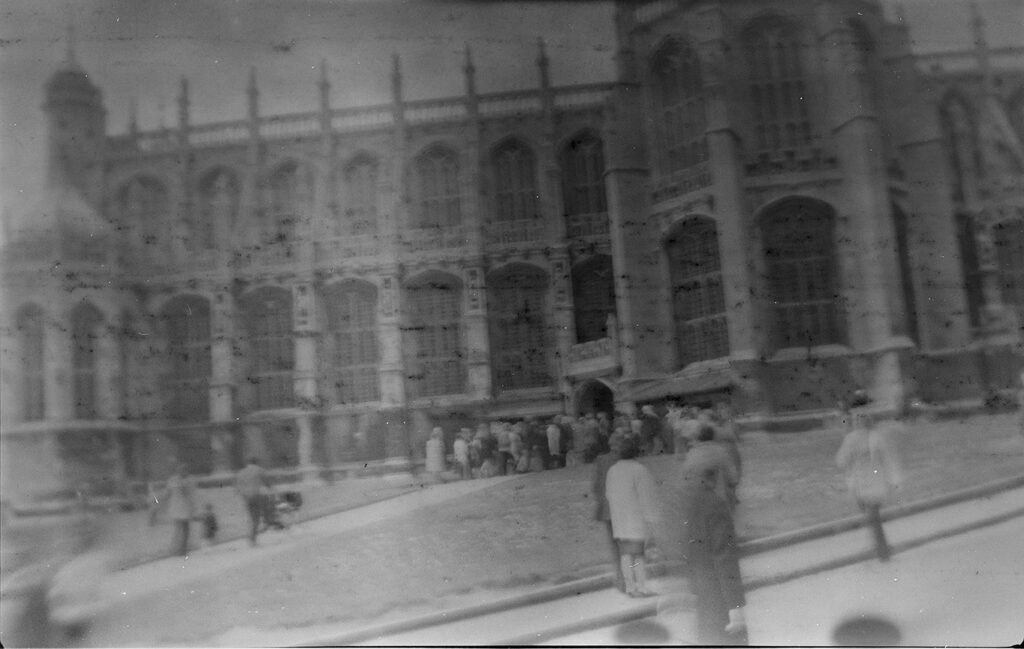
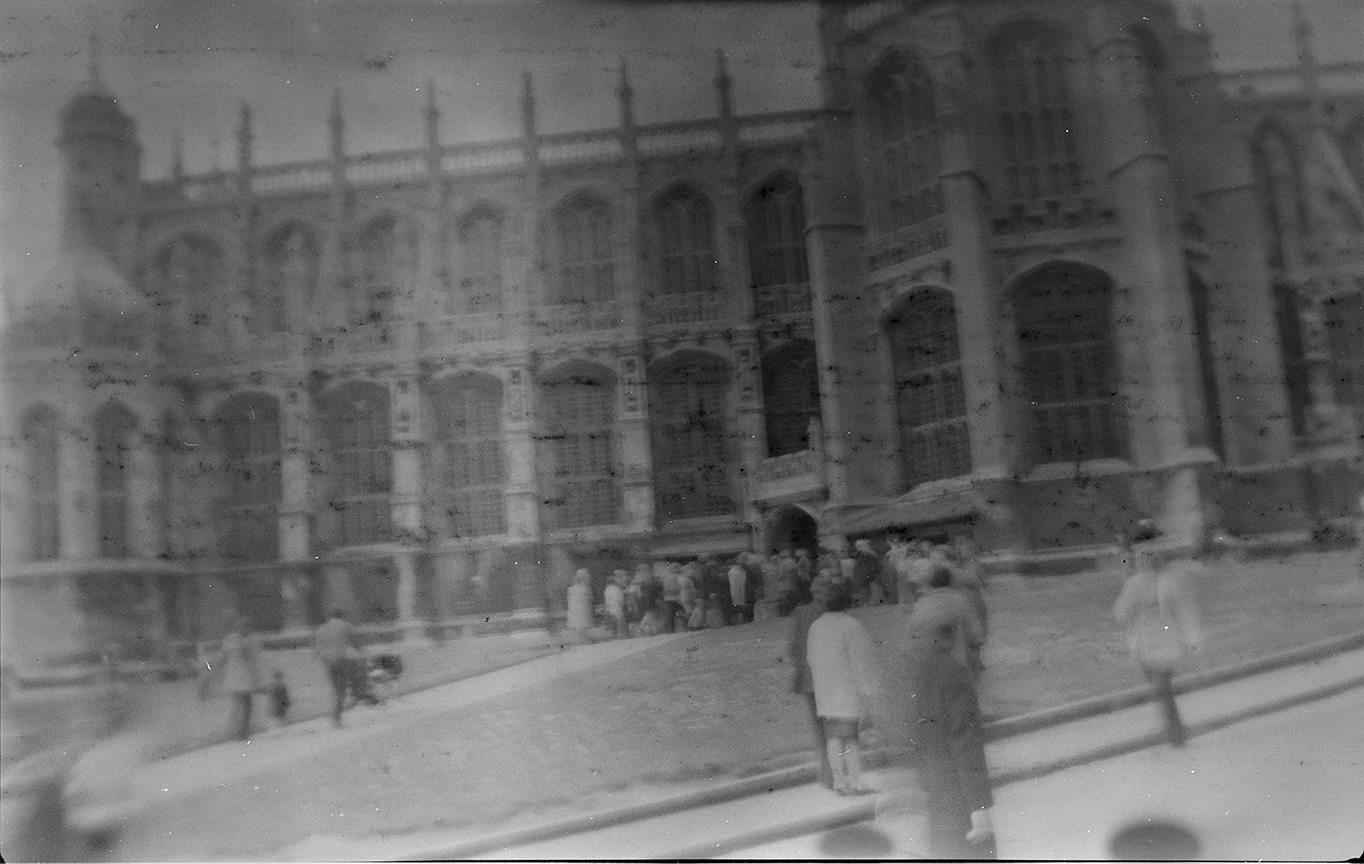
Legend has it that there was once a secret tunnel from the Crooked House in the previous picture to Windsor Castle. Whether there was or not, our family then moved on to St Georges Chapel in Windsor Castle. Clearly as popular in 1975 as it is today, Windsor castle is a monumental tourist attraction and final resting place of no less than eleven monarchs so, “quite important” in British history, then.
The site of Windsor Castle goes back as far as William The Conquerer who built what could be described as “a bit of a mound” before later developments by various royals saw it built into the structure we have today. There’s not a huge amount to say about the picture we have here other than its a fairly standard tourist shot that you’d expect someone to take on a visit to Windsor Castle. What does it look like today? Pretty much exactly the same:

On to Oxford
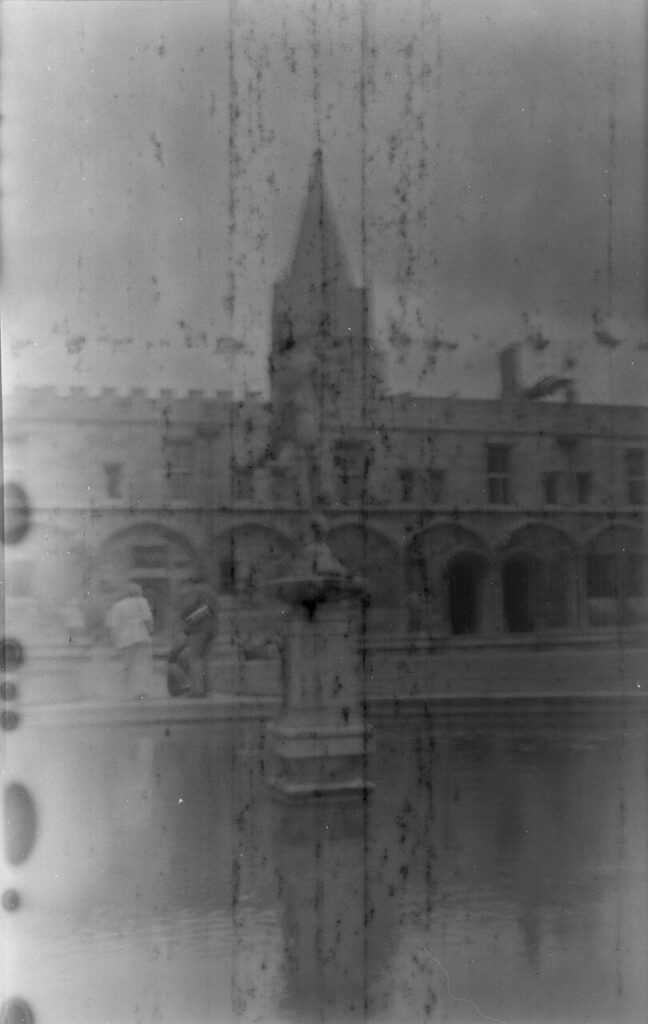
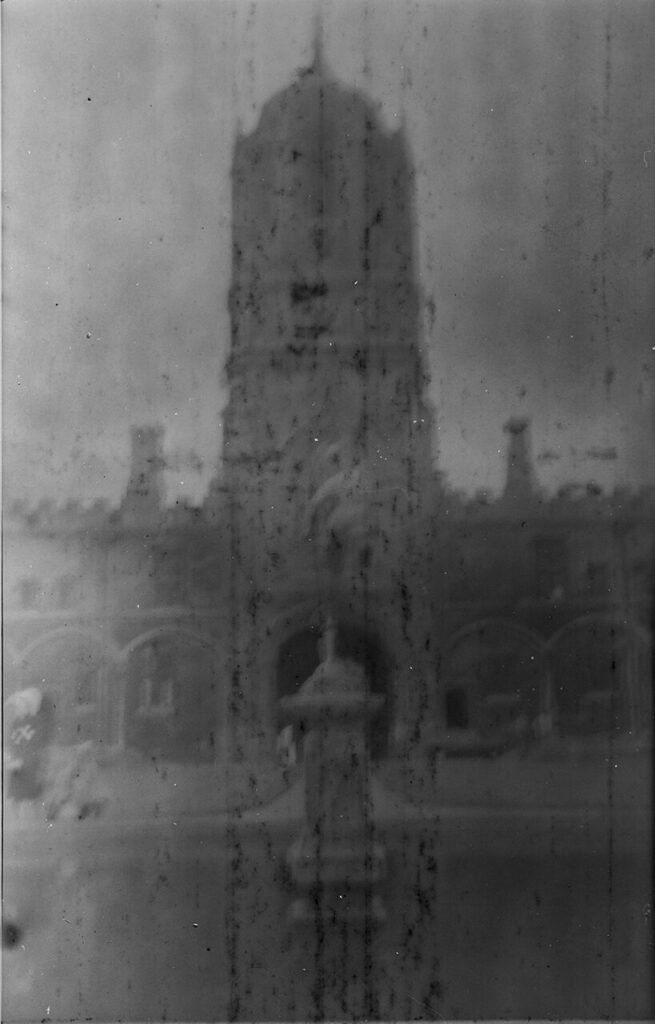
These next two images were harder to identify due to the fact the negatives are fairly knackered. This is Christ Church college at the University of Oxford. Specifically, and in their own words it is “A view across the fish pond in the centre of Tom Quad with a statue of Mercury in the middle.” So now you know. The name “Tom Quad” comes from the tower in the second picture – Wren’s Tower, which contains a rather large bell called “Great Tom.”
Today, you can visit the colleges if you book a ticket online and even stay in the student accommodation outside of term time. It must be really weird to live and study somewhere which is literally a tourist magnet for, amongst other things, Harry Potter fans. I can’t imagine other universities opening up their campuses to students in term time – “come and see our glorious cheap beer and please, buy a hoodie on the way out, we’re broke!”
We’re not doing well at the moment for piecing together some kind of coherent story with these images, but the final three shots on the roll reveal far more.
Stonehenge
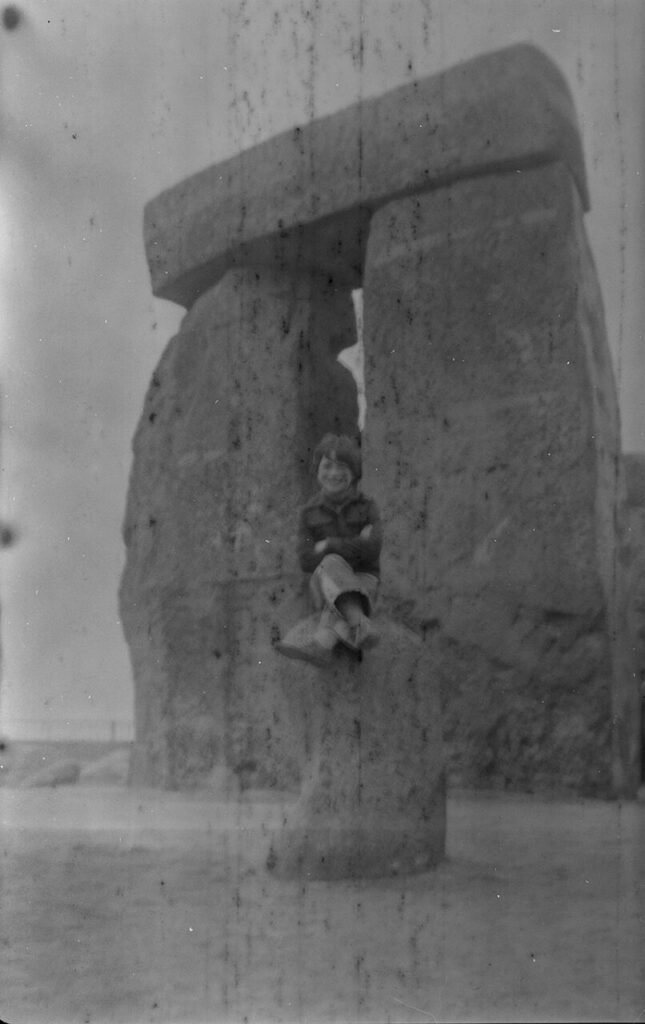
Our final destination is to the Wiltshire mystery that is Stonehenge. Today it’s completely fenced off and entry is closely controlled, but back in 1975 you could walk right up and sit on the stones should you so wish. This first image would’ve made a great family memory and I’m sure would’ve had at least a place in the family album if not in a frame on the wall somewhere. The boy is the same as the one in our first image at the Crooked House and this is a slightly clearer image than the first and there’s definitely a reasonable time gap between the images as his hair appears to have grown longer.
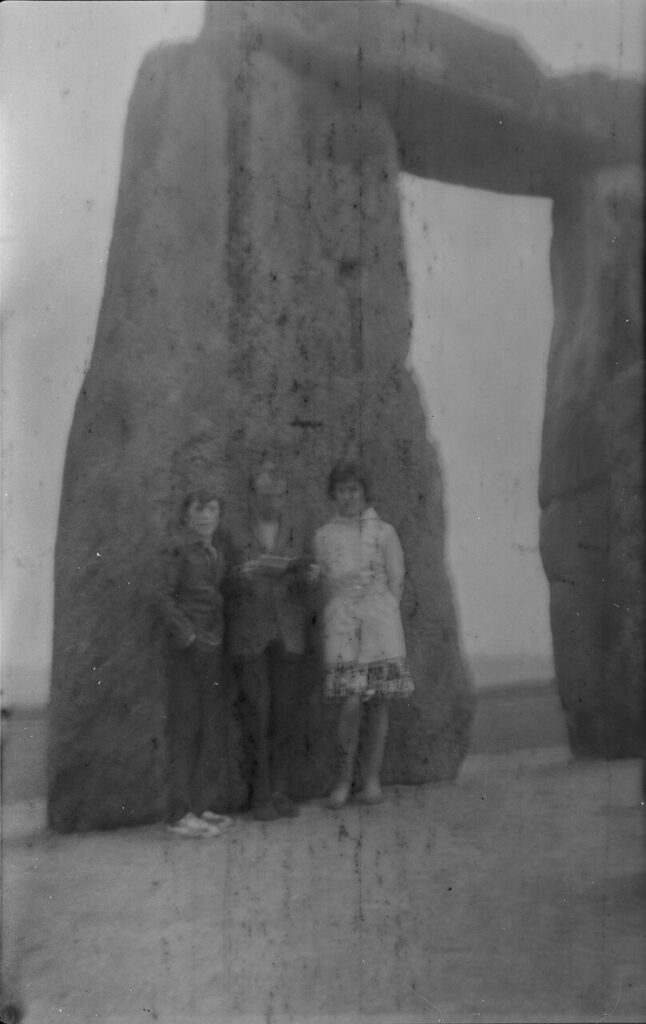
This is absolutely my favourite image of the lot. Finally we get to see the whole family together and you can picture the scene beforehand. They’ve travelled miles and miles, gone to see one of the most historic sites in England and someone, perhaps the Gran from the first image says “let’s have a picture of you all together then.” Mom does her best to cajole Dad who’s having none of it and, despite the protestations of everyone else insists he’s busy reading what might be a road map or perhaps a tourist guide, who knows. Sighs are exchanged, “everyone look this way!”
*click*
To nearly everyone else this is just a picture of three people, but to someone, somewhere, this is an image that would spark a whole series of memories, that would remind them of a cherished family holiday and relatives who are now sadly, but surely departed.
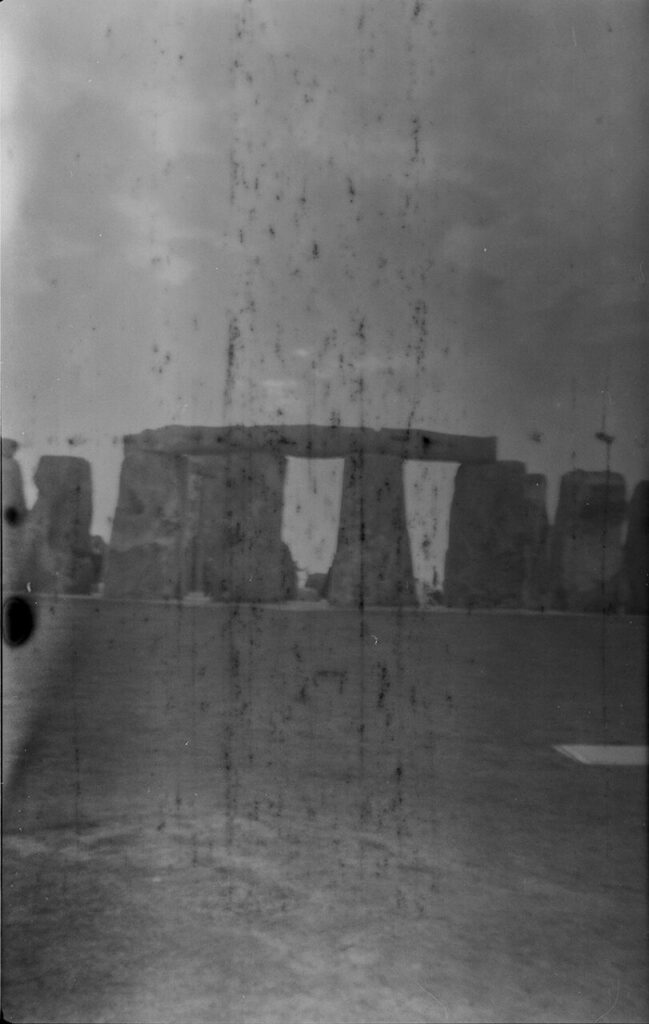
They turned round and started walking back towards the car.
“Just one more to finish the roll off.” As everyone else carried on walking, one of the family stopped, turned back and composed one last shot of the stones, clicked the shutter and wound the film on.
Then, they slipped the camera back into its case and soon were driving home, the camera put to one side, then put in a cupboard and forgotten about. Time moved on, decades passed, people came and certainly went who feature in those images, but their memories remain here on this film.
So, if you know anyone who toured these sights in roughly 1975, owned an Agfa Synchro Box and recognise the blurry faces in these photos then please do get in touch, leave a comment below, perhaps we could reunite these images and the camera they were taken on with their rightful owners.
And for God’s sake, if you find an old camera don’t open the back unless you’re sure it’s empty!