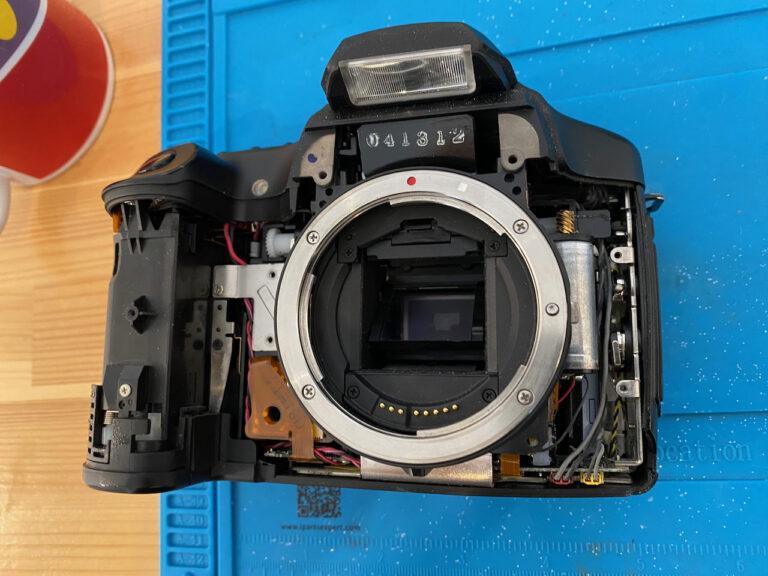
I’ve long been an advocate for budget photography, indeed the entire point of this site when I started it was to focus on photography on a shoestring, to prove you don’t need to spend huge sums to enjoy film or digital photography – that the pleasure is half in the process rather than the gear that you can or cannot afford.
I’d like to think that if I’ve not proven this point then I’ve at least advocated very strongly time and time again that old doesn’t mean past it. For film photography, it’s stupidly easy to argue the point as the quality of an image is constrained solely by the film and lens you use. Ultimately, a film camera has one job – to fire the shutter at a reasonably accurate speed and thats about it.
Things get a little more complicated in the digital world even though the quality of images produced by old DSLR cameras is not up for debate. You can take award winning photographs on a 25 year old, six megapixel DSLR and 99.9% of people would have a clue or be able to objectively point out an old camera had been used without cheating and resorting to looking at the image meta data. If I were forced to only use my original 5D Mark 1 forever for my digital hobby photography, would I be upset or constrained? No.
Case closed, then? Well… No.
You see, I’m sure everyone who takes photography slightly more seriously than the odd snap with their phone would love to see their pictures published in one form or another. It’s not about massaging egos or anything like that, it’s just… nice. Lots of people look at your photograph and you can think to yourself “I did that!”
So, what if we turn the tables? What if your photography at times (and we’re obviously excluding professionals and anyone who’s living depends on it in this argument for obvious reasons) matters? What if you need to get results and only get one chance? Can you still get by with your old camera and how old is too old?
I guess we should try to work it out…
How much camera is enough camera?
I know exactly what you’re thinking. If you’re doing a job for someone then you should ensure you have the best tools available. But, that argument doesn’t quite cut it, it just isn’t that simple for the amateur doing the odd job if they’re lucky enough to be trusted or asked to do so. I’m sure we can all agree that if you were asked to photograph your friends wedding, despite the urge to go out and buy a £10,000 mirrorless setup, you’re highly unlikely to be in any position to afford to do so and you’d never see a return on your investment.
This is where technology is weird. I’ve never judged a carpenter because they turned up to my house with a circular saw that was five years old. I’d not worry if the plumber was using pipe benders that had seen 20 years of use. You’d still look at your brand new kitchen and hopefully think “they did a really great job there” and not “would’ve been better with new tools.”
But if someone turns up with an ancient laptop to do something or, god forbid, an old camera to photo your latest event then suddenly judgements start to be made. In the tech world, last years model is no longer good enough. It unfortunately says something negative to many people if you’re using things that are deemed to be out of date and can damage the perception of your work before it’s even presented. I have lost count of the times I’ve turned up to photograph an event alongside professionals who think my equipment is hilarious. However, as a customer, if you only saw the end product the chances are you wouldn’t care one bit what tool was used to produce those images if you’re happy with the end result.
I think we can conclude, therefore, that practically any DSLR with something like 8 megapixels or more attached to some quality glass is capable (in the right hands!) of making a picture that a potential client would be more than happy with if they weren’t a camera snob and didn’t observe you coaxing the poor thing to life beforehand. If it’s reliable then… it should be ok?
Ah, reliability… This is the first potential nail in the coffin for doing a job that matters with your budget equipment.

Any electronics can and will break. You can lift a brand new TV out of its box, plug it in and get a blank screen if you’re unlucky. It happens. Equally, the next person may buy the same set and never have a fault in 20 years of use. Luck definitely comes into it, but lets face it, if you’ve bought a second hand camera you’ve no idea how the previous owner treated it.
The last thing you need is to click the shutter button and nothing happens. I’ve definitely been there – nearly 20 years ago I turned my camera on to take the first picture at a wedding and the camera died there and then. A total disaster, but fortunately I’d had the foresight to borrow a second body and all was not lost. Those cameras were new models then.
If you turn up to an event as the designated photographer and your trusty, faithful old DSLR packs up and the shutter drops dead then you’ve had it. The fact is, the older your camera, the more likely this is to happen to you. Does this mean you can’t use it? No, but we’re getting into complicated territory now and the first thing we learn is whilst you can use old cameras, you’re going to need a backup at an absolute minimum or, better still, your oldest body should surely be that backup rather than your primary machine of choice.
This is not to mention the further complications of hardware being so obsolete that you can no longer buy spares such as batteries but… I’m presuming you’re not going to be so mad as to try and use a truly steam driven camera at an important time.
So, step 1 – we need to be a little more professional than normal and turn up with two cameras and enough spare bits to cater for any eventuality. There’s absolutely no reason why you shouldn’t rattle off a few shots on an older camera if you think it has a use, a look or would just be useful so you don’t have to keep changing lenses. But as your main camera? Probably not the safest bet.
This is a sensible approach for anything important. So, we’re fine? Let’s crack out the D60 and give it a whirl, right?
Ah, no. If you’re not going to use your old faithful then, what are you going to use? How new is necessary and then… There’s performance.
The performance angle

I’m going to state the obvious, at some point in the past your old cameras were all new. They were once the tools of the trade, the professionals weapon of choice. Cameras such as the 5D Mark 1 were, in their day, the ultimate wedding photography camera, they did real work and made their owners decent money. The point being that they can do the job – they did do the job.
How can it be that something which was once a high level, high performance tool would now no longer be appropriate or suitable?
Here lies the difference between a professional and an amateur.
The photographers using those early workhorse cameras had years, decades of experience under their belts. They’d paid their dues in the film world and had learned the hard way. These are people whose eyes calculate exposure before the meter does, who knew intuitively when the moment would come, when to change roll and when to save their last shots. They knew how to compensate for serious limitations – there was no suddenly deciding you might like to change ISO mid film roll for example. They were, to coin a phrase, craftsmen.
With this wealth of experience, professionals could take full advantage of these new features such as adjustable ISO, practically infinite images and better auto focus performance but also work around the disadvantages. A Canon EOS 1n film camera, which would’ve been the camera of choice when film ruled the world and released decades before digital full frame such as the 5D Mark 1, had some key advantages over its digital brother. Primarily, the EOS 1n had the ability to fire off up to 11 frames per second depending on the configuration used and whilst this would eat a film in 4 seconds – if that’s what you needed, it would give it to you.

If you had to get the moment and you had to make sure – your income depended on it, then the EOS 1n was there for you. The cost of film doesn’t even come into it, the moment unfolds in front of you – you know this is the shot. You press the shutter, it fires like a machine gun and when you develop that roll, out of 30 blurry shots, ones with eyes closed perhaps or the “just before” and “just too late” there it is – the one. That one shot you needed, captured because you had the right tool at the right time.
The 5D mark 1 could wheeze along at three frames per second and sure, you might think that 1/3 of a second isn’t a long time but trust me, it is. In some environments like sports, live music and news reporting that performance just isn’t going to cut it. You can easily miss that split second moment in a third of a second. This is before we get into the fact that it took decades for the quality of slide film to be surpassed and I’d argue the look of slide film will never be truly recreated digitally.
I’m labouring the point, but you’ll understand where I’m going. If you’re trained, you’ve got that muscle memory and eye for the right shot at the right time, could you pull it out of the bag with a 21 year old digital camera when it came to the crunch? Yeah, of course you could, but you and I are not professionals and a little help would go a long way to not looking silly when you send the proofs over for checking or you’re digging through the RAW files and seeing only disappointment, blurred frames and missed focus.
So, we need something with a little more oomph to cover my, lets be honest, lack of ability. But how much performance is enough?
A little help from our friends

Ironically, the fact that technology moves on so fast ends up helping us amateurs more than you might think.
I think by now we’re starting to get the idea that you can of course use very early digital SLR’s on an assignment, they’ll do a job for you and they’ll cost you next to nothing, but you’re not going to have the easiest of times.
The brilliant thing is that manufacturers quickly reach saturation points with types of technology and this happens long before they are replaced by an alternative. Think about cars. How long have you been able to buy a decent, reliable car with all the bits that you really need? The answer is decades. Now that electric cars have come along, does this make all the old petrol cars obsolete? No. It creates an opportunity.
You could, of course, drive a true classic but your 1960’s beauty is definitely going to break down on you if you commute to work in it. Buy a 10 year old car for a fraction of the price of a new one and you will benefit from years of research and development, it will still be economical and probably give you many years of service before it finally dies. The 10 year old car was just as good as a nearly new car, perhaps lacking an entertainment system and a few flashy features, but the engine underneath was no less developed – the technology was so mature that manufacturers largely just face lifted the car and strapped more options on it to appear new. You’ll miss out on nothing and have enough performance to do the job of getting you around perfectly.
Back to the camera world, if you look at the last few generations of DSLR’s before everyone switched to mirrorless, the same story had played out. Sensor technology was mature long before the last models came out and newer cameras no longer offered the great leaps and bounds forward that earlier models had. You got a few more megapixels, a bit more performance in terms of continuous shooting and a slightly bigger buffer – but nothing earth shattering.
This all boils down to one simple thing and that is you can buy at the second hand sweet spot. This means not quite the last and greatest model but usually the one just before. Still packed with features, still benefitting from greatly improved performance over earlier models but costing an absolute bargain price rather than a premium. We saw this in my search for a “new” DSLR when I settled on a 5D Mark III for its price to performance ratio and range of features.
The crazy thing is that whilst that camera currently is the sweet spot and is an absolute beast – it leaves me wanting for nothing, in a few years or less the Mark IV will be the same price and that’s even better. It’s crazy the trickle down of great cameras that is happening right now. Enjoy it whilst you can, because it won’t last forever.
So, the sensible plan for jobs that matter is now becoming more clear. For a little investment, a few hundred pounds, it is absolutely possible for you to invest in a far more capable camera and one which was, once again, the choice of professionals the world over not all that long ago. Cameras that have proven themselves time and again in the field. Meaning you are equipped with a true tool of the trade and at this point, the rest is your fault if it goes wrong. The usual caveats about reliability and condition still apply, however!
Can you really tell?
That’s decided, then. Us budget photographers should make sure we have at least one camera that’s not crazy expensive but is good enough and modern enough to get the job done when we need it. That’s true, but it neglects one really important factor – the pictures themselves.
What if you just can’t afford it? You literally cannot just go out and splash a few hundred quid on a new body because you want to be ready when the call comes?
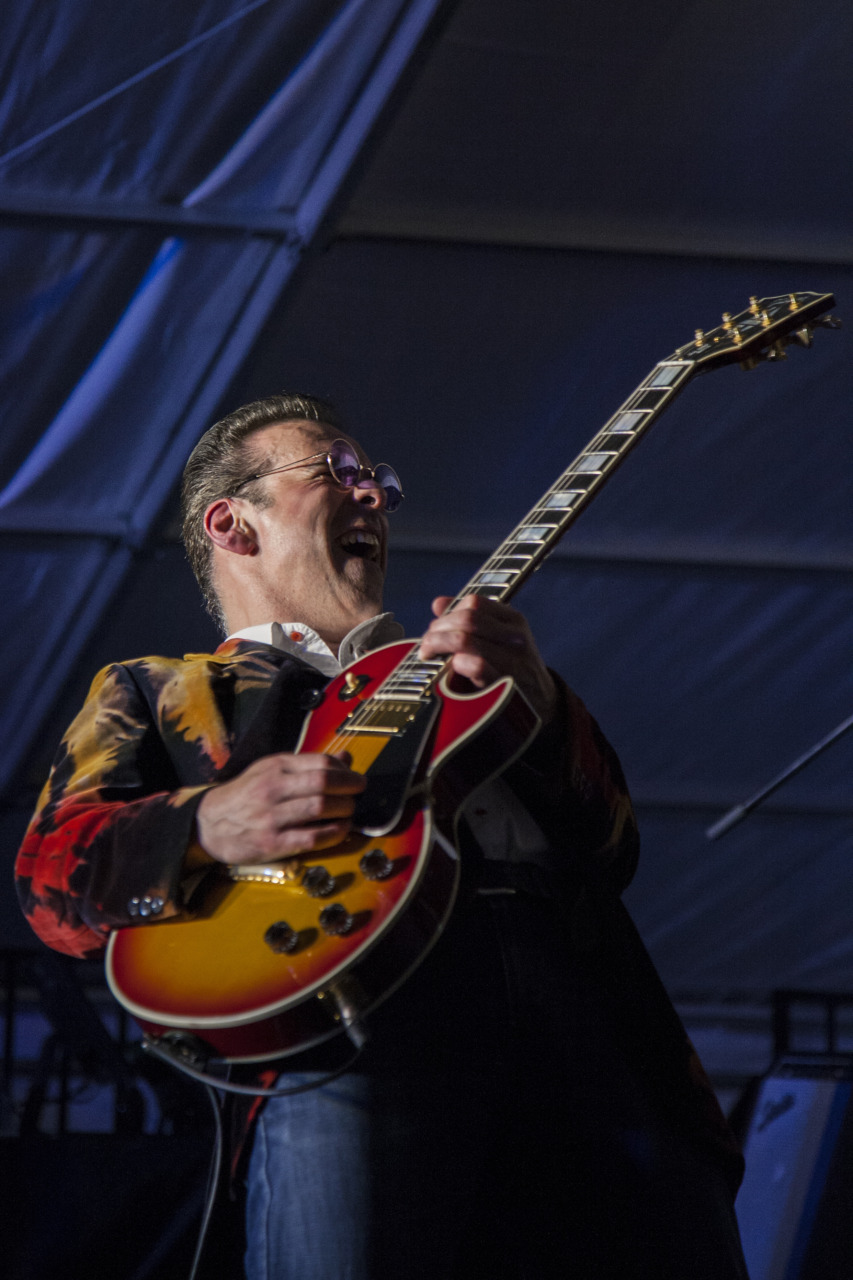
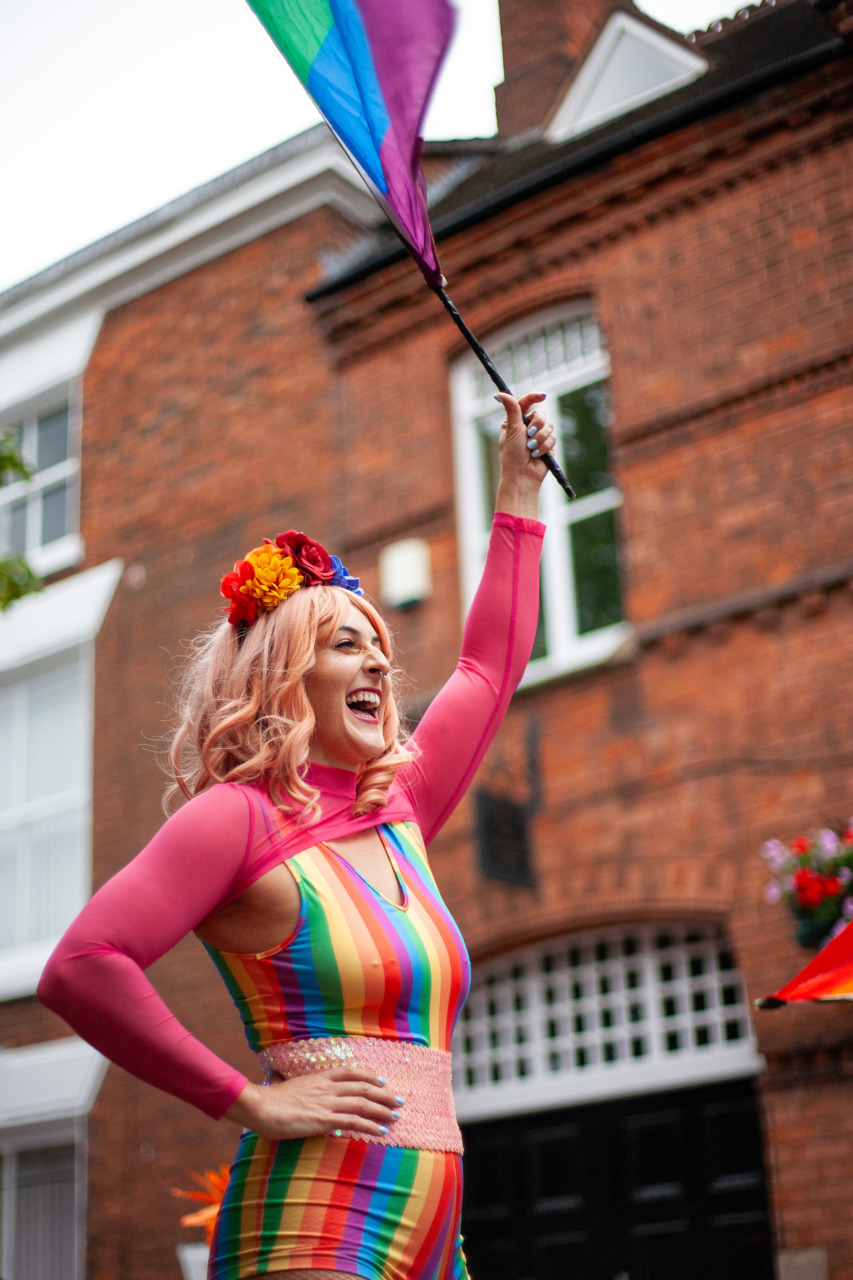
One of the images below was taken on a camera that’s 21 years old. The other is taken on a camera that is seven years younger, but still 14 years old and therefore still jurassic in technology terms.
Can you actually tell the difference, though? And are either of them so appalling because of the age of the camera used that we should just stay at home and not bother? Let the real professionals do the work…


This isn’t a controlled experiment by any means. For example, the images came from different lenses, one was taken with a 50mm F1.4 lens, wide open. The other with a 24-105 F4, wide open. However, in terms of image quality both lenses produce excellent detail, clarity and resolution. Neither image has been strongly edited – some sharpening, some contrast but the same amount to each.
I think you can tell, but I don’t think anyone in their right mind could look at either picture in isolation and conclude that it must’ve been taken on some kind of inferior, incapable camera. I’m happy with both and so were the people who asked me to take these images. No one asked me how old my camera was and no one cared. I could’ve turned up with a shoebox, strip of film and a pinhole if it did the job.
For me as the photographer, though, there comes a point where a certain level of modern convenience isn’t just nice to have, it’s really rather useful. I do, however, think there’s a limit and this is where we delve into the realm of the purely subjective for an amateur.
A professional photographer has one single goal – satisfy the client. If you produce an image using a camera that effectively took the picture for you with predictive AF, 50fps so you simply couldn’t miss, automatic noise reduction for super high ISO, automatic subject recognition and tracking and God knows what else then… photography stops being something of an art form or a craft and more a case of, I hate to say it, just being there. Does the client care? Not one bit. They look at the images, they love them, think you’re wonderful and you get paid.
This is why its nigh on impossible to argue why anyone who’s livelihood depends on it would turn down modern mirrorless cameras. As for me and I guess many like me, a part of the joy of photography is knowing that I had something more to do with that image than just pressing the button. Predicting a moment, seeing it, having the right settings dialled in manually because you know what you want, waiting for the light and then… boom, you either timed it right or missed it. I like that level of control. When it goes wrong – you’re obviously upset, but when it goes right well then you’re on a high and it’s all because you were in charge.
I think part of being a budget, amateur photographer is about living within your limits whatever they may be. One benefit of this is that if all you’ve ever known is a 20 year old SLR then you may not feel as limited as you potentially may be. The old adage is true in that you don’t miss what you never had. If you’ve never experienced the capability of a £10,000 top of the line camera then it may as well not exist.
When it comes to image quality, I think it’s a firm no to the idea that you need to use modern equipment. However, I used to think I was fine trotting along to events with only my trusty 5D Mark 1 by my side, but the truth is in this one specific environment of “get results” then… I don’t think I am fine any more. There’s something that’s been niggling me recently.
Down to the images
I’ve been photographing live music on and off for decades with quite a long break in between when thoroughly inconvenient things like careers and families came along. Recently, over the last five years or so I’ve got back into it and gained access to a few festivals to provide promotional and news images for a couple of sources to use. I’ve photographed these events with all kinds of gear ranging from a battered Canon 40D that cost me £5 and more recently, as you might expect, the 5D Mark III. One thing has remained true throughout these events – I did manage to get the results the client was after, regardless of my questionable choice of cameras at times.

Looking back over a few years I can tell some obvious things. Firstly, I have got much better in terms of technique. I can pick holes in every image I’ve taken and when I look back at some that I thought were wonderful at the time I’m now wondering what I was thinking. I’ve incrementally got better at placing myself correctly, knowing the types of shots people want to see rather than those that I want to take and so forth. I have become immeasurably better over the years (although some would say you cant polish a turd) and I keep learning for next time.
Secondly, and I hate to admit this, invariably the better images have been taken on a more modern camera. Not all of them, but a greater majority of useful pictures have come out of my Mark III than any other camera. On top of that, this year I almost exclusively just stuck to one camera and you can guess which one that was. What happened? I got more useful images than ever, although I am the type of person who doesn’t deal well with choice so restricted to one camera I’m more likely to focus on the images than the equipment. I’m an amateur for a reason, remember.
There’s a third element that only occurred this year that has finally tipped me over the edge. For whatever reason, the 5D original suddenly felt very, very old. Some of this effect is psychological, some real. For example the shutter response felt rather slow and the whole thing rather primitive when switching between the different generations. Using the Mark III is snappy, responsive and will happily fill your memory card in seconds. Frankly, I’ve been spoiled by something newer and I can’t hide the fact it is showing the weaknesses of my even older gear.
Was this a phase? No. I photographed a second event very recently and had exactly the same experience. I have finally come to the conclusion that the 5D Mark 1 whilst being a great camera that still takes beautiful pictures, doesn’t quite cut it any more when I need guaranteed results and some technology to fill the gap that my technique almost certainly leaves wide open. I’m not even sure I like using it as a backup or second body in these situations any more.
Conclusions

I think it’s important to be completely clear. I’m not for one second saying that old cameras all of a sudden produce poor images. I’m not unhappy with any of the pictures that my old 5D has produced and I would take the opportunity to reemphasise the fact that for an image like the one above, for example, I don’t think anyone could honestly tell you it was taken on an old camera.
There are some unavoidable facts, though. Using older equipment comes with limitations that you will have to either be comfortable with or learn to cope with. Some people, myself included, actually enjoy a certain level of limitation in their photography – film is certainly an example of this. It can be argued that those limitations force you to focus on the image taking process more, to learn your craft to a higher level.
However, the opposite can also be true and in the specific environment of having to get results for someone else, purposely enforced limitations start to make less sense. If an older body is all you have and all you can afford the argument is pointless, go do the job with what you have and absolutely you’ll produce great images that clients will love. You may well run a risk, but surely they know this when asking an amateur to do a job for them – if they don’t, make it clear before you agree!
Surely I now sound very stupid – I’ve just said you shouldn’t limit yourself when doing an important job. That’s right – the real conclusion here is that old doesn’t necessarily mean limited at all. Digital photography has been superbly advanced for a very, very long time now. If we strip away the marketing gimmickry the truth is that there are compromises when switching to a mirrorless setup over a traditional DSLR. The perfect camera doesn’t exist and if it did, it would take the images for you and then… what’s the point.
Old DSLR cameras from the top of Nikon or Canon’s range were extremely rugged, well built and absurdly well specified machines in their own right. They have insane auto focus systems, massive buffers, huge continuous shooting capabilities, brilliant tracking of subjects and are stuffed with resolution and ISO’s so high you’ll get a nosebleed just selecting them. The truth is, with one of these cameras there basically are no limitations – no matter how much the marketing geeks might tell you or others who’ve sold their kit and moved on might want you to believe.
Right now, and probably for the next decade at least you can happily get away with buying and using these old professional level cameras and perfecting your craft whilst satisfying the needs of others. If you buy a decent camera like this then you are the difference between a good and bad image, not the camera. It’s liberating. I do indeed recommend buying slightly newer kit if you’re being relied on.
For every other form of personal photography then the conclusion hasn’t changed – when speed is not of the essence, you can use almost anything you like. Don’t be tempted to upgrade, you don’t need it. Keep these old bodies going and enjoy them for the superb tools they were and still are.