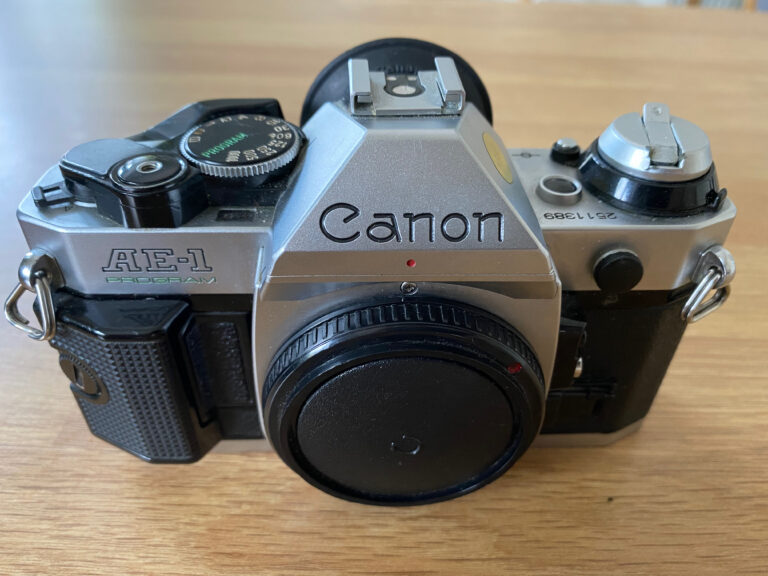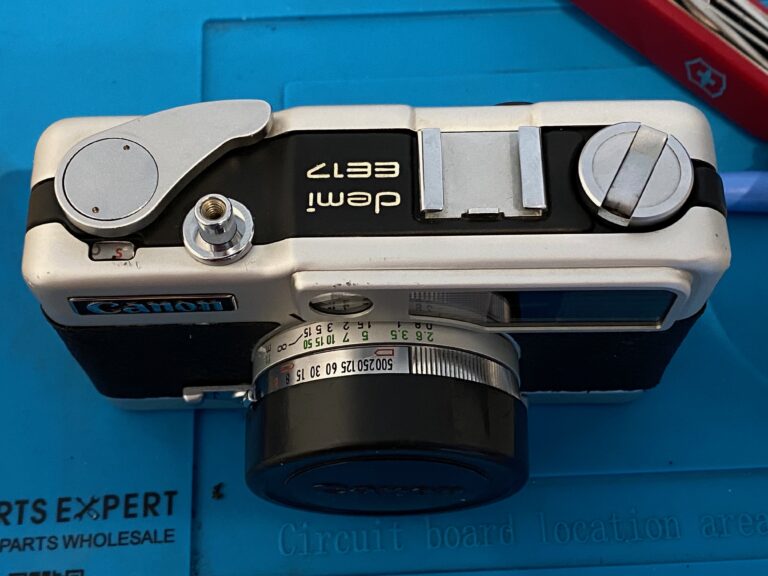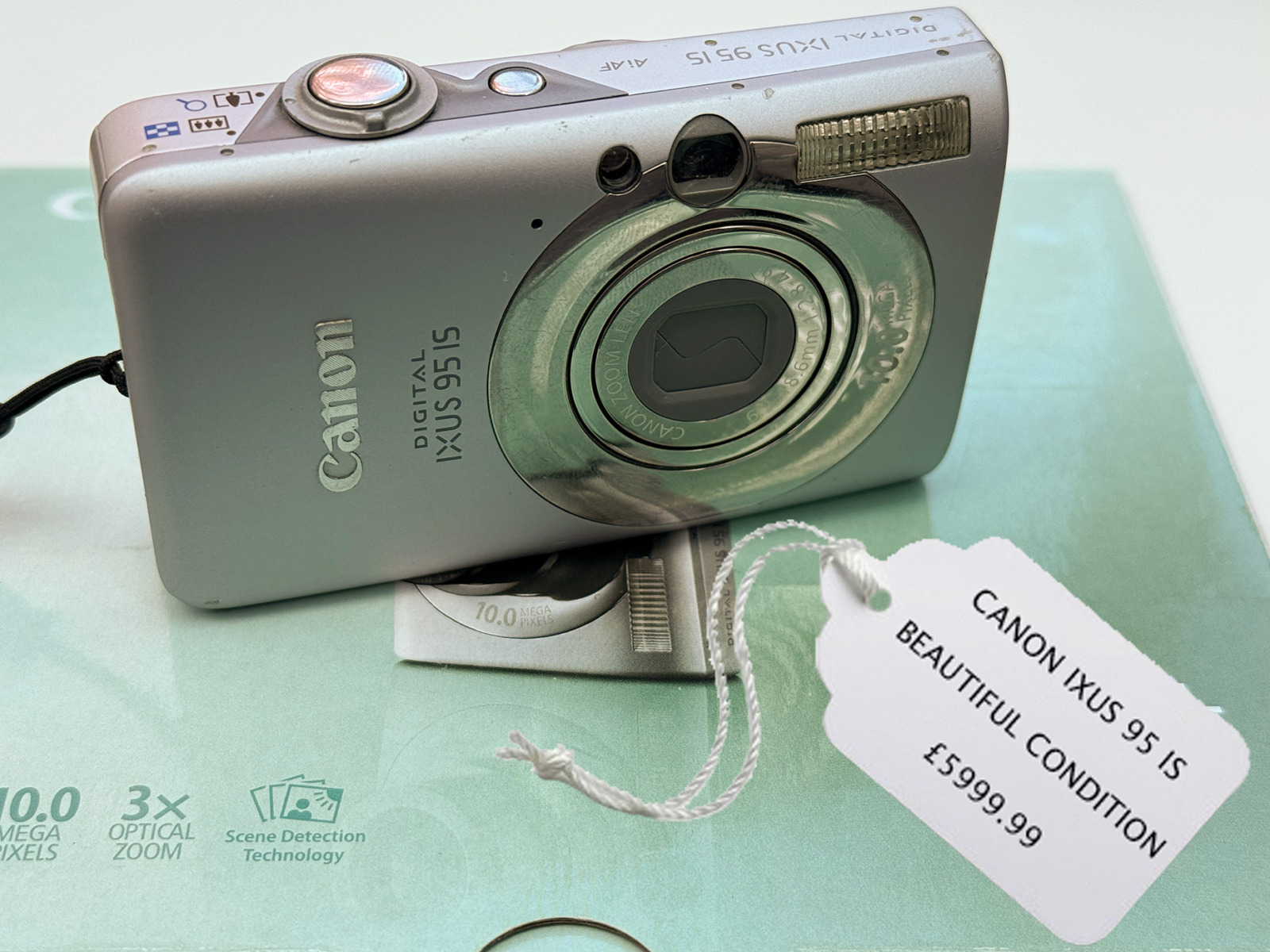
There’s something quite inexplicable going on in the world of old digital cameras at the moment – people are paying extortionate amounts for point and shoot digital cameras.
Why?
To be clear, we’re talking JPG only, bog standard, very average cameras from roughly 2008 onwards. A time when digital compact photography was a mature, boring market with little innovation or excitement. These are not the pioneering cameras which set the world on fire from about 1999-2004. You have little creative control, no RAW files, no real benefit over a modern smartphone in many respects other than the larger, higher quality lens.
When I say people are paying a fortune, they are literally paying the price these cameras cost when they were new:
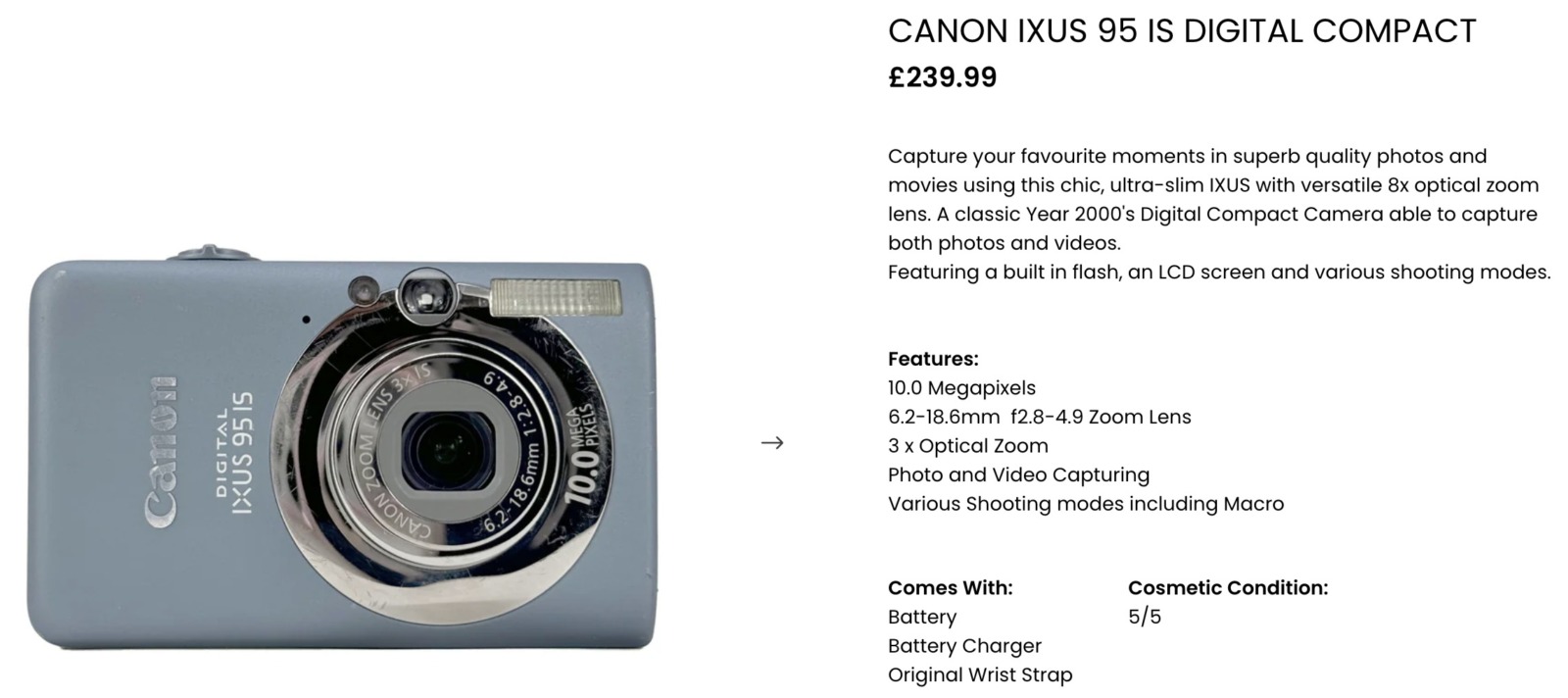
This advert is the worst of the worst. Not only are the company, who shall not be named, deliberately ripping off their customers (if they have any at this price) they can’t even be bothered to write their own descriptions. This clearly AI written nonsense says “8x optical zoom.” Really? I’m pretty sure the front of the camera has 3x written clearly on it.
This is not a trend based on objectivity, but on imaginary nostalgia mainly from people who certainly didn’t grow up with or follow digital photography in any meaningful sense to actually understand what it is they’re buying. Apparently, it’s all about “the retro look” of the images.
Retro? Digital? Jesus.
But, come on, you miserable pasta based old git, there’s got to be some positives in this story other than the obvious “quick, check your drawers and sell old cameras for a fortune” angle. Yes. There is definitely more to this trend than first meets the eye.
So… let’s try to find out, because do you know what? I genuinely do have an Ixus 95IS from 2009 languishing in a drawer. What are the chances?
In this post:
Where has all this nonsense come from?
I hate to use the word, I’m reticent to even type it but here goes…
“Influencers”
Yes, my friends, the easily led are at it again.

I shall save you the hassle of reading an article that I’m not going even dignify with a link to. In summary, some of the gold standard reasons for buying up old cameras are as follows:
“It’s comforting”
No, I don’t know what that means either.
The total and utter bollocks of this next quote is something to behold:
“I find it quite refreshing going back to something so simple. With older cameras you have to work with them a bit more, to get a good photo or to get the most out of them.”
– A total moron who has no idea what they are talking about.
I’m sorry? What? First of all you’re saying older cameras are simple, next they are apparently complicated because you have to “work them” a bit more. “Work them?” Jesus. I have no words. The level of rage in me right now reading this total crap is leaving me in danger of spontaneously entering orbit.
Here’s another:
“It looks like memories, because it’s blurry and imperfect.”
No, it’s because you don’t understand exposure and have taken a shit photograph in low light with a camera on which you don’t know how to override the automatic settings.
I’m going to have to leave it here with one final quote because I really can’t take any more.
“With your phone you can take videos and pictures of literally everything. So your library is huge, versus with this you kind of have to decide, ‘this is a moment I actually want to preserve’.”
You have to decide? This is a bloody digital camera. DIGITAL. If you stick a 4gb memory card (and you’d struggle to find one so small now so 32gb at least is more likely) in the aforementioned Ixus 95 you can fit 1449 pictures – thousands of images on a single card. What, exactly, is there to be selective about? It’s quite literally the entire point of digital over film.
I’m out. I quit. If this is what photography has become amongst young people I want nothing to do with it. Apparently we now have a generation of people who are trying to take deliberately crap photos because they look “nostalgic” from a time they have no idea whatsoever about. Did the BBC deliberately select the creme de la moron for their article or is that really a representative sample? Please don’t let it be.
This trend, though, is very real and is not going away. That article was written in 2023. Three years later, just look at the prices:

Cutting the crap
We’ve seen on this site more than once that once digital cameras reached the magical megapixel barrier you could produce very clear, high quality images that would look just fine printed out. Such cameras were available from around 2000 onwards. Yes, there have absolutely been plenty of terrible cameras like the cheapo Fujifilm A series which do indeed produce poor images, but these were cheap then and are cheap now. Decent cameras were always capable of making decent images, even when digital photography really was just finding its feet. The clarity and detail in images my old Ixus 400 used to produce was mindblowing back then and is impressive now.

The idea that old cameras somehow produce a “nostalgic” look is generally total and utter nonsense. Poor cameras have an “aesthetic” but as with buying a Holga, I’ve never understood the idea to take poor, blurry images for a “look.” That look is rarely a good one and generally you need such cameras to be in the hands of a creative visionary, someone who really knows what they’re doing to generate those show stopping images that make you question how such things are possible. Deliberately generating poor images does not make art.

By the time we hit the 8-12mp compacts that are currently in huge demand at eye watering prices, the technology was so sorted that it was almost impossible to take a poor image. We had 5th generation image processors, huge advances in noise reduction and high ISO performance, image stabilisation and creative effects galore. The notion that these cameras somehow produce imperfect images that invoke rose tinted memories of youth are misguided at best and downright bullshit at worst.
These cameras are, in many cases, better than the best phone cameras that these people are trying to get away from because apparently phone photography is too good these days. Hmm. Let’s put that to the test.
Ixus Vs iPhone
Here’s my first attempt at a side by side image comparison with an iPhone 16 Pro and the Ixus 95 IS. It’s not great at all, but I’ll include it here because it starts to paint a picture. Both cameras were set to full auto, no flash, macro mode (automatically selected by both cameras).


The first thing to say about these two images is the iPhone is applying a metric ton of image processing before you ever see the final picture. The colour saturation is through the roof and this is probably a focus stacked image and it has been sharpened to within an inch of its life.
Phone manufacturers realised many generations ago that they were beginning to be limited by the physical size of both sensor and lens. Smaller sensors are much more prone to noise in lower light and smaller lenses make it harder to reach longer focal lengths, they let in less light and they don’t have physical aperture blades which makes controlling depth of field difficult – you can forget bokeh on a phone lens. Due to these constraints they’ve been forced to apply progressively more aggressive image processing to the point where the image seen on your screen is absolutely nothing like the image captured by the sensor.
Of course, both cameras are applying image processing, but the Ixus is far more subtle and this results in a more “natural” image from a traditional photography perspective. Whichever of these images you find more pleasing is down to personal preference and the intended use. The iPhone image is clinical, stark almost and places an intense bias on saturation.
Let’s try again:


The slightly different perspective here is almost unavoidable due to the position of the iPhone’s lenses – to get the same focal distance without switching to a different lens there is a choice of too high or too low depending on which way up the phone is held. This is the closest I could get, however the story is very similar to the previous two images.
Holding the actual dice in real life up to a colour corrected screen, the iPhone image is definitely too saturated, the Ixus image is very slightly pale in comparison. Personally, I much prefer the images created by the Ixus. They are more natural and the physical advantages of a much larger lens and sensor are hard to ignore. The bokeh created by the Ixus 95 is exactly what I want in a macro image, the iPhone image has a background that is far too clear and intrusive despite the processing applied. You can actually adjust the depth of field after you have taken the image on iPhone but the effect is very obvious the more you apply it and it is nothing more flashy than an automated application of blur.
There is more to learn from these two images when we zoom right in.

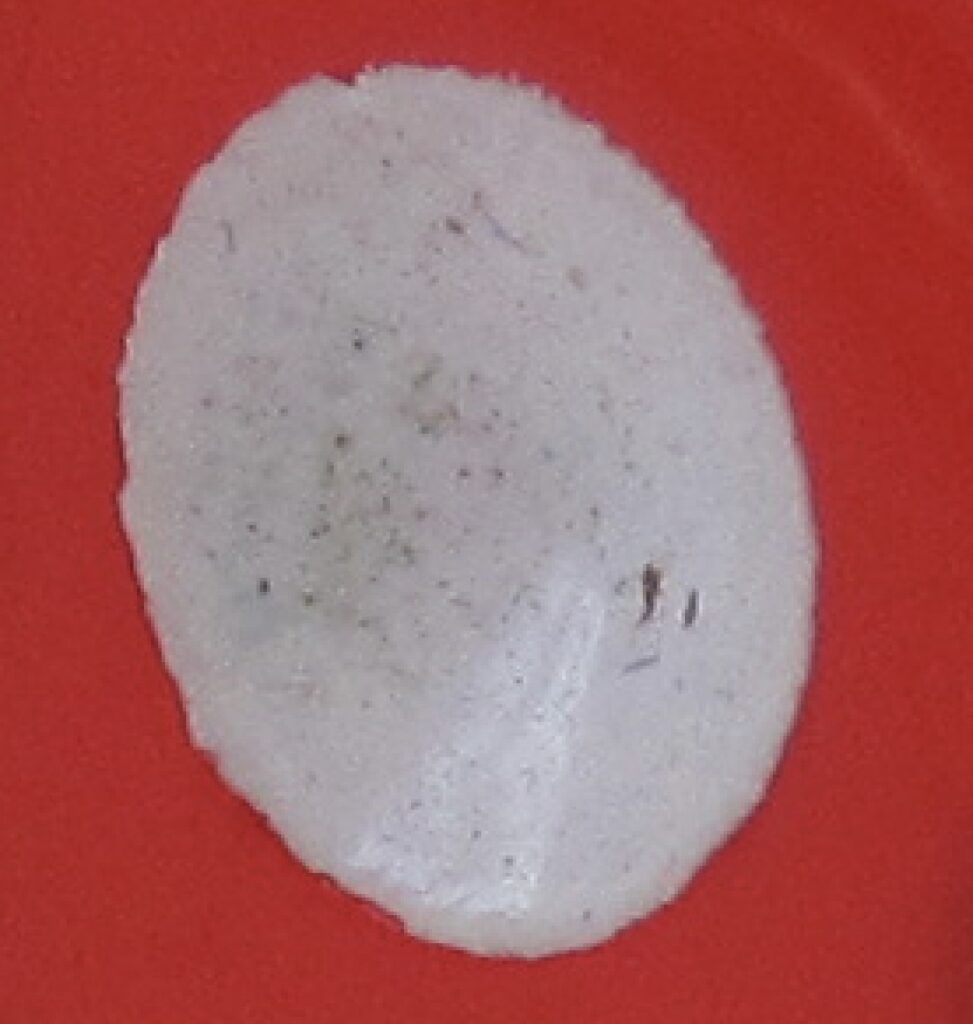
Stop for a minute and consider that the iPhone is using a 48 megapixel sensor and the Ixus a 10 megapixel sensor. This goes to show just how meaningless megapixel numbers are these days. The iPhone is using all sorts of pixel binning techniques to control noise and detail so unless you set it to RAW, which is an unfair comparison to the cameras we are discussing, you don’t get a 48MP image. Because of this, the Ixus is actually capturing slightly more detail than the iPhone is – look at the edges of the white circle on the dice, the iphone has smoother edges, the Ixus picks up the finer detail of the jagged, imperfect edge.
This level of pixel peeping is largely pointless to some extent but proves one thing beyond any doubt – cameras of this era do not produce poor pictures. This idea that people are buying into a bygone era where cameras were imperfect, images soft and fuzzy and have a “memories” look is just complete and utter garbage. What these people are seeing, or interpreting as “the look” of these images is… proper photography. They are seeing pleasing images because they’ve been largely left alone, devoid of aggressive image processing to hide physical limitations of camera phones. People are getting images with the correct optics that you should expect from a half decent camera, real bokeh and not interpreted blur.

The bottom line is, the human eye and your brain is nuts. It has a built in expectation of what looks right from real world observations and it can see the slightest, most minute deviation from this and flag it as unpleasing. Consider just this one fact – the human eye can distinguish between roughly seven million different shades of colour. That’s like going down the paint shop and they present you with seven million shade charts and you can actually see the difference between them. However, if you used just seven million colours to reproduce a photograph on a computer screen your brain would tell you something doesn’t look right, which is part of the reason we have to use a minimum of 24 bit colour these days to reproduce 16.7 million different possible colours. All so your brain doesn’t get upset.
Your built in ability to subconsciously process images to an insane level of detail is why most people have an inclination towards more subtle, less processed images. We want “real” by design and things that sway too far from that base camp has to either be proving a point artistically or have a good reason to do so. Don’t get me wrong, rules are there to be broken and some photographs are absolute classics purely because the colours grab you with both hands and give you a visual shaking, but perhaps the default of modern smartphone image processing has gone too far.
The irony, then, is that these people driving you towards these cameras to get your nostalgia fix are actually driving you towards arguably better images. That’s… not quite the point, is it?
Real world tests – the Ixus or iPhone game
Now that you’ve had some training, let’s see if you can score 4/4 on a game of Ixus or iPhone.
Ready? Pick from the 100% cropped image A or B below for each question and nail your colours to the mast. Answers are at the end of the post.
Picture Pair 1:


Picture Pair 2:


Picture Pair 3:


Picture Pair 4 – Full size image, no crop:


I admit, I don’t think this is a very difficult quiz with the images side by side, but there are a few things to think about here. Other than guessing which is which – is one more pleasing than the other? Does one invoke that sense of nostalgia, the “old camera” feel that the social media brigade are looking for? May I be so bold as to suggest that any of these images taken alone, with no context, no direct side by side comparison would see most people struggle significantly to tell one from the other.
Most interesting to me is that these two cameras are sixteen years apart in development. Sixteen years in technology terms is the equivalent of a millennia in most other areas. The very fact that a camera from that long ago can keep up pretty well with a modern, top of the range smartphone or, depending on your preference, produce more pleasing images than a smartphone is truly remarkable.
Finally, the Ixus 95 was by no means an industry leading compact camera when launched. I found several reviews that gave it 70-80% ratings and the conclusions were often “great camera, lovely small size, absolutely there is better out there for the same money.” It cost roughly £220 on launch.
The things that most let the Ixus 95 down are dynamic range, really bad chromatic aberrations (purple fringing in bright areas) and a slightly soft default output. The crazy thing about this is that if I’d used a top rated compact from 2009 for these comparisons, I really don’t think you’d see any differences at all.
The inverse fad law

There’s a simple formula that we need to remember here. The more popular something is online = the more bollocks it is likely to be.
In this case, another relationship is true. As the popularity of physical cameras grow, the potential market shrinks proportionally. People who would really love to get back into real photography are priced out or forced to use the real bin fodder like a Fuji Finepix A201… There aren’t enough batteries left in the world to power those things again.
And this is the key to all of this. For all it was, social media is no longer a good thing. It is a cancer in our society.
Algorithms are not designed to enhance your friendships, connect you with people you love or help you have a better day. Nice things do not generate profit. They are (and this is not speculation, the evidence presented in the recent Meta social media addiction court case proves this) designed purely for addiction. Addiction is driven by emotion and the most powerful emotion is rage. Social media companies know that making you happy and content does not drive engagement so that’s low priority. If you want to know why everyone is so disillusioned, look no further.
Facts don’t exist in the social media space because fact verification is a loss maker and we’re out to make a profit. However, if we can drive profit through fads and trends then this is promoted and pushed to the top of a feed. Social media “icons” are not stupid, they are also not your friend and give zero shits about you or your opinions. They are business entrepreneurs and they know that the second there is a sniff of popularity about something it can be used to drive engagement and traffic. Engagement = promotion = higher revenues.
And the driver? Nostalgia. Post a picture and a caption along the lines of “OMG totally forgot about this, how OLD does this picture look it gives me the FEELS” and all of a sudden the comments roll in “I had one!” “Me too!” “Made me look in the chest freezer in the shed and look what I found, a PC from 1999 with all my old photos on!”
Now we’re off to the financial races. This is sad and there’s one answer to this – get off these platforms. Can anyone, honestly, without bias argue that these platforms make their lives objectively, measurably better?
Conclusions and learning
Let’s go back to the start.
A few weeks back whilst tidying out a cupboard I came across the box for my old Ixus 95, but there was no camera inside. I couldn’t for the life of me think where it was and whilst the search continued, I looked up how much a replacement would be if I needed it – it’d be something else to write about if nothing else (and I still think it deserves a review of its own).
That’s when this world of insane prices revealed itself to me. A camera that five years ago you’d have been lucky to sell for £20 was now asking ten times as much. Indeed, they are now selling for more than the original asking price. It isn’t just this camera that fetches these silly prices but it is one of the most expensive that I could find and auction after auction was achieving over three figures before it had finished.
The quick research I did pointed to this all being a social media driven trend, or fad if you will and you don’t need to be a parent to know how stupidly easy led people are by brain rot trends on social media. For some reason, if someone says “this is popular” on certain platforms, everyone just dutifully falls in line and agrees without a seconds thought of their own.
The reasons for this resurgence? A yearning for a better time, for “memories”, for “the imperfect look” of the images. Time and again people mention having to think about what they’re doing, be more involved than using a phone, creating images that are blurry or have other imperfections that somehow make them nostalgic in appearance.

I could agree with this to perhaps some extent if the evidence pointed towards people buying properly ancient models – the Casio QV10 certainly gives off imperfect nostalgia vibes, or perhaps something like the Kodak DC 210. But these are not the cameras people are buying. Digital compacts evolved extremely quickly after their launch and within a few short years of their introduction we were in megapixel territory with decent lenses and great image performance that only got better and better.

As we have seen in just this one example, this idea of image imperfection simply doesn’t hold up to any kind of scrutiny. Yes, your images look different but they look different if you own a Samsung phone over an Apple one. It’s down to image processing and again, in the case of the Ixus, if I turned on the “vivid” colour mode I could get a fairly close approximation of what my iPhone was trying to achieve.
The irony is, phone pictures are imperfect. They lie about bokeh, they focus stack without telling you, remove details, sharpen to the end of the world, bin pixels all over the shop and these days use algorithms to simply make up what it thinks is there when you “zoom” past the physical limitations of your lens. Furthermore, they are still (and never will be) nowhere near the beautiful, instantly recognisable images you can get from any (and I do mean any, even the D30) DSLR ever made. That’s just physics. If you want beautiful photos, you need a camera physically capable of producing them. If you zoom in on your phone images, something people rarely do, the imperfections and soft details start to jump out at you.
The argument about a more involved and complex image process is also total and utter tripe. We are discussing point and shoot cameras. By their very nature you simply turn them on, point at your subject and click the button. There is nothing involved and you are not even given the chance to fiddle with options beyond the basics. However, I would argue and die on the hill called Le Col de User Interface that it is easier to use a dedicated camera than your phone.
Touch screens have never been a good camera interface and hilariously phone companies have tried to sell you your shutter button back to you as a “feature.” Options are hidden behind icons or even worse, in a separate settings app meaning you need to go to two places to configure your camera. In a dedicated point and shoot there’s a button for the things you most need, image settings just a press away and a neatly, well organised menu system where everything is logically grouped together. I could’ve ejected my laptop through a closed window when I read the quote from the absolute moron who suggested that these cameras were “difficult” to use. We’re talking Baldrick levels of stupidity to make such a comment.
So are these cameras objectively better or worse than the phones we carry around on a daily basis? Really?
No. They are neither and that’s because photography is an art form and therefore the argument of right or wrong, better or worse is purely subjective. My argument is no more valid than anyone else’s when it comes to the final pictures. Some facts are undeniable as we’ve discussed, but a large part of this movement is based firmly on the idea that these old cameras are basically primitive old rubbish that produce quirky images and that is just plain wrong.
So, unless you buy a very specific, niche group of cameras from approximately 1999-2002 you are in no way achieving what this trend somehow aspires to. You are simply getting slightly different image processing on your digital images and you can get right in the bin if you start the CCD v’s CMOS crap, that is just image processing.
But.
There are positives. Anything which moves people away from their phones is a good thing. Using a dedicated camera will usually get you better results than your phone can, especially when it comes to effects like depth of field which rely primarily on lenses and sensor sizes that you physically can’t fit inside a phone.
Having to remove a memory card and plug it in to your computer is another positive. This introduces people back into basic image editing, thinking about their images and ultimately making it more likely that we at least interact with our pictures rather than them scrolling off the top of a feed never to be seen again or occasionally regurgitated in a terrible AI generated video some years later. Whisper it but… some people might even print their images!
I wholeheartedly support the idea of carrying around a dedicated point and shoot in your pocket. Using your phone as a phone and leaving the images to a dedicated device is a better idea for so many reasons, not least the fact that the evidence grows on a daily basis that phone and social media addiction are quite literally this generations Big Tobacco moment and we are all knowingly smoking 100 a day despite the fact our phones are proven to lower mood, cause depression, give you body dysmorphia, lead teenagers to suicide and more besides, yet despite the plain and clear evidence people cannot give up their addictions. If this trend can do one thing, perhaps it can remove a few minutes of screen time but the irony that it is driven by social media is not lost on me.
The only problem is, they’ve ruined it for everyone by driving prices through the roof. Oh well.
Quiz answers:
Picture pair 1 – image A was the Ixus 95, image B was the iPhone 16 Pro
Picture pair 2 – image A was the Ixus 95, image B was the iPhone 16 Pro
Picture pair 3 – image A was the iPhone 16 pro, image B was the Ixus 95
Picture pair 4 – image A was the Ixus 95, image B was the iPhone 16 Pro – the giveaway here was the lack of dynamic range of the Ixus.