

I’ve lived in Lichfield on and off for the best part of 40 years and, as with anywhere you become familiar with, you’d be forgiven for thinking nothing much ever changes. Lichfield is a city due to its main tourist attraction – a huge, three spired cathedral. The cathedral is indeed monumental and very impressive, but consequently there are about a hundred businesses that have really imaginative names that are all takes on the “Spires” theme.
Other than this, Lichfield is a city packed full of history that has survived the centuries of development, expansion and even a couple of sieges during the 1643 civil war which generated this absolute gem of a quote when the Royalists sent Prince Rupert down to teach Birimingham and Lichfield “a lesson” and was met with this response by the Parliamentarian Colonel Russel:
I have heard there is a man who goes by the name of Rupert, who has burnt near four score houses at Birmingham, an act not becoming a gentleman, a Christian, or Englishman, much less a Prince.
Burning down houses really isn’t cricket. As an aside, if you’re interested in local history, there’s an absolutely superb website https://lichfieldlore.co.uk/ which is full of interesting stories about the area. It’s very well written and entertaining at the same time, well worth a read.
Incredibly, despite living here forever, I don’t really have any historic photographs of the city itself. Fortunately, this is where the local archives came in and I dug through quite a mine of old images to select some which I thought would make for an interesting “now and then” comparison. Doing so, however, turned out to be a lot more difficult than you’d imagine it would be.
Trying to replicate an old photograph is difficult because the types of camera used often give a slightly different perspective (especially plate cameras which were set up to remove perspective shifts). Moreover, and this sounds stupid but is true, trees grow. Some shots were completely pointless because the trees had grown so much, and they were full of leaves because it’s summer, the “now” shots were nothing but leafy foliage and nothing much else.
Copyright note: this post uses photographs from various sources including Lichfield GIS, Staffordshire Archives and the Francis Frith Collection. All images are free to use for non-commercial purposes and this site is not commercial in any way – I am not a company, I make no money from this site and there is no monetisation/advertising. If you want to re-use any images from this post you can take mine freely and without license, but for the originals check with the original source for copyright permissions.
Anyway, here’s what I managed to rustle up…
In this post:
Now showing
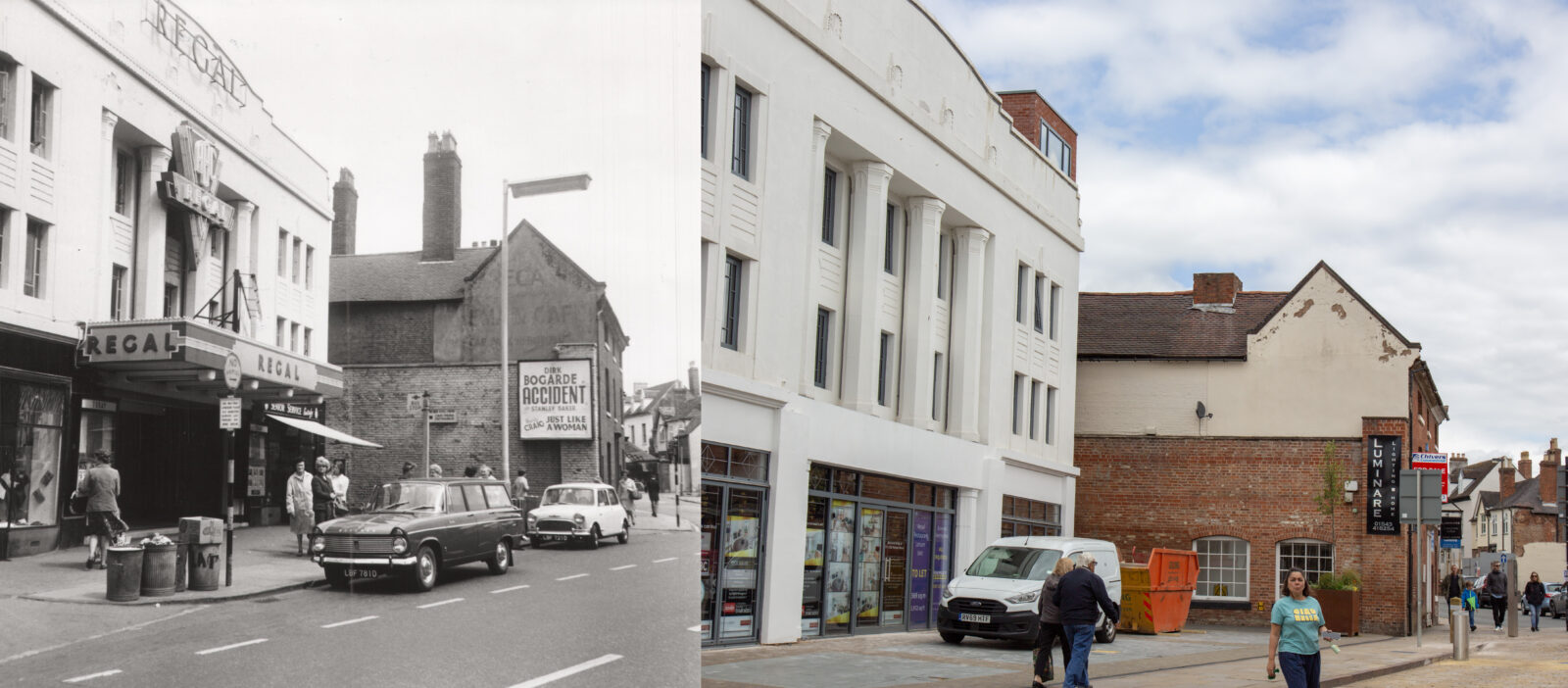
Back in the 1990’s, everyone wanted a cinema in Lichfield. “Ah, but we used to have one!” your parent’s would helpfully say, despite the fact it had been closed for at least 20 years.
Opened in 1932, the Regal served Lichfields cinema needs until 1974, where it briefly became a full time bingo hall and snooker club. Shortly afterwards it was taken over by former Welsh discount retailer Kwik Save which remained in the building for some considerable time until things started to go wrong for the company around 2006 after Aldi and Lidl began eating up market share in the UK.
Kwik Save was never ideally positioned in the town after pedestrianisation closed off the easiest access to the shop from the front, although there did used to be a large carpark around the back shared with a large hardware store called “Texas” which later became “Carols Discount.” Despite the fact the Council would have you know the new carpark is called “Lombard Street” anyone local will tell you it is, and always will be the “back of Carol’s, mate.”
A lot of the old cinema architecture remained despite its conversion into a supermarket and from the outside it was possible to make out where tiered seating would’ve been and the projection rooms at the top. A lot of fuss was made about potential applications to turn the vacant building into a hotel, which fell through and eventually a set of retirement apartments were built at the back, although quite why you’d want to retire to a carpark is beyond me. The front was converted into luxury apartments and the original facade retained as part of the planning permission.

The retail units at the front have remained vacant until the present day – or at least seemed to. I walked past this week and noticed that shop fitters were in and the poster on the door says it is about to become an Italian Delicatessen called “Mangia Mangia” which opens soon. You couldn’t get more Lichfield if you tried.
The image above is from 1967 and from the release date of the film “Accident” which is advertised opposite the cinema, we can safely say it is around February. Other than some chimneys being capped on the shop roof, the area remains surprisingly similar nearly 60 years later. The shop next to the old cinema is a lighting shop called “Luminaire” and I find it utterly incredible that a shop which sells nothing but lamp shades has lasted as long as this. They must either be incredibly expensive so one sale a month keeps them afloat, or there’s a wild demand for interior decoration in Lichfield that I’m utterly oblivious to.
Anyway, all things come full circle and our teenage wishes for a cinema have come true, only not here. Just up the road is a new “Everyman” cinema being constructed, I just hope the kids save up their pocket money because it’s not cheap.
A place of quiet reflection
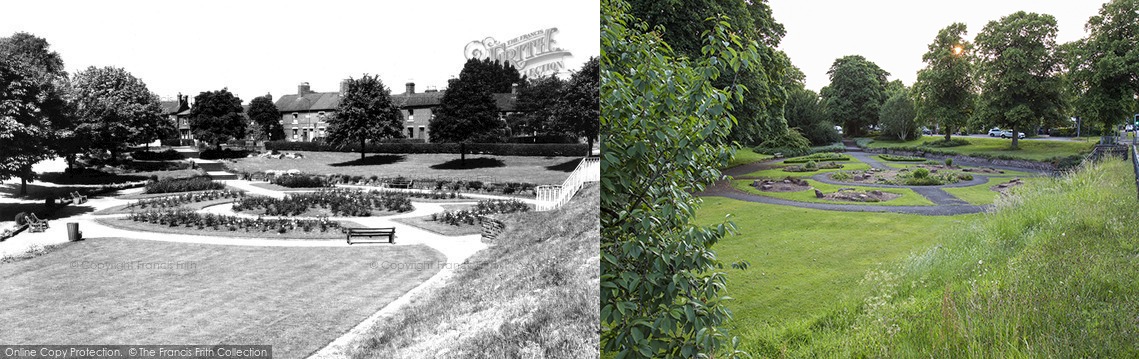
https://www.francisfrith.com/us/lichfield/lichfield-priory-park-c1965_l45076
Francis Frith was a photographic pioneer in the mid 1800’s and after a “nervous breakdown” which took him two years to recover from, dedicated a large part of his life to documenting as many towns, cities and countries as he could. Photography was an incredibly new field of technology at this time and he was a founding member of the Liverpool photographic society around 1860.
Frith died in 1898, but passed his photographic business on to his family who continued his mission to photograph towns and cities in the UK. In 2016, the company now owned by John Buck completed the digitising of the entire Frith negative collection – over 330,000 images available on https://www.francisfrith.com/uk/. The images used here are licensed for embedding in websites for non commercial use.
The Rose Gardens, originally called “Priory Park” and now “Festival Gardens” are something of a hidden gem in Lichfield. The Rose Gardens themselves are meant to be a place of memorial and reflection. Regardless of their purpose, it is a unique public area where children often learn how to ride their bikes for the first time or people simply gather or walk through there to get away from the crowds.
In the 1965 image, a great change has already taken place as the A51 Western Bypass has been ploughed through the middle of the park to connect Lichfield to Rugeley, Stafford and Uttoxeter without the need to travel through the city centre. If you look at the photograph below, taken ten years earlier in 1955 I think it’s only possible to conclude that the building of the road was something of a tragedy in that it sliced in half what was once a beautiful public place and turned it into a raging, busy cut through that destroyed the tranquility.

https://www.francisfrith.com/lichfield/lichfield-rose-gardens-c1955_l45040
I attempted to recreate this picture but the spot it was taken from is now under a huge Horse Chesnut tree which obscured most of the view, whilst the road and yet more mature trees blocked out what was once another view to the Cathedral. The houses in this image still exist today, but the angle and compression in this image make it really hard to tell what’s what.

The Rose Gardens sadly went through a period of relative neglect and became overgrown with hideous conifers. Fortunately, the council have spent a significant chunk of cash in the last few months to have them taken out and are effectively starting again with the landscaping and planting. It should be a beautiful place again by next year.
On the other side of the road is more of Festival Gardens and this image from 1965 shows just how new and fresh everything looked back then:
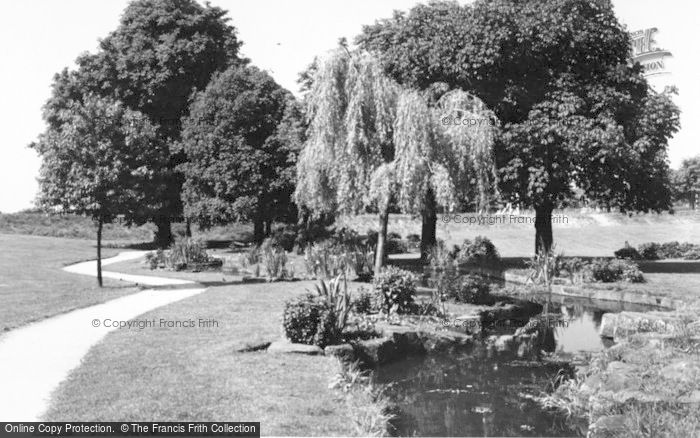
https://www.francisfrith.com/us/lichfield/lichfield-priory-park-c1965_l45075
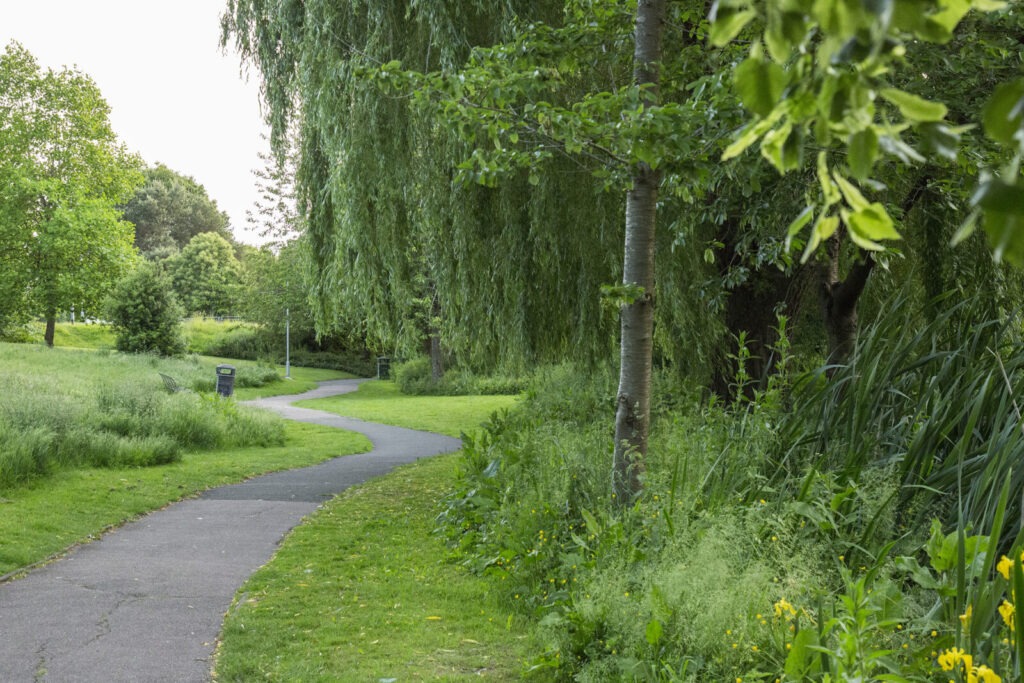
By now, you’ve guessed it, trees have grown.
What was once a rather nice stream/brook has been completely enveloped to the point where I’m not sure if there’s even water under the plants any more. There’s still a small bridge over not a lot. Whilst still maintained, when compared to the original picture it does feel like something has been lost in this public space and there’s definitely scope for making it slightly more habitable once again.
Reprioritising pedestrians
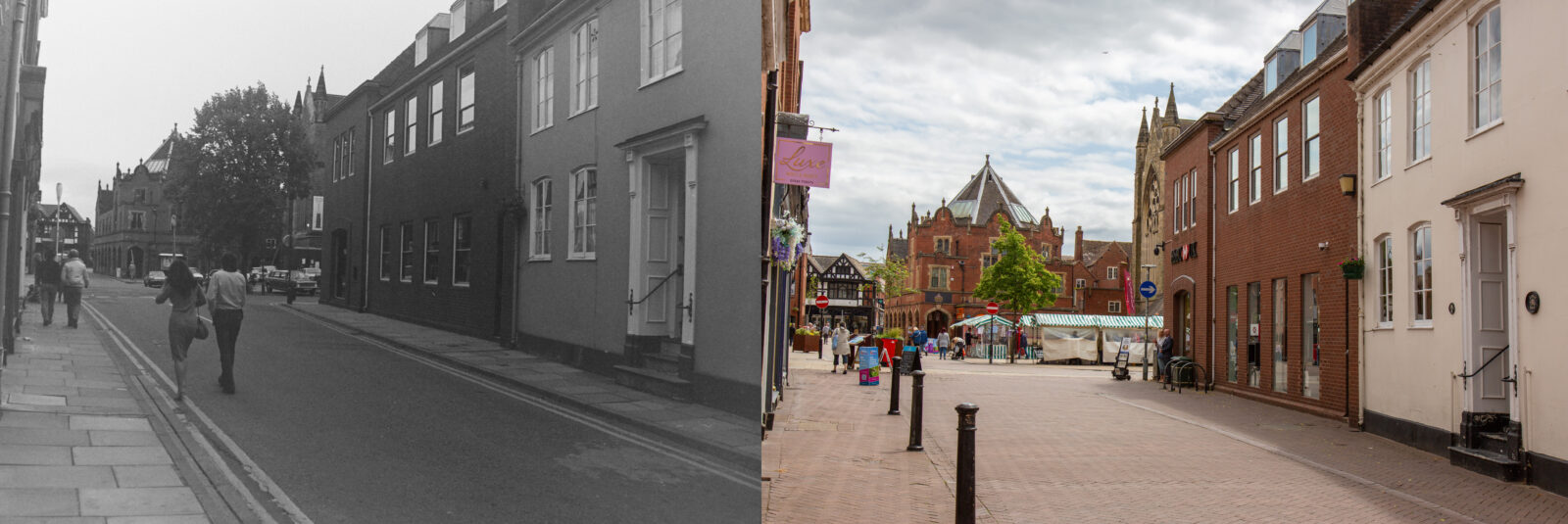
As you move into the town (sorry, City) centre, one striking thing about any of these old photos is how attitudes towards cars have changed. I can understand that in the 1900’s to 1930’s that naturally roads went through everywhere because there were so few vehicles around – it simply wasn’t the problem it is today. However, in the 1960’s and 1970’s, the attitude was that cars and roads took priority over everything else.
Some of these streets, like Dam Street, I have personally only ever known as pedestrianised areas. They’re narrow enough streets as it is without a road down the middle, but looking back at the 1970’s is almost comical because people are squeezing down tiny footpaths with cars and vans parked on them, despite the double yellow lines which clearly don’t count if you own a small van.
These images weren’t dated in the Staffordshire archives. Going on the registration plates, the van below is a 1975-6 model and the one in front is slightly newer but I can’t completely make out the lettering, but I’m fairly sure it’s somewhere around 1979. The outfits people are wearing seem to fit in to that period too.
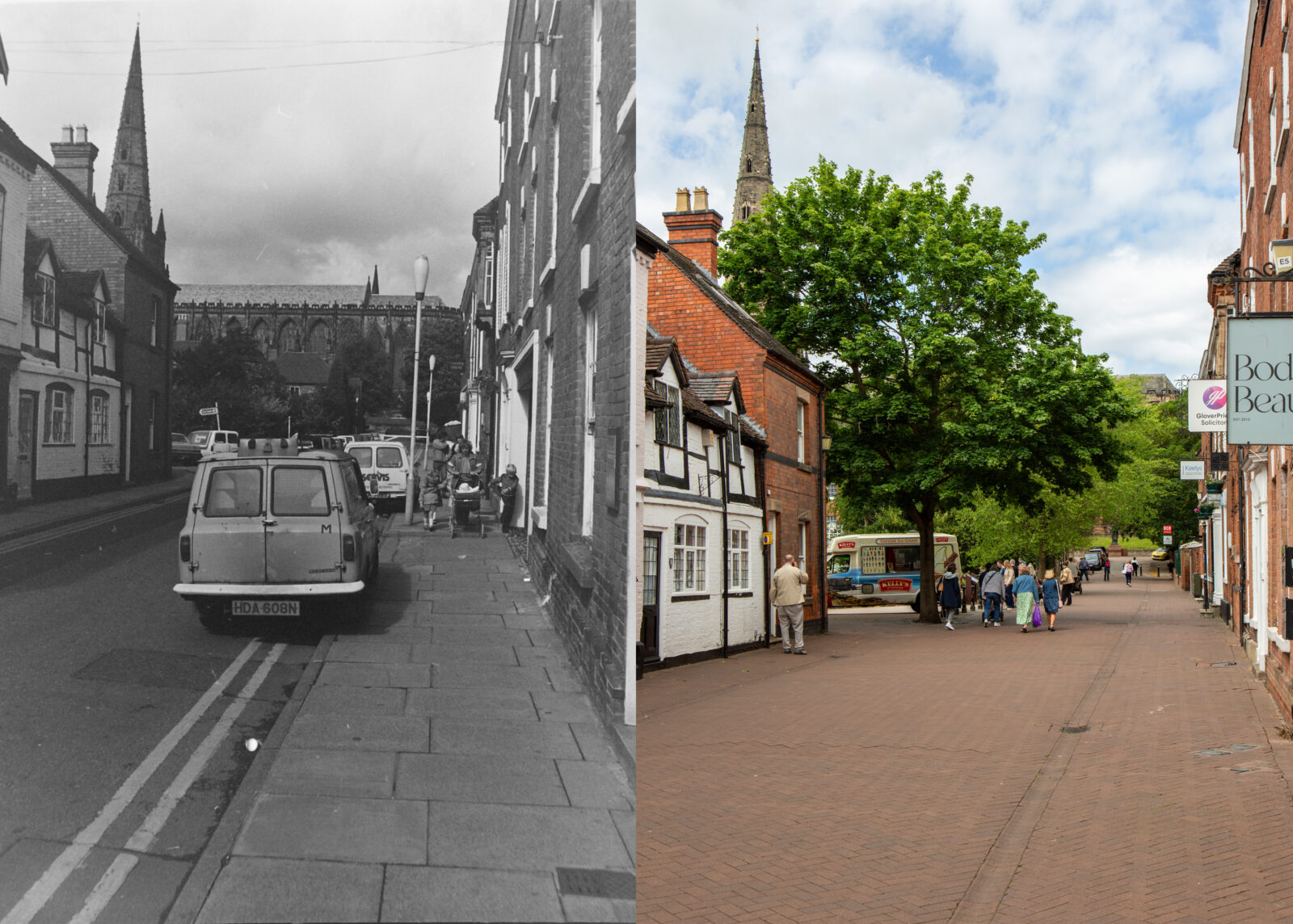
Other than pedestrianisation, Dam Street is a pretty good example of how well Lichfield has managed to preserve its rich and diverse architecture. From the timber framed buildings on the left to the slightly newer town houses on the right, not a lot has changed, other than some archways giving rear access have disappeared. Oh and trees have grown, if you hadn’t spotted that trend yet…
This image was really hard to get close to the original. I don’t know what type of camera was used but from my experiments it was somewhere between a 35mm and 50mm lens in terms of focal distance and whilst I thought I’d stood in the same place, I must’ve been slightly out as I don’t have the same perspective as the buildings on the right.
If you decide to do something like this yourself, I can honestly recommend you get either a decent tripod and take a lot of time lining everything up perfectly, or one of those mounts where you can hold your phone on top of your camera. Don’t do what I did which is to hold your SLR in one hand, phone in the other and do a lot of peering back and forth to try and make things look the same.
Professionalism? I’ve heard of it…
Bore St
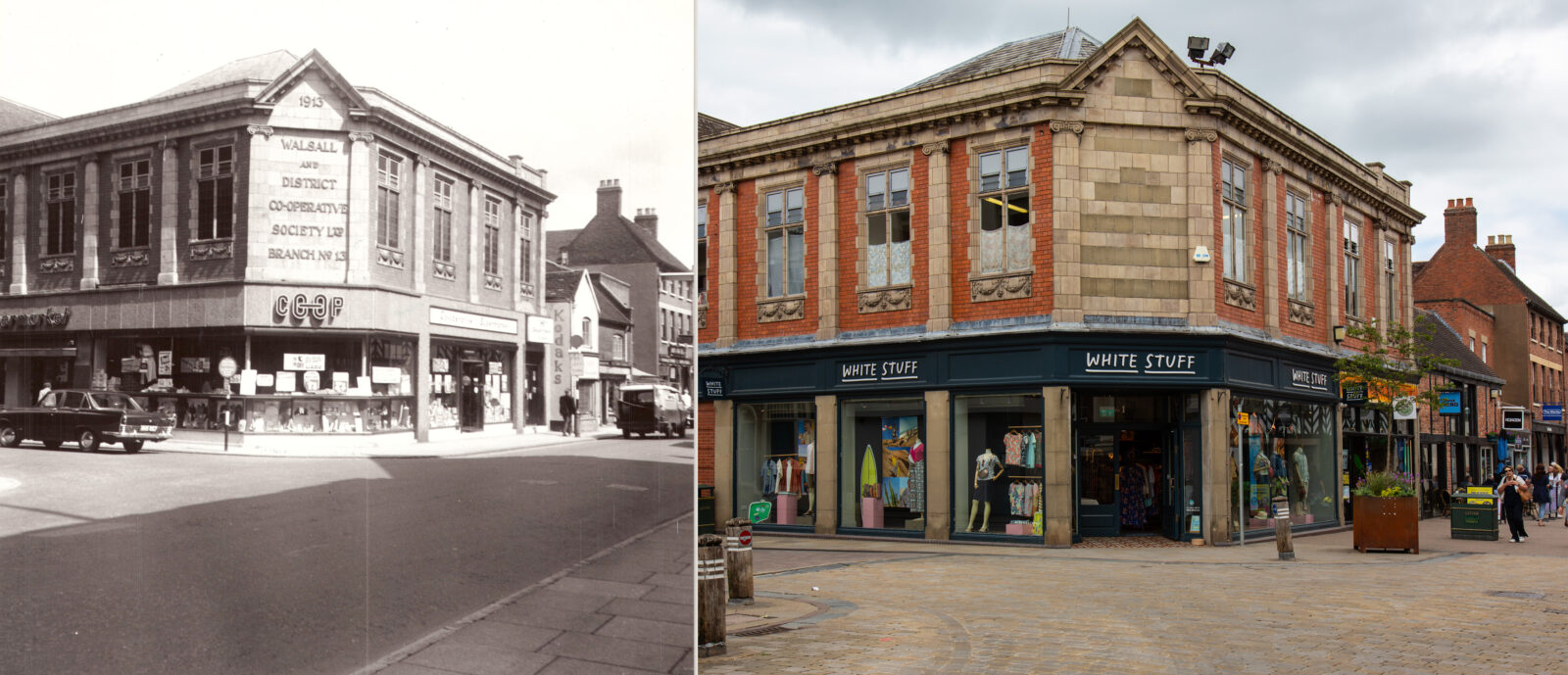
This is one of my favourite comparisons, not least because I almost got the modern day image bang on.
This building on the corner of Bore Street has been home to countless different retail outlets in its time, but before 1900, it was “The Dolphin Hotel.” I presume “T Bland” is the proprietor? I’ve no idea. This photo from 1890 shows the corner as it used to be:
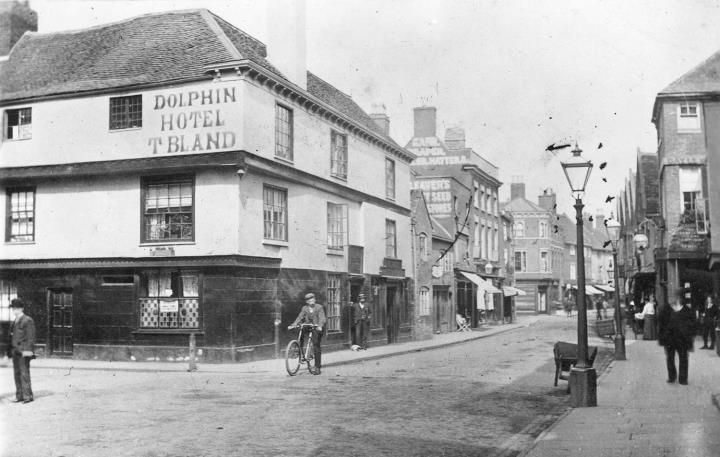
The hotel was a serious piece of history with apparent roots as far back as the 1500’s and had definitely been a pub/hotel as far back as 1800 according to the research on Lichfield Lore. The hotel was knocked down some time around 1913 and replaced with the “Walsall and District Co-Operative” where it stayed well into the 1960’s and probably later – you can see it still on the corner in this photograph below from 1961. I note the photographic shop next door with it’s “Kodak” sign and lament a better time for film photographers!
When the Co-op closed is nowhere to be found on Google, someone local will definitely know and the best I’ve found is that it survived “up until the 1980’s.” Regardless, it eventually turned in to a Burtons Menswear and stayed as such into the early 2000’s before closing and re-opening as another clothing shop – “White Stuff.” Notably, every other building in the lower end of Bore Street has survived and are largely untouched with the exception of some utterly hideous butchering of the shop fronts which took place in the 1960’s.
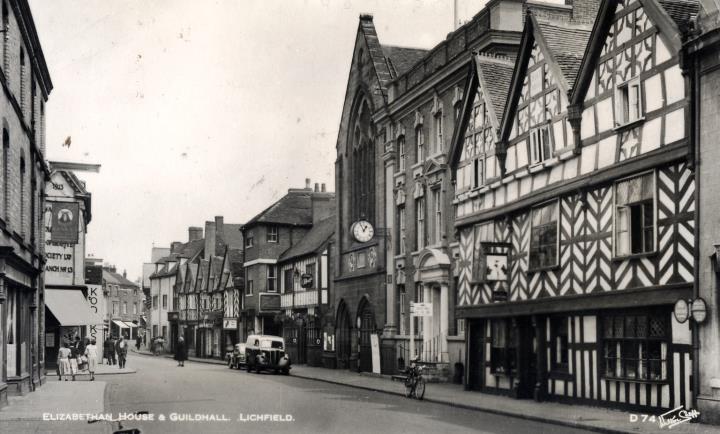
Instead of keeping the traditional shop fronts of the “five gables” with their nice semi circular windows, in what can only be described as a total seizure in the planning department they decided to allow them to be knocked down and replaced with awful concrete pillars which recessed the shop fronts from the street. Whilst the Tudor style upper floors fortunately remain, I’m not sure anyone in their right mind thinks these works were any kind of improvement. I’m surprised that, since the closure of Riley’s ever popular fruit and veg shop (which had quite literally been there a lifetime) there wasn’t call to restore the shop fronts to their rightful positions again when refitted.
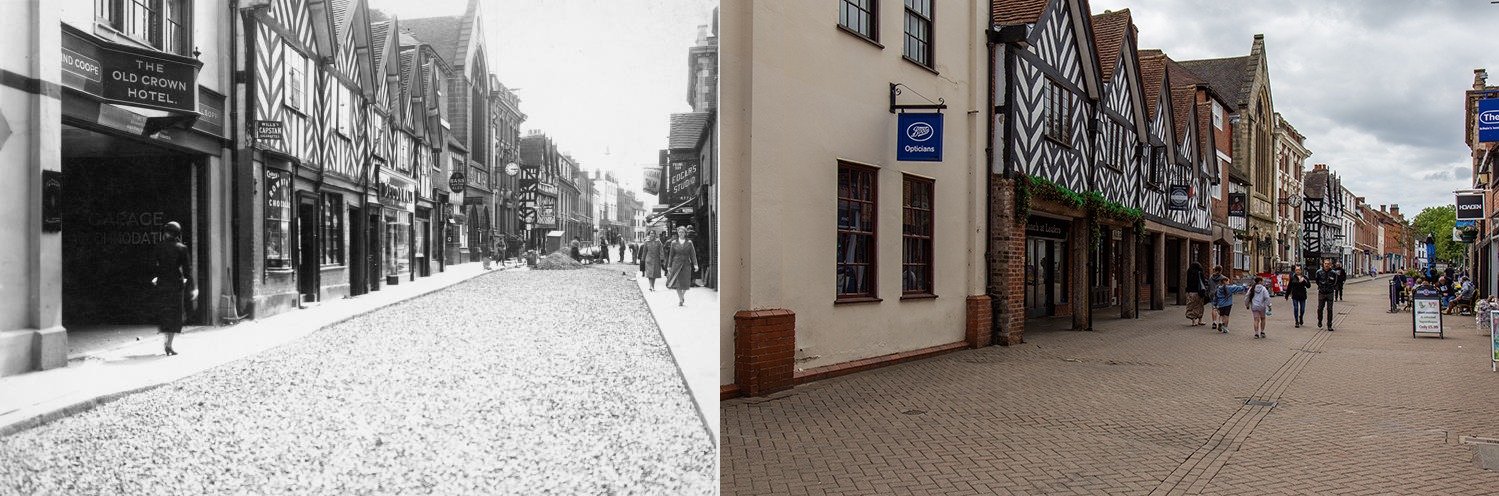
What is now Boots Opticians was once “The Old Crown Hotel” that had a large entrance for your horse and carriage as this was a popular coaching inn. You can see where this has been filled in and rendered to make invisible in the modern building – or can you? Apparently the pub remained open until 1983 but was then demolished to make way for the current shop – however the current construction does look awfully similar to the old building. So, was it really knocked down or simply converted? If it was demolished, the architects of the new build went out of their way to match up the design of the old one. Either way, dating back to 1722, the Old Crown was once the favoured meeting place of Erasmus Darwin who’s house was just up the road by the cathedral so he really didn’t have far to stagger home when thoroughly refreshed from an evenings work.
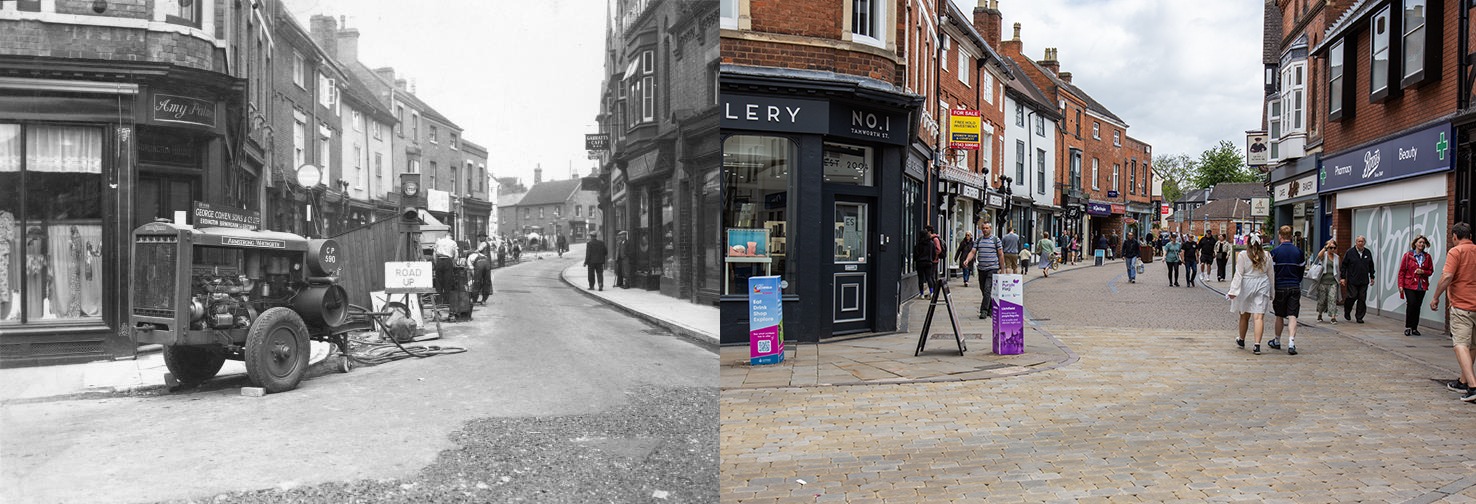
If you turn round by the opticians, you’ll be looking at the corner of Tamworth Street, home to yet more pubs. Lichfield was once so well furnished with pubs that there was something silly like one pub for every 20 or so citizens. Such was the problem that, according to a bloke who likes writing about pubs, local magistrates used to actively look for ways to cancel a few licenses just to bring numbers down. On this short stretch in the picture above alone, four still survive.
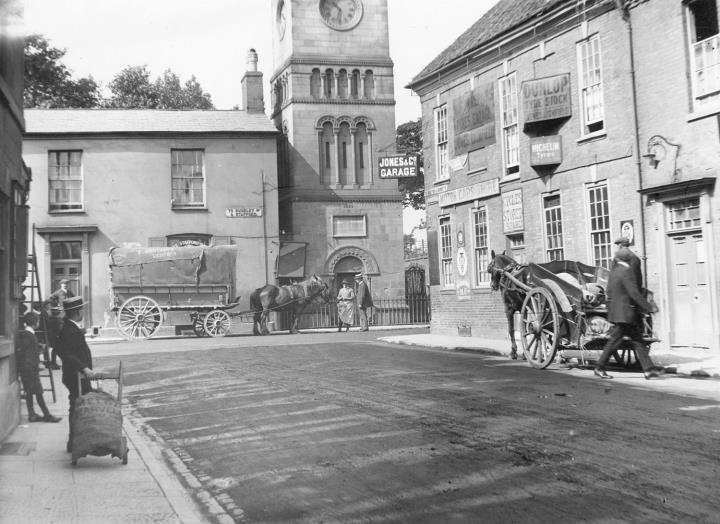
Bore Street is probably the most changed of all roads in the city centre at its top end. Where once stood Jones’ car garage and the clock tower, neither are now present and the entire top end of the road has been reconfigured. Interestingly, but only for those who don’t live here, the clock tower was preserved and moved brick by brick about 200 metres down the road. I used to know the bloke who had the job of winding it, I’ve no idea who has that joy these days. The garage, long since demolished, is now the site of a diabetes inducing dessert shop.
Bird St
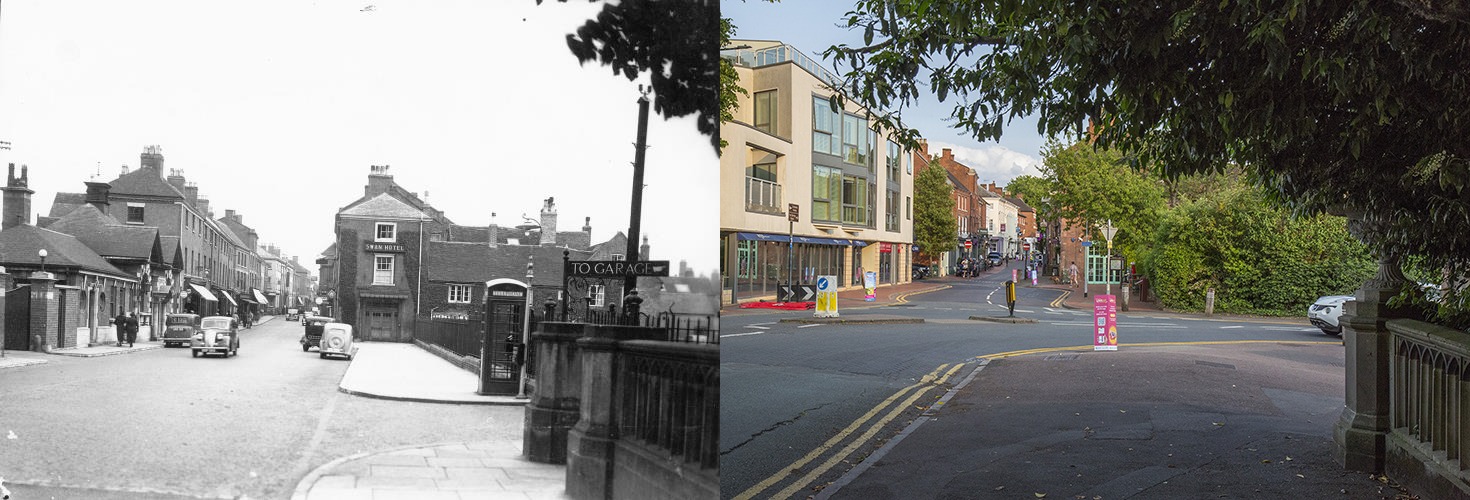
Bird street is a tale of two halves, at the top end almost nothing has changed over the years and is home to some serious history including the Kings Head which claims to be the oldest pub in Lichfield, knocking on nearly 600 years old. That’s an impressive number of pints pulled over the years. At the bottom end, however, there used to be a rather nice post office building, which then turned into an art gallery, but has since been demolished to make way for a Mediterranean restaurant and some apartments which have benefit from some lovely views over Minster Pool and over to the cathedral.
The Swan Hotel is now an Ask Italian restaurant and you can see the road has been moved during the “bypass that’s not really a bypass” Swan Link road which stopped traffic going straight through Bird Street. Before then, it was possible to go from the Friary to half way to Birmingham before having to so much as give your steering wheel a nudge in either direction.
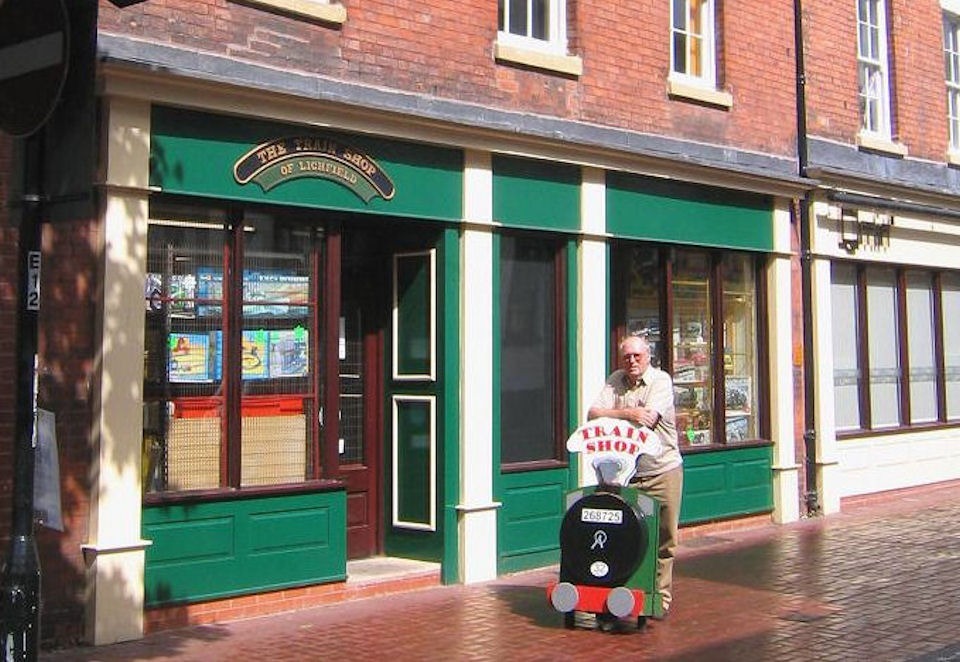
Beyond there, on the right of the road, used to be one of Lichfield’s more quirky shops which sold model railways and Scalextric sets. Aptly named “the train shop” it was a very successful and popular business which accommodated a surprisingly large number of model railway enthusiasts. The business only closed due to the retirement of the owner and I can’t help but think someone missed a trick by not buying the business. If they’d kept it going until the pandemic, they’d have been well in the money as Hornby and others saw their sales go through the roof when stay at home hobbies began to flourish again.
The only other thing of note here is the entrance to Beacon Park has been subtly shifted, but a lot of the original stonework remains in position. I’d have taken some pictures of the park from here but, you know, trees….
Market St
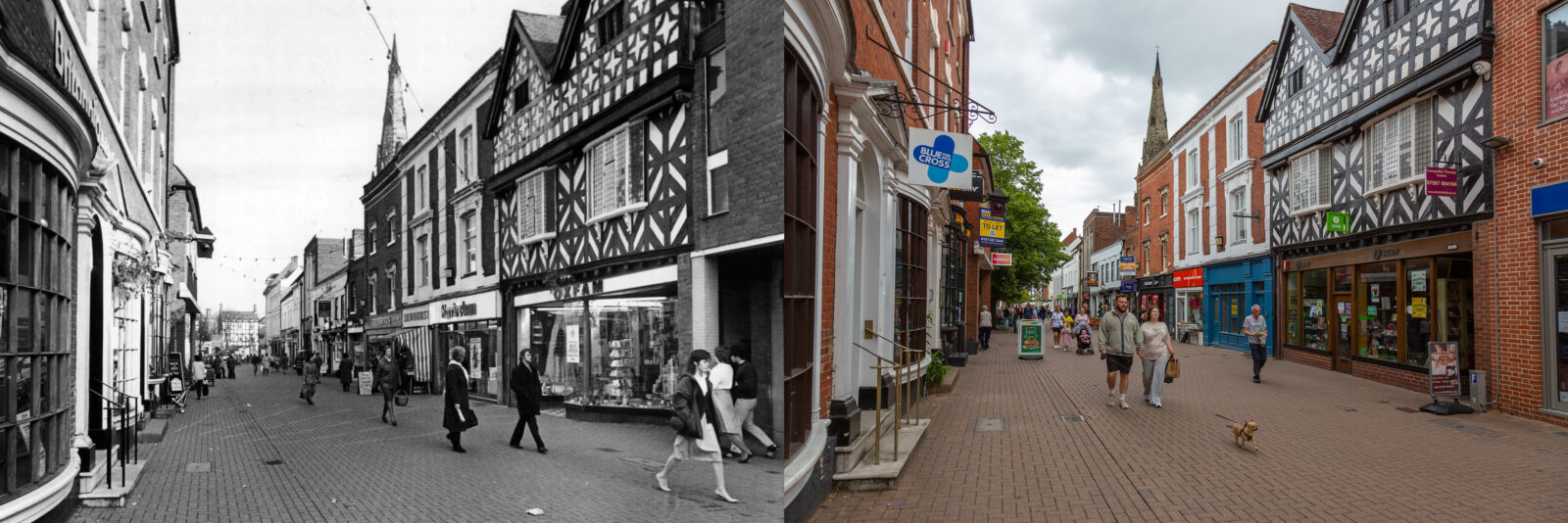
Our final street view is Market Street, home to a real mixture of old, very old and properly ancient buildings and, yes, more historic pub sites. The Oxfam shop in the picture above has been around for knocking on fifty years now, but if you’ve stuck with me this long, would it shock you if I told you it was originally… a pub? No? Thought not. What was the “Castle Inn” is a genuine Tudor era building according to our pub expert and was a pub as far back as the 1700’s. Did the Tudors even have pubs? Er, let me Google that…
Yes, indeed they did. Was this a pub from the off? No idea, if not, it certainly did something else for 100 years before turning in to one. I really am a thorough and well researched person if nothing else.

Pubs aside, the biggest mystery of Market Street is this:

According to the Lichfield/Staffordshire archives where the picture above came from, this picture is from Market Street in 1902. I cannot for the life of me place this building any more. I looked for architectural features, tried to match up the Tudor looking building next door, but nothing matches. If anyone knows any different I’m open to ideas, but I’m beginning to think this is somewhere else entirely. It could be the B&M / everyone still calls it Woolies? That certainly would’ve required a reasonable stretch of buildings to have been knocked down.
*update – 04/07/2025* Thanks to commenter Nick who points out that this building did indeed stand on the site of what is now B&M bargains. Mystery solved!
Market Street is home to some buildings that for whatever reason people have historically felt it worth documenting on an individual basis. Apparently, the former Chemist and Saddlery shops have “the oldest windows” in Lichfield. Old they might be, and listed they certainly are, but carefully decorated they have not been. The people who fitted out the Subway shop painted more of the glass than they did frame.
Interesting glass fact – people believe that glass is not entirely solid and over a very, very, very long time it can gradually sink towards the bottom of a window pane giving a sagging appearance. Turns out it’s a load of old cobblers and is simply down to the fact that glass production that long ago was, shall we say, less perfect than it is today and used a different process to modern glass production. Sorry, viscous glass fans, but silicon dioxide is still a solid.
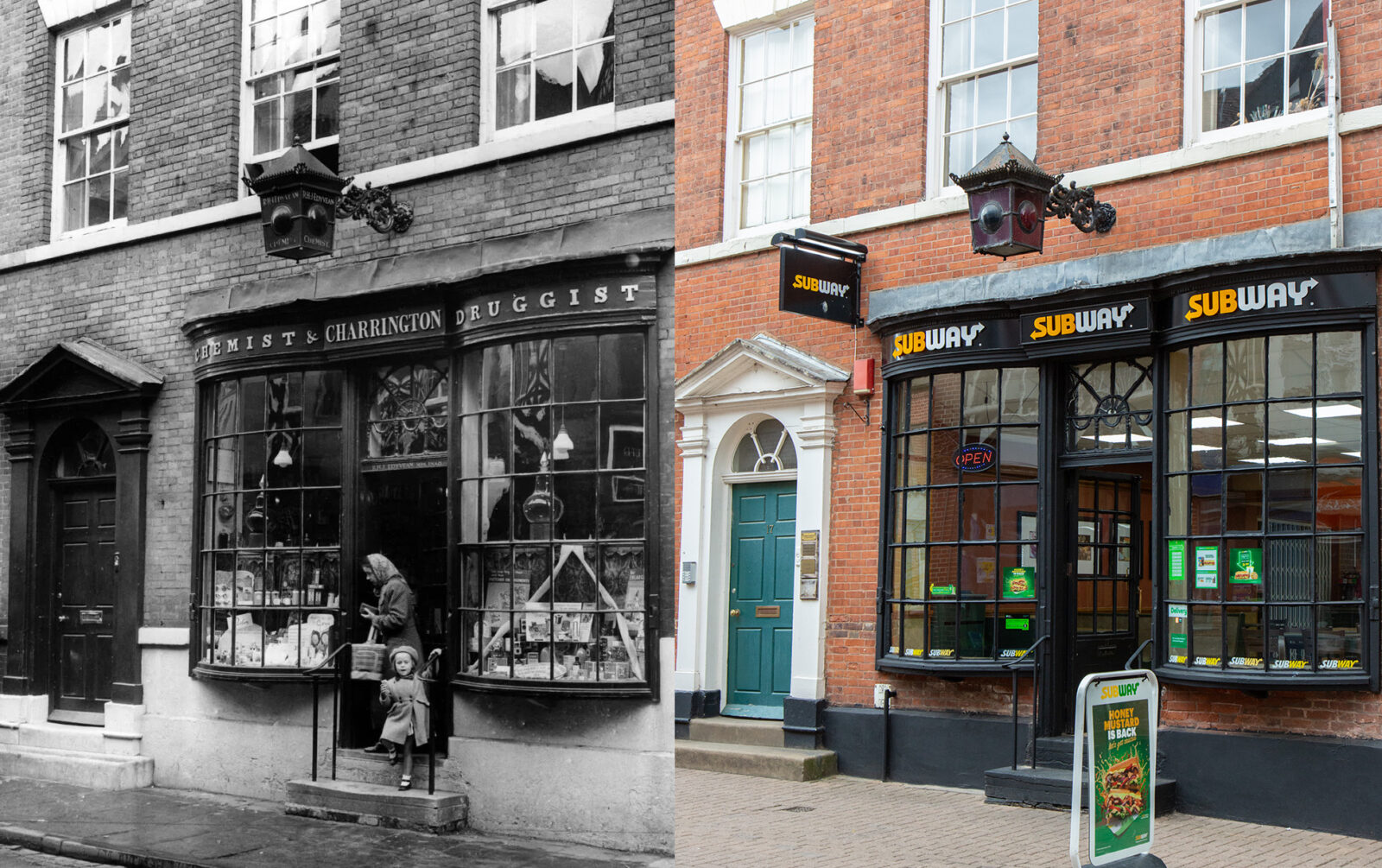
I waited for ages outside Subway for a mother and daughter to come down the steps to make this a really nice reenactment but luck was not on my side and my arms began to fall off before I gave up and took the shot anyway. I think there’s something really quite creepy about old chemists shops and medicine before about 1970. The things we used to take, rub on ourselves or inhale in the name of “medicine” is quite disturbing. Even back in the 1980’s I can remember things being for sale that were utterly useless and are no longer available, but in the 50’s it was still a case of pretty much anything goes. Sometimes I romanticise the past, others I feel grateful that I’ve grown up in a time of comparatively incredible medical advancements.
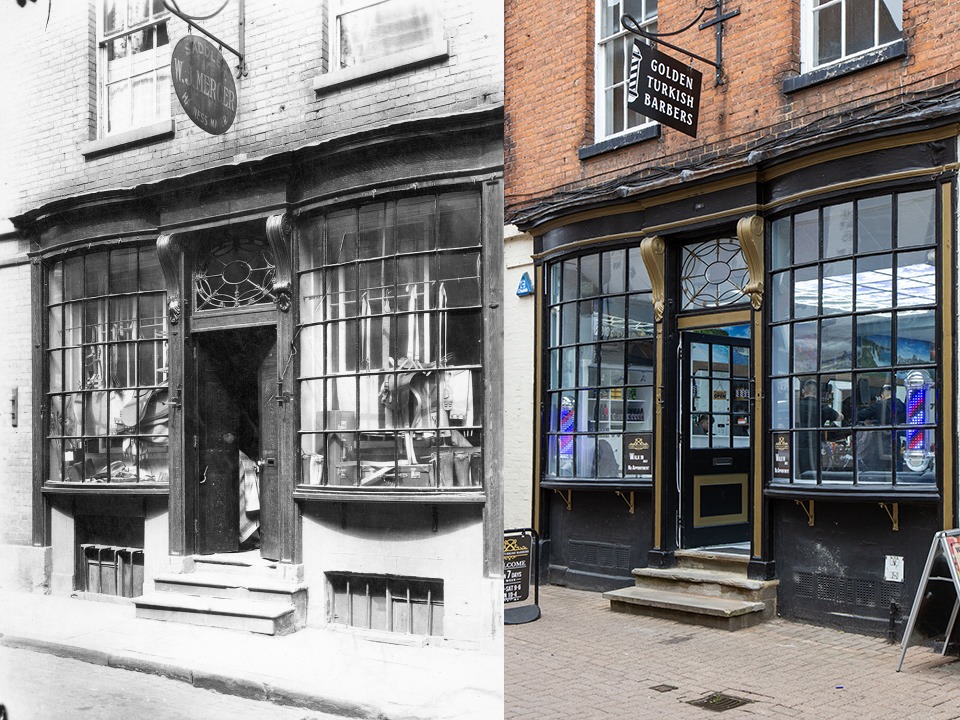
I can hear people saying “they don’t make them like they used to” when they notice that even the sign outside the old saddlers shop is still original. Either they don’t make them like they used to, or it’s part of the listed nature of most of these buildings that they can’t be changed even if you wanted to. What really fascinates me about this picture is the stairs. In 1930, a chunk was missing out of the second step up. Ninety years later and still no one has bothered to fix it, it’s simply just worn smooth with the erosion from thousands of pairs of shoes over time.
What was, for a while, a posh leather handbag shop (which was very in keeping with the history of this place) is now yet another Turkish barbers shop. Lichfield must hold a record for the most Turkish barbers in one small area. Off the top of my head we now have at least 6 of them, although this is possibly the most garish. Gold with a firework display of LED lighting everywhere isn’t the most subtle look in the world.
Total fails
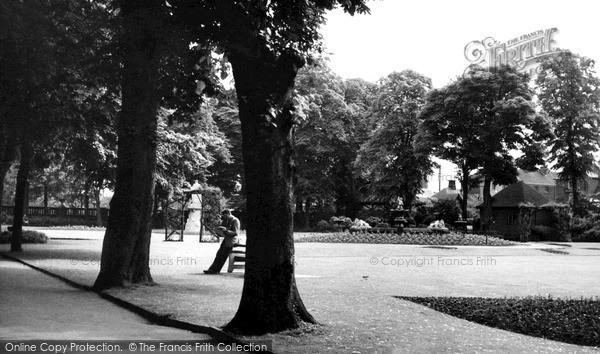
https://www.francisfrith.com/lichfield/lichfield-museum-gardens-c1955_l45036
I had to include what must be the biggest fail of the whole adventure. Above is Beacon Park around 1955-1960. I got the position right, the angle right and I’m fairly sure the focal length is pretty accurate to the original. There’s just one problem…
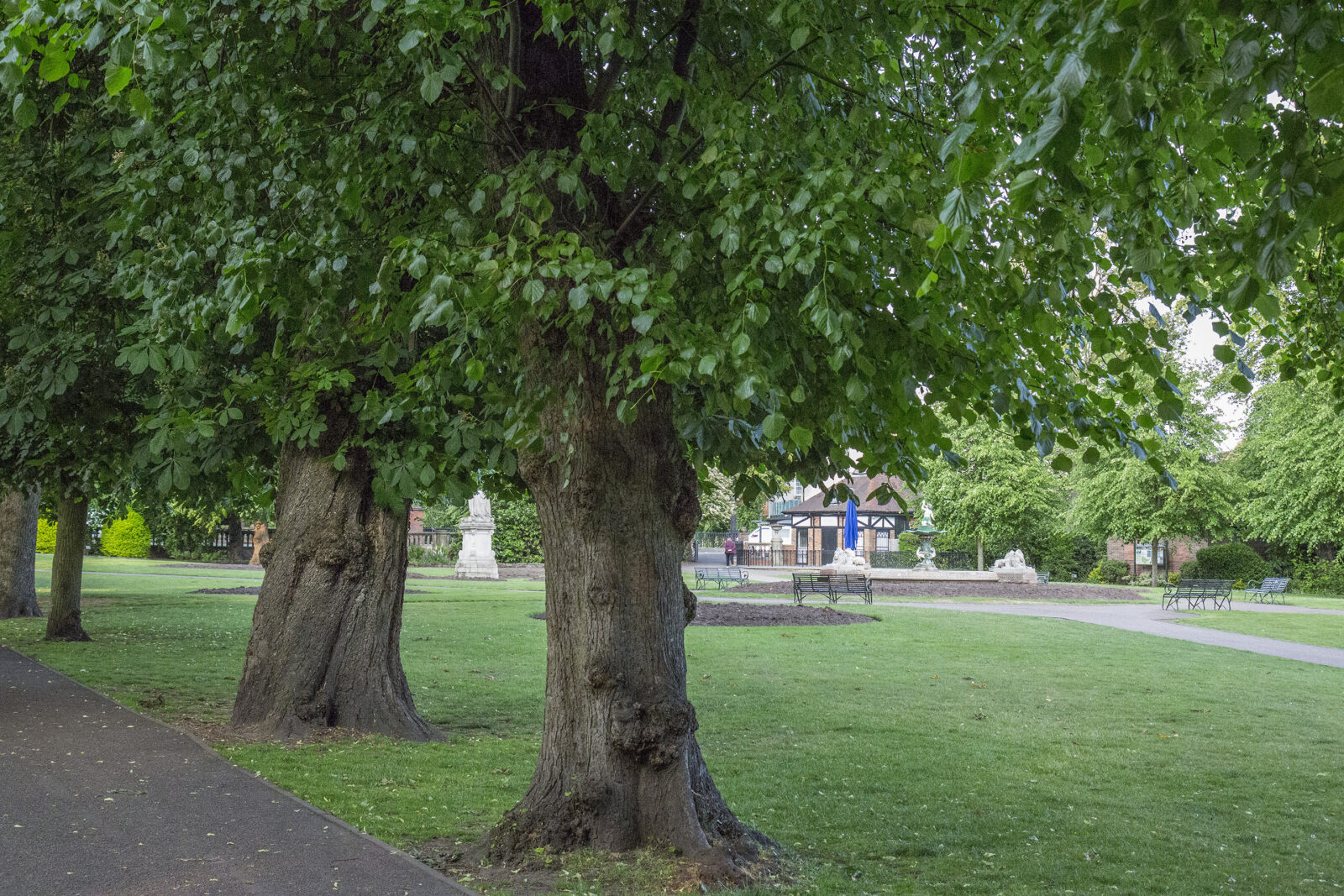
Yeah, you can’t see anything…. Still, beautiful place.
Finally…
There were a few photos I found during my research which didn’t seem to fit anywhere else or fell into the category of “It’s another pub.” I thought I’d include them here anyway for the sake of being thorough.

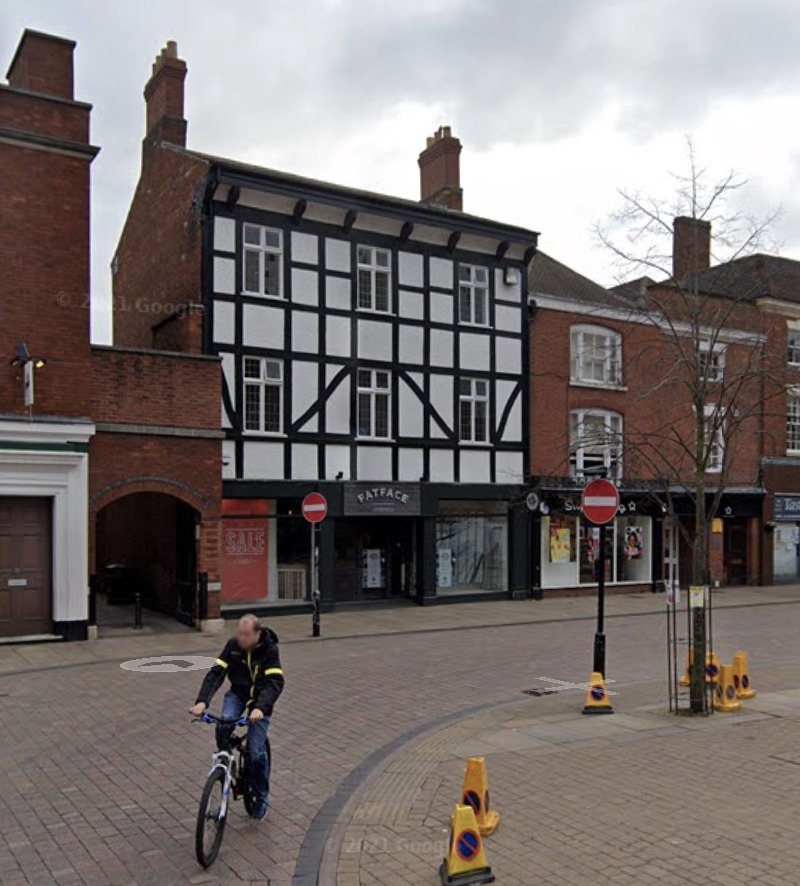
This is the Malt Shovel pub, taken in 1879, showing Hall’s butcher’s next door. Halls is long gone, but you can still find the wooden cows above the door into what is now a Superdrug:
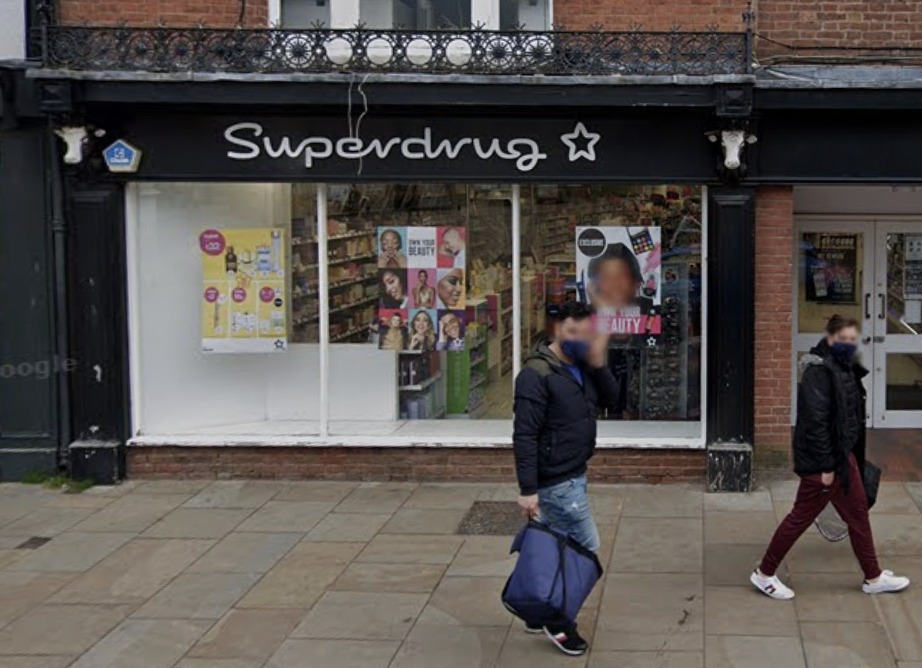
Zooming back slightly for a moment there’s been some serious work done to the front of the old Malt Shovel and I’m not sure what the motivation was for the mock Tudor facade that’s been put over the top of what was some rather nice architecture. At first I thought the archway which leads to the carpark behind had been rebuilt, but it hasn’t – the Malt Shovel like many pubs of the time had an entrance for carriages. Got to put your horse somewhere, I suppose, however there’s no use for a horse entrance in your average tech shop, so this got closed off when the shop conversion took place.
We’ll finish with a picture each from the two stations in Lichfield.
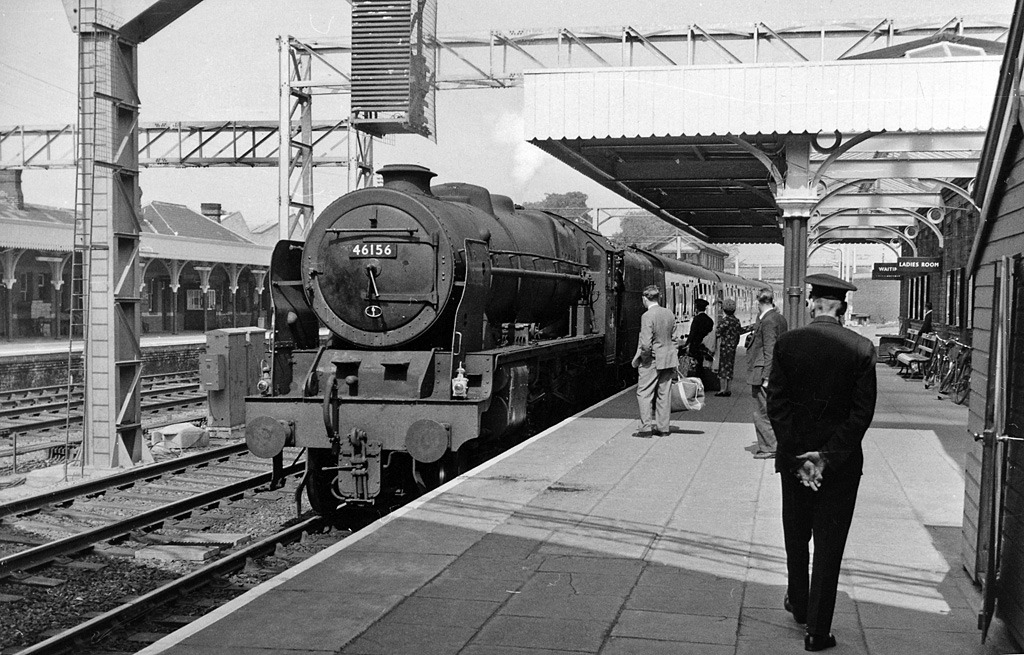
Trent Valley connects Lichfield to the London to Glasgow line and is partly an explanation as to why house prices are utterly astronomical here. When you can get to London in just over an hour and earn London wages, it makes house prices anywhere else seem like pocket money. Back in 1963, Trent Valley looked like this:
The difference between then and now is quite stunning. The beautiful traditional station buildings have all been completely erased on both sides of the lower platform. They must’ve been replaced with something even better, right?!
Of course!
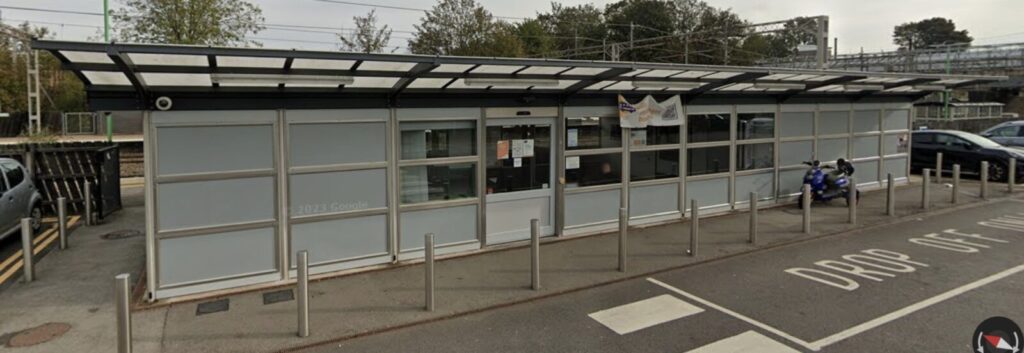
The improvement leaves me breathless, frankly. An architectural gem if ever there was one and definitely a positive sign of progress all round.
Then there’s Lichfield City which has thankfully been left mostly alone but does show the serious decline in railway activity which took place after the 1960’s. The station in the 1950’s is surrounded by branch lines and industrial areas with wagons galore. Those lines are long since gone, leaving us with a simple one up, one down line to Birmingham that only ever really sees passenger activity. There’s certainly not any industry in Lichfield that would justify or need its own train service any more, but it’s a shame all this infrastructure disappeared especially as we live in a time where shifting haulage off the roads and onto rail would be a really sensible thing to do.

and that’s it. I hope you’ve enjoyed this virtual walk around a place you either know like the back of your hand or have never seen before and means very little to you. If you’ve never been, you’d probably enjoy a day out here – especially if you need to get a couple of skinfades and go for a coffee.


Thank you for a really interesting post. Nice to see some good buildings preserved, sad to see others lost. There are not many cities with such parks close to shops. I enjoyed my trip round Lichfield on here, thank you
Lichfield Agricultural co
Using the Kelly’s Directories’ I have found this company listed at 25 Market Street which is the modern day B&M
I recognise a lot of these buildings as I came to Lichfield late 1962 as a child I am still here
I first lived overlooking the Rose Gardens , my home is hidden by the trees
That’s brilliant info, thanks for that! At least I wasn’t going mad when I couldn’t find any trace of it.
The houses by the Rose Gardens are beautiful, pity they ploughed a bunch of main roads through the area really…
A wonderful post packed full! We’re Mangia Mangia, the Italian deli you mentioned moving into the Old Picture House Retail Unit and honoured to be included in your article. Hopefully you can make it to our opening party! We moved to Lichfield 8 years ago from Italy and have a keen interest in its history. Thank you for a great read!
Thanks for reading! We’ll definitely pop in 🙂
Hi Alex, we’re hosting an opening party this Wednesday at 6pm and would love it if you could join the celebrations at the Old Picture House.
Alison and Isabella
Love the photo comparisons and thank you for being so complimentary about my Lichfield Lore blog!
I’ve spent a long time binge reading your site – genuinely fascinating stuff and definitely some of the motivation for this post!
This was really good! We moved to Lichfield 20 years ago from St Albans; we wanted to live in another small cathedral city & have grown to love it. Interesting to see how long ago some streets were pedestrianised, given the ongoing arguments that still rage about banning traffic from more of the city centre (I think we should just get on with it).
And for all the moaning people do online, one key reminder of what a great place it is to live is the universal enthusiasm of people when they come & visit us. One recently said we live in “an undisputed gem”.
😁
It’s nice that we still have such a relatively thriving city centre and it is indeed a lovely place to live, there’s a surprising number who grow up here and never leave!
Loved seeing and reading all about Lichfield thankyou
My family has been born in this to
wn since the 1800 my father was the council Gardner who worked and cared for the friary rose gardens clocktower etc from be about 1960;to when he retired in them days he would grow any plants to replace any that had died people would always say they knew when Ron had been clearing the borders as there would be be weed free
Hi, I love local history and each time I travel to a new town I buy the ‘Before and After’ photographic books that fascinate me.
I live in Lichfield, in Townfields and would love to see pictures of the area before the A51 carved through the cottages. I believe there was a sweet shop on the side looking towards Sandford Street. I’d love to know more about Townfields.
I think a lot of history is hidden in the people who live here – a great project would be to simply go round talking to people about their memories of lichfield. I bet there are loads of photographs hidden away too. If I didn’t have a job…!
Alex, just a note of thanks for this article.
Really interesting and an entertaining read!
Bravo!!