Nothing with a Leica badge is cheap and this creates a very obvious problem for anyone “normal” who wishes to board the Leica bandwagon. Cameras are invariably sold as body only, leaving you searching for an often equally expensive lens to complete your kit, pushing the cost of entry to the rather exclusive “red dot club” ever higher.
Strangely, many Leica cameras are cheaper than the lenses. The M1, 2 and 3 cameras are all generally available for less than the price of a new, or even second hand, Leica lens in many cases. The original Leica i, ii and iii models are all available for roughly £3-400 which is remarkable for a camera that is at least 80 years old and still rather desirable.
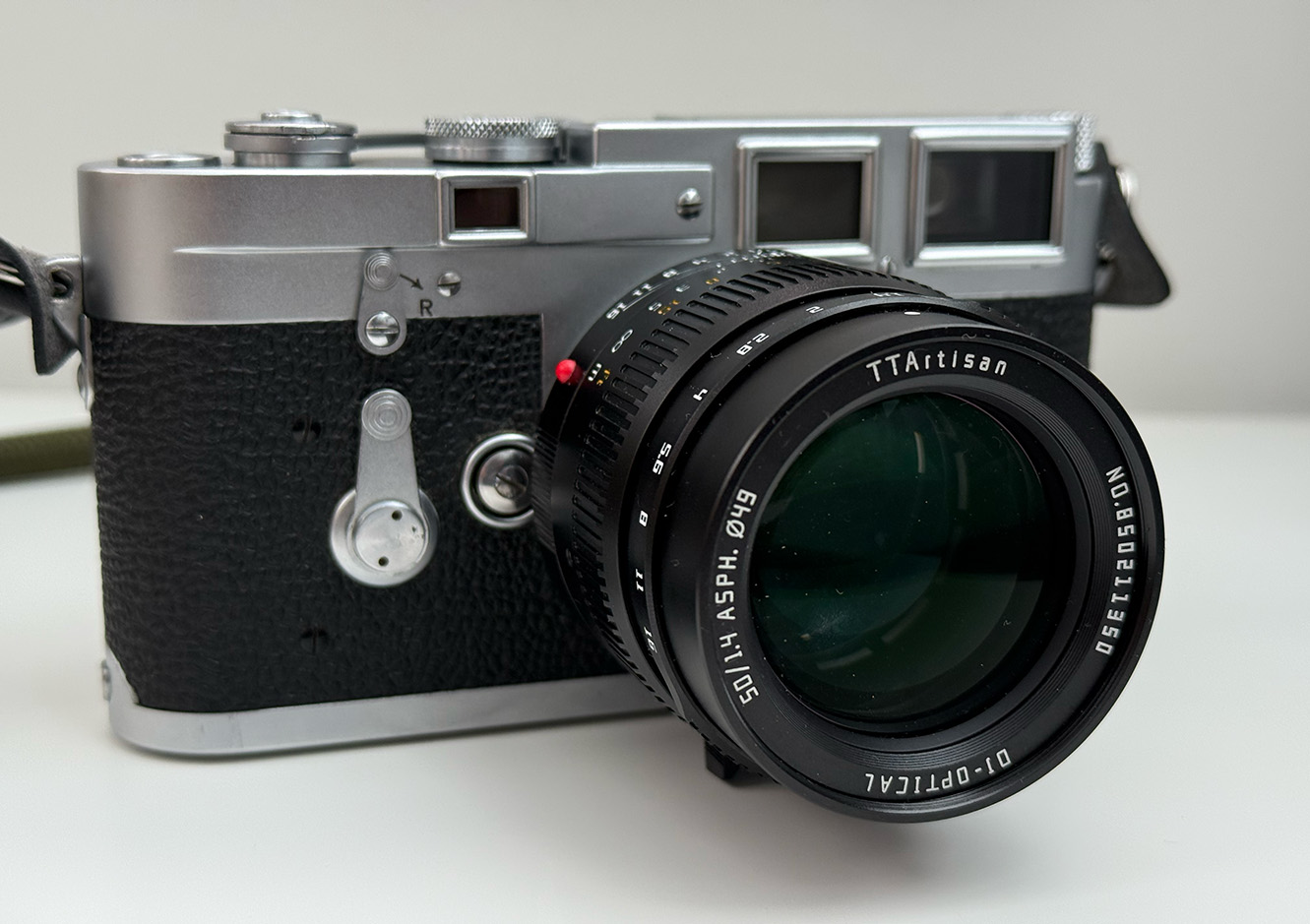
If you are prepared to stray away from the Leica fold then there are options to suit all budgets, such as from manufacturers like TT Artisans which are effectively Leica copies that give you 99% of the performance and image quality for 10% of the price. However, as you might expect, these are not without their faults. The primary of which is that, for cost saving reasons, these lenses do not come out of the factory having been calibrated which means your lens may be way off what the distance scale suggests and if you only have a film body, good luck calibrating it yourself.
Then there’s a very specific issue that probably only affects me – my TT Artisan 50mm doesn’t perfectly lock in. It is a matter of less than 1mm of movement, but the effect is that the frame lines don’t correctly disappear in my M3 viewfinder and this drives me round the bend as I have an early model without a frame line selector lever.
Unless I win the lottery, there’s absolutely no way on God’s earth I can afford to buy a “better” lens than the TT Artisan I already own, so the question is… What options do I have? Are there really any sensible alternatives?
Let’s find out.
Cheap is relative
I get it. Everyone is in a different financial boat. Some people have superb financial habits and save, live frugally and can afford nice things when they want or need them. Some people simply have done well for themselves and do not find themselves under financial constraints and therefore “cheap” is a very relative term depending on who you are.
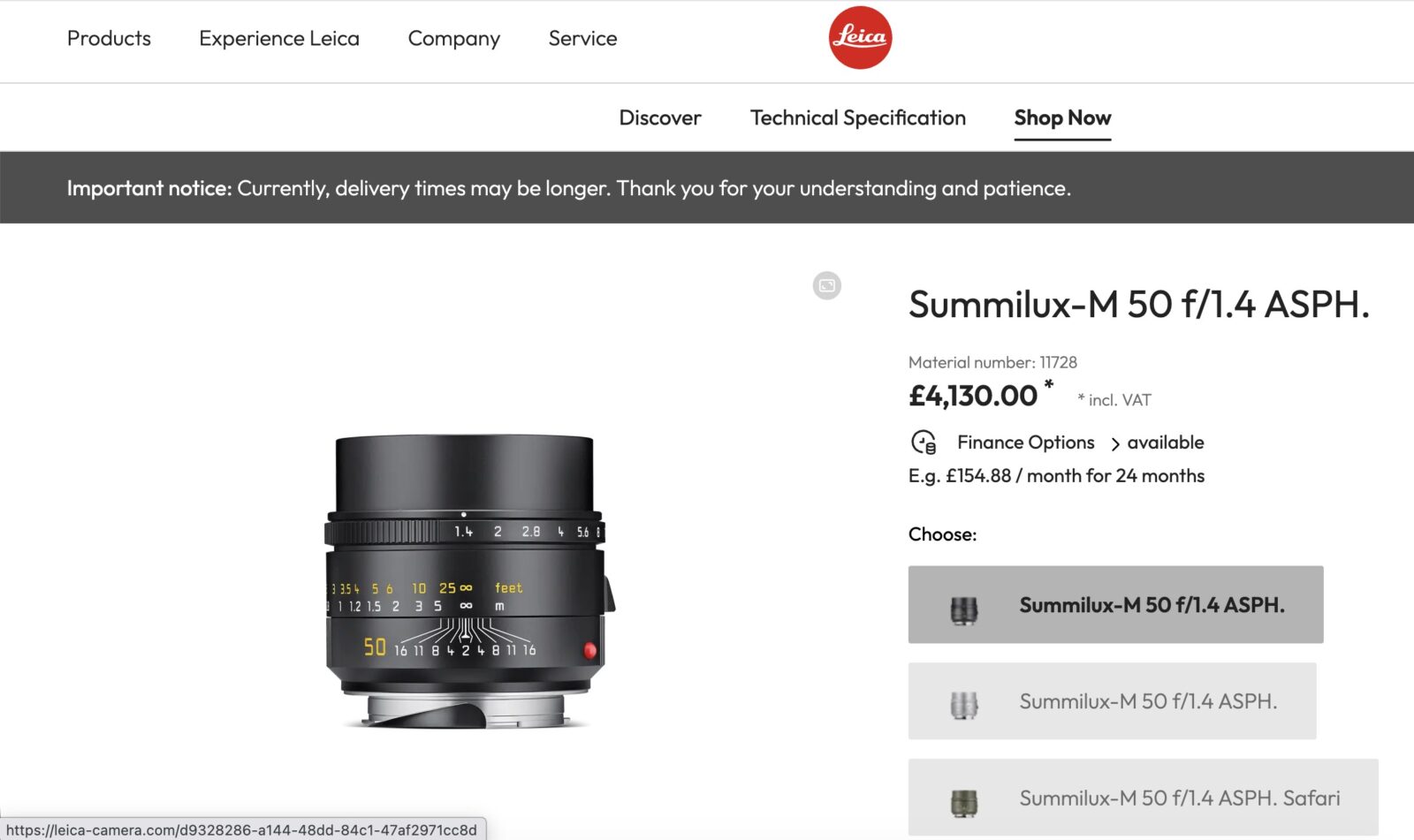
This is no better illustrated than in a website I found that literally had one purpose – to suggest and review Leica lenses that were for “normal people.” I left rather confused because, according to the information there, the best 50mm lens for a normal person costs £1200.
I’d consider myself nothing more than ordinary. You’ll know from my Leica M3 purchase that I really couldn’t afford it if i were being sensible (it’s taken many months to pay off) and in my eyes, £1000 is a lot of money. When it comes to lenses £1000 really is, psychologically if not financially at least, too much money – I can neither justify nor afford that kind of outlay without putting myself in an uncomfortable place financially.
What would a reasonable price be? Well… I’m probably not the right person to ask. My view of old, analogue photo gear is skewed by the fact that so much of it is mercifully available for next to nothing. Once desirability steps in for higher end kit prices do rise, but you can still pick up very good equipment for very little compared to the original list price.
I guess a case in point would be the fact I purchased a Canon 17-40 F4 L lens (L meaning “luxury” or the best Canon make) for £180 last year. The original list price of this lens was in the region of £600. That is not only a total bargain, but it is also “affordable.” Yes, you’re not going to go out and buy a new lens every few weeks at that cost, but it is an example of what can be purchased in todays market.
Leica lenses, regardless of their age, simply do not suffer this depreciation. This is wonderful if you’ve carefully selected equipment over your lifetime. It’s not so wonderful if you’re trying to drag yourself on the bandwagon and get started. When I bought my M3, I understood the insane outlay it necessitated, but the lens made less sense to me and once I discovered the TT Artisan was all of £300, this felt like real value for money. If it wasn’t for the annoyance of the lens not being calibrated (I have since had this done) and the frame line issue mentioned earlier, there would be little to talk about in my eyes. Beyond some serious pixel peeping – which is the most unrealistic way to test a lens possible, you would be extremely hard pushed to find any real faults.
Therefore, if you’re looking for a lens and you are genuinely constrained by an actual budget rather than this modern day skewed perspective of what budget apparently now means, your options are extremely limited and fall in to two camps – the first we’ve covered in Chinese copies of classic Leica lenses. They’re good, they work, they’re extremely well built to decent tolerances and produce pleasing images. The second option is to adapt a lens from the Leica Screw/Thread Mount (often shortened to LTM or M39) to the Leica M mount. This opens up the world of “vintage lenses from other cameras.”
What’s in a thread?

Before the M series, there were the Leica i, ii and iii cameras. These were the “original” Leica’s and are beautiful cameras that right now sell for, in Leica terms, peanuts. They used a simple screw mounting for their lenses and owing to the popularity of these early Leica’s, other companies such as Canon, Nikon and the Russian copy brands started to sit up and take notice. Canon specifically introduced one of the most blatant Leica iii copies ever, even down to the lens mount.
This was great news for customers. Not only were other brands stepping up their rangefinder game and releasing faithful, well built replicas of the Leica iii, there were suddenly more lenses on the market for customers to choose from. If you couldn’t afford a full Leica kit, perhaps you could afford a Leica body and a lens from another brand?
For a short time from 1955 to 1964, Canon created a range of quality, affordable LTM compatible lenses and rangefinder cameras to try and compete with Leica. Amongst these was the 50mm F1.4 – of which there are two editions. The only difference between them is the distance scale on one is in metres and feet and the other only metres. When it launched in 1959, the 50mm F1.4 LTM II cost ¥18,500 and according to a Yen inflation calculator, that’s £486 in 2026 money – so not an expensive lens in the scale of things even when launched.
When Leica released the M3, they changed from a M39 screw type mount to a more traditional bayonet style. A change of mount can be a royal pain in the wallet as we’ve witnessed many times over the years when manufacturers make entire ranges of lenses become obsolete overnight such as when Canon jumped from FD lenses to EF for their auto focus bodies. Other manufacturers, such as Nikon, have done their customers proud by somehow getting it right first time and pretty much enabling you to use any lens you like from the last 50 or so years on your new camera.
Leica pulled a masterstroke of design with their new M mount by making it perfectly backwards compatible with the simplest of adapters. Without going into the design in detail, what this means in the real world is you can plug a screw mount lens into an M mount camera and it works flawlessly including the rangefinder being accurate (trust me, I had the tape measure out to check).
So, here I am with an M3 and a desire for a budget 50mm which doesn’t have the annoying frame line issue of my TT Artisan lens. How many options are there realistically for an alternative? I think we can all see the answer – one.
There is one viable option.
Buying a Canon 50mm LTM
I wouldn’t say that there’s a plentiful supply in the UK of these lenses but they are certainly not scarce. Initially, there seem to be lots of cheap copies out there, but they are invariably from Japanese sellers which is fantastic if you live in the US as they don’t appear to charge import duties, but if you’re in the UK you can add 20% on top of any eBay listing before you start and that’s before some couriers charge you again for the pleasure of collecting your customs and import taxes for you.
In the end I added a few to my watch list and waited for offers to come in. Eventually I picked up the absolutely mint, complete with end caps copy seen below for just shy of £190. Not cheap and not expensive. In Leica terms, though, this is pocket money.
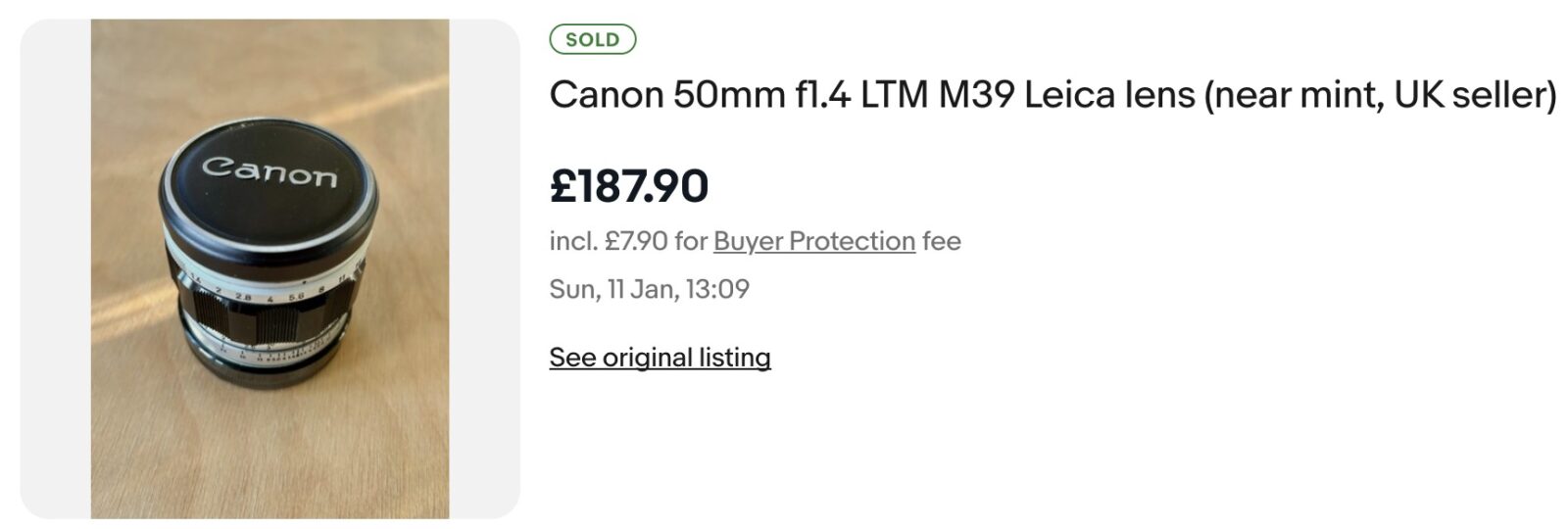
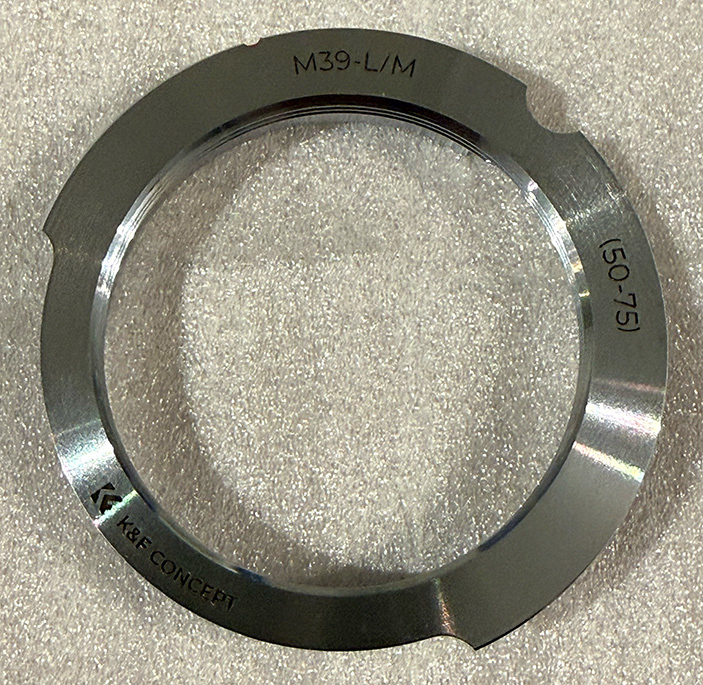
The seller came across as a very kind and honest person, packed the lens well and sent it over quickly. I waited far longer for the adapter which I picked up from K&F who do seem to make fairly decent bits and pieces. If what you want isn’t on their Amazon store, though, you will wait a couple of weeks for things to arrive from China. Having said that, for £15, you cannot argue.
If you’re new to Leica like me and you’re buying an adapter, then you’ll need to make sure you buy the correct one. There are different adapters depending on which frame lines you’d like the camera to show, so make sure you pick up an adapter specifically for the focal length of your new lens and don’t just buy the first one that pops up.
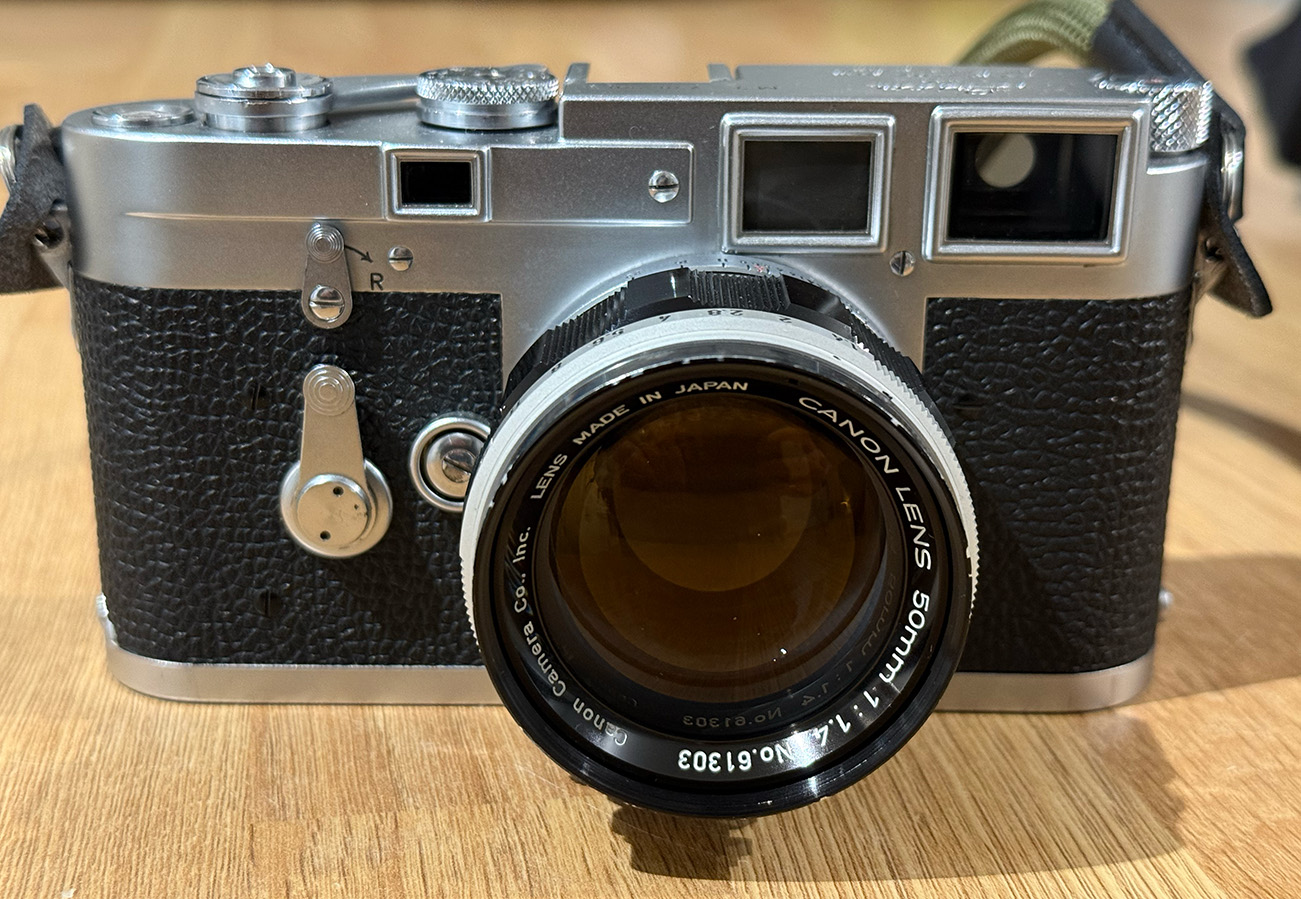
So, for just over £200 all in, I’ve now got a 1955 Leica with a 1959 Canon lens. I’m period correct and ready to shoot some film.
A lens is a lens is a lens

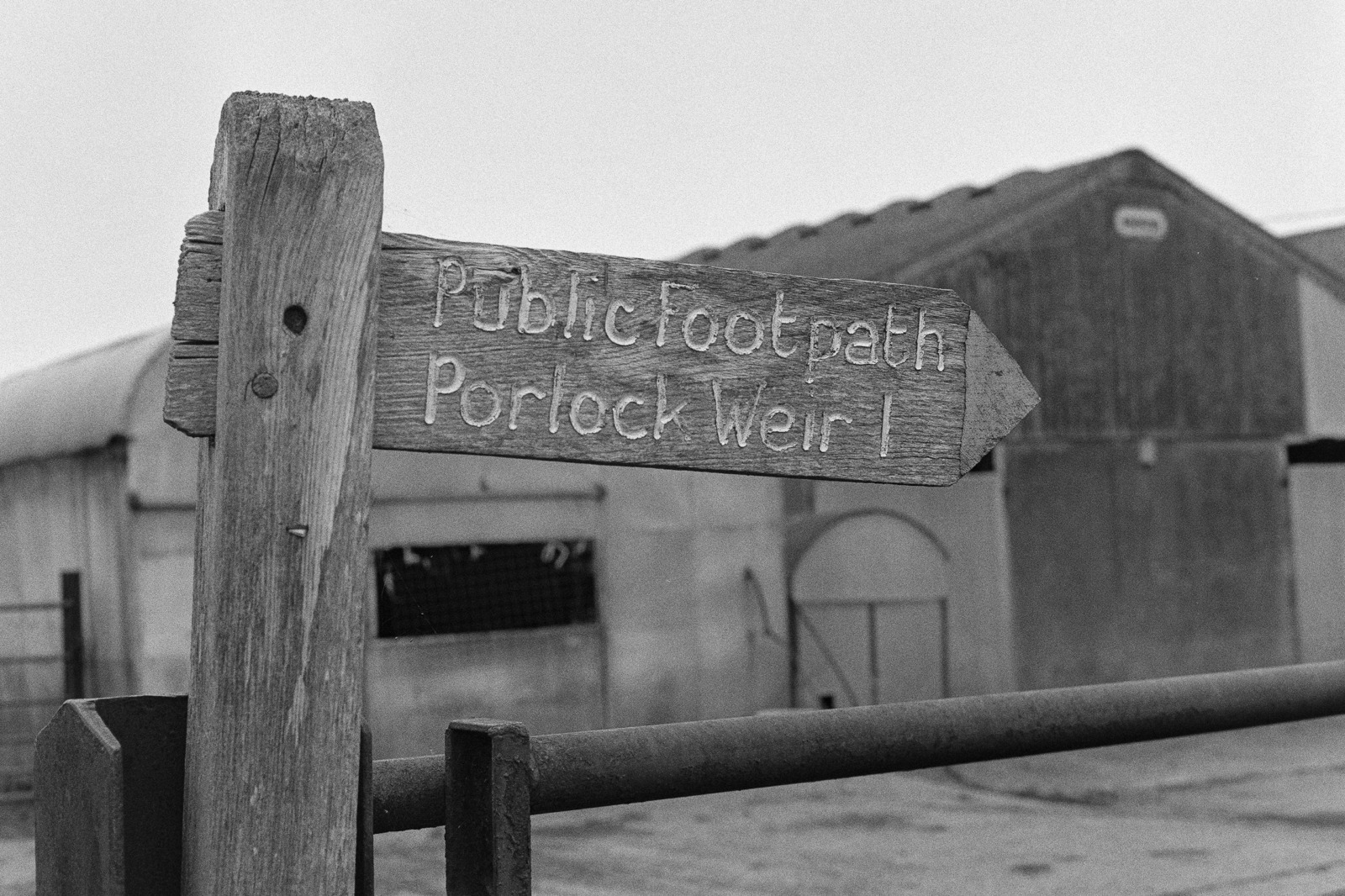
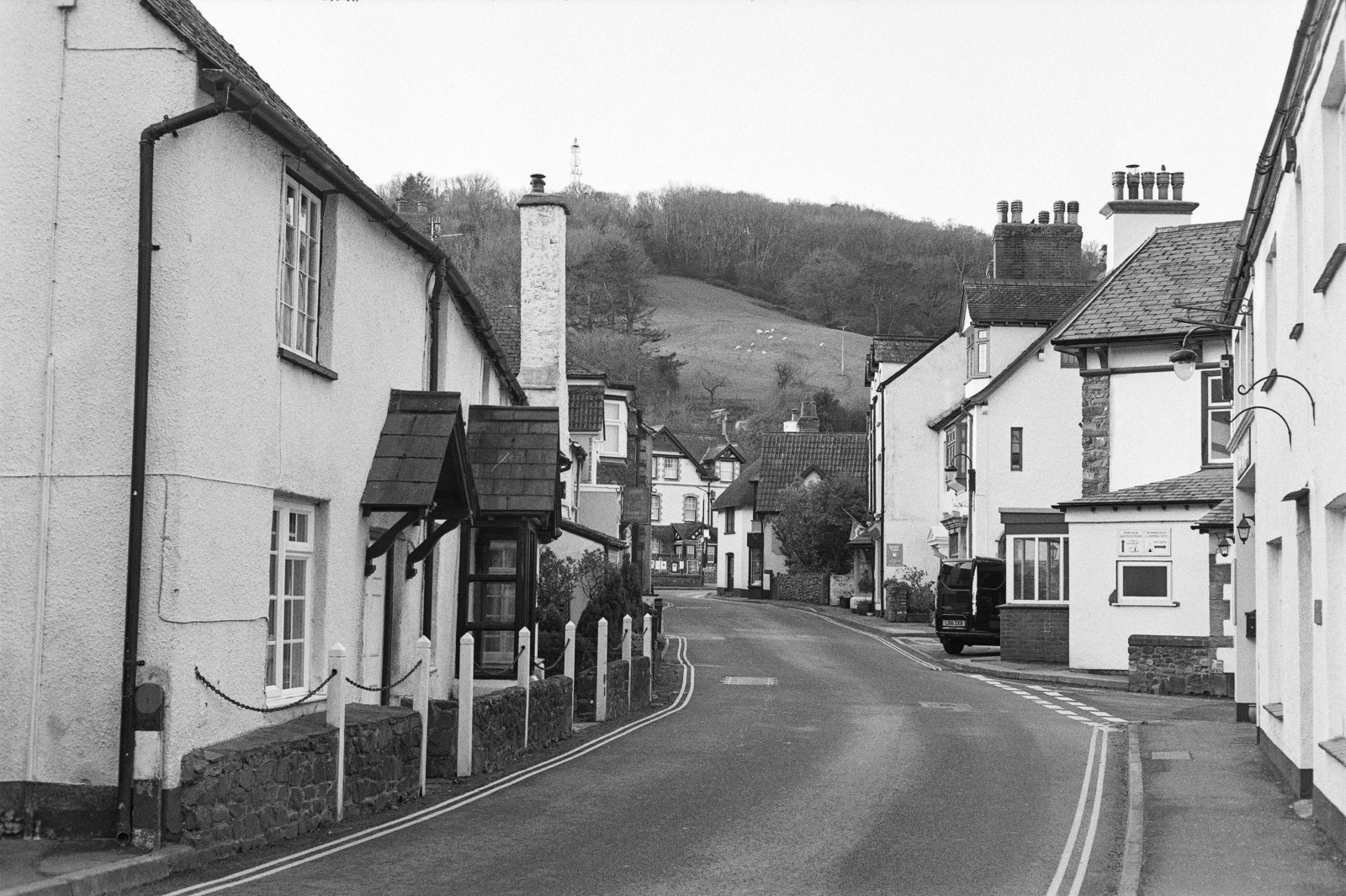
I loaded up with Kodak T-Max 400 and went for a walk around the historic seaside village of Porlock. You’d think that one lens behaves pretty much like any other, but in reality this isn’t the case.
The first thing that I noticed was just how long the focus throw is on this lens, it feels like you’re turning for a long time before anything happens and on a rangefinder from 1955, you need all the help you can get to align the little ghostly image in the rangefinder patch with the one in your main viewfinder. When scenes have little contrast or are extremely busy (like a pile of stones) it can be really hard to focus. On the TT Artisans lens, you can swing from near to infinity focus in about 90 degrees which definitely helps as you can see the split image quickly and then slot it into place.
With the Canon, however, you’re turning for an eternity wondering if anything will ever change enough. This is an advantage for fine tuning focus, but a bugger when you’re quickly trying to establish where you are. Whilst we’re on the subject of focus, the lens comes with an infinity focus lock. As soon as you focus to infinity, there’s a little click and the lens locks into place and won’t move again until you press the release in and turn the focus ring.
I cannot for the life of me think why any lens needs this feature. For storage, perhaps? The lens is not exactly loose so it isn’t to stop focus creep or anything weird like that. It’s bizarre. I am being a little facetious here, the truth of the matter is that it was designed to make unscrewing the lens easier and to place less stress on the lens when doing so. Either way, it’s a fantastically annoying feature to have on a lens, but you do get used to it. Unless you need infinity, you can feel just as it is about to click in the lock and then you can decide to just back off instead.
Other than these two things, the Canon LTM is perfectly fine to use. The focus ring is nice and smooth with the right amount of resistance, the aperture ring a little on the stiff side but better that than it sliding around too easily. For street photography, the zone focusing distance isn’t spectacular. At the close end, at F8 you can get everything from 1m to 1.2m in focus (!), 2-4m or at the distant end roughly 4.5m to infinity which is slightly better.
She’s got the look

Having said all of these things, there’s only really one thing that matters and that is how the images came out.
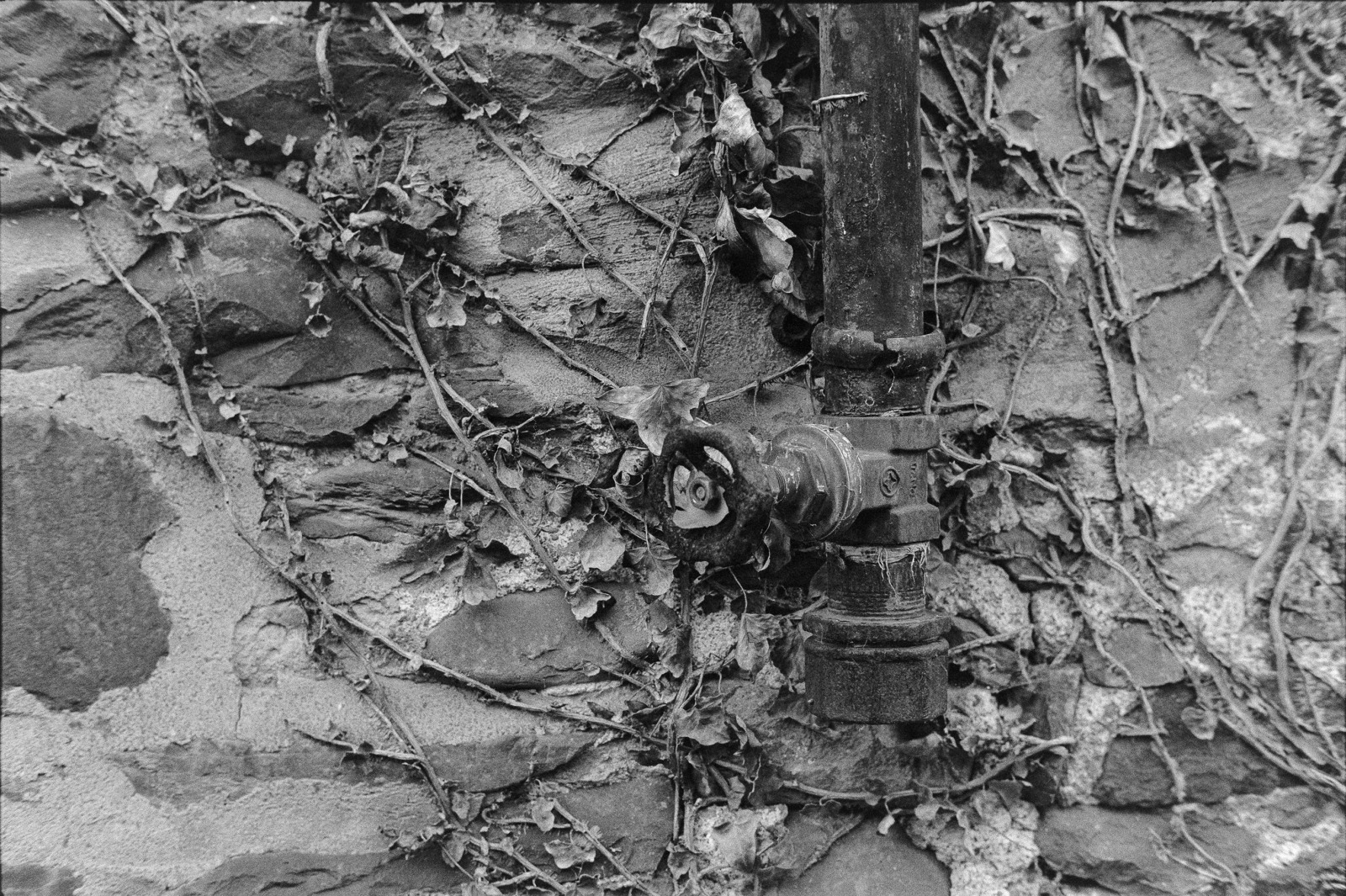
The image quality of this lens is nothing short of superb. For a lens this old, the detail and clarity of the pictures on this roll of film were remarkable. Most of my images were taken at F8 or F5.6, with a few at F1.4, 2.8 and 11 when the light did or did not allow. I tried to keep shutter speeds between 1/100 and 1/500 to avoid any potential issues with camera shake (which is much less of a problem on a rangefinder than an SLR) and metering was through a simple phone light meter phone app. In complex lighting I took a few readings of bright and dark areas and then just opted for whichever shutter speed fell in between the readings given.
WordPress has a nasty habit of compressing and resizing images that are uploaded so you never truly get to see the original quality, but there is enough here to make it obvious that the Canon LTM lens is optically brilliant. Honestly, I think if you’re someone who wastes their life poring over resolution charts and vignetting tests then yes, you’ll definitely find fault in each and every lens you ever use. If, however, you like taking pictures then in the real world you’ll find literally no optical faults in this lens whatsoever.

The detail resolved on film was so good that I actually found that grain became intrusive before resolution was found wanting in any way. Yes, I’m sure the lens does flare all over the place if you point it at the sun but again, honestly, who cares? How often do you shoot into the sun, what do you really expect of a lens that is knocking on being at least 70 years old?
Conclusions and learning
The beauty of this lens is sheer versatility. Not only is it compatible with almost every Leica rangefinder ever made from the 1930’s to date, but with the correct adapter you can also attach it to the DSLR of your choice – something I’m definitely tempted to do.
Before developing and scanning the film I have to admit I didn’t hold out a great deal of hope for the lens. The long focus throw was annoying at first and yes, the infinity lock is a pain in the backside. I wonder what would have happened if I’d used this lens first and then moved on to the TT Artisan lens afterwards. Having been spoiled by a really short focus throw I got into the fatal mindset of being wowed by convenience and modern design.
Taken in context, the lens is perfect. This is not a street photography lens, it was never designed for rapid winding of the focus and rapidly firing off candid portraits. Used patiently, there is no real problem with focus which takes a little longer. The only true downside is my 70 year old focus patch is definitely starting to lose some contrast and you absolutely notice it when you’re spending longer and longer looking at it or not relying on zone focussing. That is a camera issue and not a lens problem, though.
Is this lens “the one” and should I sell off my TT Artisans lens? The short answer is no. I see both lenses as being complimentary – the Canon is without doubt the lens I will use on most occasions, but in situations where rapid focussing is necessary or for pure street photography I would without hesitation stick the TT Artisan lens back on and use that.
For the money, I simply cannot recommend this lens enough, in the context of the Leica world it is “cheap” and with this level of performance it is an absolute bargain.
It is also the most dangerous purchase ever because now I own a thread mount lens, I now have a significant desire to strap it to a thread mount camera and that would mean owning two Leica’s and then the world would have truly gone utterly mad.