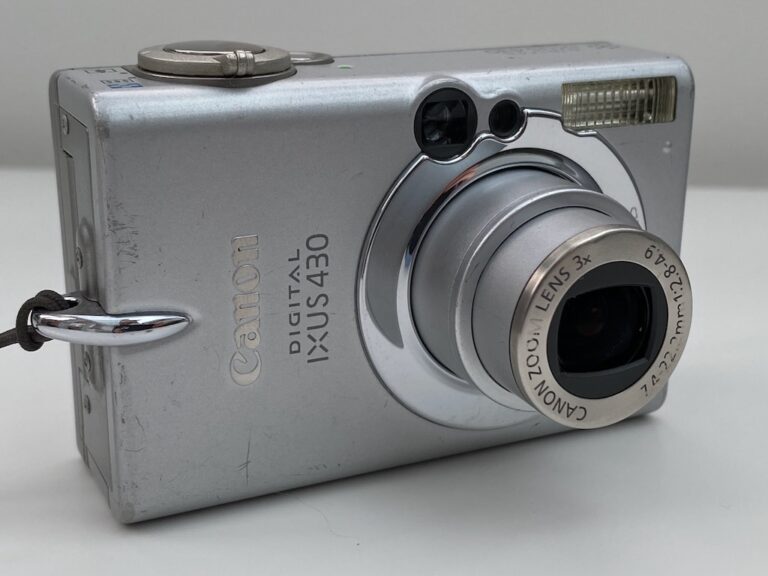
After blasting every last penny on a Leica M3 my days of spending more than £5 for a charity shop special camera are well and truly over for the time being. Knowing this, the camera Gods then arranged for a message to arrive out of the blue.
“Do you have any use for a Nikon DSLR?”
“Which one?”
“D200.”
Why yes. yes I do.
In this post:
Design DNA
Anyone remotely normal that doesn’t have an unhealthy obsession with photography equipment could be easily forgiven for thinking that cameras are just that – a camera. How different can they be from one brand to another? The truth is that they’re surprisingly different, or at least they used to be.
The design philosophy of each manufacturer is an important part of their brand identity, something which will either lock in customers for life or drive them away. The roads that Canon and Nikon decided to go down have their roots fixed way back into the 1960’s and 70’s, but the most relevant developments came in the 1980’s.
The 80’s saw some of the most significant advances in camera technology that the world had ever seen. The birth of cheap and tiny integrated circuits meant that manufacturers were in an arms race to stuff as much electronics in their cameras as possible. This opportunity to steal a march on the rest of the market also brought about a problem – how to integrate all these new options and features in a way that was easy to use.

As we’ve previously discussed here, it was Minolta that raced ahead with their Dynax / Maxxum range of auto focus SLR’s. Not only did they achieve the worlds first decent auto focus system, they also designed superb bodies to go with it. Their second generation “i” models like the 7000i really set new standards for how SLR design should be done.
The Minolta Dynax 7000i was a wonderful piece of human interface design which abstracted away all of the new, complex engineering that had taken place and just presented the user with a camera that got out of your way and allowed you to explore all the opportunities that technology presented. If you so wished, you could press the P button on top of the camera and start taking pictures immediately, no experience necessary. If you wanted to unlock more potential then a shove of the rocker switch was pretty much all it took to start making the camera do as you wished.
Minolta made subtle, but incredibly effective design choices such as a tilted LCD display that you could see when the camera was held at eye level, rather than waist level. A great deal of attention had been paid to ergonomic design so your finger naturally fell on to the shutter button, with the rest of your hand wrapped around a large, comfortable grip.
The fact Minolta managed to lose the SLR race in the 1980’s and early 1990’s still baffles me to this day, but lose they did. Eventually, they progressively moved their design backwards, the XI series of cameras were ergonomically worse, larger, heavier and ultimately not that much better in terms of performance. Meanwhile, Canon and Nikon had both released their complete re-imagining of what an SLR can and should be.
In Canon’s case, they’d made users ditch and switch their entire lens collection to enjoy the benefits of their new auto focus lenses. This turned out to be painful but worth it in the end for those who needed auto focus in their lives. Nikon rather brilliantly maintained backwards compatibility with their old lenses but don’t ask me what any of their lenses are or do, I still don’t understand their absurd lens designations to this day, and they released constant variations of how their auto focus mechanism worked creating bizarre inconsistencies with bodies that either fully or partially supported them.

I’ve discussed Canon design almost endlessly on this site for two quite obvious reasons – I love Canon design and I’ve bought or owned most of their film cameras.
Nikon, though, has never managed to float my boat. Some years back now I purchased a D70 to just try out their DSLR range and see how different it really was to own a Nikon rather than a Canon. There is often no subjective reason why people have an affinity to one brand over another, but battle lines are easily drawn and people will die on their chosen hill when it comes to defending their investment – and that’s fine, but having now owned so many different cameras I cannot escape the sheer body of evidence that suggests to me that Nikon digital cameras are just far less intuitive to use than their Canon equivalents. Their film cameras are a different story, a story for another day, but I did love the Nikon 401s when I tested that some time back.
This is not to say that one is “better” or “worse” than the other, it is purely an observation about user interface design and ergonomics. In a nutshell, the Canon EOS philosophy is very much “the wheel does all” and the number of physical buttons are either minimised on the body, or rarely used. The Nikon design philosophy right from the outset of the plastic bodied, auto focus F series was “physical buttons for everything.” This is a clear line in the sand, a differentiator between worlds and devices which ultimately do the same thing – take pictures. Whether you own a Nikon or a Canon camera, there’s almost nothing that will differentiate their picture taking and image quality abilities.
However, the way in which you operate a camera can and does affect whether you capture a moment or lose it, whether you can find the settings you need easily or have to think about it and, yes, I’m more than aware that enough exposure to one system or another will build muscle memory, but the design differences do have a clear impact when it comes to the enjoyment of using a Nikon.
It’s not going well…
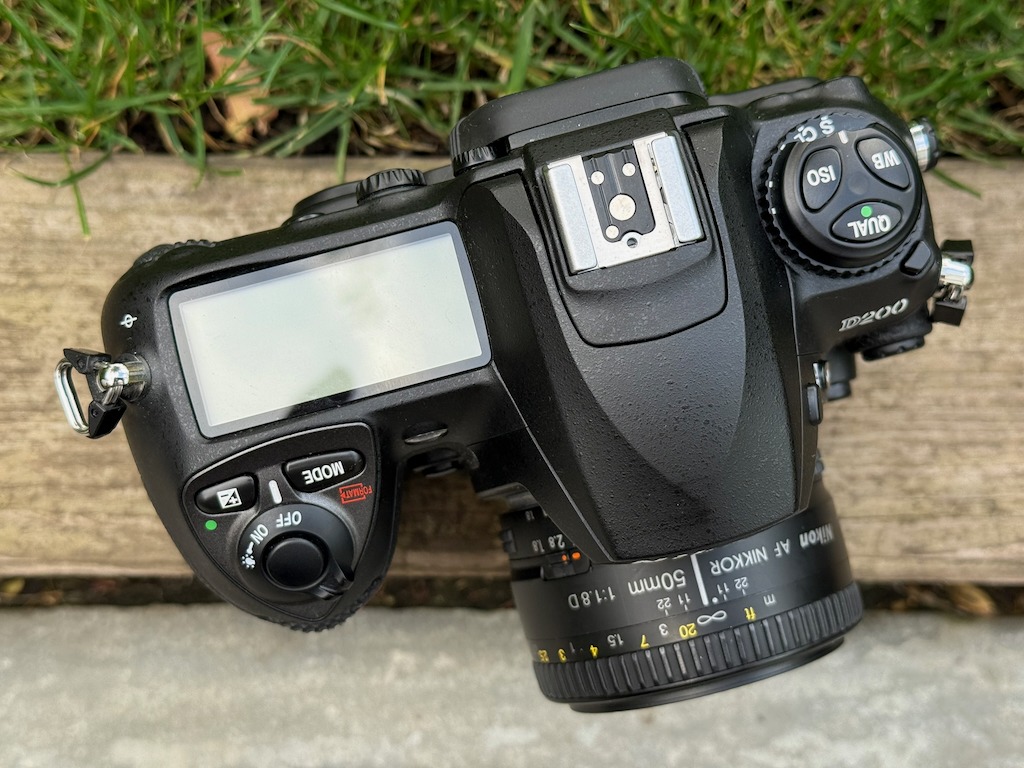
Personally, using the D200 has just reenforced the experiences I had previously with the D70. Nikon design is frustrating to say the least and downright inexplicable in some circumstances. For example, the power switch on the D200 is just madness. It is a rocker switch around the shutter button which protrudes slightly over the grip. This switch is extremely light touch to operate and consequently you can very easily turn your camera off accidentally when you’re looking for the control wheel. Furthermore, I found that the power switch was repeatedly triggered when I’d put the camera away in a bag or pulled it out to use. Don’t get me wrong, Canon didn’t get it right at first either, the 5D is easy to switch off if you carry it on a sling, but they certainly fixed it later on.
Talking of the grip, the D200 grip is horrible. I don’t have particularly massive hands but it seems that the D200 was designed for people with hands like a gorilla, because you must need monumentally large hands to comfortably hold the grip as intended. I can either get my fingers properly wrapped around the front but my palm is in the wrong place on the side and back, or I can reverse the situation. I did a side by side test with a number of different bodies to just check I don’t have weirdly odd hands and it turns out I must be quite normal because Canon film and digital bodies fit me perfectly, as does a Dynax 7000i.
Then there’s the interface. My god. I can sum up the stupidity of Nikon design choices in two words – exposure compensation. I used the D200 in environments with lots of snow and water which is always confusing for light meters, so you’ll be constantly experimenting to find the perfect exposure compensation from the meter reading. On my Canon 5D (and in fact all models I can think I’ve ever used with a control wheel on the back) you simply… roll the wheel. That’s it. Exposure compensation done.
How about the Nikon? You first have to find the dedicated exposure compensation button which is squeezed by the shutter button, then take the camera away from your face and look at the top place LCD, then perform what can only be described as finger gymnastics to hold the camera without dropping it and roll the correct control dial. You can’t use both dials, it has to be the correct one, despite the fact that when you press the exposure compensation button, you can’t do anything else at that moment but change the exposure compensation.
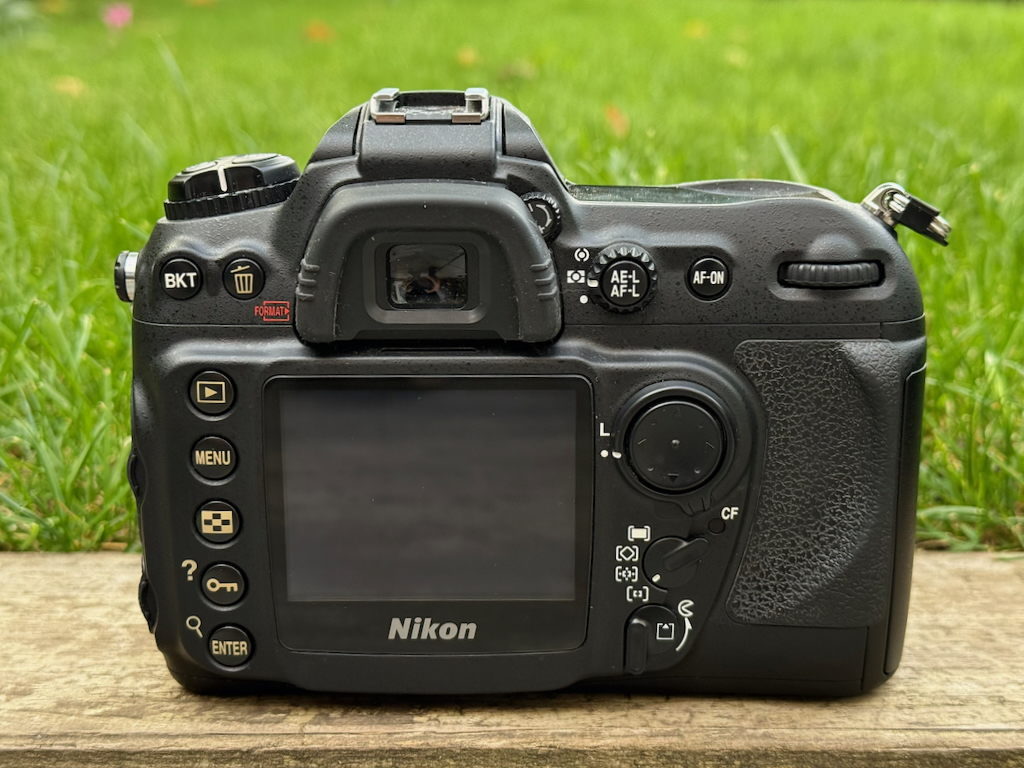
This is madness. There’s no justifiable reason for this. Exposure compensation is a feature used by photographers almost constantly and to make it so bizarre and inaccessible is inexplicable. Imagine you fancy bracketing – one stop over, one under and one in the middle. The time this takes is bonkers. Oh, but if you really want to bracket lots there’s also a dedicated bracketing button, but don’t forget to perform finger gymnastics once more. I cannot think of one single reason why they decided this set up was a good idea. Can you? If so, please let me know and before anyone says – no, you can’t just randomly dial in exposure compensation on a Canon, you have to have half pressed the shutter or it’s locked out, so if lock out is your answer, you’re wrong – it can be done better.
Most of the frustrations I have come back to this idea that there must be a dedicated button for each feature. Rather than accepting that this might not make the most usable of devices, they stuck to it.
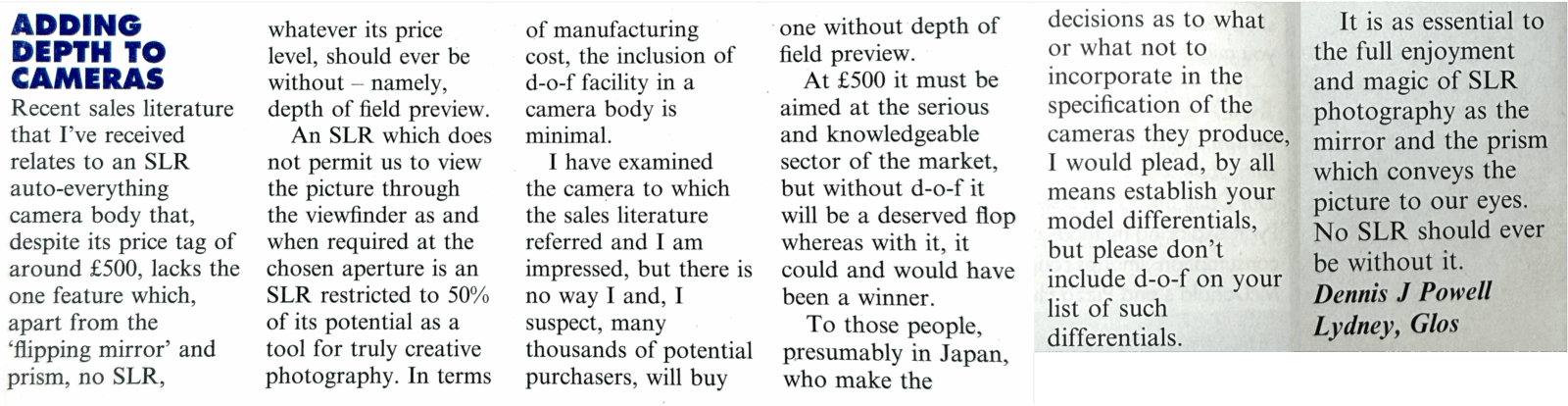
As an avid reader of old camera magazines, I’m well aware that there were people who considered any camera without dedicated controls to be an absolute abomination and they’d buy nothing without an array of buttons and dials – God forbid you forgot to add a depth of field preview button. This may have been ok in the days of film, but when you turn to digital photography it doesn’t make sense any more as the sheer weight of features quickly makes these choices rather stupid.
Do you want to change the AF mode to track a subject? Best find that dedicated switch which is round the front of the camera because there’s no room at the back or top. Canon users, press a button, roll the dial all with one hand. Would you like to change shooting modes from single shot to continuous? Then press and hold a lock button and then with your other hand (without dropping your camera) turn a dial with the other. Canon users? Press a button, roll the dial all with one hand. Do you start to see?
The situation and comparison is identical for any other feature you care to think of such as AF point selection, metering modes and so on.
There must be some good points, though?
Yes, of course there are.
The viewfinder on the D200 for a crop sensor body is much larger than those you’d find on a Canon and is almost comparable to a full frame viewfinder. That’s impressive. The viewfinder itself is dynamic and will change according to the settings dialled in and it’s invariably a pleasure to use. Furthermore, for the time this camera was released, the RAW shooting buffer is huge. You can rattle off 21 frames at roughly 5fps, whereas if you had a Canon 5D in your hands then you’d be lucky to get 9 at 3fps before things started to slow to a crawl. If I were shooting music or sport, for example, the Nikon really has a strong case for being your preferred choice for the continuous shooting performance alone.
Mom’s gone to Iceland
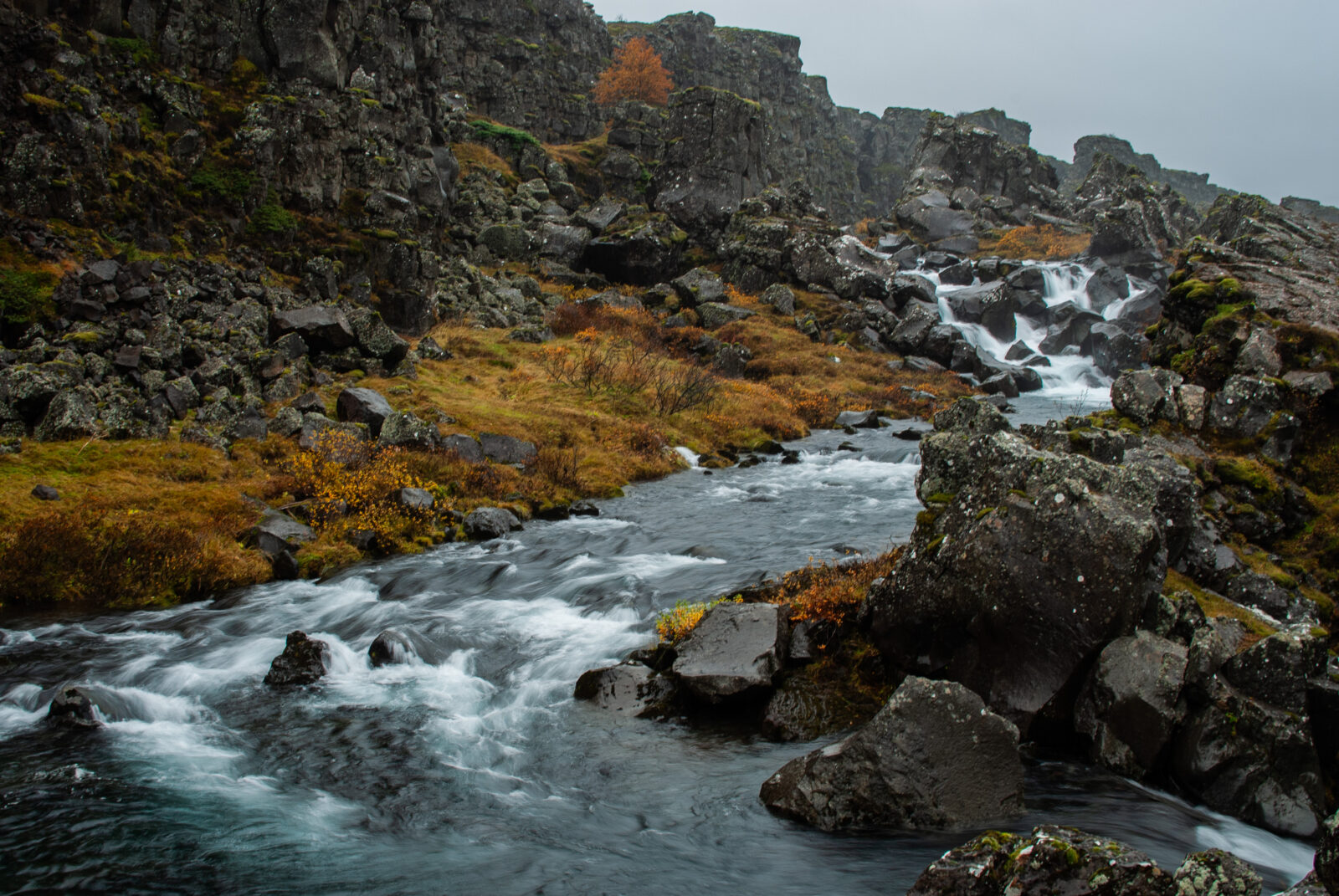
You’d be forgiven for thinking I don’t like the D200 very much, but poor ergonomics are not a good enough reason to write off a camera. If it takes banging images once the settings are dialled in then most things can be forgiven. So, I took the D200 to Iceland with a trio of lenses – the trusty 50mm f1.8, a 28-200 and an 18-35. That seemed to be enough for almost any situation and in all honesty I never found a use for the 18-35 so everything I shot whilst there was taken on one of the other two lenses.
The viewfinder really is wonderful for a crop sensor camera and I found it gave a really immersive feel which is important, but that’s where the immersion ended due to the constant need to take the camera away from your face to change simple settings. I must say, though, that the shutter and mirror are very refined on the Nikon and each actuation feels soft, damped and controlled. It gives you a psychological confidence boost and you think you can get away with shooting crazy low shutter speeds hand held – and this certainly did happen on more than one occasion as you’ll see.
The biggest surprise, though, was the auto focus. I wasn’t using crap lenses, these were decent glass for the time and the AF performance should’ve been fairly decent, but it really wasn’t in some circumstances. Normally, it grabbed focus pretty much as I’d have expected but then occasionally when shooting landscapes, not fast moving or erratic subjects, I found the camera hunted in situations that I didn’t expect and couldn’t explain. There was plenty of contrast, it’s not like I asked the camera to focus on a white sheet of paper, but time and again it decided to either hunt or focus felt genuinely slow. Using a 5D original as reference, the difference was stark. The 5D snaps into focus fairly rapidly whilst the D200 is having a think about it and will let you know when it has made its mind up.
I did some reading of reviews from reputable sources such as DPReview and the D200 was seen as a seriously capable piece of kit. My D200 is in brand new, out of the box fresh condition, yet the performance in terms of auto focus is… awful. I thought perhaps this is a downside of the screwdriver auto focus mechanism, but then it seemed to do it on lenses that didn’t have that interface and not on the 50mm which does. So, I’m rather lost for an explanation.

Anyway, the proof really is in the eating of the pudding isn’t it? In that regard, the D200 did not disappoint in any way. The NEF RAW files were easy to edit and seem to contain a decent amount of information and dynamic range. Rescuing shadows and pulling down highlights all worked as you’d expect from a top drawer camera.
The D200 is a 10mp CCD based camera which means two things – people will tell you that it has “CCD colours” which is total bollocks, and that 10mp is now such an absurdly low resolution that you may as well just go home and not bother. We need to stop the megapixels chat almost before it starts because anyone with half a grasp on the meaning of this metric will understand that it has no bearing on image quality past a certain point.
A 10mp APS-C sensor will out perform a 40mp phone camera sensor by an embarrassing amount. I currently use an iPhone 16 pro and I cannot tell you how disappointed I am in the terrible image quality that comes out of it. The images look fine on your phone screen but the second you either edit them or dare to zoom in the terrible mush made by image processing and tiny sensors with tiny lenses attached is revealed and it is not a pretty picture. Any DSLR ever produced (even the D30) makes better images than your £1200 smartphone ever can and the reason is straight forward physics. Let me save you some time, the physical limitations of phone photography are not going to be overcome any time soon unless you’re willing to accept far, far fatter phones than you use currently.
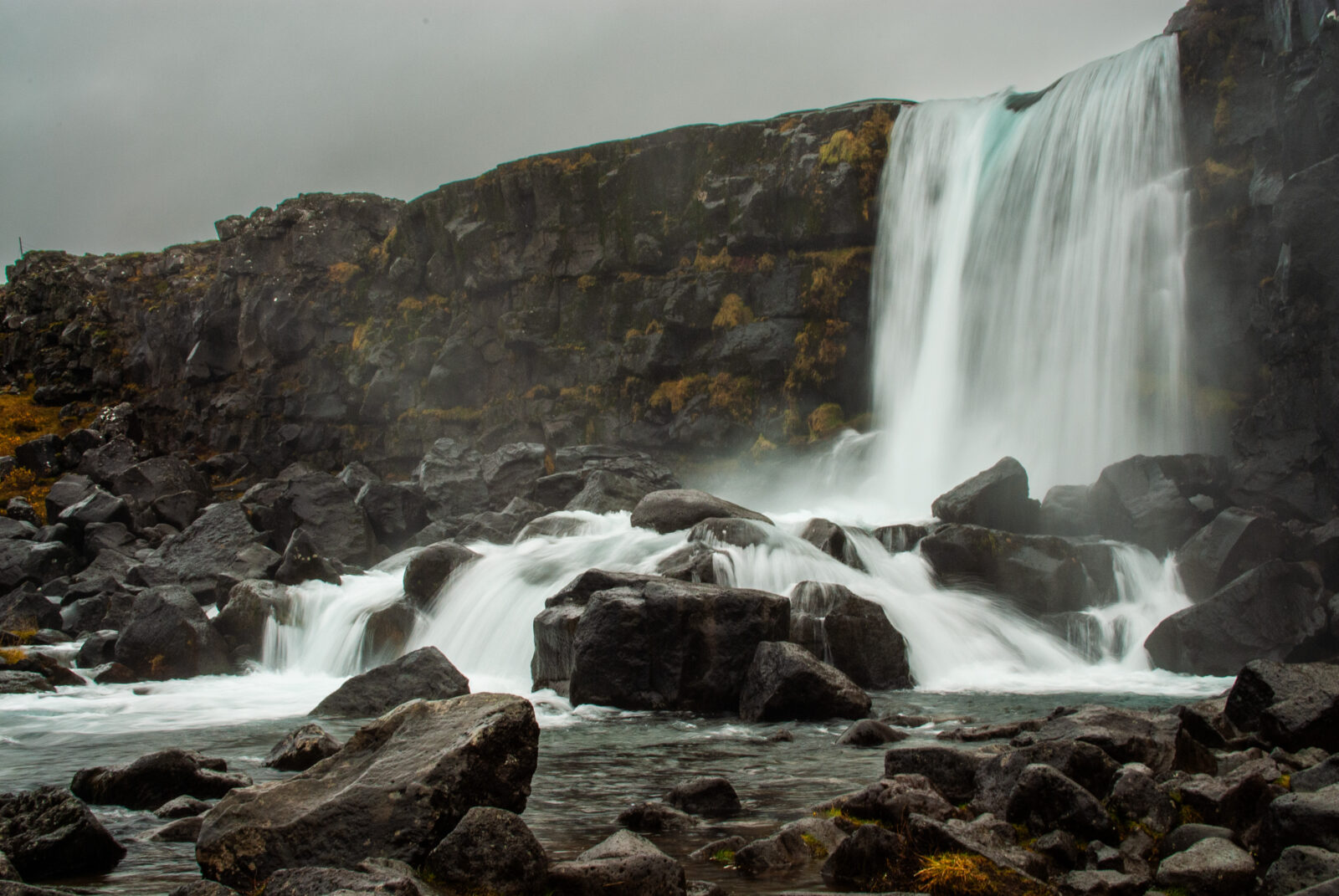
The 10 megapixels of the D200 are put to extremely good use at low ISO’s. Anything below ISO 800 results in relatively crisp, clean images that you’d be more than happy to print out at a minimum of A4 size without losing any quality. There are, of course, limitations. The RAW files produced by this camera require far more sharpening than those that come out of an equivalent Canon body of equal age. Is this a problem with the Nikon RAW files or is it a case that I need better lenses? Perhaps. The 50mm images certainly came out sharper than those from the 28-200mm but then that’s the price you always pay for such a monumental zoom range in such a compact lens.
The bottom line is that the D200 is capable of producing some utterly beautiful images in the right circumstances and so longs as you don’t slip into thinking that it’s a high ISO, low noise monster you’ll be more than happy.
Conclusions and learning

I think it’s only fair to consider the D200 in the context of what was available at the time it was released. When it came out you had two very clear options at a similar price point and level of build quality – the D200 or the Canon 5D. Which one you chose was probably dictated by which camp you’d already built up a decent set of lenses and accessories with. However, coming in blind or starting afresh offered some interesting choices.
Both cameras have admirable build quality and nowhere near enough weather sealing. You’d not be afraid to put either through some serious abuse and expect them to keep on firing away.
Which design philosophy do you prefer, then? Are you a physical button, dial and switch lover or do you prefer an uncluttered design? Do you have hands the size of a bunch of bananas or do you value comfortable ergonomics? Do you need all out continuous shooting performance or will 3fps be enough for you? What about noise?
Ah noise. The D200 really is horrific at anything over ISO 800. You might suggest that all cameras of this vintage had relatively poor noise control compared to todays cameras that can pretty much see in the dark but you’d be wrong. The Canon 5D offered superb, almost noiseless images at ISO 800, very acceptable noise at ISO 1600 and if you really had to, ISO 3200 was doable with some work.
I could go on, but ultimately I wonder what reasons people had back then for choosing any Nikon DSLR, let alone the D200. The menus are horrible, custom settings are utterly bizarre in that they’re the one thing you’d actually quite like a physical dial or control for but yet they left it off. The ergonomics are poor, choosing options and changing settings is a monumental pain in the arse. Objectively, subjectively and any other “ively” word you can think of, Canon had better usability.

Can the Nikon deliver the goods? Of course it can, the images are perfect once you’ve taken them but quite simply, the camera is just so poorly designed and thought out that the shooting experience is endlessly and needlessly compromised to the point where you spend more time looking at the camera than using it in anger and that’s a real shame. There is a reason why a huge, huge majority of sports and wedding photographers bought into Canon kit and have stayed there ever since – in the heat of the moment you cannot be fumbling about looking for the correct button or switch to flick.
The most fascinating thing is using two cameras side by side and seeing, feeling the difference a well designed interface makes. Going from something that confuses and irritates to something that just gets out of the way and is an extension of yourself is something to behold and that’s the difference between Canon and Nikon DSLR’s.
There’s a reason I love my Leica M3 – there are zero options. Simplicity and immersion are everything in photography. If you’re in it for the options, settings, buttons and dials then I think you’re probably in it for technology’s sake rather than the immersion and escapism that photography brings.
If that’s you then a Nikon is your dream camera.